

Butter From A Cow Isn't Your Only Option When It Comes To Baked Goods
We may receive a commission on purchases made from links.
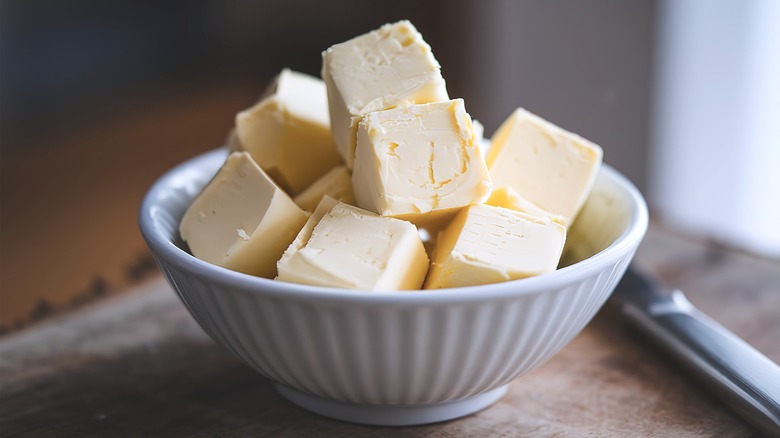
Whether you shop local or look for the best butter brand at the grocery store, you'll notice that cow butter tends to be the standard. However, it's not your only option. Goat butter, for example, can add a different flavor, color, and even texture to your baked goods. Chef, TV personality, and author Andrew Zimmern talked exclusively with Chowhound about how goat butter can be a great fit for many baked recipes.
"I am 100,000% team goat butter," he says. "I love the cultured, slightly tangy taste." Much like goat cheese, goat butter adds a zippy, unexpected punch of flavor that's clean and a little bit grassy. Zimmern finds that the tang of goat butter works especially well with shortbreads, sugar cookies, pound cakes, and frostings. Additionally, some people who can't tolerate cow's milk feel that goat butter is easier on the stomach. "Goat butter has smaller fat globules and less lactose than cow butter, which some people find easier to digest," says Zimmern.
Goat butter's unique qualities benefit savory baked dishes as well. You may find inspiration in Zimmern's latest cookbook, "Hope in the Water: The Blue Food Cookbook – Delicious Seafood Recipes for a Sustainable Future," co-authored by sustainable seafood expert Barton Seaver in collaboration with Fed by Blue. The book includes recipes for seafood pot pie and tuna noodle casserole, and the options are nearly limitless when experimenting with goat butter.
Pros and cons of swapping goat butter for cow butter
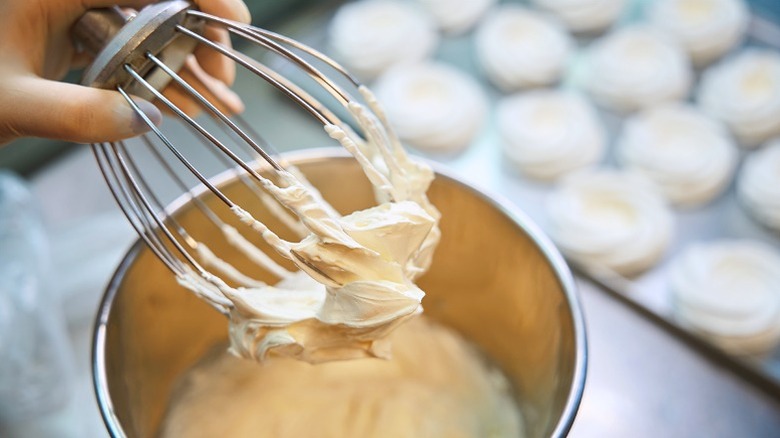
While goat butter can often substitute cow butter in baked goods, there are a few things you'll want to keep in mind to decide whether the swap makes sense for your recipe. One of the major pros when it comes to using goat butter is upgrading your homemade frosting. Cow butter lends a yellow tinge to frosting, but goat butter doesn't. "It's much whiter than cow butter, which can be visually appealing for pale frostings, white cakes, or shortbread," says Andrew Zimmern.
Goat butter also has a lower melting point than cow butter. While this can make it a good fit for spreading onto freshly baked bagels, breads, and more, it may be a mistake for flaky pie crusts and puff pastries, according to Zimmern. If you're following a recipe that relies on firm butter layers, you'll want to stick to traditional cow butter instead of goat butter.
How to incorporate goat butter into baked goods
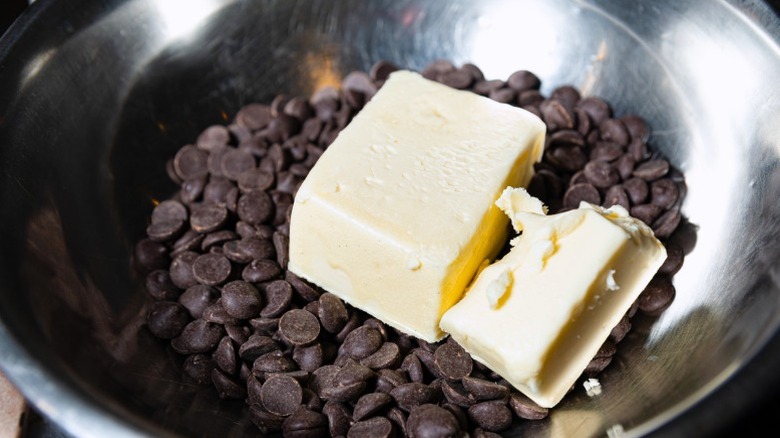
Ready to give tangy, fresh, clean-tasting goat butter a spin in your favorite recipe? Thankfully, making the switch is pretty simple. Andrew Zimmern recommends making a 1:1 swap for most recipes. Using goat butter instead of cow butter in cakes and cookie doughs is a pretty straightforward process, and it can help to enhance flavor — especially in chocolatey treats, such as triple chocolate donuts. "For chocolate desserts, goat butter's brightness balances cocoa's bitterness really well," says Zimmern.
If you're giving goat butter a try in a recipe that requires more structure, it's smart to give it more time to chill than you normally would (you may even want to freeze your goat butter dough before baking). If you're creating a laminated dough – meaning that your recipe requires that you roll and fold dough around a layer of butter (think croissants or puff pastries) — you'll need to be speedy. "In laminated doughs, work quickly and keep the butter cold because it softens faster than cow butter," explains Zimmern. With these tips in mind for incorporating goat butter, you'll be able to level up your baked goods with one simple ingredient swap.