

The Cooling Step That Might Be Ruining Your Corn On The Cob
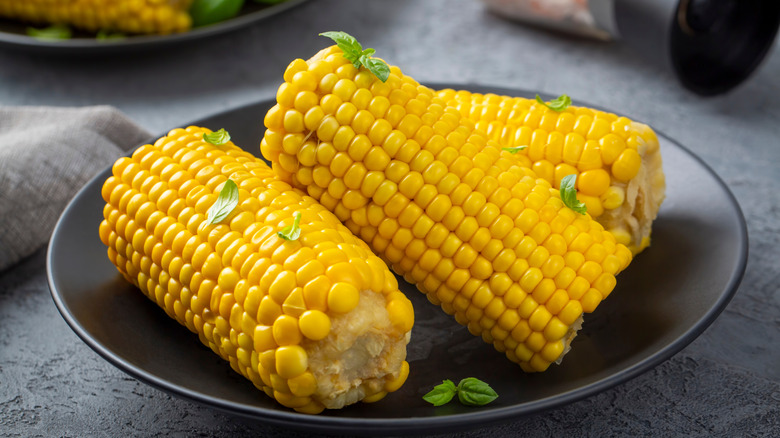
Corn on the cob is a classic side that seemingly can't be done wrong. But "seemingly" isn't quite the same as "fail-proof," and mistakes happen. One such mistake is cooling corn in cold water as soon as it comes off the stove. The idea behind this is simple: stop the cooking process in its track so the corn doesn't get overcooked or lose its beautiful coloring, much like you would blanche green beans. It's logical, since food will continue the cooking process while it remains hot. This is called carryover cooking, and it happens when the food maintains some of the residual heat from the stove after it's removed the heat source.
But when you rinse fresh corn, you also rinse away a lot of that delicate, sweet flavor; this is completely counterproductive and leaves you with a bland, flavorless dish that is more trouble than it's worth. If you've taken the trouble to cook the corn just right to guarantee sweet, juicy kernels, you'll want to do everything you can to maintain that flavor. As soon as you take it out of the hot water, place the corn gently on a drying rack or towel, or place it directly on a plate so it can cool enough to eat. Treating your corn with care is about as important as properly preparing the meats for your next barbecue. Give it the respect it deserves, and you're sure to have an epic meal.
Treat your corn right and you'll be craving it every day

Corn is technically a seasonal vegetable. Although its growing season is dependent on what part of the country it's grown in, the best time to enjoy fresh corn is during the summer and into the fall. But whether you are eating it fresh from the farm or picking it up at the grocery store, you can take a few steps to ensure it's amazing at any time of the year. Once you've learned to keep it away from the cold water faucet, you'll want to flavor it to perfection, which often includes spreading it with butter while it's still nice and hot. You can use the plate method to cover all the nooks and crannies, or take an even easier route and use the butter wrapper itself. Simply leave some butter in the wrapper and use the paper itself like a towel to brush it all over the sides. The best part is that you simply throw the wrapper away when you're done.
From there, the sky is the limit for seasoning your corn. You can go simple with salt and pepper, or give it some rich decadence with a sprinkling of Parmesan cheese. You can also experiment with spicy flavors and make homemade Mexican street corn with a mixture of lime, Cotija cheese, Mexican crema, and some cayenne pepper.