

10 Design Mistakes That Make Your Kitchen Look Dirty
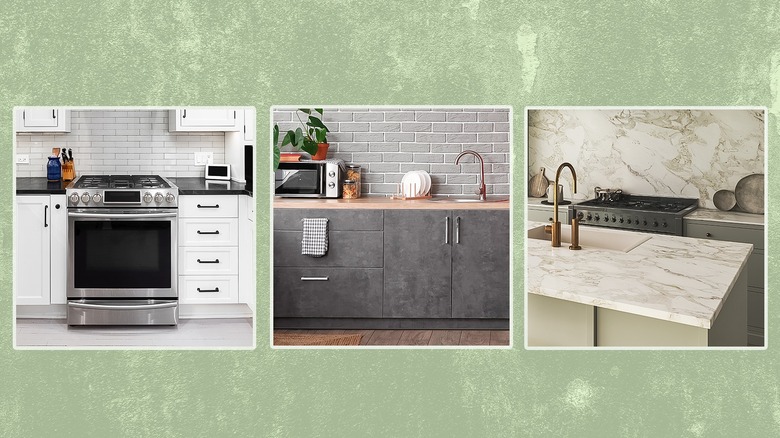
Kitchens are one room in the house that we can probably all admit to using every day. As such, it's a space that tends to get very dirty very quickly — as evidenced by near-constant tomato sauce splatter in the microwave and climbing fingerprints on the fridge handle. Doing a quick 10-second tidy at the end of the night or a weekly deep clean can help control some of the mess. In order to keep your kitchen looking as spotless as possible for as long as possible, though, you may have to look a little deeper. Consider how the design of your kitchen may be one of the reasons why it looks so messy all the time.
In order to get some insight into the biggest design-related mistakes that can make kitchens look grody, we consulted an expert: Paul McManus, president of McManus Kitchen and Bath. In addition to cluing us in to these design shortfalls, he also gave us some suggestions for alternative design choices that can minimize the look of dirt and grime. This can keep the space as functional as possible.
1. Installing stainless steel appliances
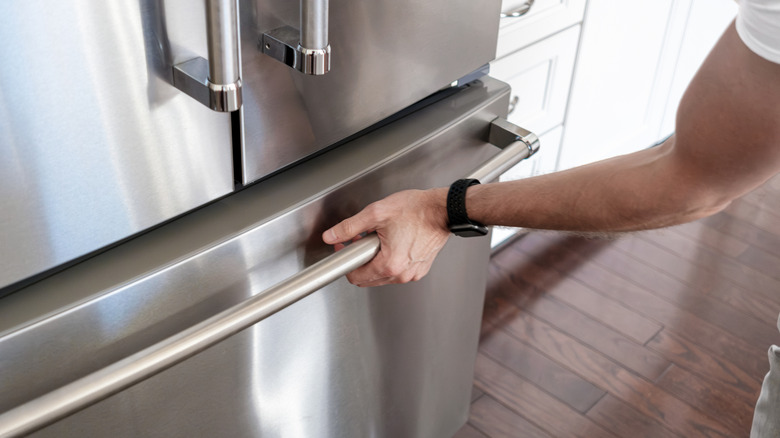
There are some merits to installing stainless steel appliances in your kitchen. They're modern-looking and sleek, and appliance stores are absolutely full of them — whether you're in the market for a stove, dishwasher, or a new refrigerator. However, one of the big downsides to installing stainless steel appliances over non-stainless steel ones is that they can start to look very gross very quickly.
"Stainless steel is prone to fingerprints and can make a kitchen look dirty," says Paul McManus, president of McManus Kitchen and Bath. We're admittedly all guilty of prepping something in the kitchen, realizing we forgot something, and clutching the fridge handles with dirty hands. But, the type of stainless steel that you're buying may be contributing somewhat to its dirtiness. "When buying appliances look for [fingerprint-free] stainless and watch out for fake stainless — which [is] actually brushed aluminum," he says. McManus also suggests purchasing a stainless steel polishing spray — though you can also use club soda to clean stainless steel – to ensure that your appliances look as pristine and beautiful as the day you got them.
Stainless steel isn't the only finish you should be avoiding during the design process if you're after a clean kitchen. Black kitchen appliances can show scrapes and flaws, which can make your space look even less cohesive and clean.
2. Not investing in storage
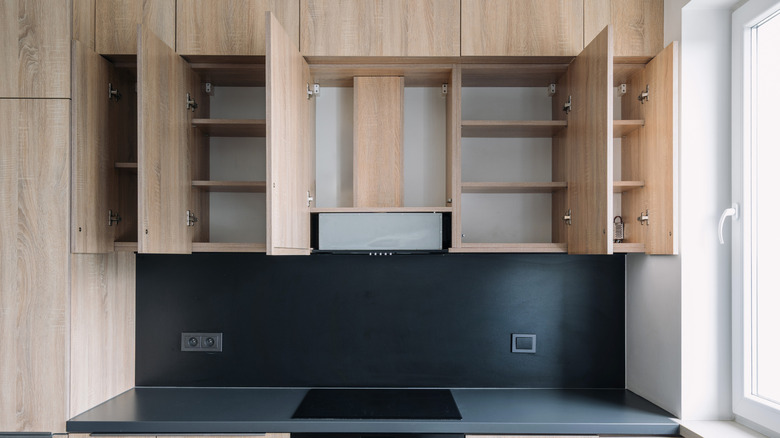
Say it with us: A cluttered space is a dirty space. Having kitchen appliances, dishes, flatware, and more strewn across your counters doesn't just look bad, but it also makes your kitchen a less functional space. After all, you don't want to have to dance around the kitchen while holding a hot dish trying to find a spot to put it down.
"Clutter is probably the main thing that can make a kitchen look dirty," says Paul McManus. "Organize your cabinets and pantry and keep countertop appliances and accessories to a minimum." If you're someone who seems to have a kitchen appliance for every day of the week, you may want to look to more comprehensive storage solutions, like using appliance garages, considering installing more cupboards, or just storing items in your pantry rather than out and about. If you have appliances you use every day (and can commit to keeping relatively clean), like a coffee or espresso maker, those might be fine to leave out. The cast iron skillet you used for dinner three weeks ago that's still sitting on your stove? Well, you may be better off storing that somewhere else.
When considering the type of storage you want to install, you'll also want to think about how it can add or detract from a space, both in terms of function and aesthetics. Open shelving, for example, may not be a friend to folks with messy kitchens, as it can show (yet contain) clutter. If you're a member of the dirty hands club, you may also want to consider installing storage solutions that you can bump with your elbow to open.
3. Not considering panel-ready appliances
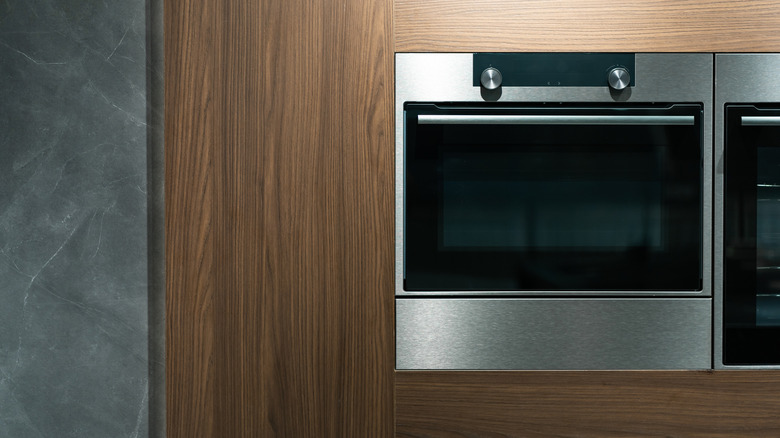
We get it: not everyone can afford a custom-designed kitchen — sometimes, we have to work with what we have. If you are willing to do a complete overhaul on your space and redesign it from scratch, then you may want to consider biting the bullet and installing panel-ready appliances. These appliances are tucked into existing walls and cabinets, which can make them stick out less and make the appearance of your kitchen more sleek and, as Paul McManus says, less dirty: "Adding a cabinet panel to your dishwasher or fridge helps blend it into the design but also [avoids] fingerprints."
If you're after a very modern look in your kitchen, panel-ready appliances may be the way to go. You can panelize so many different kitchen appliances, but some of the more common ones are beverage fridges, freezers, and dishwashers. Ovens, microwaves, and the like are a little more difficult to install, presumably due to venting.
The panels should also be installed in a way that looks cohesive and seamless, but is still functional. This means matching handles and knobs with the ones on your counters and drawers, and also thinking of ways to make the space easy to navigate and use. Due to their design intricacies, panel-ready appliances are something that's usually better off left to kitchen design experts, and they may cost more than standard kitchen appliances. Is it worth it for a fingerprint-free space? That's for you to decide.
4. Using the wrong type of flooring
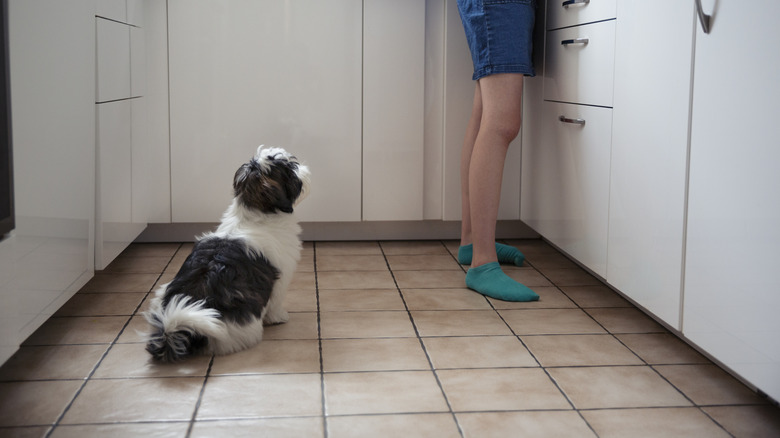
Your floor takes up a large chunk of real estate in your kitchen, and it's arguably one of the surfaces that you will interact with most during your daily kitchen routine. As such, it can take a beating and look especially gross if you choose the wrong type of flooring and don't regularly keep up with messes.
Color is a really important consideration when shopping for flooring. "Super dark floors (espresso wood, black tile) show dirt easily," says Paul McManus. While it might look great when you do the initial install, you may notice that crumbs, pet hair, and more start to accumulate on dark surfaces. Not only should you invest in a Roomba, but also take McManus' recommendation and install either mid-tone wood or luxury vinyl planks in brown or gray hues to conceal grit. These materials don't just look cleaner than darker surfaces: they are also still easy to clean and maintain.
Another flooring material that you need to be careful of is tile. "Tile floors with big grout lines will quickly look dirty," McManus says. He suggests both choosing a grout color that matches the tile and opting for one with a thinner line.
5. Opting for glossy coatings on kitchen surfaces
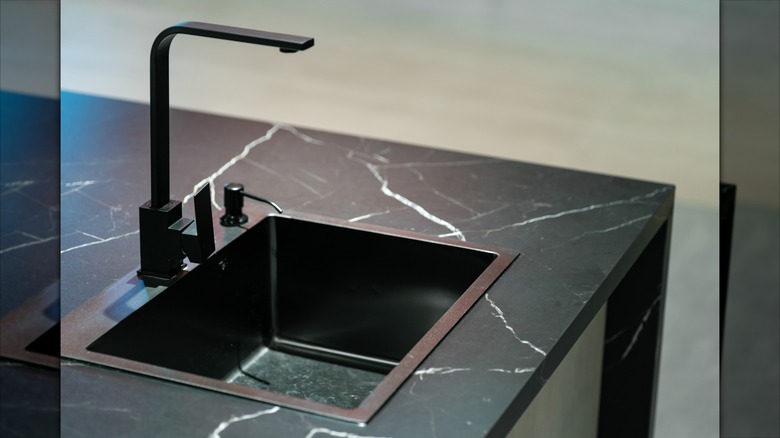
Your kitchen counters are yet another surface that takes a beating. Spills and drips occur on a regular basis and can be visible, especially if you don't clean them often. As Paul McManus says, some counter materials, especially ones with a high-gloss finish, show stains more obviously than others. "It comes down to contrast and reflectivity. Surfaces that are extremely light, dark, or shiny exaggerate every mark, speck of dust, or irregularity," he says. These effects can be amplified by task lighting, like under-cabinet lights, and can make your surfaces look dirtier than they actually are.
Aside from cleaning your counters more regularly, which we all should probably spend more time on, you may also want to consider the color and composition of your surface. "A mix of textures and mid-range tones are better at hiding dirt," McManus says. Besides how well it conceals grime, you should also consider other important factors when selecting countertops, including durability, porosity, price, and ease of installation. Countertops are a major investment and one you'll interact with every day.
6. Installing painted cabinets
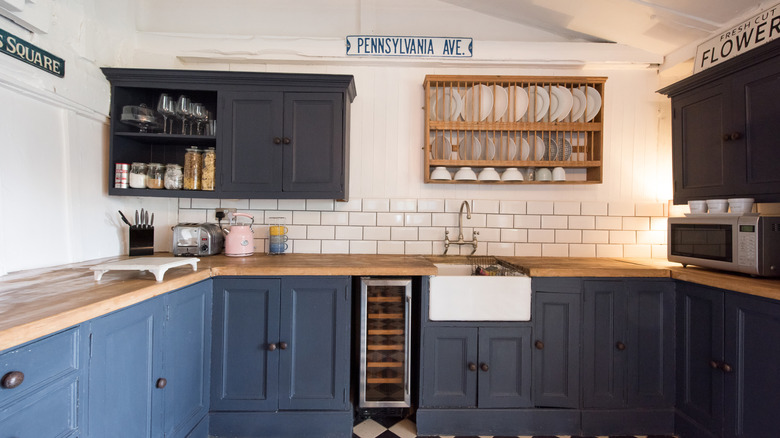
Painted cabinets can give your kitchen a modern vibe, but they may not be ideal if you're after the cleanest or neatest-looking space. While the cabinets may look decent when they're installed, time and use can do a number on them.
"Painted cabinets look great but they show dirt and scratches a lot more than a wood finish," says Paul McManus. If you tend to ding the corner of your countertop often or like knowing that your cabinet finish can stand up to dents, you may want to invest in a different finish. The best part? You don't have to sacrifice design or aesthetics. "Today there are a lot of choices of colored stains that can add color to the design while still showing the woodgrain and that hide wear and tear better," McManus says. You may also want to consider laminate doors, which are easier to wipe down than painted surfaces.
Besides material and color, you may also want to consider the texture of your cabinets. Ornately-designed knobs and raised panels can collect dirt over time, and unless you are going at them with a toothbrush, you may not be able to remove that grime during your weekly tidying. Opt for flat doors and simple details that require very little special attention.
7. Using butcher block or marble countertops
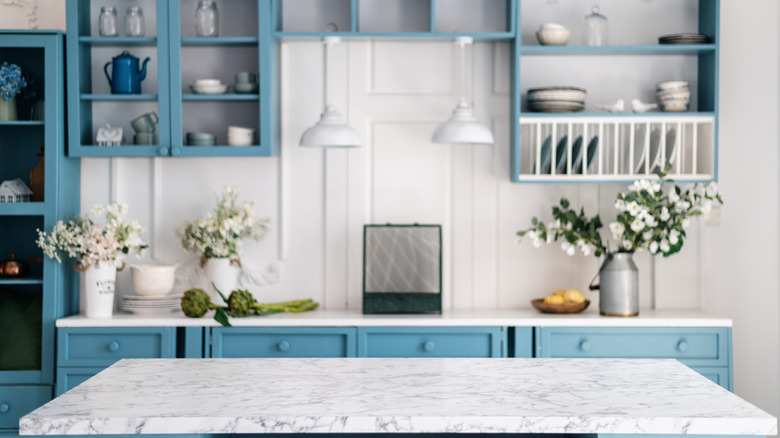
Porosity and penchant for staining are two factors that may make a cabinet surface less than ideal. Countertops aren't cheap, so you want something that not only lasts a long time, but also doesn't easily discolor. If you tend to leave spills on your countertops, you may want to stay away from two materials, in particular: marble and butcher-block. While marble is very chic and Instagram-friendly, some varieties are porous and can discolor if you don't wipe up a spill immediately. The surface of the marble can also dull if it comes into contact with certain cleaning compounds or ingredients, especially acids. It may even cause black rings to form on the surface of the counter. While you can hide this discoloration by choosing the right type of light, the better route is to either select a different material entirely or go for shiny, polished marble.
Butcher block is unforgiving, and unfortunately, there are very few things that you can do to prevent it from staining. To add insult to injury, these countertops aren't durable, require frequent sealing, and can get really grimy if you don't clean them properly. While you can cut your food directly on a butcher block countertop, it can cause unsightly dents, stains, water damage, and more — all of which will make your kitchen look very dirty.
8. Choosing the wrong size backsplash
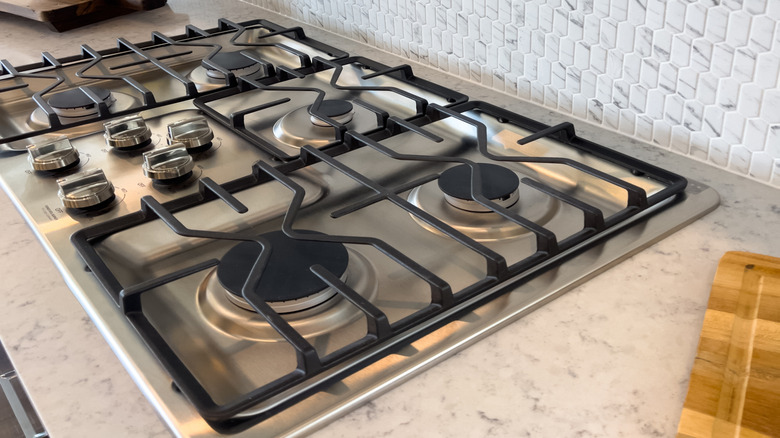
Backsplash can be a critical investment for a dirty kitchen. You'll often find it stuck behind the stove, sink, and the like, as it functions as a protective barrier between grease, grime, and splatter and the wall. While backsplash is helpful in preventing your walls from staining, and is easier to clean than trying to chisel stuck-on food off a painted wall, choosing the wrong backsplash design can cause your space to look even dirtier.
While an ornate, textured backsplash may look great the day that you apply it, you'll find that those small nooks and crannies become more difficult to clean with time. Large grout lines — as is the case with flooring — hold on to dirt and grime like a sponge. The more grout lines, the more difficult it is to clean. Busy patterns can help conceal splatter and grime better than an all-white or solid-colored backsplash, and a larger-sized tile or slab can ease your cleaning woes.
Another important consideration when selecting and applying your backsplash is how high it goes. Anyone who has cooked a bubbling crock of tomato sauce or splattering bacon knows how volatile splatter can be. If your backsplash isn't high enough behind your stove, you may risk staining the wall.
9. Opting for an all-white kitchen
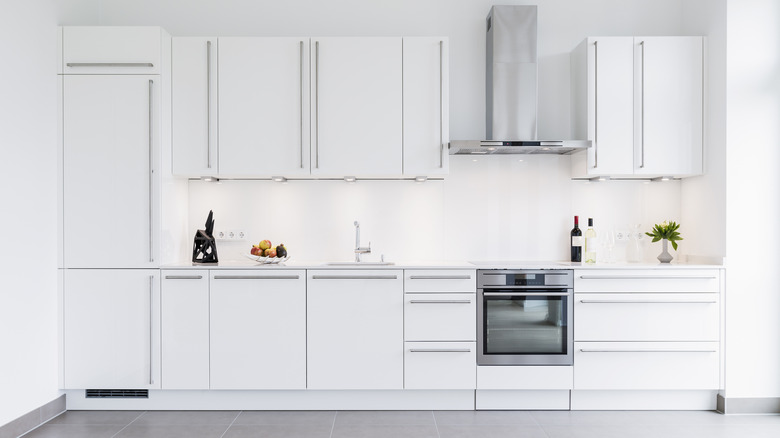
We hate to say it, but the only place where an all-white kitchen is practical is in a magazine. Once you start moving around and using your kitchen as it was intended to be used, you'll likely find that an all-white design really wasn't the most practical of options. While white kitchen designs can help your space look bigger, they will require constant cleaning to keep them looking white.
If white isn't the best color to use in a kitchen — and black surfaces, especially floors, can show dirt and dust — what exactly is the best color scheme for your space? Well, it really depends on the mood you're trying to capture and what other design elements you integrate into your space. Grays, for one,have gotten more attention over the years because they pair well with other bright accent colors. Additionally, they aren't as sterile and clinical as white surfaces. Light blues can emulate cleanliness and crispness in a space, and paired with complementary accents, they can make your kitchen look inviting and calm.
10. Forgetting about your fixtures and appliances
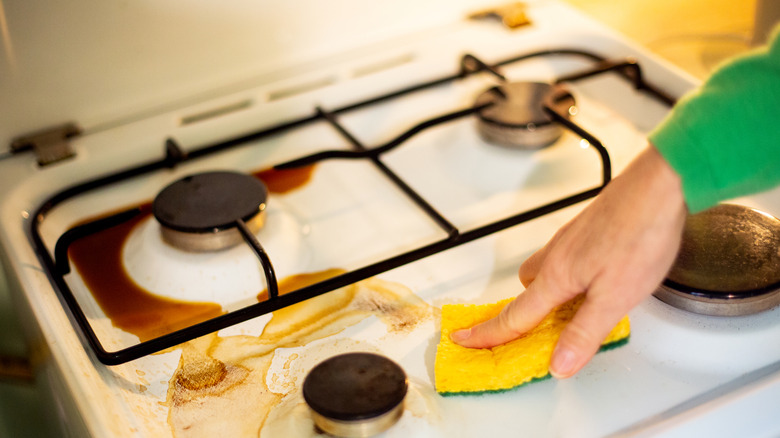
Anyone who has ever had to lift up and clean underneath an electric stove's coils knows that the type of cooktop you select has a big impact on your kitchen's overall functionality and how easy it is to maintain. The more raised surfaces you have, including coils, grates, buttons, and knobs, the more surface area there is for dirt and grime to camp out. Unless you can dedicate time — and spare a toothbrush — for cleaning these nooks and crannies, you may want to invest in appliances and fixtures that are as sleek, flat, and easy to clean as possible. Induction and flat electric cooktops, for example, can be swiped with a paper towel after they have cooled down and don't require you to lift up any grates.
You may also want to consider the surfaces you touch every day in your kitchen to find ways to reduce touch transfer. Installing a no-touch faucet, for example, can reduce the amount of grime on your sink handle, while swapping out regular light switches (toggle switches) for flatter rocker switches will allow you to flip the switch with your elbow, rather than your grimy hands.