

Why It's Actually Tricky To Make Dim Sum Vegan
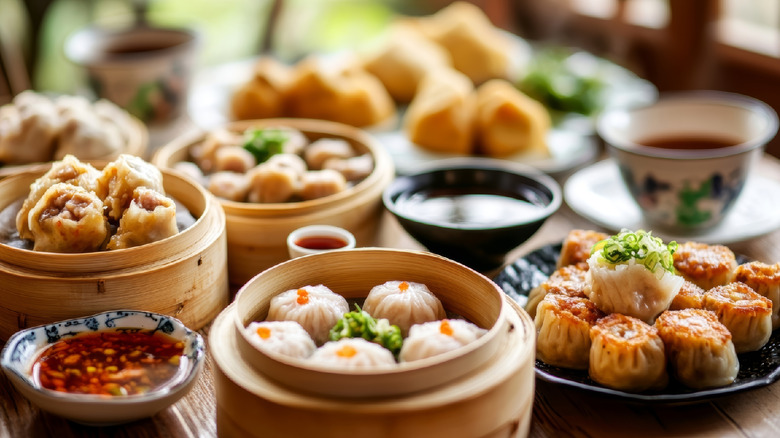
Dim sum, which consists of small plates traditionally served at brunch, is a uniquely fun and indulgent kind of Chinese meal. One dim sum outing could mean digging into BBQ pork buns (cha siu bao), shrimp dumplings (har gow), and shumai, plus many other iconic dishes, such as chicken feet and egg tarts. Unfortunately, unlike more modifiable cuisines, dim sum isn't really designed for diners with dietary restrictions, especially those who avoid animal products. If you live a vegan lifestyle, you may end up disappointed at dim sum restaurants, staring longingly at overflowing carts of inaccessible food. So why is dim sum so tricky to adapt to vegan diets?
To find out, Chowhound exclusively spoke with Ed Harris, the executive chef at vegan stir-fry restaurant Stir House in Atlanta, Georgia. According to Harris, it's notoriously difficult to translate the right texture of dim sum into a vegan-friendly meal. Many dim sum dishes are known for their "QQ," an East Asian term for the springy bounce inherent in foods like dumplings and buns. "Flavor is usually easier to dial in," he says, since "you can build umami with seasonings, marinades, and sauces." However, "traditional dim sum often relies on meat or seafood for that bounce, chew, or delicate flake. In a vegan version, you need to recreate those sensations without the original proteins." For those determined to vegan-ize dim sum, Harris recommends "experimenting with ingredients like wheat gluten for chew, konjac or tapioca starch for springiness, mushrooms for meatiness, and layered vegetables for crunch or softness."
The toughest dim sum dishes to make vegan
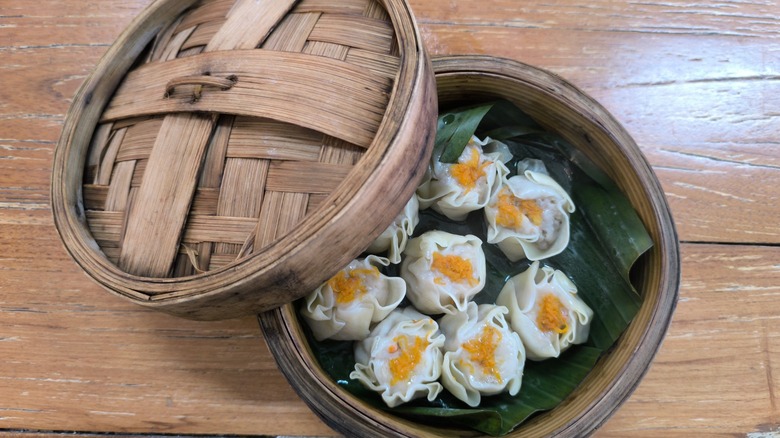
Not all dim sum is full of meat and animal products, but many of the most iconic dishes are, which makes inventing vegan versions challenging. Shrimp dumplings, also known as har gow, and siu mai (or shumai), which contain pork and shrimp, are not easy to recreate without these key ingredients. Chef Ed Harris explains that texture, juiciness, and heat stability are some of the prominent reasons that vegan ingredients can't just be blindly substituted for animal products in dim sum. "Shrimp's snappy bite and pork's springy chew come from myosin and fat. Plants don't behave like that out of the box," Harris says. "You have to build it with technique, starches, and sometimes hydrocolloids, if you are into those."
Even some vegetarian dishes are complicated to convert to vegan ones, like egg tarts, also known as dan tat. Hong Kong-style egg tarts (as opposed to Portuguese egg tarts) are a dim sum staple distinguished by their smooth, glossy filling and shortbread crust. "Getting a glossy, custardy set and buttery puff without eggs or dairy is doable, but technical," Harris says. To do so, he recommends using vegan laminated dough and a soy or coconut-based custard set with starch or agar, plus "a pinch of kala namak for egg aroma." He also points to deep-fried taro puffs, or wu gok, as a particularly difficult dim sum dish to make vegan. "That lacy, airy crust plus a rich 'porky' center is a precision game with vegan shortening and a well-reduced filling," he says.
The best dishes and strategies for vegan dim sum
So which dim sum dishes, if any, translate most easily to vegan cooking? Unsurprisingly, some of the top ones chef Ed Harris highlights are already veggie or starch-based, and simply need a few ingredient substitutions. For turnip cake, or lo bak go, the rice flour and daikon radish base is already vegan. Just swap the lap cheong sausage and dried shrimp for shiitake, scallion, and douchi, a condiment made from fermented soybeans; of the final result, he says, the "texture and flavor land beautifully."
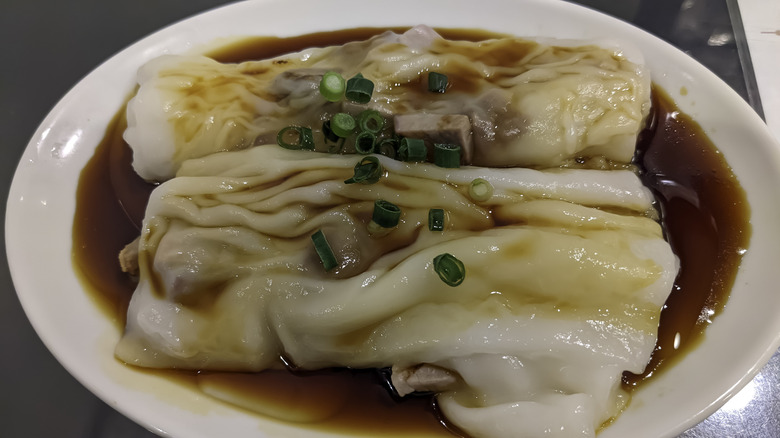
Similarly, cheung fun, or rice noodle rolls, use a naturally vegan batter, and can be filled with vegan proteins like yuba, mushrooms, or fried tofu. Other dim sum dishes Harris recommends turning vegan are vegetable dumplings, sticky rice in lotus leaf (lo mai gai), and steamed bao buns with char siu-style mushrooms or seitan.
"My advice for anyone approaching vegan dim sum is to respect the tradition while letting plants shine in new ways," Harris says. Focus on using quality ingredients and precise technique, and creating layered flavors. Some go-to meat and seafood substitutions he likes are king oyster mushrooms, yuba (tofu skin), seitan, firm tofu, konjac-based seafood analogs, and even textured vegetable protein, which some cooks are skeptical of. Harris also recommends keeping "flavor builders" nearby, like douchi, red fermented tofu, Shaoxing wine, soy sauce, white pepper, sesame oil, MSG, kombu, and nori. When shopping for ingredients, he says, keep in mind texture first, then flavor. "You can season flavor; you can't fix mush," he says.