

Here's Exactly How Often To Clean Your Ice Maker For The Purest Taste
We may receive a commission on purchases made from links.
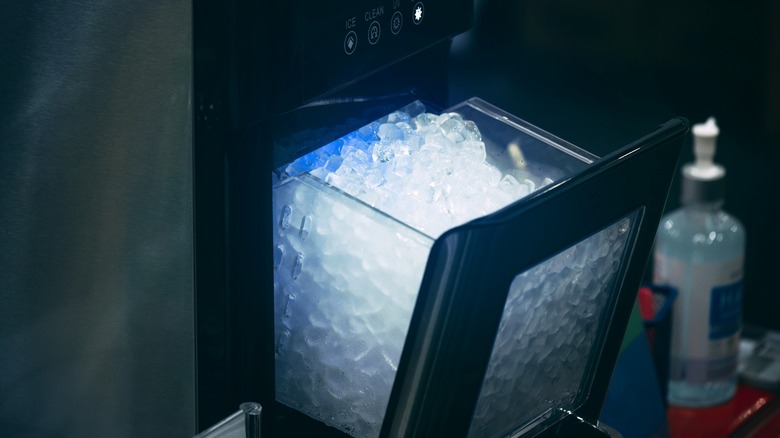
Ice does a lot more than just cool your cocktails and make chilly desserts; its quality also impacts the flavor of your drinks and dishes. Because water tastes different depending on the source, whatever you put in your ice maker affects the flavor and quality of your ice. If you use crisp, clean water like Starbucks, for example, you get equally crisp-tasting ice. Because the cleanliness of your ice maker also affects the taste, regularly cleaning it is one of the many ways you can keep your ice tasting fresh.
Chowhound asked Kris Koch, principal engineer at GE Appliances, exactly how often we should clean our ice makers. He recommends a minimum of every six months, adding that "more frequently is preferred, especially in areas with hard water where scale develops more quickly." A water's hardness refers to the level of its natural mineral content, which impacts its taste. As water passes through your ice maker, these minerals build up in deposits over time, leading to scale. While you can probably get away with a bare minimum cleaning in areas with high-quality tap water, such as New York, you need to do it more frequently in other locales with harder water, such as Texas, Utah, and Kansas. The water reservoir, ice bin, scoop, and scoop holder should also be cleaned weekly.
Other factors that affect your cleaning schedule
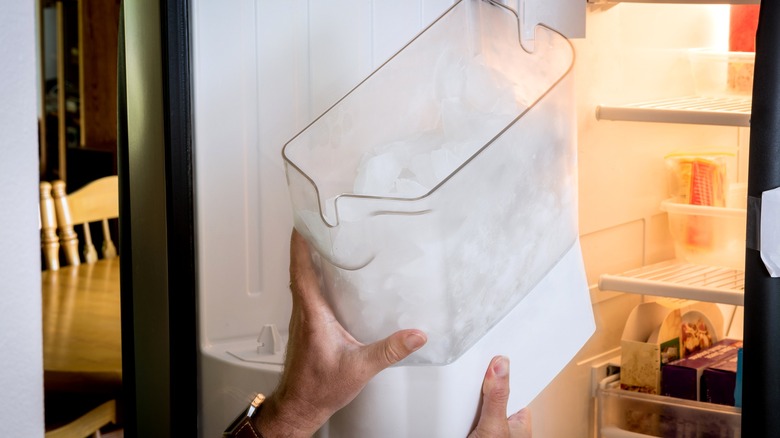
Outside of water quality, Kris Koch mentioned frequency of usage and door openings also affect how often you need to clean your ice maker. Any sort of air exposure increases the risk of spores and bacteria entering the machine, which in turn leads to slime and mold growth. These already affect the taste of your ice during earlier stages of development while later stages increase the risk of health issues.
The model of your ice maker also determines how frequently you need to clean it. Each machine should come with a care manual containing this info, from the best-reviewed ice makers to less-popular ones. Most manufacturers recommend a higher frequency, both to maximize your safety and to prolong the lifespan of your machine. For example, Lauren Platts, director of product management for ice and beverage at GE Appliances, recommends models like the GE Profile countertop nugget ice maker be descaled at least once a month as part of a multi-step maintenance routine. "Drain your ice maker weekly and refresh with clean water to keep water mineral content low, extend the life of your product, and ensure fresh-tasting ice," she said. Platts also advised descaling the machine every month and cleaning any air filters or side vents every two months to ensure best performance.
How to clean your ice maker
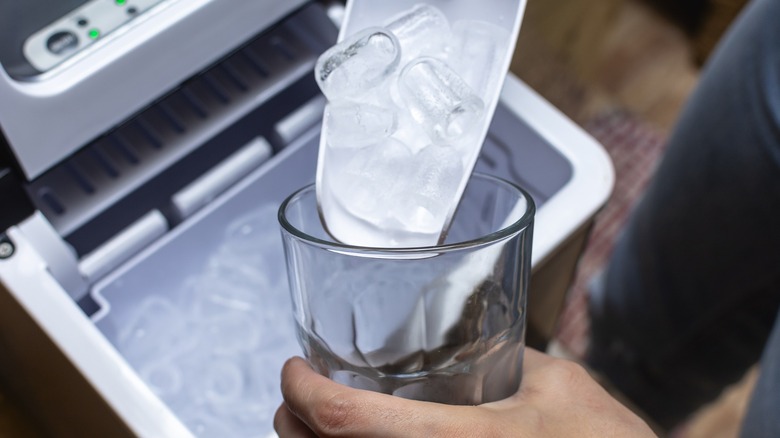
Because your ice maker is in direct contact with the ice you consume, both Kris Koch and Lauren Platts recommend using food-safe cleaning solutions to descale the machine. Koch suggests using a citrus-based cleaner while Platts says an all-natural citric acid cleaner or a 1:1 vinegar and water solution does the trick. Side vents can be vacuumed to get rid of any trapped dust or hair. Platts also recommends removing any filters your ice maker might have while you're cleaning it. "Filters will capture and retain cleaning agents that pass through [them] and can affect flavor if not removed during cleaning," she explained. Filters, according to Koch, should be replaced on time based on your ice maker's use and care manual.
Lastly, it's important to pay attention to any signs that your ice maker may need cleaning so you can nip any problems in the bud. A screeching noise could mean that your machine needs descaling, for example, while low ice production might be an indicator that debris is building up in the condenser. If cleaning doesn't solve these issues, consult a qualified service technician. With proper care, your ice maker should provide you with crisp, pure-tasting ice for years — Koch says his own machine at home has been around for more than a decade.