

How To Make Smooth And Creamy Homemade Peanut Butter
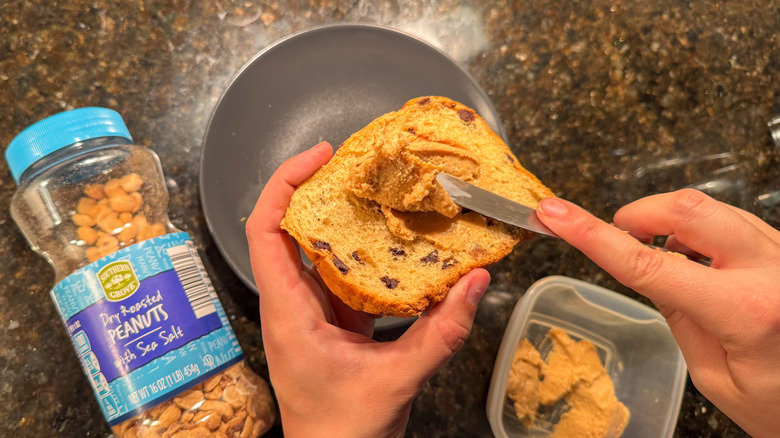
There are so many different peanut butters to choose from at the grocery store, ranging from creamy and chunky to flavored, organic, and more. While any of these options can make a perfectly good sandwich, there's something to be said about a rustic, high-quality homemade peanut butter. The task of getting whole nuts to a spreadable form may seem really daunting at first, but you may be surprised to find out how easy it actually is. You only need one ingredient, two tools, and a guide on how to do it (that's where we come in) to make creamy homemade peanut butter that everyone in your family will love.
Good peanut butter starts, of course, with the nuts. Many folks will opt for basic roasted nuts for peanut butter — either salted or unsalted will suffice. Others will go for raw peanuts, which have a subtler flavor. You can use any kind of peanut you'd like for homemade peanut butter, and add in extra salt or ingredients to suit your taste. Use this guide to making homemade peanut butter to get your bearings, then explore different creative twists and ways to serve it.
Tools you'll need to make homemade peanut butter
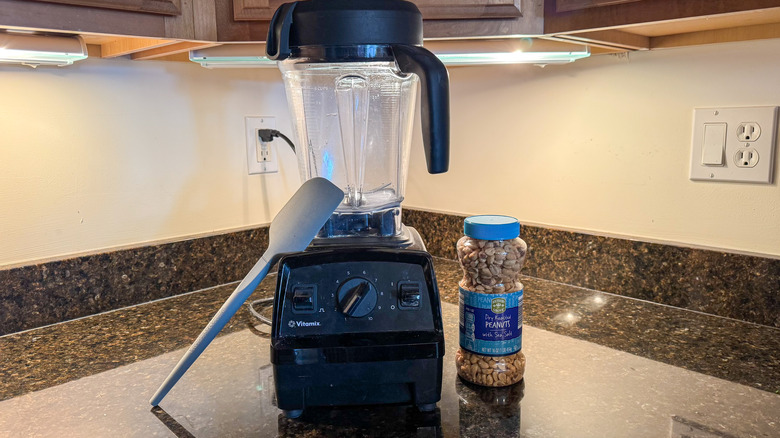
The only tools that you will need to whip up a tasty batch of homemade peanut butter are a high-powered blender or food processor and a spatula. You'll want to use a high-quality and durable appliance that can cut through the crunchy nuts with ease, as this will expedite your preparation significantly. A rigid spatula is a good investment as well because you can scrape the walls of your bowl or container more easily than with a flimsy, cheap one.
Add your peanuts to the blender or food processor
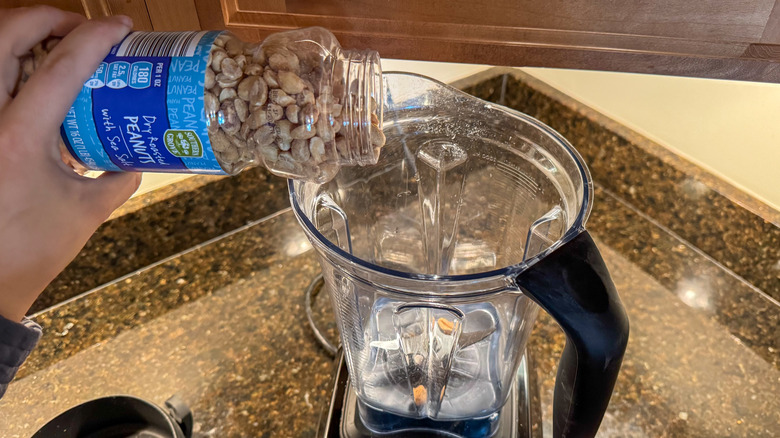
Add your peanuts to the blending vessel.
Pulse the mixture until creamy, scraping as needed
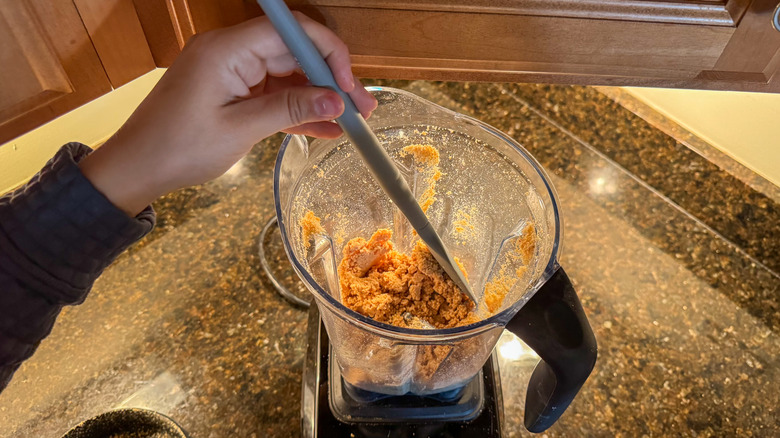
Once your peanuts are added, it's time to go to work. Blitz the nuts for about a minute until the mixture is coarse and sandy. If you're planning on making a chunky peanut butter, you can reserve some of the peanut bits at this point. After you've scraped down the edges and underneath the blade, place the lid back on and continue pulsing for another few minutes, scraping as needed. This break will also allow the blender or food processor's motor to cool down.
After a few minutes, your peanut butter will look paste-like. At this point, you can add in any seasonings or oil you'd like, blitzing the mixture until it reaches your ideal stage of creaminess. You can also add back your peanut pieces for a chunkier rendition — just make sure not to pulverize the peanut pieces too much afterward. You'll know that your peanut butter is ready to go when it's smooth and creamy, rather than pasty and gritty.
Transfer the mixture into a jar
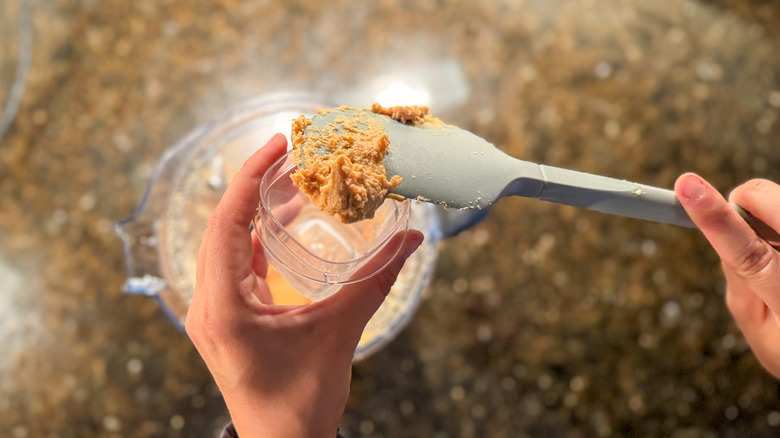
Your peanut butter will be ready to eat straight out of the food processor or blender. You can reserve the rest for later by transferring it to an airtight container or jar.
Store your peanut butter in the refrigerator
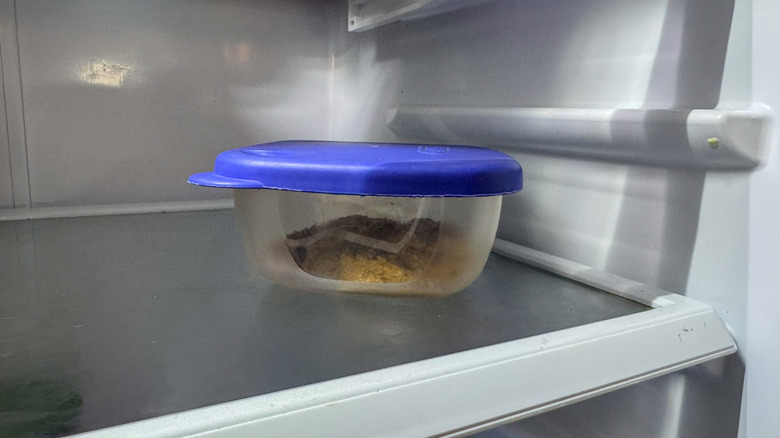
You might be accustomed to storing your peanut butter on the counter, but to keep your homemade batch at maximum freshness, you'll want to keep it in the fridge. It'll last for about a month.
Since there are no oils or stabilizers in your homemade batch, the oil and peanuts will inevitably separate. Separated peanut butter is still safe to eat; just give it a stir before using it to reincorporate the oil, or try storing it upside down.
Fun flavor variation to try
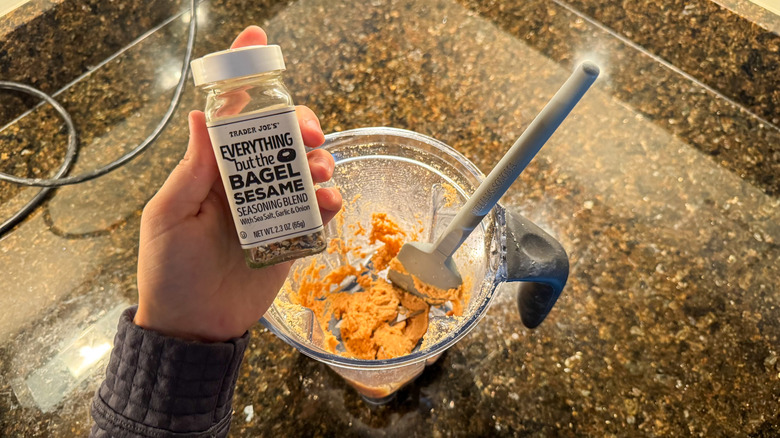
There's nothing wrong with making and using plain peanut butter. But there are so many creative ways to add a unique spin to your nut butter — and you can get some inspiration just from looking in your spice cabinet. For a savory spread, try adding a few tablespoons of everything bagel seasoning. The sesame and poppy seeds will offer a great textural contrast; it's an especially tasty add-in if you opt for a chunky peanut butter. You can also give your peanut butter a sweet edge with a dash of cinnamon or a drizzle of maple syrup. Taste as you go, and always add these flavors incrementally.
The process for making homemade peanut butter is the same as that for other nut butters. As such, you can try adding a handful of cashews or almonds to your recipe to alter its flavor and soften the strong, peanutty flavor. You can also swap out your roasted peanuts for another flavorful variety, like honey-roasted or spicy ones.
Ways to use your homemade peanut butter
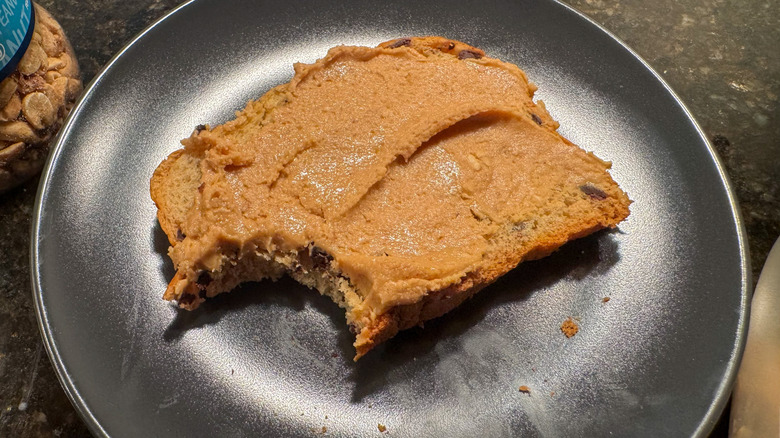
Peanut butter is incredibly versatile. Spread it on your toast for a nutrient-dense breakfast, use it as a sweet sandwich filling, or mix it with ingredients like soy sauce and sesame oil for a flavorful salad dressing or meat marinade. You can also incorporate it into your baked goods, like peanut butter cookies, or try your hand at making homemade peanut butter cups.