

The Seafood Delicacy You Should Skip The Next Time You Visit A Buffet
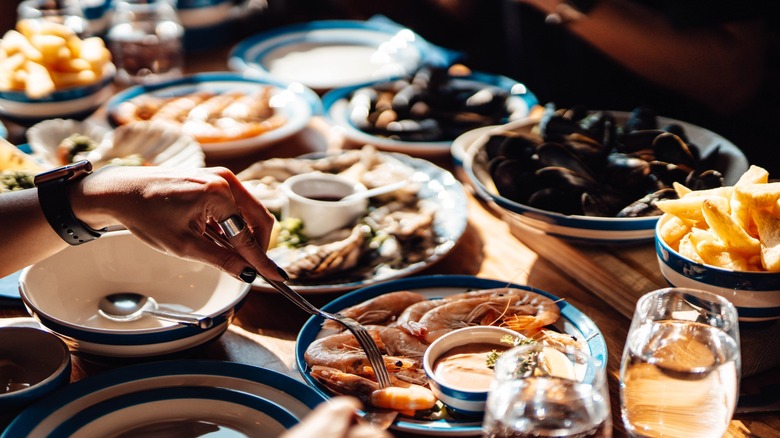
Going to an all-you-can-eat buffet seems like a genius way to access heaps of dishes that you might otherwise not make for yourself –- at least not on a regular basis. Among those trays of food you'll find something for just about any appetite, but that doesn't mean you should take just any old dish from the buffet array. And according to an expert in the field of food safety, you might be better off leaving those succulent-looking crab legs right where you found them.
Campbell Mitchell is the founder of Quest4Food, a food quality and safety consulting company. Recently, he spoke with Chowhound regarding any hang-ups he might have with buffet options, and he said to watch out for seafood as "[it] is a high-risk category due to how quickly it can spoil." Getting more specific regarding crab legs, he stated that "crab legs may be safe if they're chilled on ice, replenished frequently, and served with proper utensils," but noted that it can be hard to know for absolute certainty that this is the case.
The issue of freshness can be a concern at some buffets, and may be one of the secrets that your buffet doesn't want you to know. But if you know what to look for –- "clean tongs, visible ice beds, and vibrant color," per Mitchell –- then you can crack those crab legs as you please. Otherwise, just save the craving for the next time you steam crab legs at home.
What else should you avoid at a buffet?
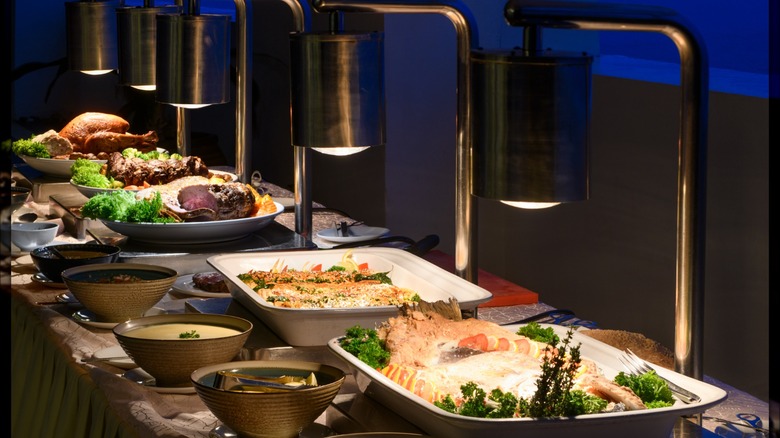
Listen, we're not here to try to suck the enjoyment out of your buffet experience by telling you that you can't have half of the dishes on display. Rather, it's in your best interest to learn which foods might be more susceptible to contamination and general uncleanliness so you can make sure that dinner experience doesn't have long term consequences (besides maybe some post-eating sleepiness). Crab legs, and cold seafood more broadly, represents just one of the foods that you should steer clear of at a buffet, but Campbell Mitchell makes it quite apparent that there are more foods you should be wary of too.
When asked if he has any broad categories of items he's cautious of at buffets, Mitchell responded, "I usually steer clear of high-risk items like egg-based sauces, creamy salads, or meats that aren't clearly held at safe temperatures. These foods, if left in the 'danger zone' (between 40 degrees Fahrenheit and 140 degrees Fahrenheit), can easily harbor pathogens like Salmonella and Listeria." He added that "dense items like potatoes or stuffing can cool unevenly and may not stay hot enough to be safe, especially later in service" –- a useful insight to keep in mind if you're dining outside of peak hours. All in all, though, common sense prevails, and you'll do well to "avoid buffets where food appears congealed, where utensils are dirty or misused, or where sneeze guards are absent," said Mitchell. Do this, and your buffet experience should go just fine.