

Before You Cook With IPA Beer, Make Sure You Know This
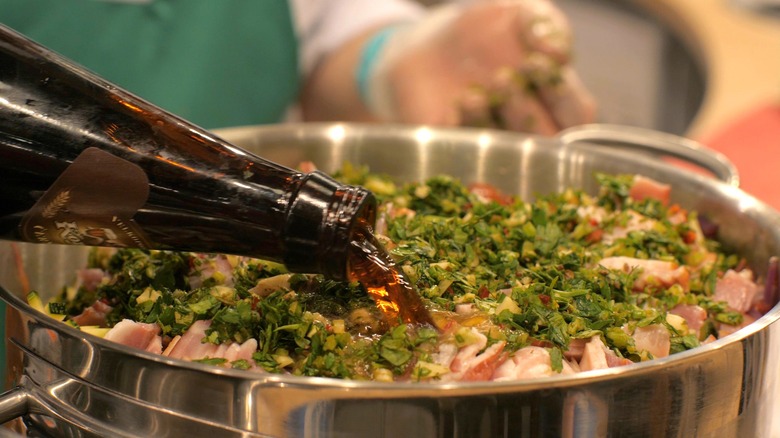
Cooking with beer is a bit of an art form; there's a lot of complex flavors at play, so a small mistake can completely change your recipe's results. Thankfully, there's no shortage of pro-tips on cooking with beer, even for trickier brews like India Pale Ales, which are known for their bitterness. So it pays to know a few things before working with an IPA — or, according to Peter Engelhardt, executive chef at Founders Brewing Co. in Grand Rapids, Michigan, it's all about avoiding one major mistake.
In an exclusive chat with Chowhound, Engelhardt advised against making reductions with the brew. "The trick is to avoid reducing them, as that can intensify the bitterness of the beer. While we love this flavor profile in the beer itself, sometimes it can be a bit overpowering when reduced into a sauce, for example," he explained.
Engelhardt shared that he prefers to braise or slow roast whenever he cooks with IPAs, both of which minimize any reduction of the beer. The hops, which create those bitter flavors in the beer, can help cut the richness of fatty meat cuts, so braising pork shoulders or briskets in IPAs can help balance out the flavor profile. He's also seen success with poaching seafood, so feel free to break out the steamer and experiment with shrimp, trout, and other hearty fish.
How to pick the right IPA for cooking
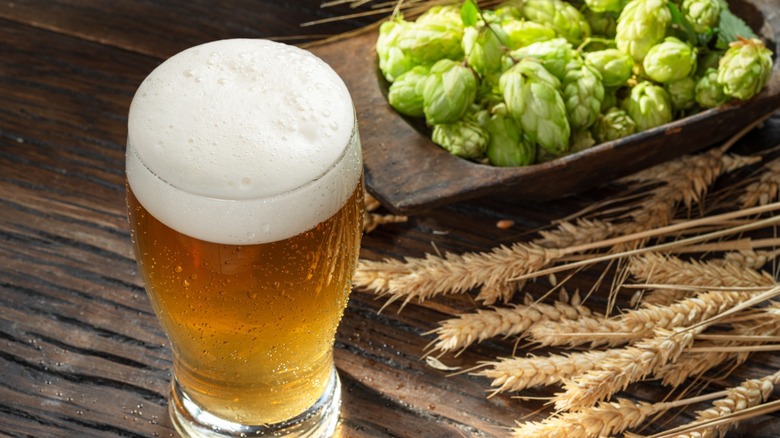
IPAs are popular partially because there are so many distinct flavor profiles within the style. Chef Peter Engelhardt, for example, uses Founders' Mortal Bloom hazy IPA to add floral and citrus notes to his poached shrimp. To pick the right IPA for your recipe, you'll need to think about how all these flavors complement the dish.
The sweet, bready notes that come from the malt and barley go well with Mexican and Southwestern dishes, so the beer would work excellently in a chili. To add a touch of zest, look for one that uses citra hops in its brew; this particular variety has a nice lemony flavor to it. If you're making spicy wings and need just the right brew for a beer cheese sauce, try a hop-forward double or imperial IPA — the bitterness helps balance out the heat, so you can push for bolder flavors with the protein.
If you're concerned about bitterness, you might also want to check the beer's IBUs. The International Bitterness Unit is a measure that gives you an idea of how bitter the beer is; for comparison, a lager like Budweiser has an IBU of 12, while an IPA falls around the 50 to 70 range. While the actual bitterness you taste also depends on how the hops are balanced by all the other ingredients, the IBU comes in handy as a baseline estimate. If you want to tone it down, you try a hazy IPA instead of the traditional type; the difference between the two in how they use hops gives hazy IPAs an IBU range of 30 to 50.