

The Necessary First Step At A Buffet That You Should Do Before You Even Grab A Plate
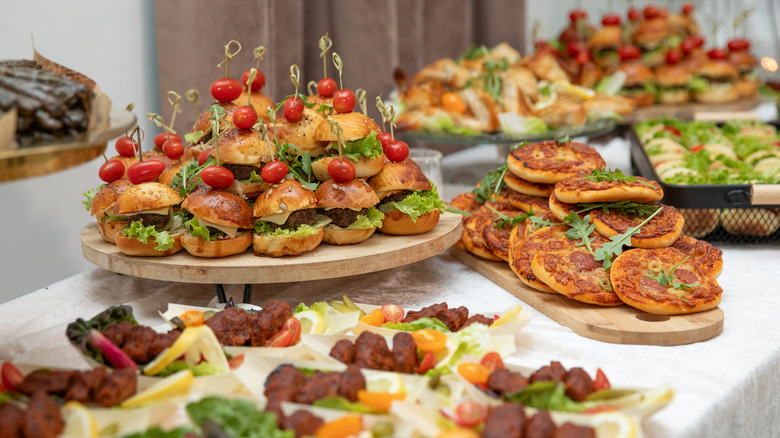
Buffets are a hit for a reason: they're cost-effective, offer a ton of variety, and allow you to keep eating until you're fully satisfied. Whether you're walking into a wedding reception with pristine sterling silver buffet servers, eyeing up the food on the super-long table at a work event, or are headed to a new buffet-style restaurant for the first time, having a ton of food options can be overwhelming. Buffets give you the chance to sample a lot of flavors, and understanding how to do it right — and safely — can help you make the most of your experience. Campbell Mitchell, the founder of food quality and sustainability company Quest4Food, talked exclusively with Chowhound about the best way to approach a buffet-style dining experience.
Mitchell recommends taking some time to fully scope out the scene before you even pick up your plate and take your spot in the buffet line. "Observe food conditions, see what's fresh, and watch how the staff maintain the station," he recommends. "This sets you up to make informed choices and avoid items that look like they've been sitting too long." While most buffet foods are generally safe, there are buffet items you typically want to steer clear of, including crab legs, fondue, and dishes loaded with mayonnaise. Fried foods are also one of the worst buffet options, as their flavors start to go off after sitting a while.
How to make the most out of every buffet dining experience
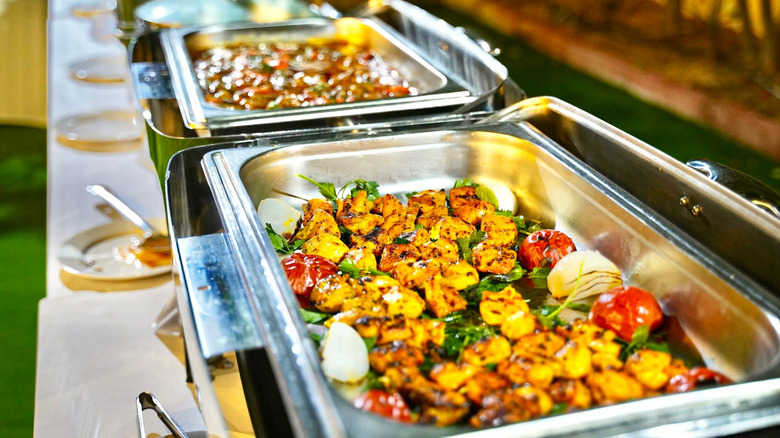
Believe it or not, one of the biggest all-you-can-eat buffet secrets is that restaurant or venue may be using psychological plays to get you to fill up on cheaper items, like rice, bread, and potatoes. To get your hands on the stuff that gives you more bang for your buck, make sure you're saving room on your plate for the pricier items that are typically placed at the middle or end of the buffet line — think shrimp, steak, and the like.
Being mindful of your portions when you're at your favorite buffet-style restaurant can help you reduce food waste. "Serve yourself in small amounts to begin with — you can always go back for more," says Campbell Mitchell. Unsure about whether you'll like an item? Mitchell recommends putting a bit on your plate and coming back for more if you're a fan (with a clean plate, of course). "Sampling also reduces food waste and prevents you from overloading with items you may not enjoy," he says.