

Gochujang Vs Gochugaru: What's The Difference Between The 2 Korean Spices?
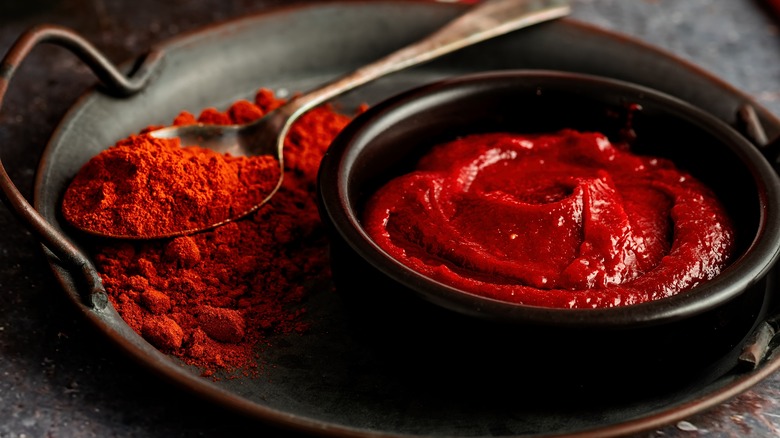
Whether you're a fan of Korea's variety of flavorful dishes or are just looking to discover new foods, if you're at all tuned into Korean cuisine, chances are you've come across two ingredients that are used quite frequently in many dishes: gochujang and gochugaru. So, what are these coveted staples that are prized in every Korean household, and are now also gaining recognition across the world? Both gochujang and gochugaru are derived from Korean red chili peppers called taeyangcho, and impart an eye-catching fiery red hue to any recipe that you use them in. That's likely as far as their similarities go, as you usually cannot replace one with the other, given their distinct flavors, culinary properties, and applications.
For starters, gochujang is a spicy, fermented pepper paste that develops a subtle sweetness to complement its natural spice during the fermentation process. Gochugaru, on the other hand, is a red pepper powder or flake, and you can typically find both forms at Korean markets. It is the foundational ingredient for making gochujang, which also requires fermented soybean powder, glutinous rice, and a few other ingredients to create a rich, umami-packed paste. You can find varying spice levels of gochujang, which ultimately depend on the amount of chili pepper seeds that are ground into the type of gochugaru used. Gochugaru itself has subtle fruity and smoky notes that add a nice warmth to any dish, but it's less complex than the fermented gochujang. While both gochujang and gochugaru are prized ingredients in the Korean cuisine, their potential is being recognized and celebrated as more creative recipe developers explore ways to showcase these condiments in a multitude of ingenious ways.
How to use gochujang and gochugaru in your cooking
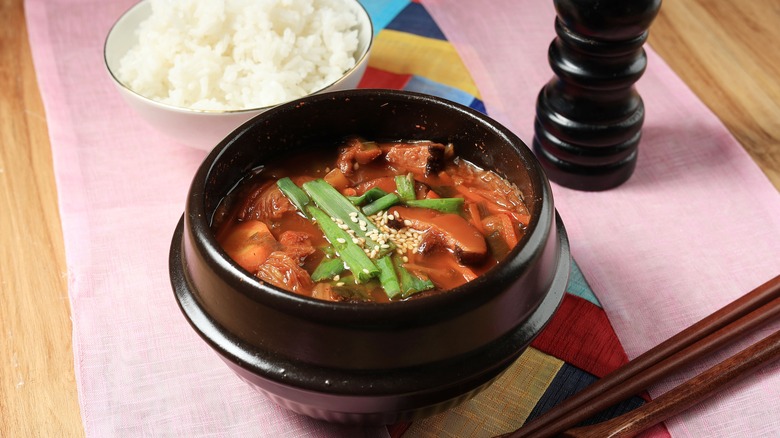
Gochujang and gochugaru can both elevate your usual recipes and inspire you to try something new. In some traditional recipes like kimchi jiggae, which is a Korean stew that is beloved by Top Chef winner chef Kristen Kish, both ingredients work in tandem to create a masterful, comforting dish. Gochugaru comes through with some smoky spice action, and gochujang imparts its signature tang and sweetness that complements its heat.
The two spices can also shine on their own, but their obvious textural difference (gochujang is a paste while gochugaru comes in a powder or flake form) means there's a difference in how they are used. For instance, gochujang is the cornerstone condiment to make the fiery red sauce that's often served with a traditional Korean rice dish called bibimbap, which translates to mixed rice, and a cold, spicy noodle dish called bibim-guksu, meaning mixed noodle. Of course, if you desire extra heat, you could sprinkle some gochugaru onto the sauce. On the other hand, gochugaru is a key ingredient for making the fermentation mixture for spicy kimchi varieties.
Beyond the traditional ways to savor both gochujang and gochugaru, they also breathe new life into so many dishes, like pastas, curries, and much more. For example, you can serve a taste of Korea and add a spicy kick to an Alfredo pasta dish by stirring in gochujang into your sauce. Or if you're bored with the usual serving of salted fries, a sprinkle of gochugaru might be exactly the Korean seasoning your mundane fries were missing. From discovering traditional recipes to developing unique fusion foods, both gochujang and gochugaru open you up to a world of mouthwatering possibilities.