

The Absolute Best Charcoal For Grilling
We may receive a commission on purchases made from links.
Before you take a stand in the great charcoal versus gas grill debate, it's important to ask yourself: Do you really know everything you need to about charcoal? How it's made, which grills it is appropriate for, how to light it the best way, and how it impacts the flavor of your food? If you're like many amateur backyard barbecuers (*raises hand*), then chances are you think of charcoal as a material to be used when needed and dismissed from the mind when not. However, that could leave your food wanting, especially if you know nothing about the best charcoal for grilling.
"I have overcooked, undercooked, and pretty much destroyed every piece of meat (and quite a few vegetables) as I learned how to grill the hard way ... with trial and error," admits Scott Thomas, owner of The Grillin' Fools. Echoing many of our stories, he'd never grilled growing up because his dad took care of everything, and it was eye-opening to take it up for the first time as a young adult. "The running joke in my family is I was dropped off at college with a grill and a suitcase," he says. For many of us, even that probably seems pretty young, and we've been flailing around doing our best with charcoal ever since.
Time to educate ourselves. "A good charcoal should light easily, produce a clean, smokeless burn and leave behind minimal ash," explains Gareth Lloyd Jones, waste management expert at U.K. waste removal company, HIPPO. That said, which types constitute "a good charcoal"? First, you need a crash course on what charcoal is and how to choose it.
What is charcoal?
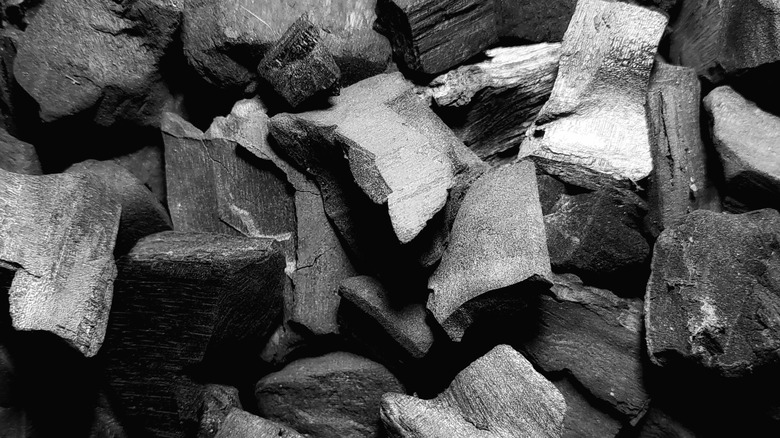
First and foremost, you need a basic scientific understanding of what the magical ingredient charcoal actually is. Essentially, says Jess Pryles, the author and "hardcore carnivore" behind Jess Pryles, it's wood that has been heated via a process called pyrolysis. "This restricts airflow, so the material doesn't completely burn," she says. When you heat plain and unadulterated wood this way, you get one product. When you add ingredients, you get a similar but not identical one. "Briquets have additional ingredients added for functionality and performance, and so they are more consistent in size," she explains.
A critical component in making charcoal is to restrict the oxygen in the environment. This leaves mostly pure carbon behind, explains Dennis Littley, professional chef at Ask Chef Dennis. "The fuel is concentrated by this, so it burns hotter and cleaner than raw wood," he explains. "This is what gives your grilled food its distinctive smoky flavor." Typically, says Rae Robertson, chef de cuisine at The Darling Oyster Bar, the wood has to be heated to at least 1,000 degrees Fahrenheit in order for this process to take place.
It is also what makes charcoal such a dense fuel source, ensuring it heats evenly, retains heat longer than wood, and burns hot without making flames (or, in grease-rich environments, excessive flames).
Why is it good for grilling?
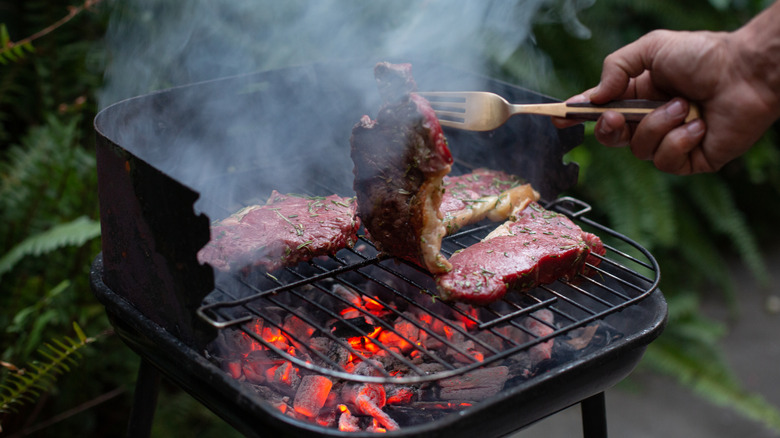
The best charcoal for grilling depends on exactly what you're looking for in a fuel, but in general, it offers a lot of reliability and flavor that gas can't give you and wood is too finicky to provide. "Good charcoal lights easily, burns hot and steady, and leaves behind very little ash," says David Figueroa, certified grillmaster and president of Melinda's Foods. That keeps your food and barbecue cleaner. Plus, he says, charcoal imparts a balanced smoky flavor, with no chemical aftertaste. "For me, the hallmark of great charcoal is that it enhances meat, not overpowers it, allowing spice rubs, marinades, and sauces to shine."
The process of transforming wood to charcoal also pulls moisture and impurities from the wood, Scott Thomas says, making for a cleaner fuel source. "For pitmasters, it's the bridge between firewood and the perfect sear, a controlled heat source with that unmistakable smoky kiss," says Figueroa.
It's important you understand the proper timing of coals, though, even if you buy the absolute best charcoal for grilling. You won't get good results if you don't first wait for them to get white hot, then spread them evenly beneath your barbecue, creating hot or cool spots as demanded by your recipe. To get the most out of charcoal, you must also know your cooking style. "I keep both lump and briquettes on hand, especially for the busier summer period," Dennis Littley says: lump for fast grilling and briquettes for long cooks. "Specialty charcoal like binchotan or coconut can be fun, but you don't need them to make great food," he says.
What should you know before choosing charcoal?
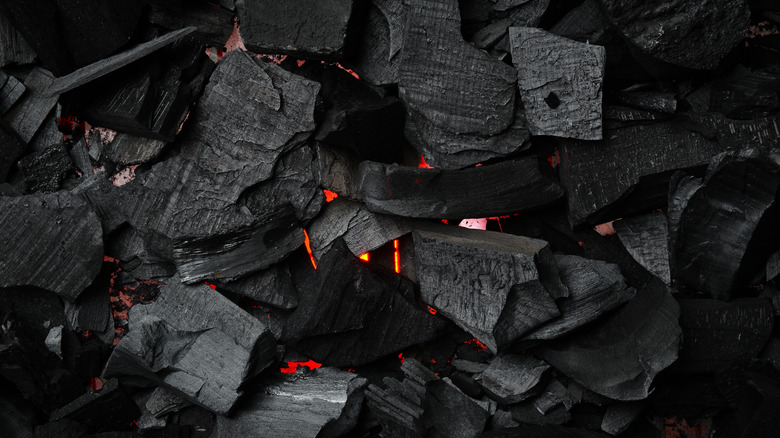
Before you consider your options vis-à-vis the best charcoal for grilling, there are a few things you ought to know. First, Scott Thomas says, the best charcoal has nothing added. It's made from pure wood, heat added, without additives; this is known as "lump" charcoal. "The problem comes when companies take leftover product like sawdust or wood pulp, and compress it together with petroleum binder to form 'briquettes.'" These contain chemicals, he says, which give your food off flavors.
Of course, not everyone agrees that briquettes are a bad idea. For her part, Jess Pryles prefers a product that lights easily, doesn't smoke or pop too much, and provides consistent heat. That way, she says, you know how to manage the cooking process every time. "For that exact reason, I prefer using Kingsford briquets. It's reliable and consistent, with even longer-lasting heat. Cooking over lump for me is like cooking in an oven with hot spots — it creates unnecessary challenges."
Rather than going too far down the lump-versus-briquette rabbit hole, though, it's better to match your charcoal to your goal. "The most important thing to remember is that not all charcoal burns and works the same, and your choice should always match what you're cooking," Dennis Littley says. "Some types burn hot and fast, others low and steady." Gareth Lloyd Jones agrees, stating that while briquettes are great for burgers or sausages, you'll probably want lump or specialty charcoal for slow-cooked ribs or brisket.
Lump charcoal
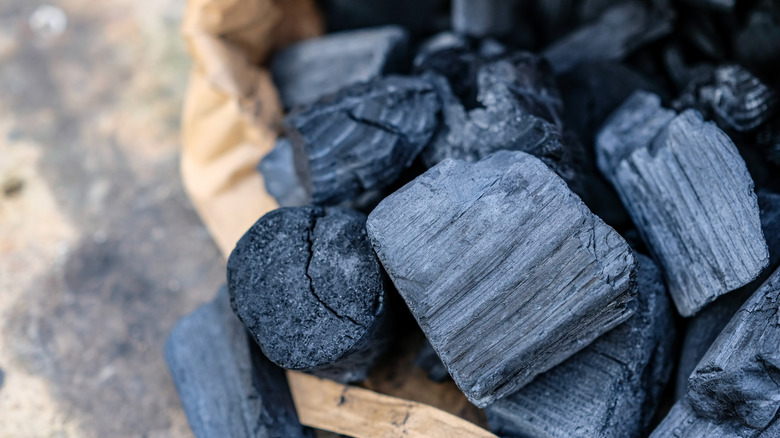
There are all kinds of ways to light a charcoal grill, from using a chimney starter to trying Alton Brown's simple hack using vegetable oil and newspaper. However you light your charcoal, however, you must first ask yourself: What's the best charcoal for grilling in the first place? That's where the first choice of many experts — lump — comes in.
"Lump charcoal is made from pure burnt wood, contains irregular pieces, and is ideal for short, high-temp cooking due to its fast-burning high heat," Rae Robertson says. For instance, she says, it's great for when you're grilling oysters, because the lump gives you high-heat control as well as imparting a pure, smoky flavor that enhances the salty taste of seafood. That high heat is necessary when cooking delicate proteins, too, because it gets the job done without causing seafood to lose moisture. For this same reason, lump charcoal is a popular choice for searing stakes, says Gareth Lloyd Jones. For any protein or veggie that benefits from searing heat and a short cooking time, it's a great choice. "It also leaves very little ash, making cleanup easier," Jones adds.
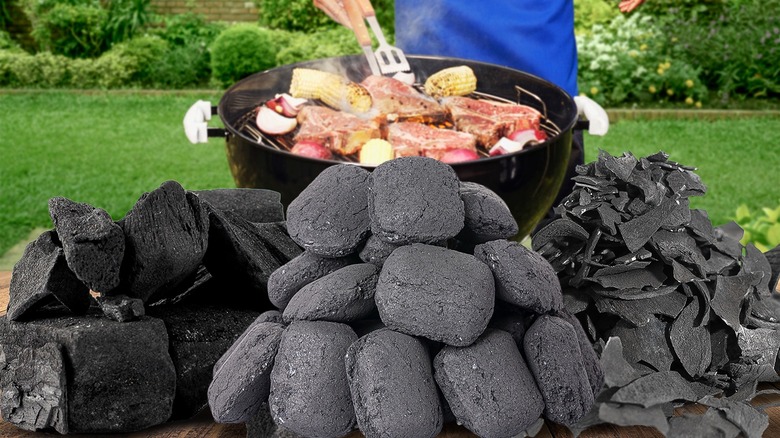
When looking for lump charcoal, seek out products that actually look like wood. The pieces shouldn't have a uniform shape, Scott Thomas says, but rather should come in larger and smaller sizes. Although this can create hot spots and some unevenness when cooking, it's how you know you're getting the real deal. Jumbo Lump Grilling Charcoal is one such option.
Briquettes
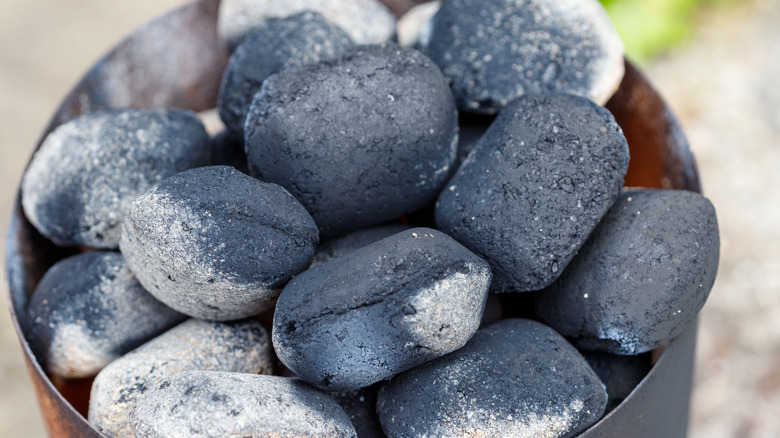
Briquettes are another of the best charcoal types for grilling, but what are they? "Briquettes are compressed carbon with binders and sometimes additives for easier lighting," David Figueroa says. Their processing results in a condensed pillow shape, which most of us recognize from childhood barbecues in the backyard.
"They burn longer and more evenly than lump, making them ideal for low-and-slow cooks. Purists knock them, but for predictability, they make sense." For instance, he says, briquettes are magical when you're using the snake method, which requires lining the outside of a grill with several layers of overlapping charcoal briquettes, then lighting them at one end. Slowly, the coals light one another along the snake, which results in a steady heat over hours of time, without the need to refuel. This is a good method for smoking meats, for example, or any kind of cooking where you want long-lasting heat without hot spots.
The downsides to briquettes include a bit more ash, as well as the fear of chemicals such as petroleum. If you're worried about that, you can let the briquettes burn down to coals before adding any food. "This cooks all that petroleum out of the briquettes and thus doesn't impart that chemical flavor into the meat," Scott Thomas says. "This may result in a hotter fire than needed for a low-and-slow smoke sesh. There are also hardwood-only briquettes with no petroleum-based binders, which are much preferred over traditional briquettes." These are more eco-friendly as well. If you want something you can order online, you can try Organic Charcoal Briquettes by Olivette or Kingsford Original Charcoal Briquettes, both of which have good reviews.
Hardwood charcoal
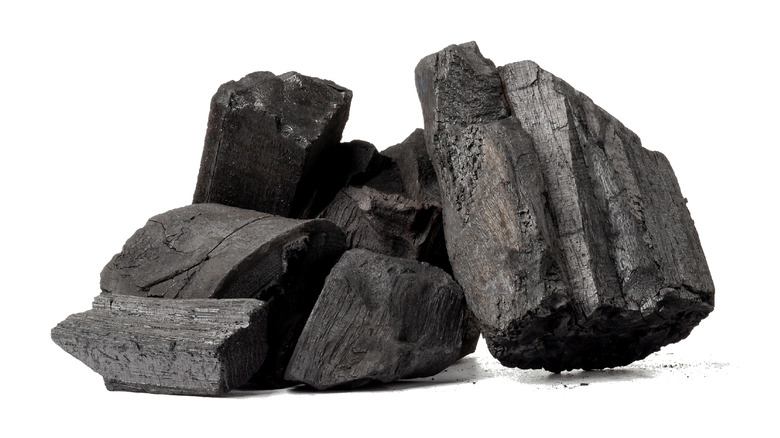
All hardwood charcoal is lump charcoal, but not all lump charcoal is hardwood. "Hardwood charcoal is similar to lump but made from denser woods like oak or hickory," Dennis Littley says. "It burns longer and adds a stronger woodsmoke flavor, which makes it great for red meats or ribs." Because it is hardwood, it requires a bit more patience to light, he says. "But it's worth it when you want that distinct flavor."
In terms of why you'd buy it, David Figueroa says, it offers some of the benefits of both lump charcoal and briquettes, made from carbonized chunks of specific hardwoods like oak, hickory, or mesquite. "You get distinct flavor nuances depending on the species, which can be a great tool for layering smoke on different proteins," he explains. Because it's completely free of chemical additives, Gareth Lloyd Jones adds, it's a good choice for those who worry about food safety and the environment. Try Fogo All-Natural Large Sized Hardwood Lump Charcoal if you want to give it a go.
Binchotan
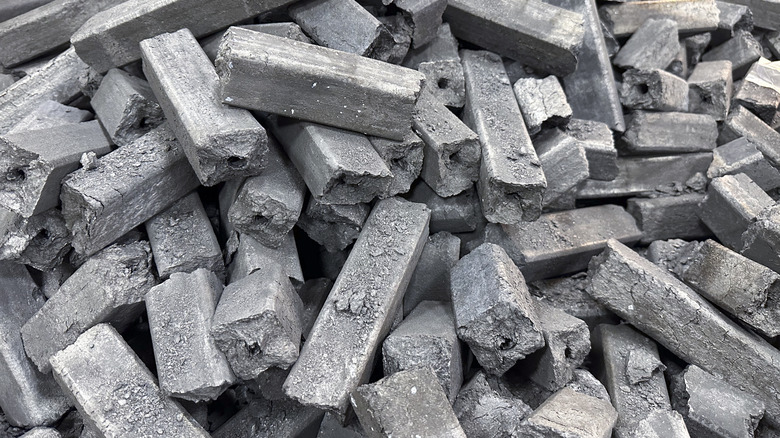
If you haven't heard of binchotan, it's time you did. Some sources consider this oak-derived charcoal the best charcoal for grilling, while others find it to be a nice addition to the repertoire. It is, according to Jess Pryles, a Japanese style of lump charcoal made from smaller branches for use in yakitori-style grills, and its subtlety is its main selling point.
"Binchotan is Japanese white charcoal, prized for its purity and incredible burn time," David Figueroa says. "It burns so cleanly it's nearly smokeless, which makes it perfect for yakitori or delicate grilling where you don't want heavy smoke." It's expensive, he says, because the price correlates with the purity. According to Scott Thomas, while regular lump charcoal is about 75% carbon, binchotan is roughly 95%, which is about as pure as it gets. "It will not pass on any flavor to the meat," he says. "Use chunks of smoke wood to do that. That's the job of the smoke wood, not the charcoal."
Binchotan also lasts for hours, burning cleanly without smoke or ash, and is easily controlled so that you can avoid hot spots and burning. It does take a little time to get used to cooking with it, however, says Gareth Lloyd Jones, so take it slow. If you're looking to experiment, either Binchotan Charcoal for Japanese BBQ or Premium Binchotan All-Natural Hardwood Charcoal are good choices.
Coconut shell charcoal
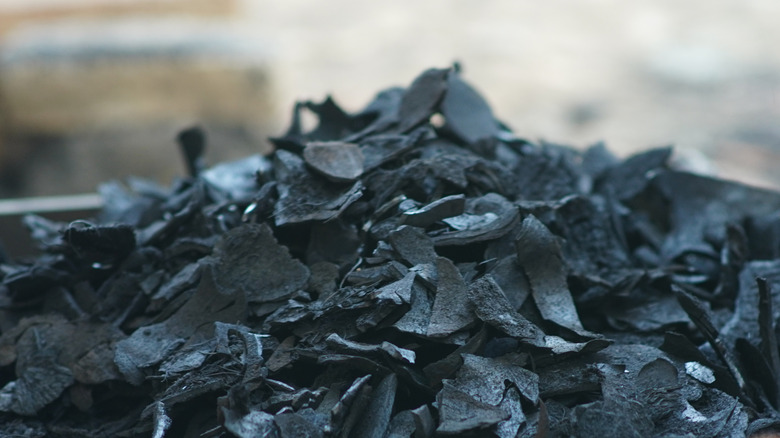
Last but not least, if you want to go the recyclable route, then you might consider coconut shell products, such as Coconut Charcoal BBQ Briquettes, the best charcoal for grilling. "This gem is eco-friendly, favored for its high carbon content, producing a longer and hotter burn," Rae Robertson says. "Also, it's low ash content reduces clean up."
The environmental claims are the main thing in its favor. "Being based on leftovers from other products and naturally occurring in nature, it is better for the environment than other more traditional charcoal products," Scott Thomas says. Plus, Dennis Littley adds, it offers even burning, steady heat, and not much smoke. Although the flavor is mostly neutral, David Figueroa adds, it does impart a bit of sweetness to your grilled items.
The only downside, Jess Pryles says, is that it's underwhelming when it comes to heat output. For that reason, she finds it difficult to use and doesn't care for it when chasing her carnivorous pursuits. If you want to try it anyway, for the sake of the environment, plan to cook something you know well already so that you can put your focus on the charcoal, not the food.