

Timing Is Everything When Adding Potatoes To Soup
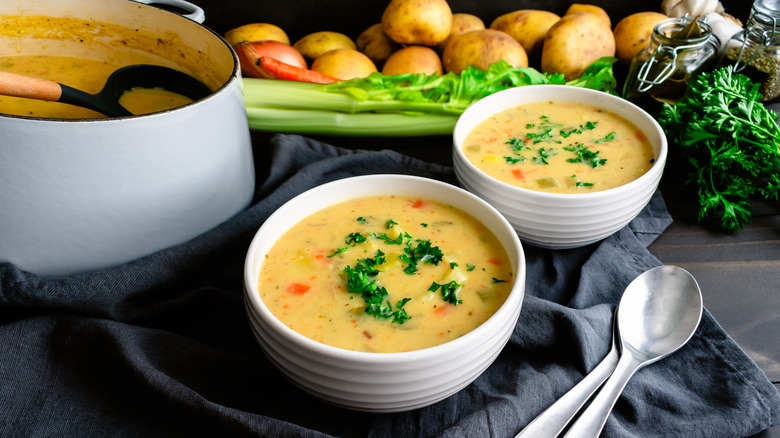
As we enter the season of warm, cozy bowls of soup, you might be looking back on potato soups of your past and remembering a disappointing, mushy experience. Be it a luxuriously creamy potato and leek soup or a colorful, herbaceous tomato soup packed with a variety of vegetables, the timing of when you add the vegetables is important for the optimum textural experience. Avoiding overcooking your vegetables is the ultimate solution to preventing mushy veggies in your soup, and to ensure that your potato soup recipes are as stellar as they can be, Chowhound spoke to chef Kieron Hales, the managing partner and head chef of Zingerman's Cornman Farms.
"Don't add them too early," he says. Since potatoes typically take 15 to 25 minutes to become fork-tender, Hales suggests adding them around halfway through cooking. "Add them too late," he adds, "and you'll be left waiting on hard, chalky chunks. Timing them right means they'll be perfectly tender just as the soup is finished."
Hales also advises keeping the soup at a steady simmer. If the potatoes are subjected to an aggressive boil, their cell walls rupture easily, releasing starches that not only thicken up the soup, but also make the vegetable mushy. Potato type is key, too. Hales says to avoid fluffy baking potatoes and instead opt for lower-starch, all-purpose or waxy varieties that hold their shape well — think fingerlings, Red Bliss, or his favorite: Yukon Gold. These, he says, "strike a nice balance: creamy inside, but sturdy enough to survive a simmer." And, of course, cut them evenly so they cook at the same rate.
Is it possible to fix the consistency of your potato soup?
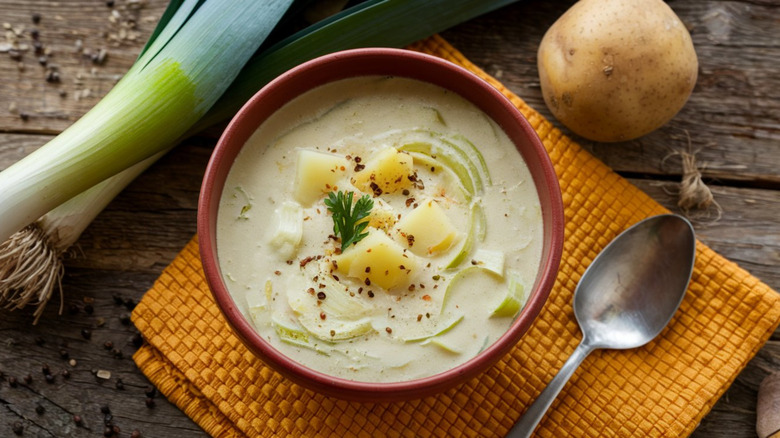
If you've been drawn away from the stove for something urgent, only to return to a pot of potato soup where the once al dente pieces have disintegrated into a mealy mush, there are ways to salvage your recipe and maybe even create something new that you would enjoy on the regular. You've already nailed the flavor of the soup, and all that's left is to reach for some reinforcements for a quick and easy fix in the texture department. When we asked chef Kieron Hales what could be done to course-correct if the potatoes start to fall apart in the soup, his recommended step one is an adage from "Hitchhiker's Guide to the Galaxy": Don't panic.
One option, Hales says, is to make an intentionally creamy dish. Bring out the blender and purée some or all of the soup. The result is a silky-smooth broth that becomes a hearty creation from a now-welcome mistake. If you still desire a textural bite, Hales suggests adding in some freshly cut vegetables. You can also keep things interesting by incorporating grains like barley, or legumes like beans or lentils to bulk it up. Fresh corn imparts a chowder-like feel, and if you fancy some extra crunch, crispy toppings like French-fried onions, croutons, roasted chickpeas, or even crispy bits of potato skin could do the trick. Hacks like these can inspire you to transform a momentary mishap into an ingenious culinary creation.