

10 Mistakes To Avoid When Making No-Bake Cookies
We may receive a commission on purchases made from links.
Whether you've run out of time and need to whip up a dessert, or the day is especially hot and you can't stand the idea of turning on the oven, you've got a range of no-bake dessert options from which to draw. (We see you, store-bought cookie icebox cake.) But what about when you want the perfect mix of candy and delicious cookies? Well, that's where the no-bake cookie comes in.
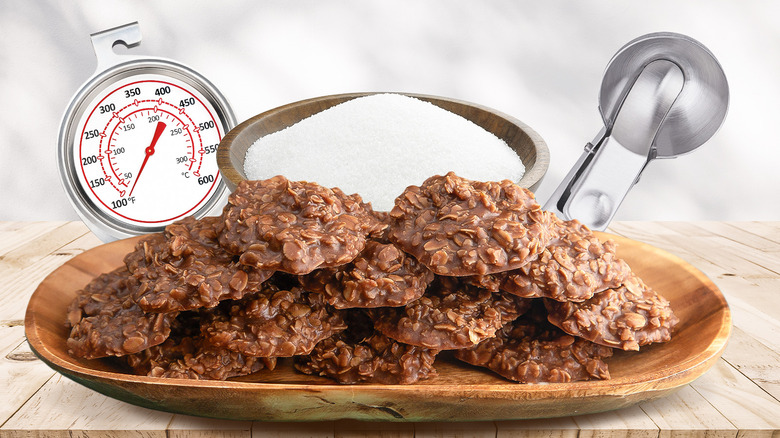
"No-bake cookies are really just candy disguised as cookies," says Rachel Farnsworth, recipe developer and founder of The Stay at Home Chef. They usually consist of oats, peanut butter, chocolate, and a sugar mixture, along with toppings such as crumbled nuts, sprinkles, or coconut flakes. "No-bake cookies are a perfect 'starter cookie' because they come together fast and use pantry staples. You can even freeze them for up to three months, so you can make a big batch and have treats ready to go." What's not to love? Other than the fact that they can be kind of tricky, of course.
"No-bake cookies may sound easy to some just from their name, but what people don't understand is that there is a science behind making them," explains Rena Awada, the recipe guru behind Healthy Fitness Meals. Ingredients ratio, temperature, and timing all play key roles in whether your no-bake cookies are a delicious, chewy, candied treat ... or a total flop. Accordingly, here are 10 mistakes to avoid when making no-bake cookies.
1. Substituting ingredients
It's important to note that while "no-bake cookies" might seem like a catchall description, and there are many recipes that result in cookie-like products and don't require an oven, no-bake cookies are actually a specific breed of chocolate candy/cookie hybrid. Therefore, when discussing mistakes to avoid when making them, it's important to understand that you really do need to use the right ingredients.
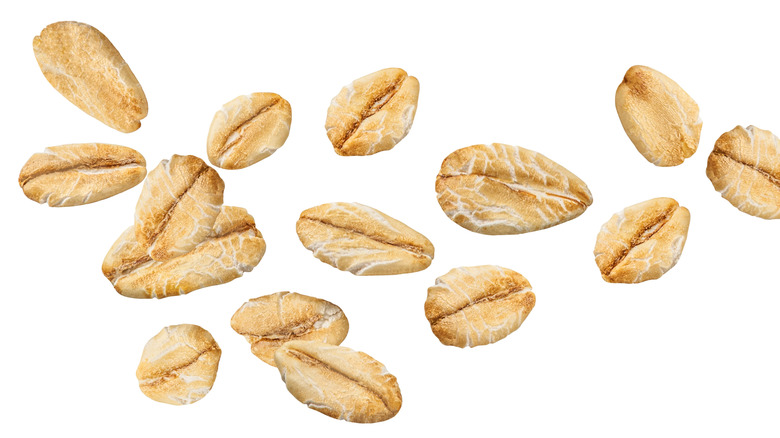
"Swapping ingredients in no-bake cookies isn't as forgiving as in baked recipes," says Grace Vallo, food blogger and founder of Tastefully Grace. "For example, trading butter for margarine, or quick oats for old-fashioned oats, changes texture and moisture absorption. Even replacing peanut butter brands can shift how the cookies set."
That's not to say you can't sub out anything at all, but you need to be careful. "Some ingredient substitutions can be okay," says Trung Vu, chef-instructor of Pastry & Baking Arts at The Institute of Culinary Education's New York City campus. For instance, she says you can swap out one nut variety for another if you have allergy concerns or taste preferences. But others shouldn't be replaced, no matter what. "For instance, sugar substitutes such as Splenda or Equal may taste sweet like sugar but will not set the way sugar does when cooked. Even reducing the amount of sugar can cause unexpected results, so I would not attempt this with a recipe I've never made before." If you want to experiment, of course, that's your right, but you may need to do some serious trial and error before you land on a substitution that actually works. Better to trust the recipe.
2. Not gathering tools and ingredients ahead of time
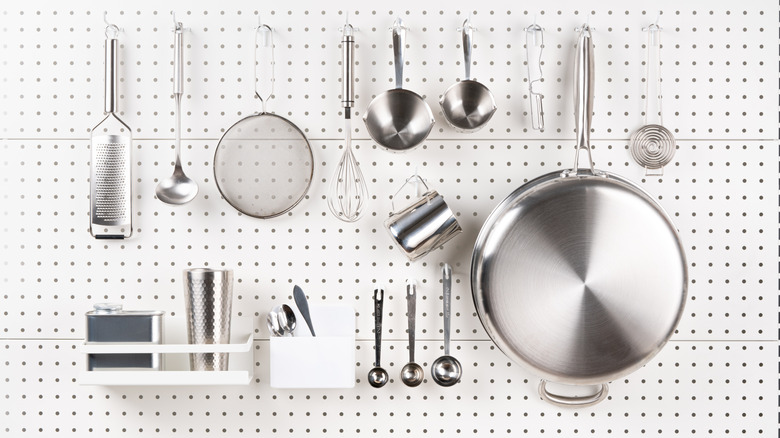
It might seem like an optional task, but laying out your tools and ingredients ahead of time is anything but. "One of the first terms you'll hear if you go to culinary school, or work in professional pastry or culinary, is 'mise en place,' a French term meaning 'everything in its place,'" says Trina DeKett, operations and creative specialist of BaKIT Box. "By setting your workspace up with correctly measured ingredients, as well as all tools needed, you'll be able to not only keep your space cleaner as you work, but your timing will improve as well." This, she says, is extremely important in pastry.
In order to adhere to the spirit of mise en place, Trung Vu says you should wash and dry anything you will need while baking, then place it in your immediate vicinity. For this recipe, you will at least need a saucepan, thermometer, ladle or ice cream scoop for portioning cookies, wax paper, cookie sheets, and all of the ingredients, including optional toppings. These need to be ready when the time comes to use them. "Once the sugar starts cooking, you won't be able to stop the process," she explains. Similarly, "You won't be able to stop and toast nuts once the sugar has reached the target temperature." Leaving this step to chance is, therefore, one of the biggest mistakes to avoid when making no-bake cookies.
Don't have everything you need? Check out tools such as this cookie scoop set, a Sensarte nonstick saucepan with lid, or parchment paper sheets, all available online.
3. Getting the wet-to-dry ratio wrong
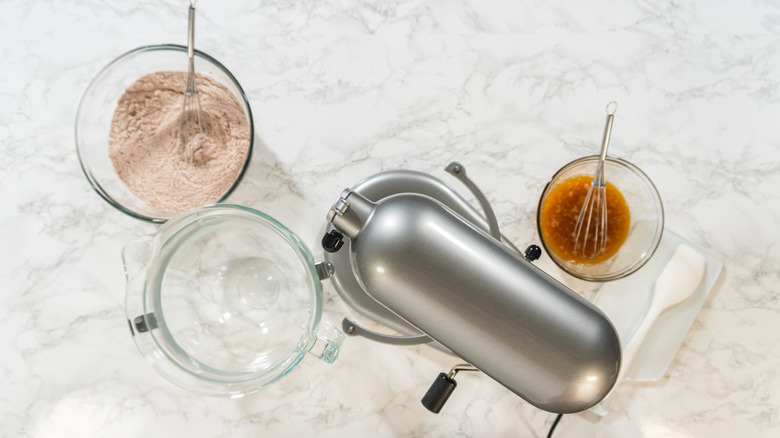
Another mistake to avoid when making no-bake cookies is messing with the wet-to-dry ratio. Because no-bake cookies are more akin to a candy than a baked good, the chemistry is even more exacting than something that goes in the oven. "Too much liquid leaves cookies sticky and gooey, while too little results in dry, crumbly pucks," says Grace Vallo. "Since oats, cocoa, and nut butters all vary slightly by brand, measuring carefully helps ensure consistency. If your cookies didn't set properly, the culprit is often a ratio misstep."
How can you avoid such missteps, then? Trina DeKett recommends a kitchen scale, such as this Amazon Basics digital kitchen scale with LCD display. "If you do not have one, don't worry," she says. "Just ensure you are using volume measurements for the wet ingredients." Another way to avoid trouble is to steer clear of eyeballing. While it might be tempting to freehand the ingredients or use an extra splash of milk where it looks to be needed, Rena Awada says, don't: "The ratio of butter, milk, and sugar should be exact."
Because making no-bake cookies involves candy-making skills, practice is important. "Once you get the hang of the sugar stage and ratios, they become one of the quickest, most satisfying treats in your repertoire...no oven required!" Vallo says.
4. Overcooking or undercooking the sugar mixture
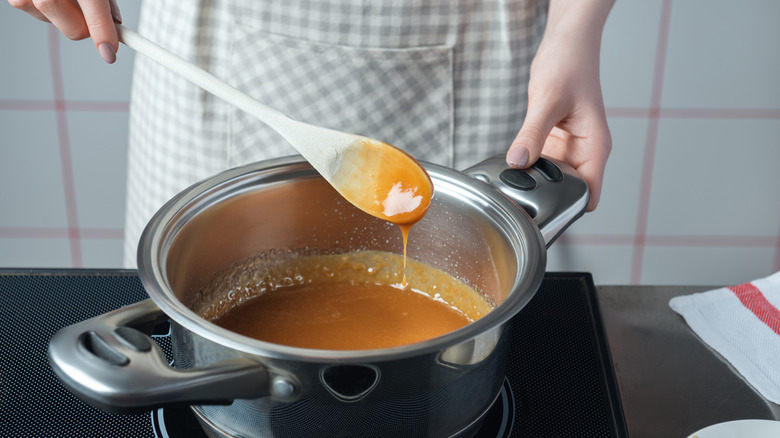
Perhaps the most common no-bake cookie mistake you'll face is overboiling or underboiling your sugar mixture. This mixture usually consists of sugar, water, a liquid or inverted syrup (think corn syrup), dairy, and chocolate, Trung Vu says. It must cook together for a specific amount of time, and to a specific temperature, in order to set right. (Remember, we're talking about candy here.)
"When we overboil, too much moisture evaporates, leaving us with dry and crumbly cookies," Trina DeKett explains. "On the other hand, undercooking this mixture can lead to no-bake cookies never fully setting." What you want, says Rachel Farnsworth, is a glossy, thick mixture that holds its shape when dropped ... and that won't happen unless you get the consistency of your sugar mixture just right, usually about 1½ minutes, Rena Awada says.
If you want to avoid both sad puddles and brittle lumps, Grace Vallo recommends sticking to a specific recipe. By doing so, you'll avoid the temptation to take a little from here, a little from there, because the exact timing depends on the exact ingredients (and even brands) used in any given recipe. "Because there's no baking cushion to correct mistakes, precision and timing matter more than you might expect," she says. DeKett recommends timing your boil. This is the best way to make sure that you get it to the perfect temperature and don't over- or underdo it. Of course, there's another way to ensure you hit the right temp: using a thermometer.
5. Not using a thermometer
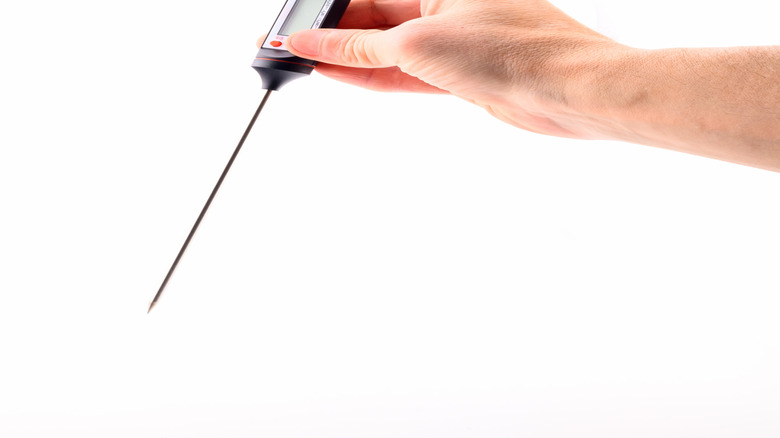
Baking with chocolate, even when you're not technically baking, can prove challenging. It's important to heat chocolate the right way to prevent it from getting burnt or granular; that's why it's helpful to have a candy thermometer for no-bake cookies. "There is a science to making the perfect no-bake cookies, and one of those important aspects is the temperature at which you cook the sugar, milk, and butter," Rena Awada notes. "The perfect temperature you are looking for should be somewhere around 234 [degrees] F to 240 [degrees] F before adding the other ingredients, such as oats and peanut butter, or whatever else you are adding in."
Part of the problem is that all stoves run differently. Whether they're gas or electric, old or new, reliable or tetchy, they will affect how true your burner is to the one used in the recipe. As such, Trung Vu says you'll need a thermometer. "A thermometer is a key piece of equipment you need to ensure you're not undercooking or overcooking the sugar." If you don't have one handy, then timing becomes even more critical: Remember not to go over that 1½-minute mark.
If you find you keep running into temperature mistakes when making no-bake cookies, there are a few steps you can take, Vu says. These include not stirring once your sugar mixture is close to the target temperature, which will promote undesirable granulation; making sure all your equipment is clean; and using the right heat level (medium-high to high, even if that feels scary).
6. Working too slowly once your sugar mixture is cooked
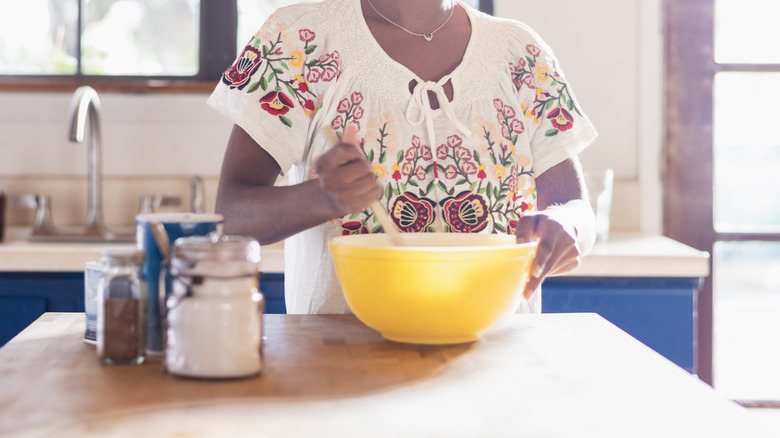
Taking a laissez-faire approach to assembling your goodies is another of the most important mistakes to avoid when making no-bake cookies. "Once your sugar mixture is ready, the clock is ticking," Rachel Farnsworth says. "If you don't stir in the oats and scoop quickly, the mixture can seize in the pot." That's why mise en place is so important. "This is where having everything prepped pays off," Grace Vallo agrees. "Work quickly but confidently."
Note that sugar heats extremely slowly at first, then extremely quickly as it gets closer to the target temperature, Trina DeKett explains. "You usually only have a window of a few seconds to minutes to ensure your mixture is not overcooked," she says. "This makes or breaks your baking experience!"
As such, you'll want to put all your next-step tools nearby, including a good set of measuring cups and spoons (think Tiluck stainless steel measuring cups and spoons). The same goes for ingredients: peanut butter, toppings, and of course, oats. 365 by Whole Foods Market organic rolled quick oats are a highly reviewed option if you're in the market. On the other hand, make sure you don't work so quickly that you panic and overmix. "You only need to mix just enough until the oats are fully coated," Rena Awada says. "Otherwise, the cookies will have a grainy texture from the sugar crystallizing as it cools."
7. Expecting the cookies to cool too quickly
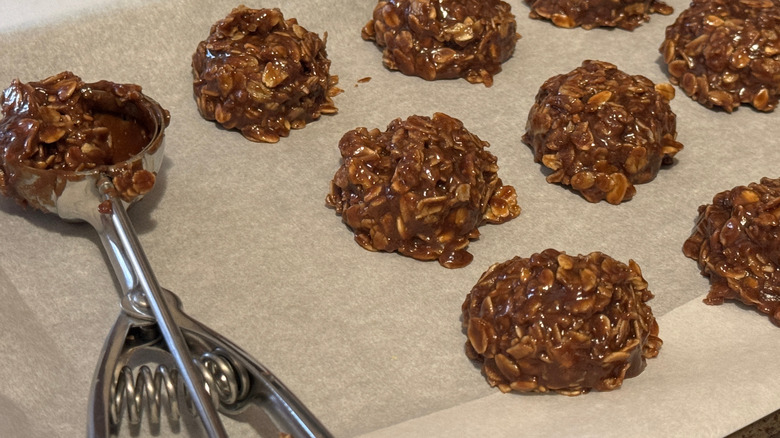
Look, no-bake cookies are kind of a pain; let's all accept that right now. However, once you figure out the techniques and timing, they become one of the easiest treats to make ... as long as you're willing to be a little bit patient. As you probably won't be surprised to hear at this point, being impatient is another one of the mistakes you should avoid when making no-bake cookies. If you move them too soon, unfortunately, they'll just fall apart.
"The cookies will need time to cool and set, and they can't be rushed," Rena Awada says. "Generally, they will need about 30 minutes to set, and I do not recommend trying to rush it by placing them in the fridge, because they will just set unevenly." You may also get a gritty result, because the sugar will crystallize and the cookies will attract condensation. For the fudgy, candy-like results you're going for, leave them alone.
The only exception, she says, is if your kitchen is really humid. In that case, if they still haven't set by the 30-minute mark, you can pop them in the fridge to fully harden.
8. Not accounting for the weather

Weather is an unavoidable factor when making no-bake cookies, and forgetting about it is a major mistake. "Humidity is the silent saboteur of no-bake cookies," Rachel Farnsworth says. "On rainy days, sugar can take longer to cook and sometimes won't set properly." They also stay kind of sticky, Rena Awada says, rather than cooling into a treat you might expect to find at a chocolatier's counter.
The answer? Wait the required 30 minutes for setting and then use the fridge; however, it's better to try and dry out your kitchen and leave them on the counter instead. "If you live in a humid climate, pick a dry day or run a dehumidifier in the kitchen," Farnsworth recommends.
Once you become a no-bake cookie expert, you can try fussing with the ingredient ratio as well. "If it's dry out, your wet ingredients may need to be bumped up a bit in measurement," Trina DeKett says. "If it's heavily raining out, you may need a bit more of your dry ingredients." Her rule of thumb is to first make the recipe once with no edits, noting the weather and how long you have to cook your mixture, and write everything down. Once you understand how the weather affects the result, then you can adjust...every variable plays an important role," she says.
9. Eyeballing your no-bake cookie scoops
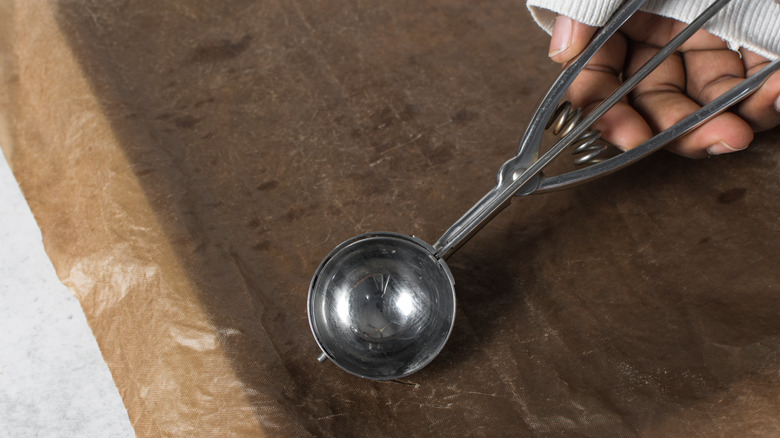
Remember, there's no room for eyeballing when making no-bake cookies. This is a science, not an art, and eyeballing will not get you where you want to be. "I recommend using a scooper, so the cookies are all the same size," Rena Awada says. "This will allow the cookies to all set at the same time. If the cookies are too big, they will not set right. You can also use a tablespoon and try to keep the size uniform." Note that the cookies not only need to be the same size as one another, but also the same size as the recipe calls for. But don't let precision get you down ... get a cookie scoop set to make things easy.
To make sure the cookie mixture releases completely from the spoon or scoop, Trung Vu recommends lightly spraying the utensil with oil before use; that way, you will get the whole amount every time, and they will stay even. Some good parchment paper sheets will also help ensure that you can lift the cookies up easily once they've cooled and hardened.
Remember, too, that this takes practice. Even the pros mess up, so don't expect to get amazing results the first time. "Giving up is the most common mistake people make," Trina DeKett says. "It takes time to learn the techniques required to make a recipe go from good to great. Baking is about rules, yes, but it's also about taking risks, and trying something new."
10. Forgetting to add toppings
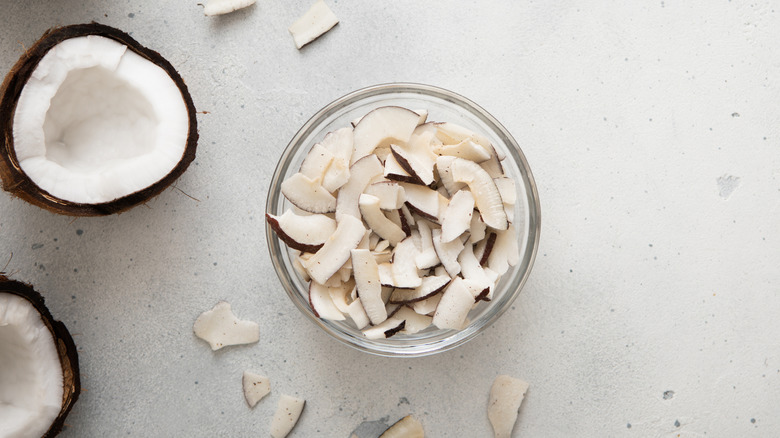
One of the big mistakes to avoid when making no-bake cookies? Forgetting to add toppings, of course. "Toppings like coconut or sprinkles are fun to add to no-bake cookies," Rachel Farnsworth says. This is especially true if you're working with or preparing these cookies for kiddos, who always love the extra flair. But, she adds, you have to add them immediately after scooping them onto the cookie sheet or tray. Otherwise, the chocolate-sugar mixture will harden too much, and the toppings will not stick.
A few suggestions? Anthony's organic shredded coconut and Yupik rainbow sprinkles will both help to jazz up your confections. If you prefer, you can take the simple route and add a sprinkle of salt, Grace Vallo says. Another approach, according to Rena Awada, is to wait until the cookies cool entirely, then drizzle melted chocolate over the top of them in a fun pattern; you can even use chocolate of a different color, such as white chocolate or candy melts. The melted chocolate not only adds additional flavor, but it will allow the toppings to stick to your cookies. Remember, it's all about fun, not perfection, so do what feels right to you and enjoy a newly acquired recipe in your repertoire.