

10 Foods Al Capone Loved
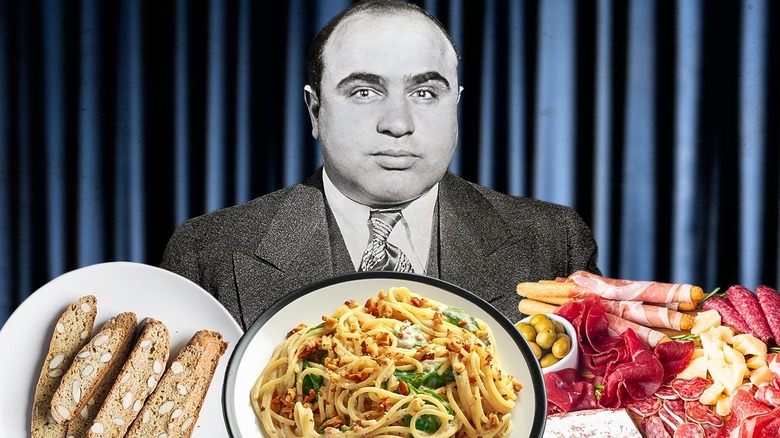
Al Capone was a criminal mastermind with an immaculately tailored image who wanted the public to see him as a businessman and an advocate for the people of Chicago. He sat for interviews and discussed themes like virtue, honor, truth, and the law, as well as current events like which political party was likely to sweep the next election. But no one seems to have asked him what he had for breakfast or if he liked apple pie better than peach cobbler. Apparently, 20th-century journalists just didn't know how to ask the truly important questions.
A century after the notorious gangster ruled Chicago, his complete list of favorite foods is about as elusive as his millions of dollars in ill-gotten gains. (Spoiler: Neither his money nor his food preferences can be found in the basement of Chicago's Lexington Hotel.) Most of what we do know about what Capone liked to eat is either conjecture, hearsay, or straight-up guesswork. His parents were Italian immigrants, so it's probably safe to say he enjoyed Italian food. Al Capone's favorite restaurants are fairly well-documented — by the people who own them — so even cuisine-based generalizations are sprinkled with a certain amount of doubt.
With this in mind, history does remember a few details about what Al Capone liked to eat, but let's just say we had to dig pretty deep to find them.
1. Walnut pasta sauce
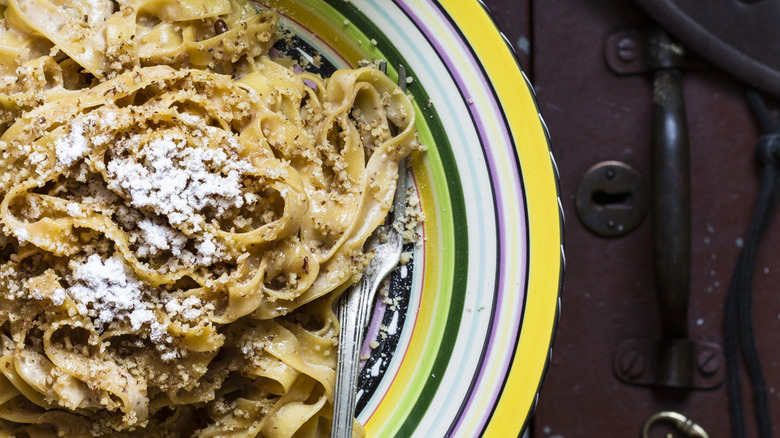
The only definitive truths we could find on the subject come from Al Capone's family. In her book "Uncle Al Capone: The Untold Story from Inside His Family," Deirdre Marie Capone, Capone's grandniece, spends some time talking about what he liked to eat. This is the original source of a walnut pasta sauce recipe you may have seen around the Internet, which is widely purported to be his "favorite" food.
Some sources even go so far as to say walnut pasta was Al Capone's last meal, though it is worth noting that Capone died in his Florida mansion in 1947, so the term "last meal" doesn't have quite the same drama as, say, the sausage, escarole, and beans that mob boss Sam Giancana purportedly ate just before he was shot in the back of the head.
For a guy who once spent $8,000 on diamond belt buckles, Capone's favorite pasta sauce is surprisingly modest, containing just a few basic ingredients: olive oil, garlic, walnuts, crushed red pepper, and Italian parsley. There's no meat, no decadent embellishments, and the whole thing can be made in about 20 minutes. Capone probably ate it over spaghetti noodles and topped it with grated Parmesan cheese.
2. Biscotti
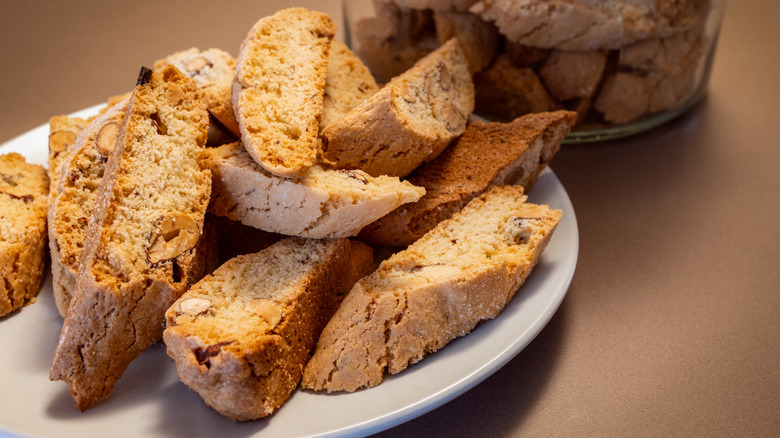
When Deirdre Capone was a child, her uncle donned an apron and taught her how to make biscotti, so we can probably safely conclude that Uncle Al enjoyed this famously crunchy Italian cookie. Besides the obvious fact that he at least liked biscotti enough to make sure his grandniece was sufficiently armed with a decent recipe, he was also Italian, and it's probably illegal not to enjoy biscotti as an Italian.
Fun fact: Biscotti (from the Latin bis meaning "twice" and "coctum" meaning baked) has a long history of being eaten by soldier types. It's one of those "will survive a nuclear holocaust" kinds of snacks, supposedly invented so soldiers would have something to snack on during long marches from one Roman Empire conquest to the next. Pliny the Elder once said biscotti would be "edible for centuries," which doesn't sound like a compliment, until you consider that it's damned hard to make something that is both delicious and capable of surviving the ravages of time.
The recipe Deirdre Capone included in her book "Uncle Al Capone: The Untold Story from Inside His Family" is for a simple biscotti flavored with anisette.
3. Italian beef
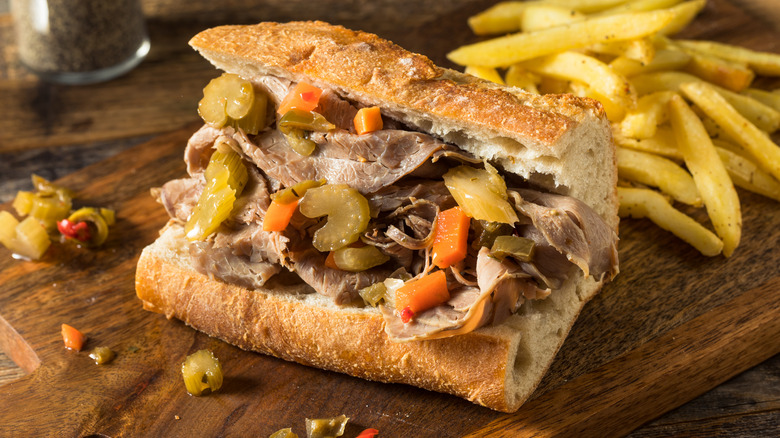
Deirdre Capone's book also mentions rump roast as one of Al Capone's favorites, though she's a little short on specifics. Capone's grandniece does share a family recipe for Italian beef, which she says came from the man himself. This particular recipe is for sliced beef, typically used to make Italian beef sandwiches. "Italian beef in particular is simply not available anywhere else," she writes. "But now you can make it yourself using Al Capone's recipe." (Note that her book was published in 2012, so this is not really true anymore; there are quite a few places where you can get Italian beef in Chicago, for example, but homemade is always better anyway.)
The recipe calls for hot giardiniera, an Italian relish made with chopped, pickled vegetables. Deirdre recommends looking for giardiniera in an Italian market; the popular brand Mezzetta makes a version of "hot Chicago-style giardiniera." You might get lucky and find it in your local supermarket, though it's probably a safe bet that an Italian market would have something a little more authentic.
Al Capone's Italian beef is crusted with spices like garlic, oregano, red pepper, and paprika. It's slow-roasted at a temperature of 225 degrees Fahrenheit for 6 to 8 hours. Deirdre recommends serving it on hard-crusted rolls or Italian bread with olive oil-fried red or green peppers and hot giardiniera.
4. Nathan's Famous hotdogs
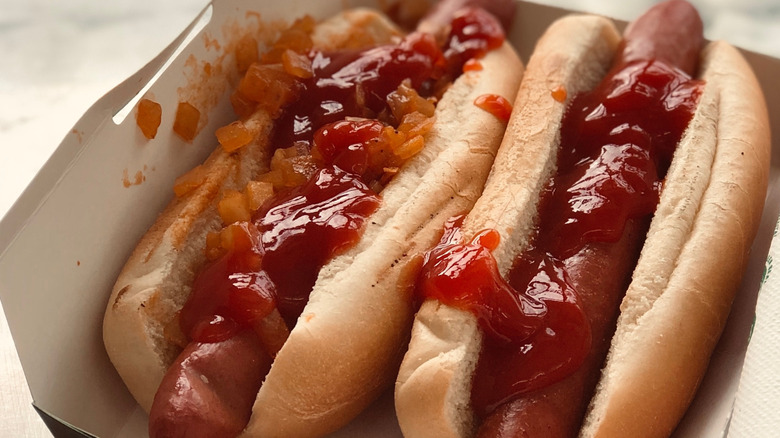
Al Capone did his most famous criminal activities in Chicago, but he was born and raised in New York City. As a young adult, he worked as a bouncer and bartender in a Coney Island brothel-saloon called the Harvard Inn, which is where he got the slash on his left cheek that earned him the nickname "Scarface."
Nathan Handwerker opened his Coney Island hot dog stand Nathan's Famous in 1916, the year before Al Capone started working at the Harvard Inn. Handwerker's hot dogs were made with a special spice blend passed down from his wife's grandma, and they only cost a nickel, mostly because Handwerker wanted to undercut the 10-cent hot dogs his competition was selling.
Although Nathan's Famous (still in business today) doesn't brag openly about Al Capone's patronage (at least not on its website), several sources say he was a regular there in 1918, around the same time he was making a living throwing rabblerousers out of the Harvard Inn. Later in life, Capone would stop in for a hot dog whenever he traveled to New York.
5. Al Capone roast
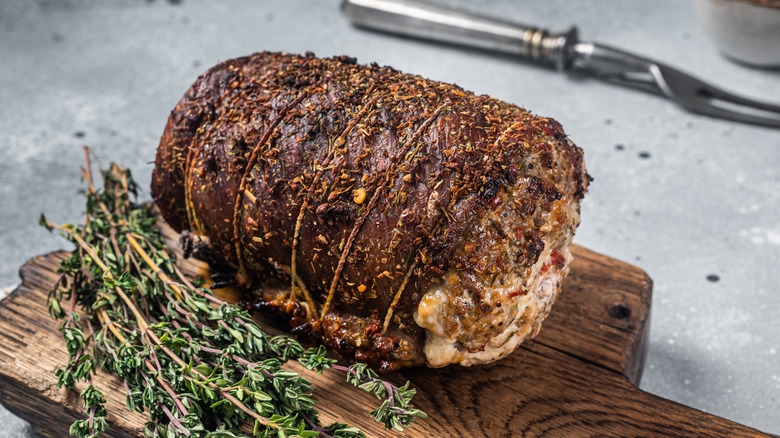
The details about this particular pork roast and the ways in which it is associated with the infamous gangster are a little sketchy. There are versions of it all over the Internet, so it's nice to think that there's a real — albeit lost — historical link between Capone and this artery-clogging, extra-decadent pork roast, but no promises.
The so-called Al Capone pork roast is a Wisconsin favorite, and let's keep in mind that Wisconsin Public Radio recently quoted historian Robert Ritholz as saying, "There really is very little evidence that Capone spent a whole lot of time in Wisconsin, and when he was in the state, he seems to have behaved himself." Eh, the threads of history do seem a little tenuous for this one, but let's just say it's possible he indulged in a stuffed pork roast once in a while. And if Capone didn't eat this roast himself, it was at least inspired by him.
If you're keen to put something similar on your table, most recipes direct you to roll a flattened pork shoulder (or sometimes a flank steak) around some Italian herbs, kalamata olives, mushrooms, and prosciutto. Variations might include pepperoni, Italian sausage, and various kinds of cheese; basically, anything that is sure to usher you to an early grave seems to be fair game.
6. Chinese food
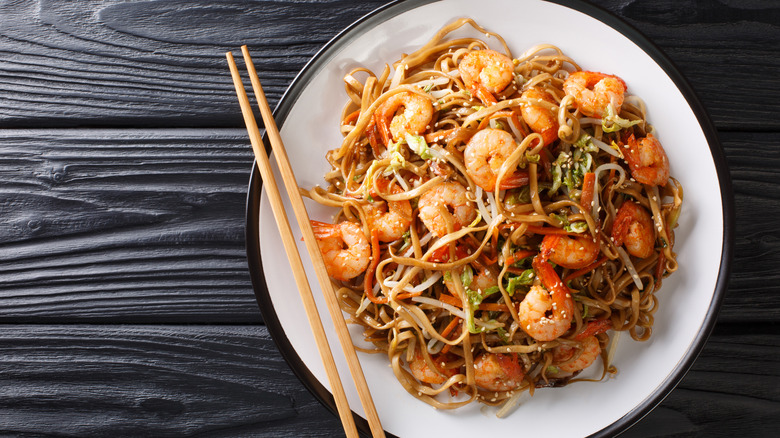
Okay, yes, "Chinese food" is a bit vague, given that lots of things that aren't Chinese food are still called Chinese food. (Example: Panda Express invented orange chicken in America in 1987.) So while it's safe to say Al Capone never ate orange chicken, no one really seems to know exactly what he did eat when he was at Won Kow, a restaurant in Chicago's Chinatown that he was known to frequent. According to one Chicago area ABC station, "confirmed rumors" (by a "former patron," who apparently heard it from a guy who used to wait tables at Won Kow in the 1930s) say Al Capone would sit at a corner table and eat dinner while his bodyguards hovered ominously around the front door.
An archived article in the Chicago Tribune provides some potential clues about what Capone might have eaten at Won Kow. Former waiter and busboy Grant G. Moy (possibly the same person referenced above), who worked at the restaurant from 1934 to 1940, said he remembered Al Capone sitting at a table in the northwest corner, though he did not offer any details about what Capone usually ordered. Moy did, however, share his own Won Kow favorite: subgum chow mein, a variation on the popular Cantonese noodle dish made with shrimp, peppers, tomatoes, and almonds. No, we don't know whether Al Capone ever ordered the subgum chow mein, but we do at least know it was on the menu at the time.
7. Joe's Stone Crab
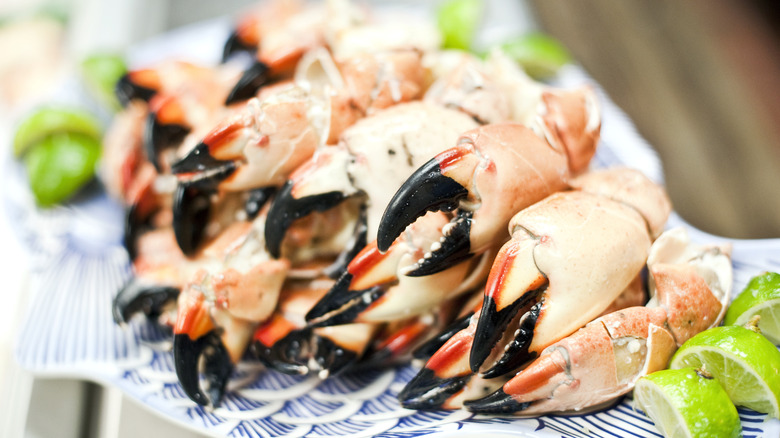
In yet another "Hey everyone, eat here, Al Capone loved us" sort of corporate legend, Al Capone liked to eat seafood at a Miami Beach restaurant called Joe's Stone Crab. Joe's was founded in 1918 by Joe and Jennie Weiss, the latter of whom provided the anecdotes about Al Capone.
Al Capone bought an estate on Palm Island in Miami Beach in 1928, to the great chagrin of upstanding, law-abiding locals. The Miami Beach City Council almost immediately promised to enthusiastically cooperate with any and all federal efforts to apprehend the gangster, mostly because they were afraid he would stain Miami Beach's reputation for "good clean fun."
According to Joe's Stone Crab's website, Capone and his "entourage" would come have dinner at the restaurant every day at 5 p.m. Capone always used the pseudonym "Al Brown," so despite having an entourage and being the most infamous criminal in America and someone whom the Miami Beach city council was actively trying to apprehend, the Weiss' had no idea who he was. In fact, Jennie was so fond of "Mr. Brown" that she complimented him on his good manners. Perhaps this was unusual for Capone — the man regularly ordered hits on his enemies, after all — he was evidently so moved that he sent Jennie a truckload of flowers every Mother's Day to thank her for her kind words. Or maybe he just liked the crab a lot.
8. Beer and wine
Al Capone was a great champion of the God-given right to get wasted and embarrass yourself in public. Lest you think it was all for charity, Prohibition also made Capone a very wealthy man to the tune of around $100 million a year. So it's safe to say that Capone was fond of alcohol, but maybe not in the same way some people are fond of alcohol.
Al Capone was rumored to enjoy the hard stuff. Templeton Rye Spirits once marketed itself with claims that its small-batch brand was made using Al Capone's own Prohibition-era whiskey recipe (until 2014, when it came out that the company actually just bought barrels of whiskey from another company that basically mass-produces it). Despite Templeton Rye's erroneous claims, at least one source says that Capone not only did not drink Templeton Rye whiskey, but he also didn't really drink hard alcohol, like at all.
In his book about Chicago mob boss Tony Accardo — who ran in the same circles as Capone — author Neil Gordon says Al Capone typically just stuck to beer and wine, depending on the weather and/or the social event. It kind of sounds like he was more of an occasional social drinker, too, which does make some sense. When everyone from the police to rival gangsters is out to get you, you probably don't want to ever get fall-over drunk on whiskey and let your guard down.
9. Italian food
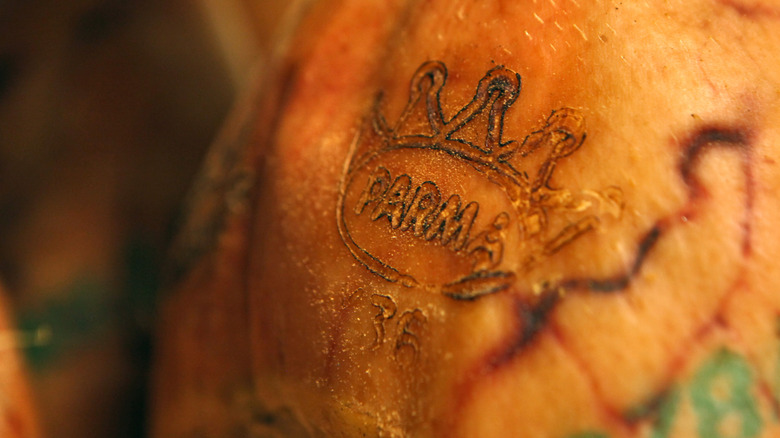
Saying "Al Capone loved Italian food" is kind of stating the obvious, since Capone was the son of Italian immigrants and loved his mother's cooking. But it is also true that Capone liked to share his love of Italian food with his friends and business associates, and the lavish parties he hosted often featured some sort of Italian fare, from basic spaghetti to expensive prosciutto.
Neil Gordon's book details the Italian food served at a Capone-hosted dinner honoring Alberto Anselmi and John Scalise, who'd recently been killing it at work (literally, they'd just murdered rival alcohol bootlegger Dean O'Banion in his North Side flower shop). This particular event featured "Mama Capone's" sausage and peppers antipasto, old world capicola, and Prosciutto di Parma, a dry cured Italian ham. Lest you remain unimpressed, Prosciutto di Parma is not just dry cured Italian ham. It's made from the hind legs of specially bred heritage pigs raised in specific parts of Italy. Only the hind legs.
Capone threw Italian food parties in Miami Beach, too, though they aren't remembered with as much detail. Miami's Community News called them "spaghetti and steak parties," so they were perhaps not quite as lavish as Capone's "thanks for murdering that guy" parties. Though to be fair, the noodles might have come only from durum wheat grown on a certain 10 acres in Apulia, using only kernels harvested from the center of the wheat head ...
10. Meat
If you can base someone's love of something on how much money they spend on it, then it's fair to conclude that Al Capone really liked meat. Remember that when Al Capone was finally brought to justice, it wasn't over illegal alcohol manufacturing and sale, or because he was operating speakeasies, or even because he ordered the murders of seven people on Valentine's Day in 1929. It was for tax evasion.
The government really, really wanted to put Capone away for a long time, so they dug up a lot of numbers to support their claim that obviously Capone was dodging taxes, because look at all the money he spent that he definitely did not mention on his 1040EZ. $100,000 in improvements on his Palm Island estate, $9,000 on phone calls, the aforementioned $8,000 belt buckles ... And, apparently, $6,500 worth of meat to feed poker party guests and whoever was going to those spaghetti and steak parties in Miami Beach. (A 1931 Time Magazine article about the trial also mentions thousands of dollars spent on cakes and macaroni, and $5 tips, which was equal to a bit over 100 bucks in 1931.)