

How To Preserve Frozen Cantaloupe So It Stays Sweet And Juicy For Months
We may receive a commission on purchases made from links.
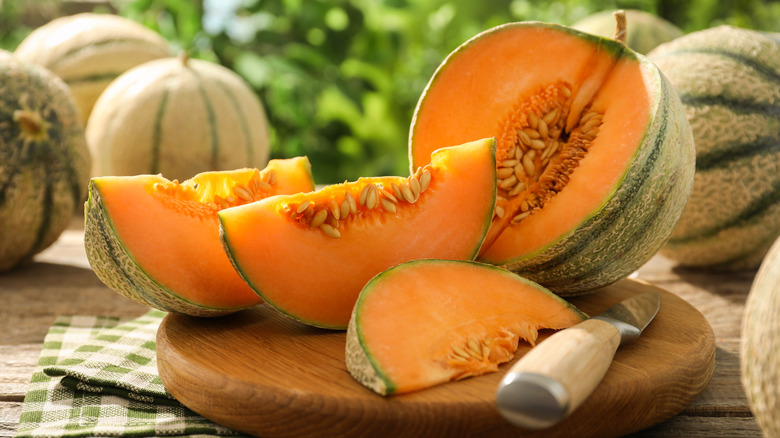
Cantaloupes are a type of melon known and beloved for their delicate, sweet, and floral taste, and alluring, sunrise orange hue. Given that they are among the list of hydrating foods, the fruit is a tasty way to keep yourself hydrated. Summer is prime time for sweet and juicy cantaloupes, and if you want to savor the season's bounty for months on end, there's a handy storage hack that comes in clutch. The trick is to "rapid freeze" the pieces, a process that's particularly suited for storing produce with high moisture content, like cantaloupes.
Step one is always choosing the best cantaloupe so that you can get the most out of every bite, even in the dead of winter. Once you've sliced the fruit into your preferred shape, give the pieces a good toss in lime juice. This step isn't mandatory, but it can help prevent oxidation and the accompanying browning that comes from it. Next, place them on a lined baking sheet and let them fast freeze in the freezer for a couple of hours or until frozen firm to the touch. Finally, transfer the frozen cantaloupe pieces into a freezer-safe bag or container, and back to the freezer they go 'til you're ready to relish the fruits — quite literally — of your labor.
The reason why rapid freezing works better to preserve cantaloupe's texture is that the process yields smaller ice crystals, while slow freezing creates larger ice crystals that cause more damage to the fruit's cell walls. This ultimately compromises the texture when defrosted. Whether you rapid or slow freeze the fruit, it should still come as no surprise that the texture of the thawed cantaloupe pieces will still be notably different from that of their fresh counterparts.
Alternatives to fast freezing and ways to enjoy cantaloupe
If you don't have enough freezer space to spread your cut cantaloupe pieces on a lined baking tray, you can skip the "rapid freezing" step. Start by cutting your cantaloupe into bite-sized pieces — cubed or sliced, based on your preference. Remove the seeds and save them for later to make a tasty, roasted snack, and the rind. Then, layer them in a freezer-safe bag like Ziploc's food storage freezer bags, ensuring that you press as much air out of the bag as possible to avoid any ice crystal formation and properly seal it. Stick it in the freezer and your fruit will be fresh for eating for the next six months!
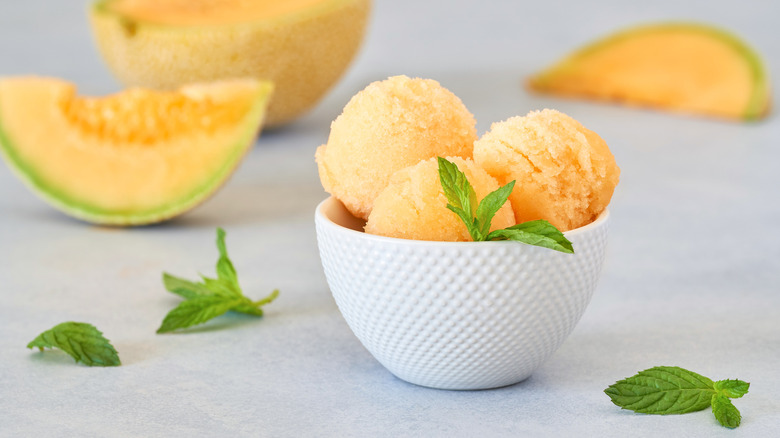
When you're ready to dig in, there's no shortage of ways to bring some summertime light into a cold and dreary day. To enjoy a cantaloupe that has spent some time in the freezer, the general advice is to allow it to defrost in the fridge before serving. If you fancy a savory spin on a sweet treat, cantaloupes get an unexpected flavor boost with a sprinkle of salt, making the fruit perfect to toss into a refreshing salad or hearty grain bowl. One of the defaults with frozen fruit is to blend them into a flavorful smoothie. With a handful of simple ingredients, you can also whip up a delicious sorbet or slushie. Another viral food trend calls for grating the frozen melon into a dessert reminiscent of flavored shaved ice. Top it off with a generous drizzle of condensed coconut milk, and you're in for quite the tropical treat. For the avid and adventurous foodies who enjoy gazpacho, perhaps a chilled cantaloupe soup is a recipe worth giving a try.