

10 Best 1-Ingredient Upgrades For Apple Pie
We may receive a commission on purchases made from links.
When the weather starts to get cooler, the leaves start to change color, and you pack all your beach stuff away until next summer, it's time to focus your attention on the best time of year: fall. It's a foodie's favorite season for many reasons, thanks to Thanksgiving (arguably the most food-centric of the holidays), pumpkin spice everything, and of course, the pies. Your kitchen is finally cool enough that the butter doesn't melt out of your crust immediately, and you can whip up a whole host of seasonal fillings.
If you're a beginner baker, apple pie is a great place to get your footing. Plus, it's one of the most universally beloved pies. Layers of subtly sweet fruit and spices are nestled cozily underneath a lattice-topped or double crust to create a tantalizing and sweet dessert best paired with a scoop of vanilla ice cream. Whether you're just figuring out how to make this iconic fall recipe for yourself or are looking to step up your apple pie game, we created a list of some of the most fun and unique ways to take apple pie to a new level. These single-ingredient suggestions are easy to implement and will allow you to put your own creative spin on this dessert.
1. Chinese five-spice
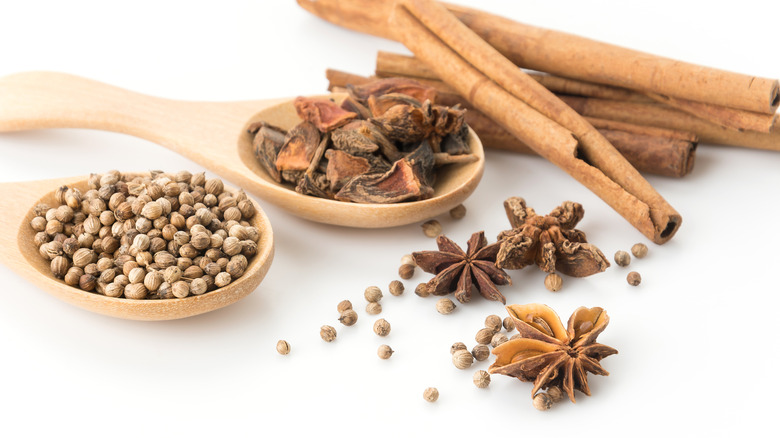
We're going to be frank here: not everyone has Chinese five-spice powder in their pantry. But this is a great time to reevaluate your spice cabinet and invest in a small jar of it for special occasions like this one. This spice blend, as its name suggests, consists of five major ingredients. Some of them are no stranger to apple pie, including cinnamon and cloves, but you also have some strange bedfellows in the mix: star anise, fennel seeds, and Sichuan peppercorns. The star anise and ground fennel will add a subtle licorice undertone to your recipe, while the Sichuan peppercorns will provide a bright and well-balanced hint of spice. It works better than you'd think.
Apple pie is not a place where you want to go easy with the spice, which is why we would recommend building your flavor foundation with common baking spices, like cloves, cinnamon, allspice, and ginger, before adding just a pinch of Chinese five-spice powder to your filling. You may only need a little over a teaspoon of the spice blend to taste its effect, and the last thing that you want to do is overpower your pie with anisey or spicy notes.
2. Melted ice cream

The thought of intentionally melting ice cream for your apple pie might seem a little silly. After all, isn't apple pie supposed to be served with a scoop of ice cream on top? Well, once you try adding your melted ice cream directly to your pie filling, you may not go back to plain apple pie à la mode ever again. Melted ice cream, in its most basic form, is sugar and cream. Most apple pie recipes already call for adding sugar, so using melted ice cream will not only add sweetness, but also a creamy consistency that highlights the natural flavor of the fruit.
Vanilla is a solid flavor to start with, as it's predictable and works well with most apple varieties. Once you get a sense of how to implement this hack by marinating the apples in the ice cream before adding the entire thing (cream and all) to your pie dish, you can start experimenting with different ice creams. For example, the savory undertones of a salted caramel would act as a check against the sweetness of the ice cream, whereas the nuts in a maple walnut would add texture to an otherwise soft pie.
It's important to note that you shouldn't re-freeze thawed ice cream, as its texture never reverts to what it was. If you still have some melted ice cream left over, fear not; you can use it as a shortcut crème anglaise to serve with your pie.
3. Quince
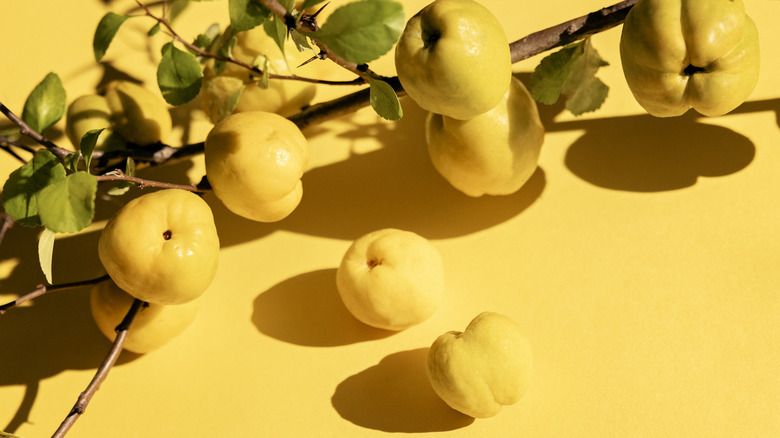
Apple pie should, of course, put the apples on a pedestal. But, you'll quickly find that they're not the only fruit you can utilize in your recipe. Quince is an excellent fruit to add to your apple pie because it doesn't detract from the honeyed flavor of your apples. Instead, it'll add bulk to your pie, along with a pear-like mouthfeel.
Quince is, admittedly, a peculiar fruit. It's not recommended to eat raw quince, as its flavor is very astringent and its texture is hard. But when you add them to a pie, you'll find that they soften quite well. Quince may also take more time to cook properly than the surrounding apples, so you can expedite the process by using a grater instead of adding large chunks of the fruit to your filling. If you opt for the large pieces, try simmering them with fruit juice in a pan until they start to soften (it should take about 10 to 15 minutes, depending on the size of the pieces).
Besides the taste benefit, quince is very high in pectin. Pectin is an important soluble fiber that home food preservers likely know well. The compound helps things set, including pie fillings, so adding some quince to your recipe will encourage the juices to firm up more readily than if you opted for an apple-only pie.
4. Cranberries
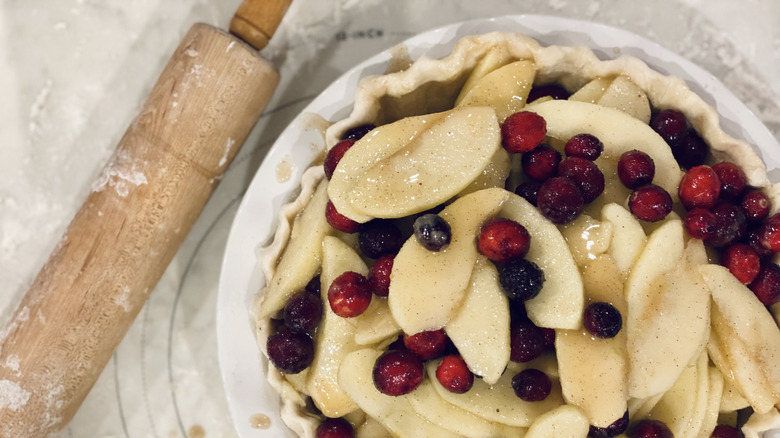
Cranberries and apples practically sit next to each other on the Thanksgiving table, so it's not surprising to see how this humble berry could elevate an apple pie filling. Cranberries walk a thin line between being tart and sweet, making them a compelling addition to a traditionally sweet pie.
You'll be happy to know that there are more ways to pair apple pie and cranberries than just adding the whole fruit to your pie. The whole fruits are very juicy and will give you a bright and tangy bite, while rehydrated dried cranberries will offer a sweeter flavor and a slightly chewier texture. Just make sure not to skimp on the sugar; since cranberries don't have a ton of sweetness, supplementing your apple pie filling with granulated white sugar, honey, or maple syrup is key to getting the flavor just right. We would also recommend being bold with the spices; cranberries and apples are both in good company with ginger, cinnamon, and cloves.
Another creative way to add cranberries to your pie is to look at what you serve the slices with. A scoop of cranberry ice cream (it's a thing — and boy, is it delicious) would not only add a beautiful color contrast to the nude-colored pie filling, but also a bright, tangy flavor. You may also consider using your leftover cranberry sauce as a flavorful garnish for your pie.
5. Lemon or orange juice
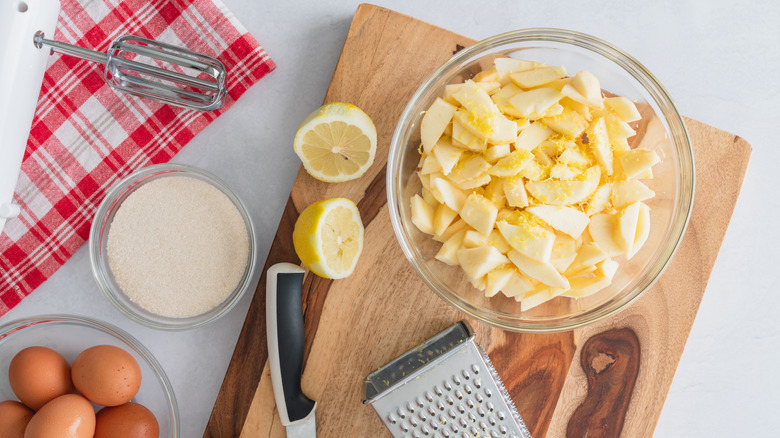
Lemon juice, or citrus juice as a whole, is an essential ingredient for your pie. You don't need to use a ton of it to reap its benefits, but you do need to be methodical about how you add it to your recipe. Citrus juice does more than just add a tangy flavor that balances out the sweetness of the fruit and your filling. On a functional level, lemon juice helps stave off oxidation, which occurs when fruit is exposed to air for too long. Brown fruit doesn't just look unsightly; oxidation can also give the fruit a mushier consistency. You may only need a couple of tablespoons of juice for your entire pie; add it to the fruit as you peel and prepare it.
You can use store-bought citrus juice for this hack (we've found that lemon juice and orange juice work equally well). Some folks will also add lemon zest to their pie, though we find this is more for flavor than to curb oxidation. If you're all about lemon flavor, try rubbing your sugar together with lemon peels to release their oil, then add that flavored sugar to your pie filling.
If you don't have citrus juice handy, another stand-in that works, believe it or not, is soda. This creative use of the bubbly beverage is smart because the citric acid will help create the same barrier as fruit juice would. However, its flavor is sweeter than plain juice, so just be careful that you're not making your pie too sweet by using it.
6. Thyme or rosemary
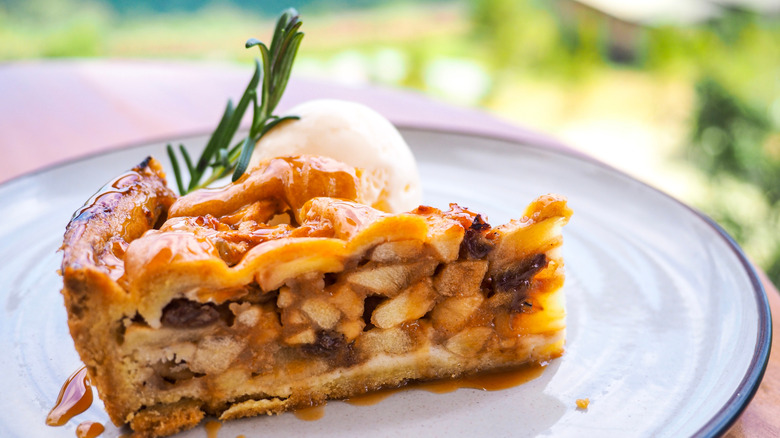
Say it with us: Savory ingredients belong in sweet pies! It might seem a bit odd to load up a traditionally sweet pie with fragrant herbs, but just trust us on this one. The flavor of thyme and rosemary is an excellent match for the honeyed and sweet apples. The fresh herbs will give your pie a grounding earthy undertone, and as long as you don't use an entire plant in your pie, you won't have to worry about making your dessert too savory.
Our favorite way to add these savory spices to our pie is to add them to the crust. That way, their flavor is well-distributed throughout every bite, and the buttery flavor serves as the perfect vehicle for the herbaceous undertones. We would recommend chopping the herbs very finely, as biting into a whole piece of rosemary or thyme can give you a more anisey or soapy flavor than you were anticipating. You can also use dried herbs for your pie if you don't have fresh ones. The flavor might not be as fresh, but it will still give your crust some color and flavor. Use no more than a tablespoon of fresh rosemary or thyme for your double-crust, and even less if you're opting for dried herbs. You can also make a rosemary-infused simple syrup for the filling if you prefer to have a more traditional crust.
7. Maple syrup
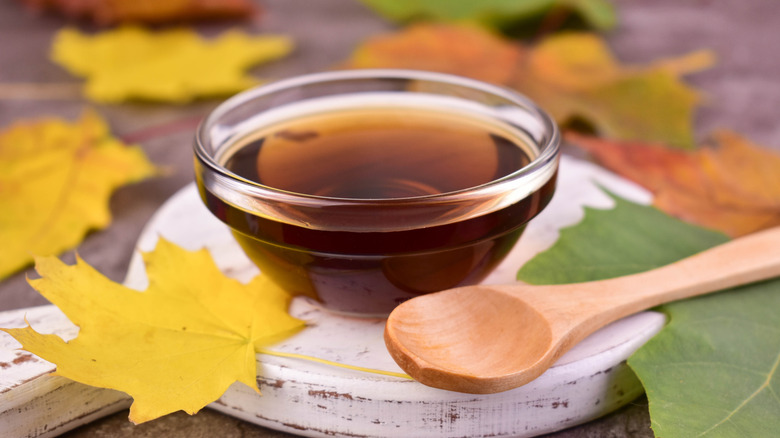
You might assume that just because apples are fruit, they are naturally sweet enough to use in your pie. However, adding additional sweeteners to your pie filling is important because it balances out the flavor of tart apples and serves a functional purpose: thickening the filling by attracting and binding moisture. Traditionally, most apple pie recipes call for granulated white sugar, though that's far from the only sweetener you can use. Maple syrup is a great addition to your apple pie, as it adds a layer of oaky complexity that complements both the fruit and the buttery crust.
Since maple syrup is a liquid sweetener and sugar is not, you'll need to be careful about how much of it you add to your recipe, so as not to make the filling so watery that it doesn't set. Maple syrup is also not as sweet as granulated sugar, so you may want to consider this when you're deciding how much to add to your recipe. Since there's a lot of substituting involved, we recommend using a recipe that specifically calls for maple syrup, rather than trying to transform a recipe that already calls for sugar, to increase your odds of a successful (and not overly sweet or soupy) pie.
8. Chopped nuts
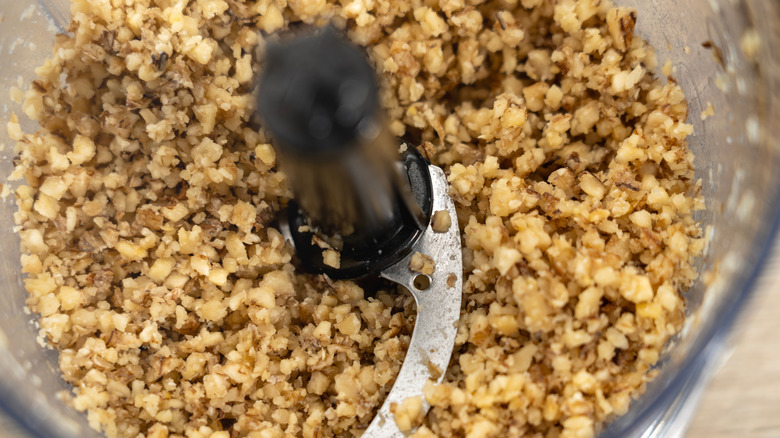
For all the things that apple pie is, there is one thing that it is not: texturally diverse. Sure, you have the contrast between the flaky and buttery crust and the soft apples, but that's about as much as you get. If you really want to step up your apple pie game, you may want to recruit some help from a crunchy and nutty ingredient, like walnuts or pecans. Adding crushed nuts to your apple pie recipe will enhance the texture and give you a more complex flavor than using the fruit alone. The easiest way to do this is to stir in your chopped nuts with the pie filling before adding it to your bottom crust.
However, this is far from the only way to give your apple pie a nutty twist. You can also forego the top crust and opt for a nut-speckled streusel topping. Simply mix together the chopped nuts with your other streusel ingredients, like butter, brown sugar, white sugar, and cinnamon, and layer an even coating on top of the pie. Just make sure to keep an eye on the streusel as it bakes, since the nuts may burn faster than the buttery pieces around them. You could also serve your slices with a nutty ice cream, like butter pecan or maple walnut.
9. Sour cream
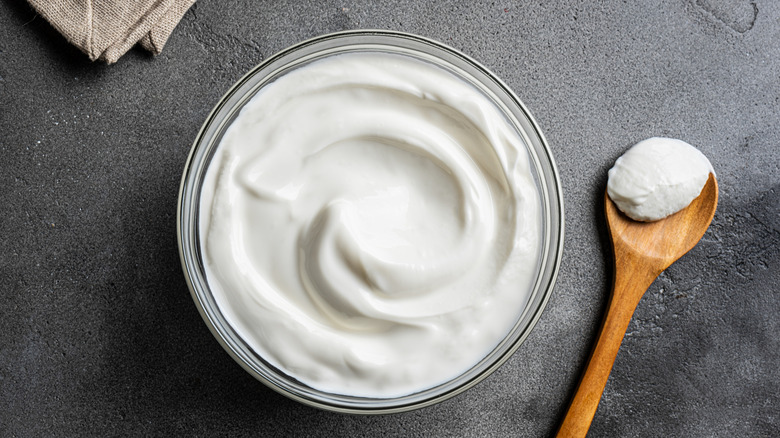
Your first thought when you see the container of sour cream in your fridge probably isn't apple pie. But this creamy and high-fat ingredient is the secret to unlocking an even tastier dessert. The cream will counteract some of the sweetness from the sugar and the apples, while its fat content will help thicken it up and make each bite extra luxurious. The key is to use full-fat sour cream here, rather than reduced-fat, for the best texture.
You'll want to add the sour cream to your recipe along with the chopped fruit, spices, and sweeteners. You can use about a cup of sour cream for a standard-sized pie. Once the filling is mixed, spoon it into your pie crust and bake. This dense filling is a great pairing for a streusel topping, rather than a standard top crust, because the brown sugared and spiced notes of the topping will pair well with the fruit underneath.
10. Chai spice
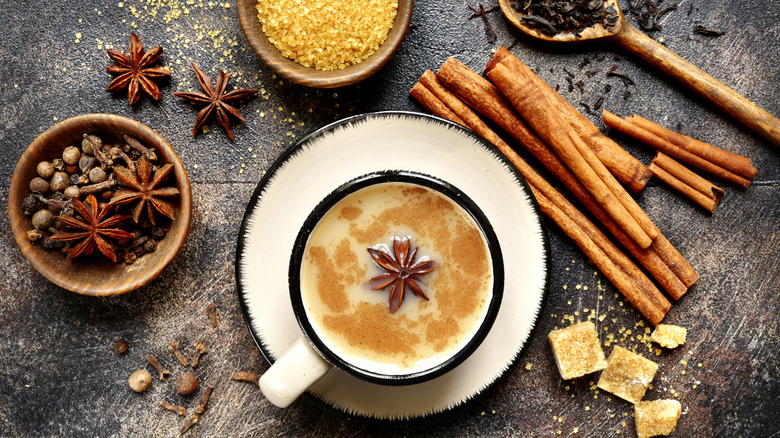
Some foods just go together: peanut butter and jelly, mashed potatoes and gravy, and apples and spice. Recipes for apple pie will often call for a dose of the aptly named "apple pie spice," or some combination of cinnamon, cloves, and allspice. Instead of using a generic apple pie spice, look to another seasoning blend for inspiration: chai spice. This blend of cinnamon, cloves, nutmeg, ginger, star anise, and cardamom is an excellent way to upgrade your apple pie and will offer your dessert a slightly more complex flavor than if you just stuck to the traditional spice blend. The cardamom is an especially compelling addition because its flavor is piney, fresh, and has undertones of menthol. The woodsy spice works not only with the other spices — especially the woodsy cinnamon and spicy nutmeg — but also with the sliced apples.
Chai is filled with big, bold flavors, so you'll want to be cognizant of how much you're adding to your recipe. If you have the respective components of chai, you can make your own spice blend. Though if you use things like star anise and cardamom infrequently in your cooking, it may be better to invest in a jar of pre-mixed chai spice; Watkins chai powder is our go-to product for baking.