

7 Popular Regional Casseroles In The US Everyone Should Know
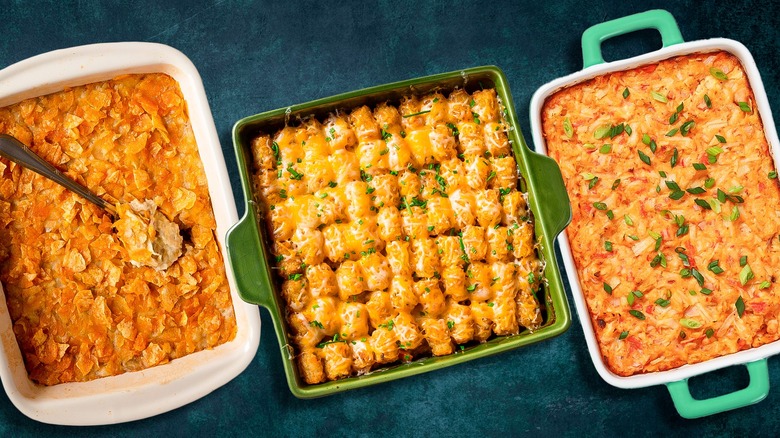
A casserole is technically a specific type of baking dish, and in the U.S., the word also refers to a one-dish meal baked in one of those casserole dishes. However, the name has become so entwined with these types of recipes that it doesn't matter what the food is baked in; if it's a one-dish meal that involves a baked mix of ingredients and sauce, with a browned topping, chances are that it's called a casserole. (You will find debate about this for dishes like Chicago deep-dish pizza, which is a controversy we are not touching here. Godspeed to anyone who tries to wade into that one.)
The U.S. has casseroles aplenty, from the ubiquitous tuna noodle to regional recipes that no one really knows about outside of those areas. Other casseroles have famous names that people recognize, but the dishes still don't appear at meals outside of the regions in which they're popular. That's a shame because many of these casseroles deserve wider attention, both for their flavor and for their convenience. They're simple, economical, and meant to feed people easily, often with leftovers for the next day. You may have heard of some of these regional casseroles already, but chances are, you haven't heard of all of them. Let's fix that and take a look at seven popular regional casseroles that you really should know about.
1. Funeral potatoes
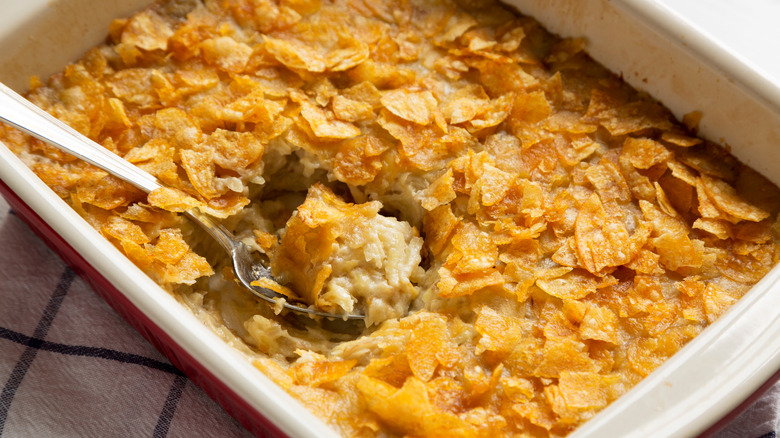
Funeral potatoes are a favorite among members of the Church of Jesus Christ of Latter-day Saints, or the Mormons. The basic ingredients are simple: potatoes, cheese, cream of mushroom/chicken soup, onions, sour cream, butter, salt, pepper, and some sort of crunchy topping like bread crumbs, chips, or cornflakes. While some families go all out and make their own sauces and butter, many others aim for speed and convenience. The potatoes are often frozen hash browns, tater tots, or instant; the cheese is usually pre-shredded. You may find actual onions in the dish, but you're just as likely to find onion powder. Everything can be store-bought, and so many families have their own recipe that you'll find endless variations.
No one is really sure who first created the dish. Probably the most accepted origin story is that the dish was created by the Relief Society, which is a women's organization within LDS churches. The women who run the society help families for a number of reasons, including when there's been a death. Funeral potatoes are very easy to put together, use ingredients that most people already have, can be made in large quantities, and are easy to transport. All of these make the casserole perfect for giving to a family in mourning who may not want to cook. The casserole also shows up at other functions with happier connections, but the funeral name stuck. Fans agree that it's the ultimate comfort food in times of need.
2. Tater tot hotdish
Apparently, there's question in some circles about whether hotdish — that's its actual name — is a casserole. The answer is yes, hotdish is a type of casserole served mainly in Minnesota and North Dakota, and it has some specific rules that separate it from a mere potato casserole. Overall, hotdish is a main course for a meal other than breakfast. If it's got breakfast foods, it's a breakfast casserole, not hotdish. True hotdish has to have meat and vegetables, plus sauce and usually potatoes.
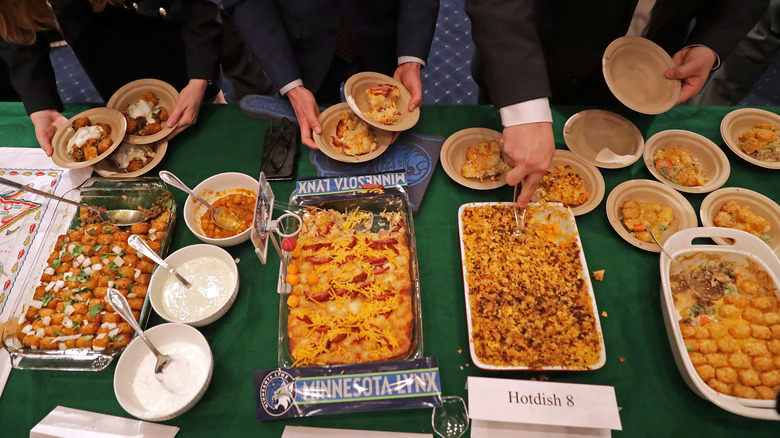
Tater tot hotdish, though, is a little different. This contains beef and vegetables in sauce, covered with a layer of tater tots. This is a Great Depression food, created in the 1930s as a filling meal that used basic, cheap ingredients. The dish is one of the better-known foods out of Minnesota, and it's so popular in the state that the state's congressional members have an annual hotdish contest with names that are just as creative as the recipes. Entries have included "Hotdish A-Hmong Friends," "Turkey Trot Tater-Tot Hotdish," and "Little Moga-hot-dishu."
3. King Ranch casserole
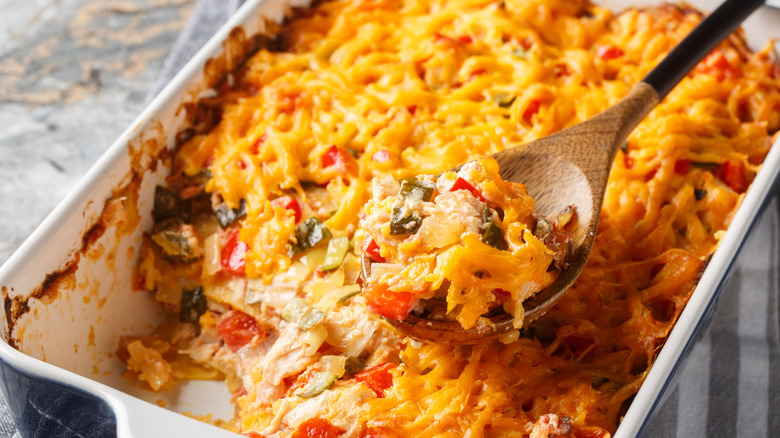
So far, we've covered two casseroles from states further north, but Southern states have some winners, too. And in Texas, one of those winners is the King Ranch casserole, also called the King Ranch chicken casserole or King Ranch chicken. It doesn't always look that appetizing at first, and many Texans don't like it because its flavor can be rather, well, mild. Kind of a surprise considering how flavorful Texas cooking usually is. But King Ranch casserole is comfort food, and comfort food doesn't have to knock your socks off with too many chili peppers. There are some in most recipes, but they don't make the dish spicy.
King Ranch casserole typically contains cooked chicken, cheese, tortillas, lots of canned condensed soup, onions, margarine, and a can of Ro-Tel tomatoes and green chiles. Recipes for similar dishes like creamed chicken (albeit without the soup or Ro-Tel) had been around since the early 1900s, but this specific one may have debuted as part of former First Lady "Lady Bird" Johnson's own recipes. The casserole does appear to be named after the King Ranch, which is located southwest of Corpus Christi, Texas, and the Johnsons were linked to the ranch. It wasn't the only chicken-cheese-Ro-Tel casserole in existence at the time, but Johnson's recipe card was the first printed recipe to use the name and to use condensed soup instead of bechamel sauce.
4. Frito pie
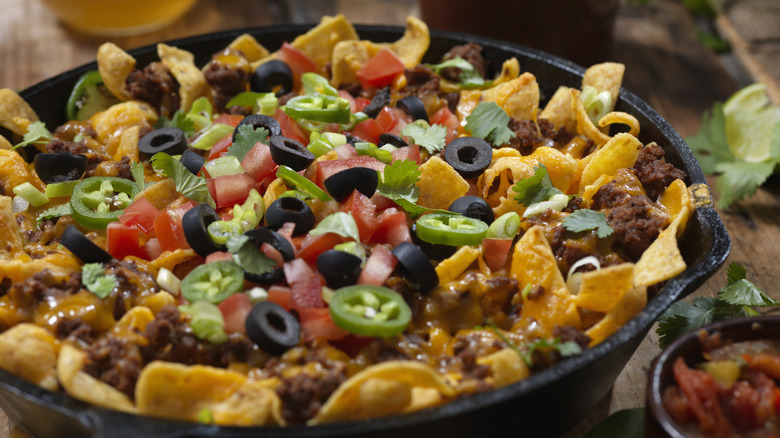
Back in the 1930s and 1940s, Fritos weren't a snack chip. They were invented in 1932 and meant to be a topping, accompaniment, or additional ingredient in other recipes. The official story says Frito-Lay introduced the recipe in 1949, and there is truth to that. But there are records that show a "Frito pie" was served in 1946 in Electra, Texas, at a meeting of a group called the Electra Home Demonstration Committee. However, no recipe was linked to the name, and the first official recipe presented as Frito pie came from the chip company itself.
In 1949, the Frito Company introduced "Fritos chili pie" (with that "s") at the Dallas Dietetic Association's conference. The recipe was as simple as could be: place Fritos in a casserole dish, cover them with layers of chili, cheese, and onions, and bake. Some claim the dish was actually invented in New Mexico (and a lunch counter there did help popularize the recipe), but all records point to this being a Texas original.
Fast-forward to 1962, when the company, now Frito-Lay, added a shortcut version of the recipe to the back of each bag, telling people to pour into the bag a can of hot chili, shredded cheese, and onions. Since then, this snack-sized version of the casserole has become a classic Friday Night Football snack with too many variations to count. There's also a related recipe called a walking taco, which puts taco filling ingredients in a bag of Fritos.
5. Three Sisters casserole
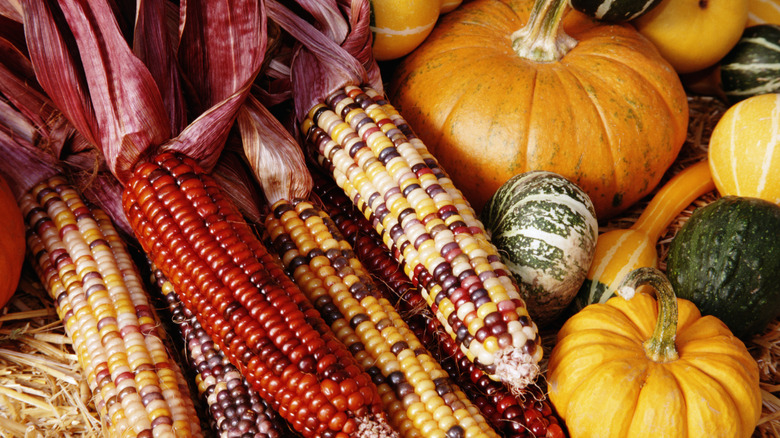
One of the advantages that casseroles have is that they can usually be modified in some way to fit what food you have available. Even if they have requirements, like hotdish requiring certain foods, there's something that can always be changed out of necessity or preference. Three Sisters casserole, also known as Three Sisters gratin or Gratin of Three Sisters, is a stellar example of this. The casserole contains the "Three Sisters," or beans, corn, and squash, which are often planted together as companion plants. The squash can be winter or summer squash, the beans can be black or pinto, you can top it with polenta, you can add more squash, different cheeses, onions, you name it. The casserole is typically linked to the Southwest states, such as Arizona, although you'll find variations wherever the trio is popular.
Now the question is, why is this sometimes called a gratin, and does that mean it's not a casserole? Gratins are a type of casserole, just like hotdish is a type of casserole. Gratins typically have a crispy topping, such as breadcrumbs that have been combined with cheese and butter and then briefly broiled. Of course, in the Wild West that is the casserole, you're likely going to find recipes that don't distinguish between the two terms.
6. California casserole
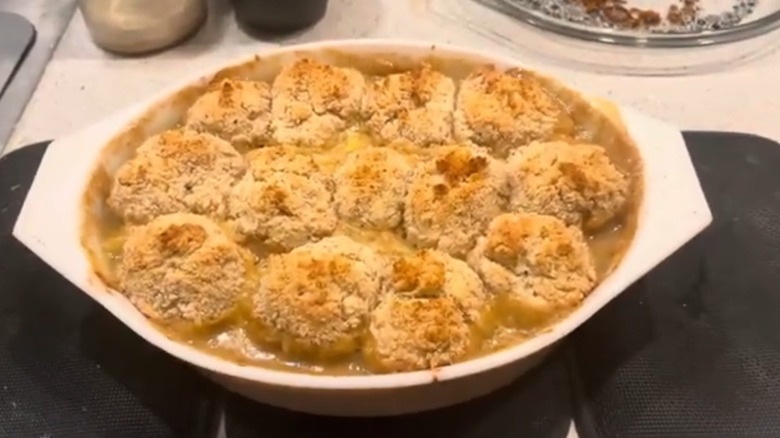
Another casserole that has a bajillion variations is the California casserole. This is not one that you see often in recipe blogs and sites, but despite its apparent under-the-radar status, when you try looking this up, you're going to be greeted by a hodgepodge of different recipes that call themselves California casserole. One recipe does stand out, though, and that's the original one that won the 1956 Pillsbury Bake-Off contest.
This recipe is from Hildreth Hatheway of Santa Barbara, California, and it initially looks complicated. That's because it contains 24 different ingredients, which can make preparation look intimidating. But many of those ingredients are spices, which are easy to measure. Use the technique of mise en place — having everything measured and all tools ready to use before starting to put the casserole together — and putting the casserole together suddenly becomes a lot easier. As for the recipe itself, the main casserole contains veal, small onions, condensed soup, and spices. It's topped with homemade dumplings that turn brown and biscuit-like after baking, and it's served with a sauce made of sour cream, milk, and condensed cream of chicken soup. The actual baking time is reasonable at only 25 minutes.
7. Sushi bake
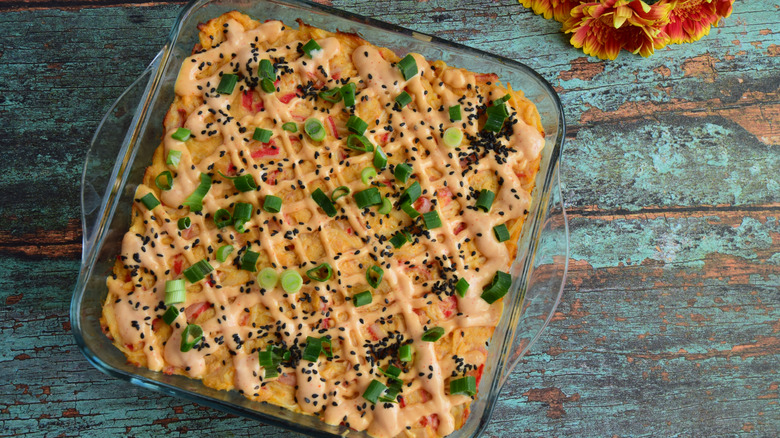
Sushi bake is exactly what you think it is: deconstructed sushi baked in a layered casserole form. The ingredients are usually those of a California roll, but you'll find variations using different sushi ingredients. The basic form is a layer of seasoned sushi rice topped with layers of furikake, shredded imitation crab or other sushi protein like salmon, more furikake, sauces like sriracha mayo, sesame seeds, green onions, and so on. The dish is baked, and then portions are scooped out and placed on squares of nori.
This casserole-style dish may have originated outside the U.S., but its origins are a little hazy. A lot of the dish's social media fame stemmed from the Philippines in the summer of 2020, with images of sushi bakes from both home and commercial kitchens in that country showing up frequently. However, Hawaiian food blog Onolicious Hawaii published a recipe for sushi bake in May 2020, implying that these bakes (along with pan sushi, an uncooked version) were common potluck foods in the state. Vice also reported in May 2020 that online recipes for sushi bake date back to at least 2015, although that article didn't state whether these were from the Philippines or Hawaii.