

Chicago Vs NYC Restaurant Scene: 16 Differences You'll Notice Right Away
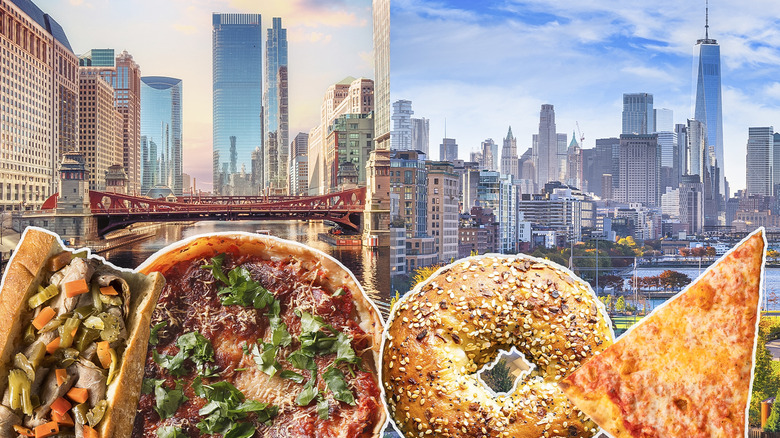
Chicago and New York are two massive food cities, both known for big-name restaurants, unique dishes, travel-worthy meals, and numerous awards. Oftentimes, they're pitted against each other with locals (or just aficionados) of each city debating the aspects that make them great. From pizza to hot dogs to fine dining, there seems to be a lot of disagreement on who does it best.
While there are many differences, these differences are what make both Chicago and New York stellar additions to the U.S. food scene. Endless options reign supreme — both are bolstered by huge immigrant populations that bring depth of flavor, character, and community to each neighborhood and borough. Their unique characteristics and signature dishes can both be appreciated at the same time; for food-lovers, chefs, and critics alike, both Chicago and New York should be at the top of your list of cities to explore with a healthy appetite.
1. Chicago masters casual comfort
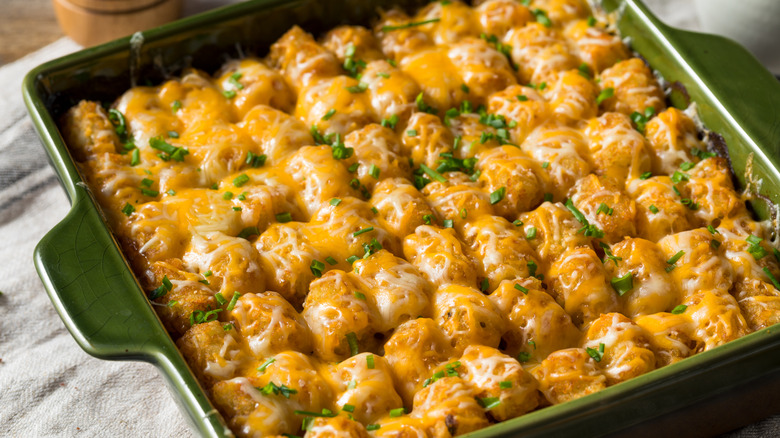
The Midwest is notorious for hearty comfort food that will either fuel a day's worth of hard work or lay you out on the couch in a food coma. In many ways, Midwestern casual comfort food has defined American cuisine — hotdishes and casseroles are craveable staples at potlucks across the nation.
If the Midwest defines casual comfort, then Chicago masters it. Known for large immigrant populations that make the food scene diverse and plentiful, street food staples beloved across the nation, and an incredible diversity in dining out experiences that make eating here a full-time hobby, you don't have to spend much time in Chicago (24 hours in the Windy City would do it) to feel like you've been invited to grandma's for a moveable feast. It's a city whose restaurant scene makes you feel like you're home.
2. New York is a Michelin Mecca
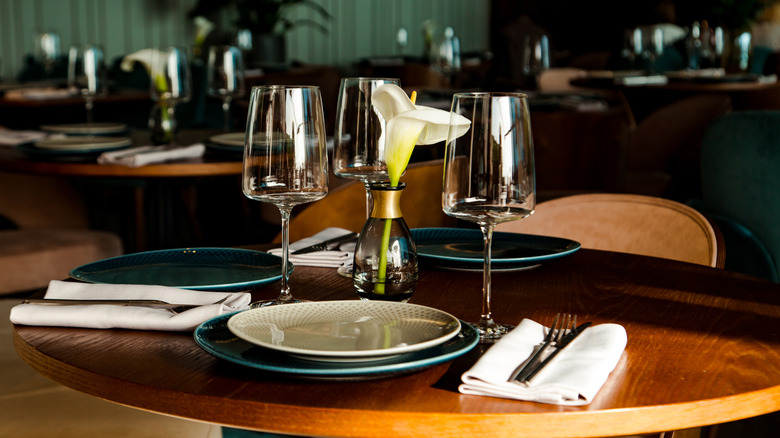
While you'll likely be wearing drawstring pants to eat around Chicago, New York begs for Carrie Bradshaw-inspired fashion moments and dressing to impress. Of course, New York has plenty of casual eats, and Chicago is by no means lacking in impressive upscale restaurants (Alinea, anyone?). But there's no arguing with the fact that NYC has the most Michelin stars in the U.S.A. — by a long shot.
In 2025, New York has 72 restaurants that have been awarded stars, and 82 restaurants that have earned the Michelin Guide's Bib Gourmand (a distinction for more affordable restaurants that are still impressive). By contrast, Chicago has 19 restaurants with Michelin stars and 38 Bib Gourmand awards.
This isn't to say that New York's restaurant scene is superior — food is subjective, and not everyone will enjoy the starched dining rooms and tiny plates that seem to define fine dining. New York is, after all, a global financial hub that is more in demand for high-budget entertainment.
3. Chicago's signature pizza requires some patience
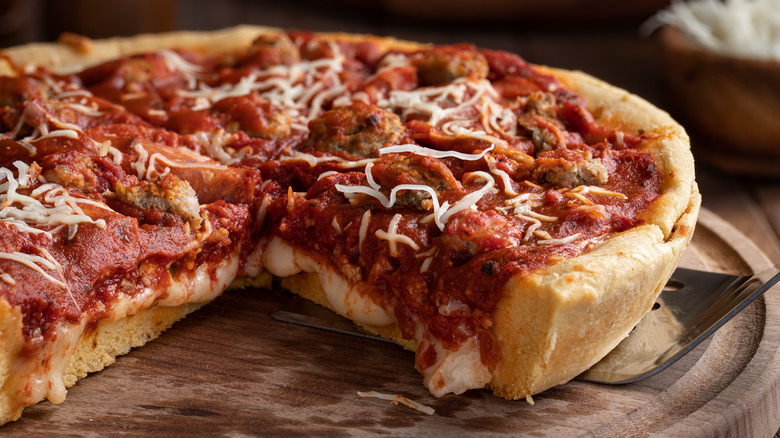
Culture is reflected in food, and this is especially true with Chicago's signature pizza: deep dish. There's nothing about deep dish that would make you want to rush. First, you have to sit down to eat it, preferably in a well-cushioned booth that you can lie down in after. You'll need utensils, and above all, a bit of patience.
If you're planning to go out to a restaurant to try some deep dish, be prepared to wait at least 30 minutes, but realistically, more like 45 minutes to an hour. This is an event, an experience defined by Midwestern comfort and indulgence — and it's worthwhile. Enjoy a nice glass of wine while you wait, relax into friendly conversation with your dining companions, and let your appetite build for that exciting moment when your pizza finally arrives.
4. Take your slice on the go in the Big Apple
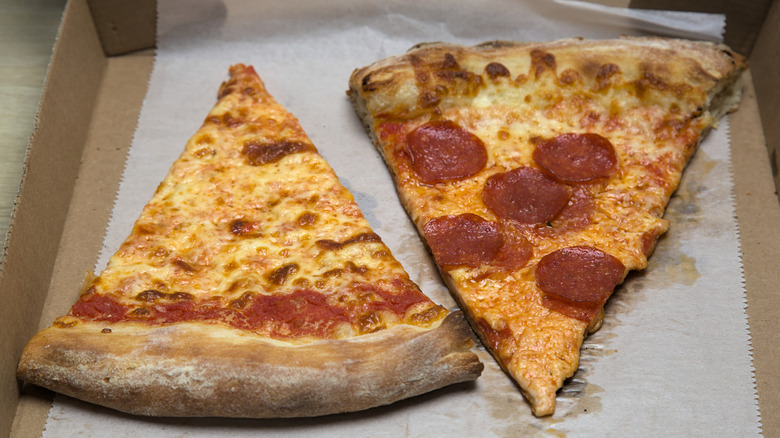
Culture on the East Coast is different, and in the city that never sleeps, there's simply no time for the deep dish experience. Thin crust, floppy slices of pizza reign supreme. This is the pizza you can fold up and eat with one hand as you speed-walk down the street on the way to your next engagement.
Pizza joints speckle the city like raindrops on pavement, making for easy access in any borough. You can be in and out with a hot slice in under 5 minutes (provided there's no line), and even spend less than $5 for the quick meal. All of these characteristics are indicative of a city that's always on the move and needs an accessible meal that's quick, affordable, and delicious to keep the people sustained.
5. Italian beef is uniquely Chicago
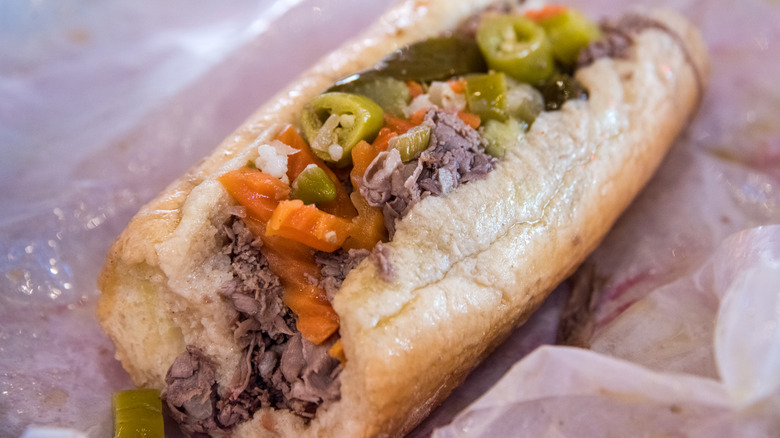
As is common with many signature dishes in U.S. cities, such as chicken teriyaki from Seattle, they are often created by immigrants who draw on inspiration from the cuisine of their homelands to envision something new. This is the story of the Italian beef sandwich, which some may consider to be Chicago's signature dish.
It's a simple affair: thin slices of lean beef on a soft roll, dipped (yes, the whole thing) into au jus. To complete the masterpiece, it's topped with Italian pickled vegetables. There are only so many words to describe just how delicious this sandwich is — the indulgence of the soft bread soaked in roast-beef drippings. The zest and crunch of the giardiniera. The comforting flavor of the beef. Not to mention the environment of one of Chicago's famed Italian beef shops is an experience in and of itself — you simply must try it.
6. New York bagels are famous for a reason
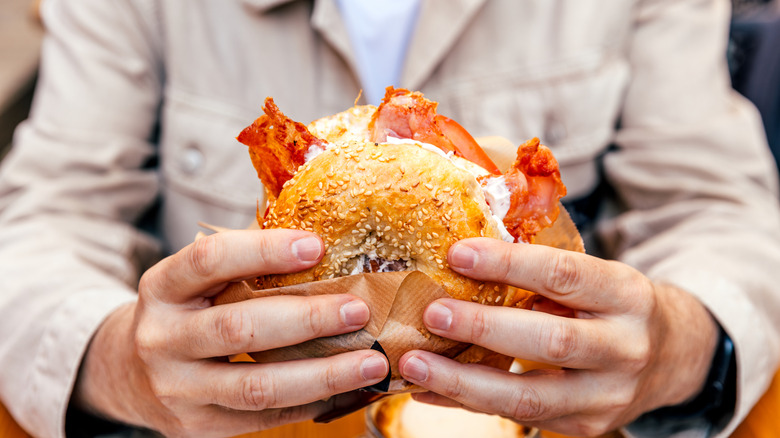
Those who grow up in New York and leave for other cities often find themselves pining after a New York bagel. It's one of those foods, similar to barbecue in the South, that is hard to find in its authenticity away from home.
Jewish immigrants from Poland introduced New York to bagels in the late 19th century, and they quickly became a staple not just in the Big Apple but across the United States. Often served in Jewish delis, the options can be overwhelming for those new to the experience.
Glass cases full of countless cream cheese spreads. Baskets upon baskets of different flavors of bagel, all delightfully round and fluffy. Red onions, cured salmon, whitefish salad, tomatoes, capers — and these are just the cold options. An iconic bacon, egg, and cheese bagel is just what you need to start your day the New York way.
7. Chicago's drive-thrus bring comfort food to another level

While Chicago does have great public transport, it is still part of the Midwest, where streets are sprawling and massive, and a car is essential to connect you to any of the suburbs. Thus, a big part of the dining-out experience is one in which you never have to leave the comfort of your vehicle (which is especially great for those harsh winters).
Drive-thrus are common everywhere in the U.S., of course, but Chicago doesn't just have the franchised fast food joints you'd see anywhere. There's a unique brand of Chicago-specific drive-thrus like Portillo's, Charcoal Delights, Superdawg, Chi-Shack, or Janson's that serve Chicago favorites like charbroiled burgers, Italian beef, Chicago dogs, shakes, and chocolate cake. It might not be something that tourists experience all too often, as visitors are more likely to stick to pubic transport. But many of these drive-thrus have sit-in dining areas that you can enjoy just as easily without a car.
8. Bodega culture is big
NYC has the fewest cars per capita in the United States; in a city so big and so very crowded, walking and taking the train reign supreme. The need for quick access to food and groceries on foot is met by the almighty bodega, a New York phenomenon similar to a corner store but with distinctly New York flair.
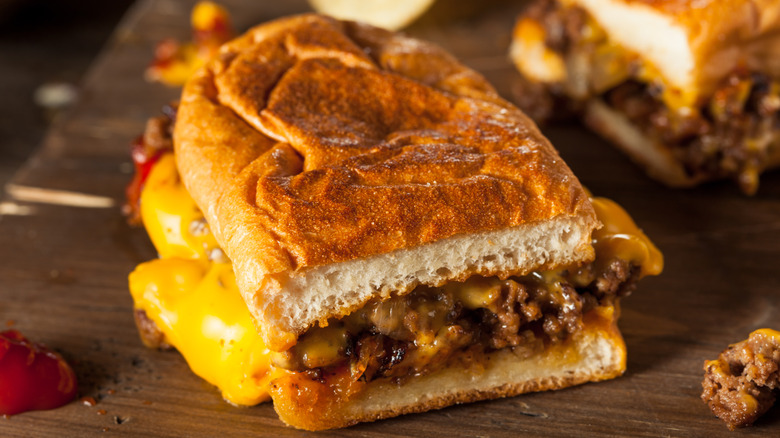
Beyond groceries, snacks, and coffee, bodegas are known for having deli counters that will feed the people late into the night and early in the morning. Bacon, egg, and cheese croissants, chicken over rice, and deli sandwiches are all common bodega meals, but perhaps the most famous and iconic of the bodega staples is the chopped cheese.
Ground beef chopped up on a flat top, smothered in cheese, and served on a soft hoagie roll with toppings similar to a cheeseburger. It's filling, affordable, and accessible. Grabbing a chopped cheese on your way to the train is a well-known New York experience.
9. Chicago street food is world famous
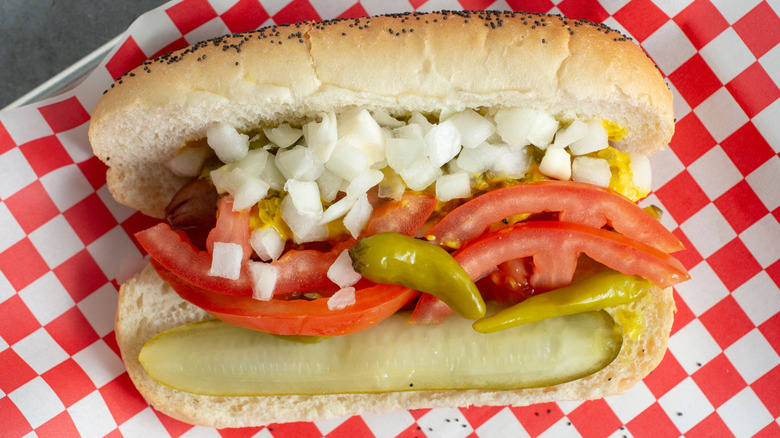
Many cities in the U.S. have their own style of hot dog and topping (New York is known for two versions between Manhattan and Coney Island), but Chicago's is perhaps one of the most renowned and interesting versions.
Pickle spears, fresh tomato slices, mustard, relish, peppers, celery salt — there are so many fresh and pickled veggies on this dog it almost feels like a healthy snack. Piled onto an all-beef dog and housed in a poppyseed bun, the result is a super-colorful meal that is easy to spot on menus all over Chicago.
Seriously, you don't have to look far. From street food carts to restaurant menus to drive-thrus and sports events, the Chicago dog is ingrained in the city and is always there when you need it; in fact, it's such a staple that you're likely to find it on bar menus far outside of the city.
10. NYC halal carts changed the game
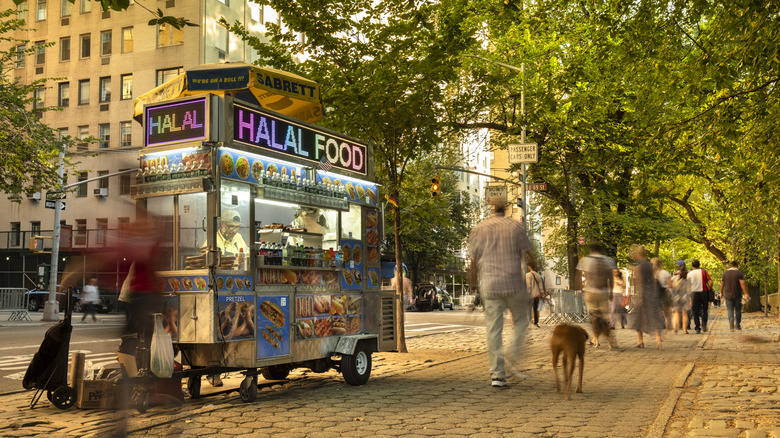
The street food in New York City is plentiful, and there's no shortage of hot dog carts. But by far the most popular and most iconic of the late-night (or all-day) street eats is the halal cart.
Now a significant part of food culture in New York, the halal cart began around the '90s when an influx of primarily Egyptian immigrants decided to cater food to their fellow Muslim taxi drivers by making halal carts that are quick, affordable, and widely available.
The menu generally consists of chicken or lamb over rice, gyros, falafel platters, white and red sauces, and desserts like baklava cheesecake. They're pretty easy to spot — walk around NYC enough and you're sure to find one. If you're lucky, there won't be much of a line, although around peak hours like lunch and dinner time, it may be wrapped around the block.
11. Mexican food in Chicago is setting the tone
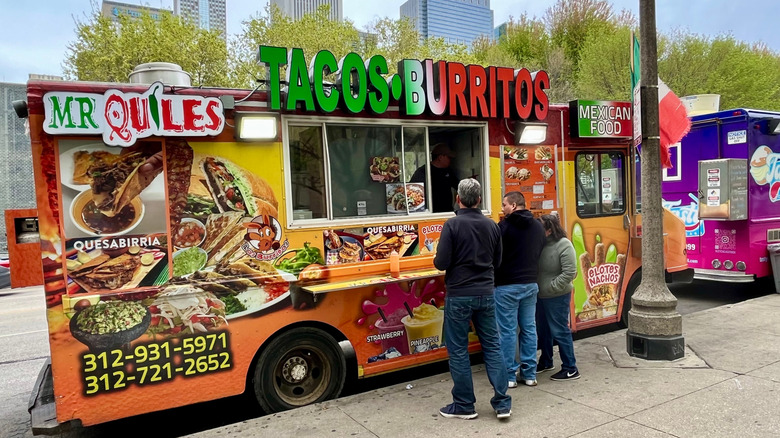
If you've ever been to Chicago around Mexican Independence Day, then you already know that the Windy City has an impressively large Mexican population for a city so far from the border. Taco stands, trucks, and hole-in-the-wall burrito spots are not hard to come by, but beyond the casual eats, Chicago is setting a tone for upscale Mexican cuisine in the United States.
Mexican food is often regarded as 'cheap' — most likely because the ingredients used to make it (corn, beans) are usually abundant and affordable. But what most people don't realize is the massive amount of labor and time it takes to make items like fresh tortillas, tamales, and barbacoa.
Eleven of Chicago's Michelin-recognized restaurants (between stars and Bib Gourmands) are Mexican. Marcus Samuelson, the famed New York chef who started Red Rooster Harlem, said of the city in an episode of "No Passport Required with Marcus Samulesson," that "there's also a really cool emerging Mexican food movement that is really creating dishes at the highest level."
12. One of the most diverse neighborhoods in the world is a great place to eat
You may know it from Lin-Manuel Miranda's musical, "In the Heights." One of the most diverse neighborhoods in the world, it's estimated that 160 different languages are spoken amongst Jackson Heights' some 160,000 people. It's a true representation of New York, which has been built and rebuilt over time by countless immigrants from nations across the world.
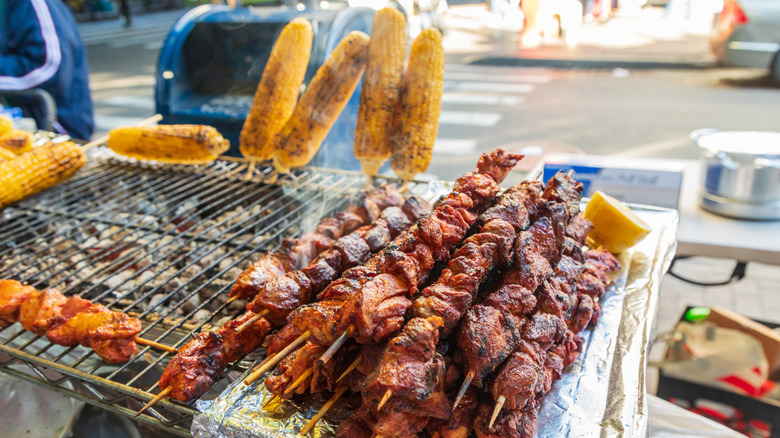
And where there's diversity, there's great food. Arepas, samosas, dumplings, birria, shawarma, koftas ... the options are practically endless. Not too far away, near the Queens Zoo, is the legendary Queens Night Market, where you can find all the diversity of flavors that Queens is known for in one place — just make sure you check their website before you visit, as the market is seasonal.
13. Restaurant Row in Chicago is a food-lovers dream
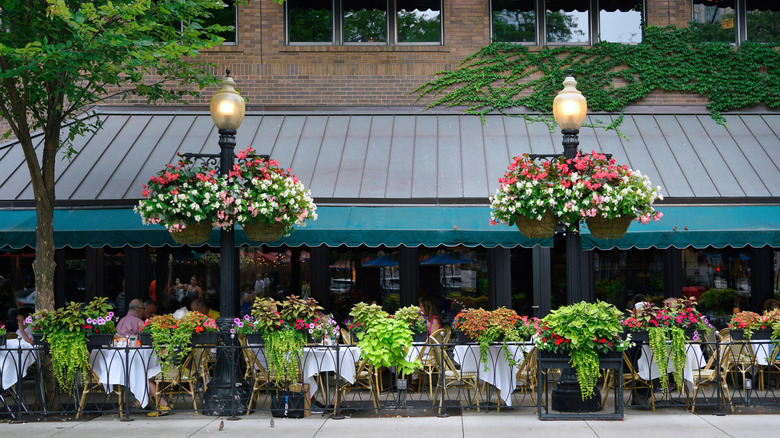
The first time you see Randolph Street in Chicago's Fulton Market District, you may find yourself both salivating at the mouth and panicking a little bit at the overwhelming amount of options. Large restaurants are stacked like ducks in a row, one after the other, down the entirety of the street.
Chicago is known for these spacious, food-centric streets that New York can only dream of with its very limited physical space and massive population. Milwaukee Ave is another, which you could spend infinite amounts of time on and barely scratch the surface of what Chicago has to offer.
Further North lies Devon Ave, one street that will transport you out of Chicago and into one of the most diverse streets in America. Known as Little India, walk this street and you'll find sweets, treats, meals, and stores that will open your mind to an incredible world of South Asian cuisine.
14. NYC squeezes restaurants into tight corners
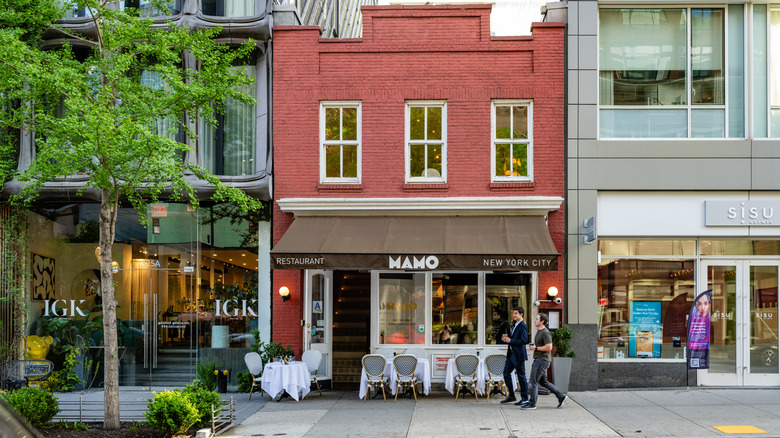
There's a reason New York apartments have grown a reputation for being incredibly small (and expensive); the city has a population density of roughly 367 people per square mile (and that's not including the roughly 65 million tourists that visit each year). Not only are the apartments small, but the space available for restaurants is also quite limited. Chefs have to make do with cramped kitchens, limited dining areas, and, oftentimes, old buildings.
Still, these circumstances are a big part of New York's charm. Something is endearing, and even romantic, about a restaurant that only seats 20 people, where you can enjoy an intimate meal with staff and fellow diners.
Take Joji, a one-star Michelin sushi experience that's tucked in a corner of Grand Central Station. They seat only 10 people at their countertop, where you can witness the incredible sushi being made before you in an omakase experience.
15. Chicago hosts the James Beard awards
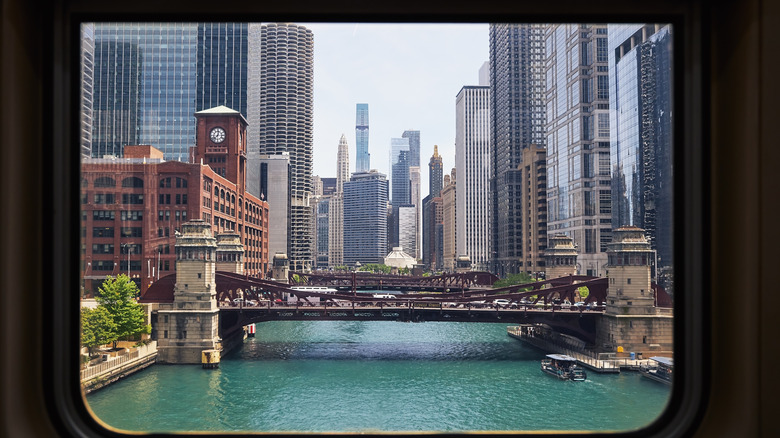
The James Beard awards are the Oscars of the food world. Chefs, restaurants, and bartenders are nominated from around the nation, and the lineup at the yearly awards (hosted in Chicago) is a who's who of the restaurant world.
While the awards are based out of New York, in 2015, they began hosting in Chicago — a true testament to the significance of Chicago's food scene. They will continue to be hosted in the Windy City until 2027, as of the time of this writing, bringing a massive amount of tourism and attention to the city each year.
New York may have the most Michelin stars by a long shot, but it's hardly the only award that signifies a great restaurant, or great food. Chicago boasts over 50 winners of James Beard awards, from Outstanding Service to Best Chefs.
16. New York restaurants are full of history
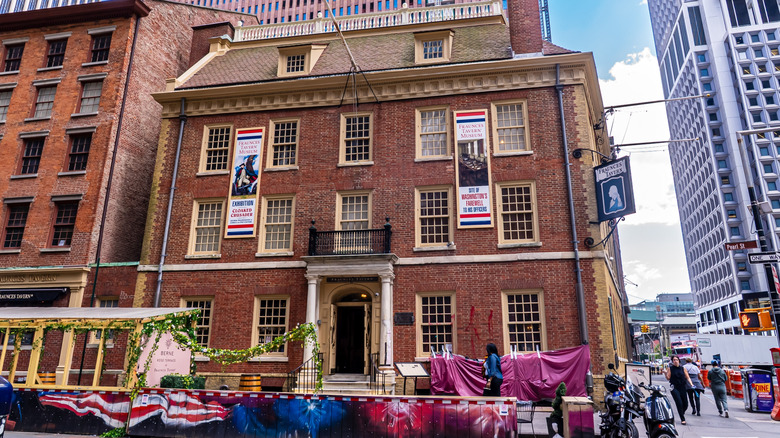
Both Chicago and New York are full of history, but the former capital is home to some incredibly historic taverns and restaurants. Known for major points in restaurant history like the opening of the nation's first fine dining restaurant, Delmonico's, which is still open today, and for raising many chefs who would go on to define restaurant and food culture in the U.S., there is no shortage of history in NYC.
Given that New York is right on the coast, its history of European settlement dates back significantly further than Chicago, and many notable events took place in bars and restaurants that still exist today. Fraunces Tavern is perhaps one of the most notable. Opened in 1762, it is now a National Landmark due to the events that took place there, such as meetings by the Sons of Liberty to plan the tea party.