

10 Common Breakfast Foods You'll Find In Peru
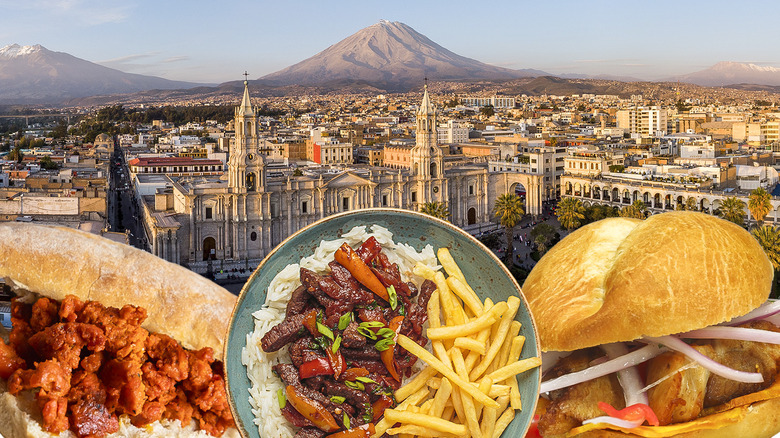
Lima, the capital of Peru, is known as a culinary capital of South America. And while it is certainly a destination within South America, more and more, Peru is also solidifying itself as a world-renowned food destination. This year, the restaurant Maido, in Lima, was ranked the number one restaurant in the world on the World's 50 Best Restaurants list, with three other Lima locations also claiming spots on the prestigious list.
But it's not just the city's fine dining scene that really puts it on the map. Chef Erik Ramirez of the acclaimed Peruvian restaurant Llama Inn (in New York City) says that the factors that set Peru's food scene apart are cultural influences and biodiversity. There is such a rich cross-cultural blending in Peru that many of the resulting cuisines even have their own terminology: Nikkei refers to Japanese-Peruvian cuisine, and the blending of African, Indigenous, and Spanish cuisines is referred to as comida criolla. This incredible sharing of cultures, paired with the biodiversity and microclimates of the country, results in massive access to produce, grains, and meats — basically a chef's or food lover's dream come true.
While some Peruvian dinner items have become quite commonplace, Chef José Luis Chávez of Michelin-recognized Mission Ceviche (in New York City) would love to see Peruvian breakfast foods recognized on the same level as ceviche. "Peruvian breakfast is such a deep and diverse tradition, from coastal to highland to jungle regions; every area brings something different to the table. It's more than just a meal; it's a cultural expression," he tells us.
1. Quinoa porridge
The typical American breakfast can look quite different than a Peruvian one — you won't find pancakes and waffles on the table first thing in the morning in Peru. Chef José Luis Chávez says: "Peruvian breakfasts tend to be more savory and hearty, even a bit indulgent at times. In the U.S., breakfast is often lighter or sweeter — think cereals, pancakes, or smoothies."
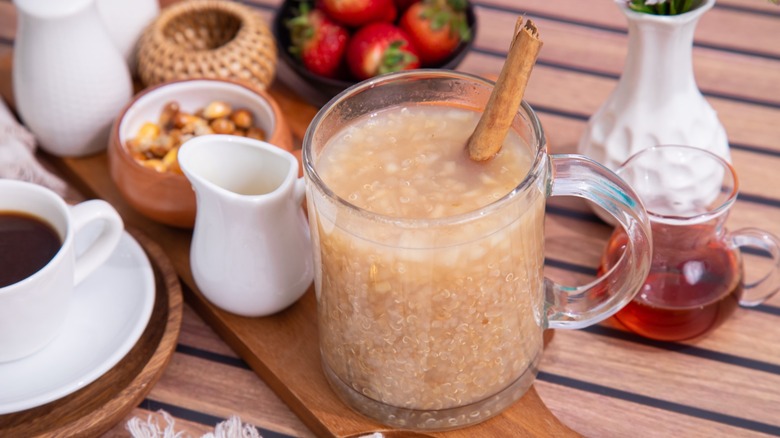
Despite the differences, there is one breakfast food that draws on some similarities. Quinoa porridge, also referred to as quinoa oatmeal, is served with fresh or stewed fruit, spices, or nuts — very similar to how an American-style oatmeal would be served at the breakfast table. Sometimes it's cooked with enough liquid (water or coconut milk) and fruit to be served in a cup and consumed as a beverage.
Quinoa porridge is a healthy way to start the day, and one that Miryam Huarcaya of Lima Limón Peruvian restaurant in Las Vegas says is an underrated Peruvian breakfast. Quinoa contains all nine essential amino acids and has almost twice the amount of protein that oatmeal does. You can even start the process of making quinoa oatmeal in your rice cooker, which will yield perfectly fluffy quinoa with minimal effort. You can always add coconut milk, fruit, and spices to the quinoa once it's mostly cooked to create a more porridge-like consistency.
2. Tamales
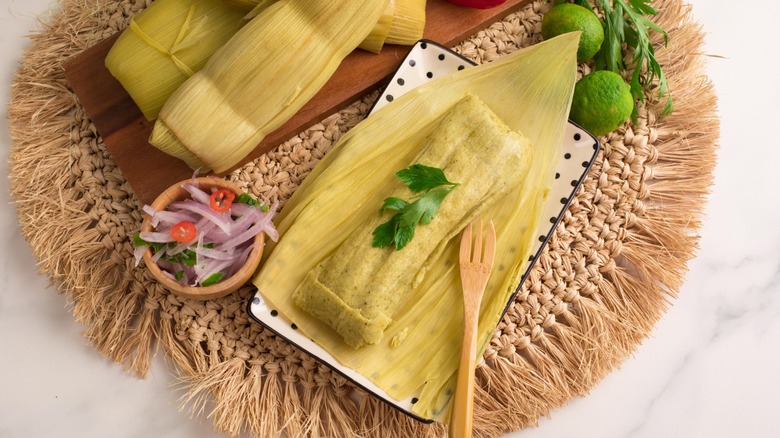
Tamales are a deeply traditional food dating back as early as 8,000 B.C. in indigenous Mesoamérica. They are perhaps one of the world's oldest and longest running food traditions — a dish that has withstood the test of time and lasted all these years as a true testament to its ingenuity; flavorful meat filling surrounded by a protective, and preservative casing of masa, neatly wrapped in a corn husk that serves as the perfect package both for steaming and storage.
True to the statement that Peruvian breakfasts tend to be more heavy and savory, tamales are commonly served first thing in the morning in Peru, accompanied by a spicy sauce, bread, and coffee on the side. Chef Jesus Delgado of Tanta Cocina Peruana in Chicago lists tamalitos verdes as one of the more underrated Peruvian dishes. These noticeably green tamales are distinctly Peruvian and appear quite different (in color, at least) from their Mexican counterpart. They get their vibrant color from the addition of fresh cilantro to the masa, resulting in a bright, herbaceous flavor to cut through the richness of the meat filling.
3. Butifarra
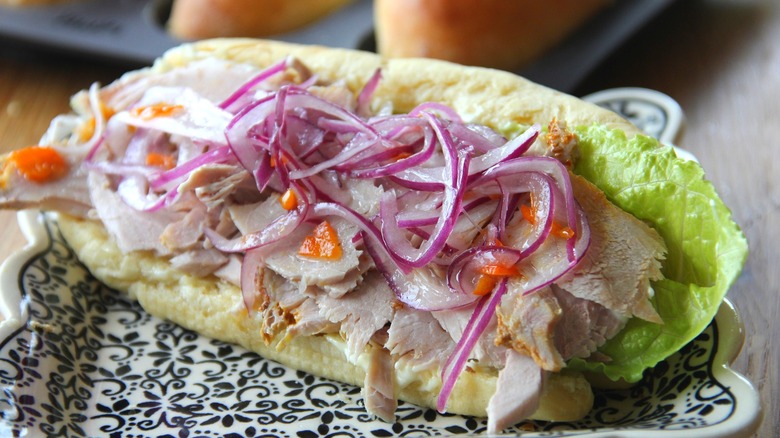
Similar to one of Anthony Bourdain's favorite foods, the Brazilian mortadella sandwich, a butifarra is a relatively straightforward sandwich consisting of cold slices of ham on French bread with salsa criolla (a traditional Peruvian salsa). The key to making this sandwich truly Peruvian, not to mention truly delicious, is in the star ingredient: The ham.
Jamón del país isn't your average ham; seasoned with ají chili, loads of garlic, and red pepper, the result is an exciting depth of flavor. From there, the sandwich really builds itself. You don't need much in the way of added seasoning when there's already so many spices packed into the meat. It's topped with salsa criolla, which is basically the Peruvian version of pico de gallo, but rather than dicing the onions and peppers you'll slice them into thin, long strips and dress them with lime juice and cilantro. The spice of ají peppers or jalapeños combined with the acidity of lime juice and pungency of the onion is the perfect condiment to complement the richness of the ham.
A sandwich like this would be more commonly seen on a lunch menu in the U.S., but for Peruvians, a hearty, savory breakfast is the norm, and this isn't the only pork sandwich you're likely to find on the breakfast table.
4. Pan con chicharrón
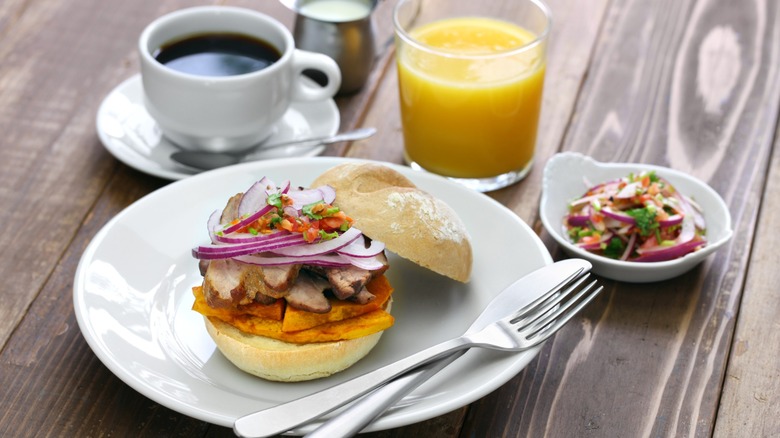
Four Peruvian chefs all named one dish as their absolute favorite Peruvian breakfast: Pan con chicharrón. Chef José Luis Chávez said: "Growing up, one of my favorite breakfasts was pan con chicharrón — a sandwich with crispy pork belly, sweet potato slices, and salsa criolla, all on fresh bread. It's bold, flavorful, and incredibly satisfying — a true Peruvian classic."
An indulgently thick slice of pork belly is layered on top of soft bread and topped with Peru's favorite condiment: Sliced onions and peppers marinated in lime juice. The addition of sweet potato adds texture and sweetness, while the vibrancy of the salsa cuts through it all to bring an infallible balance. Simple, yet utterly perfect.
The history of this dish didn't actually begin in Peru, as the continent didn't have domesticated pigs until the Spanish introduced them. Thus, pork sandwiches were something the Spanish brought to Peru, but the addition of sweet potato and salsa criolla makes this dish distinctly Peruvian, and very popular in Lima, especially.
5. Humitas
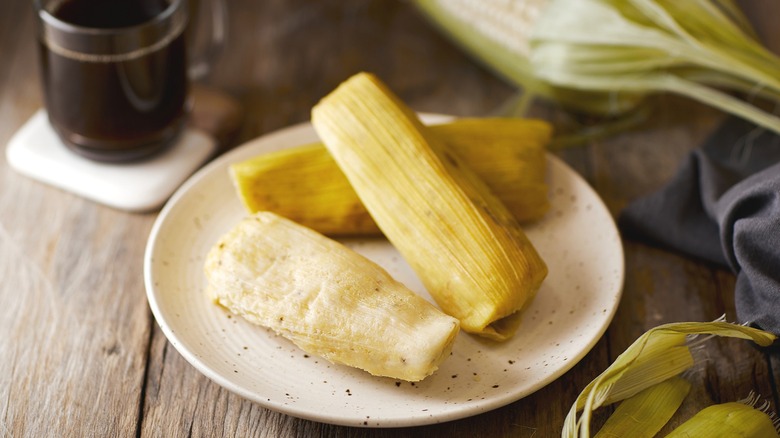
At first glance, you might mistake a humita for a tamal — after all, they are both corn-based dishes that are cooked in a corn husk and steamed. The primary difference is that while tamales use masa (a dough made from nixtamalized corn), humitas use fresh corn. They are generally much smaller as well because they aren't typically stuffed with a filling; rather, the fresh corn is ground with cheese, eggs, cream, and either sugar or savory spices and eaten on its own.
Chef José Luis Chávez says humitas are one of Peru's most underrated breakfast dishes. "They are similar to tamales but lighter, slightly sweet or savory, and made with fresh corn. They're not as common on menus outside Peru, but they deserve more attention." And Chef Jesus Delgado describes them as "soft and comforting."
Given the light juiciness of freshly ground corn, combined with the aerating effects of cream and egg, it's no surprise that a humita is the slightly sweeter, lighter version of a tamal.
6. Tacu tacu
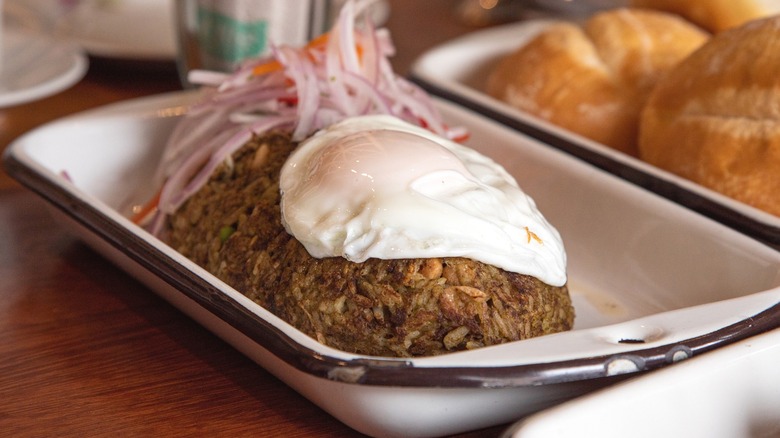
Like many of Peru's most-enjoyed dishes, tacu tacu is rooted in a long and complex history. Made from leftover beans and rice that are brightened with ají amarillo or other seasonings and pan-fried to achieve a crispy exterior, this dish is typically served for breakfast or lunch, topped with a fried egg and ever-present salsa criolla. For an extra heavy breakfast, it might be served with a side of bread or lomo saltado, a stir-fried beef dish that is one of Peru's more popular lunch or dinner dishes.
This dish was created during the Spanish colonization of Peru, when African slaves were often only provided with leftover ingredients to prepare their meals. Thus, creativity and ingenuity brought about a dish that is now a staple on many Peruvian breakfast menus.
The basic technique to make tacu tacu begins with aromatics like onion, garlic, and one of Peru's most important ingredients — ají amarillo. From there, you add mashed leftover beans and cooked rice to form a dough. The dough is then fried in a pan until crispy on both sides, and topped with an egg to finish. The resulting breakfast is packed with flavor, and is super filling.
7. Juane de gallina
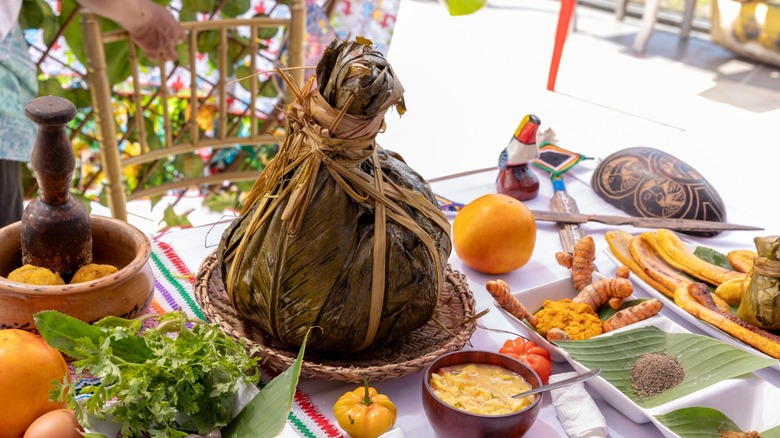
This dish consists of rice and chicken wrapped in banana leaves, according to Chef Miryam Huarcaya (owner of Lima Limón Peruvian Restaurant in Las Vegas). It has an interesting look, and an even more interesting history to go along with its striking shape. The dish was likely created long before the Spanish arrived in Peru, when banana leaves were a common tool for cooking meals, but how the flavorful ball of food got its name is up for debate.
The first theory is perhaps the most logical — ancient Peruvians used the word "huanar" to describe the method of cooking food in banana leaves. This word could easily be shortened to "huane" or the alternative spelling: Juane. The other theory is a bit more dramatic, suggesting that the Spanish referred to the round balls of rice as "Juan" due to their resemblance to the decapitated head of Saint John the Baptist, whom they declared the patron saint of the Amazon, where juanes are most popular.
Whatever theory you choose to believe regarding the name, one thing's for sure: Juanes are a big part of Peruvian culture, and packed with flavor to boot. Large amounts of turmeric are used to cook the rice initially and give it that signature yellow hue. Rich chicken broth is used to prepare the chicken and rice to perfect tenderness, and the banana-leaf packages are finished with classic Peruvian garnish: Boiled eggs and black olives.
8. Salchicha huachana con huevos revueltos
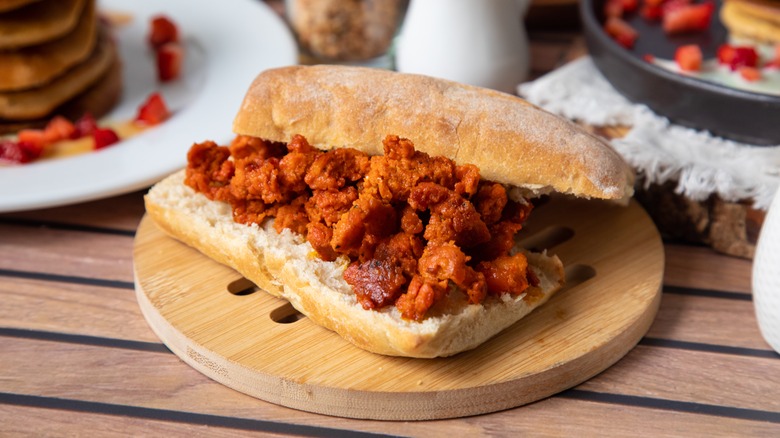
While the Spanish name may seem long, this dish is remarkably similar to what one might order for breakfast in the United States. Salchicha means sausage, with Huachana referring to the city in Peru (Huacho) where this spice-rich sausage is a staple, and huevos revueltos simply means scrambled eggs. Thus, this simple dish of scrambled eggs and sausage would look quite familiar to an American who enjoys a good Italian sausage for breakfast alongside some fried or scrambled eggs.
For James Beard Award-winning Chef Erik Ramirez (of Llama Inn) this dish is more than just simple sausage and eggs. "My favorite breakfast growing up was salchicha huachana con huevos revueltos — crumbled pork sausage from a town called Huacho in Peru (hence the name). We'd eat it with warm bread. The real star of the dish was always the sausage — there was almost more sausage than eggs." He says that this is still his favorite Peruvian breakfast to eat, and he enjoys preparing it for his sons as well.
Sausages vary in spice blends, flavors, and texture around the world, and salchicha huachana is no different in its uniqueness. If you're dying to try this delicious breakfast, you may be lucky enough to live near a Peruvian butcher who makes it themself. If not, you can always order it online straight from the source.
9. Hot soups
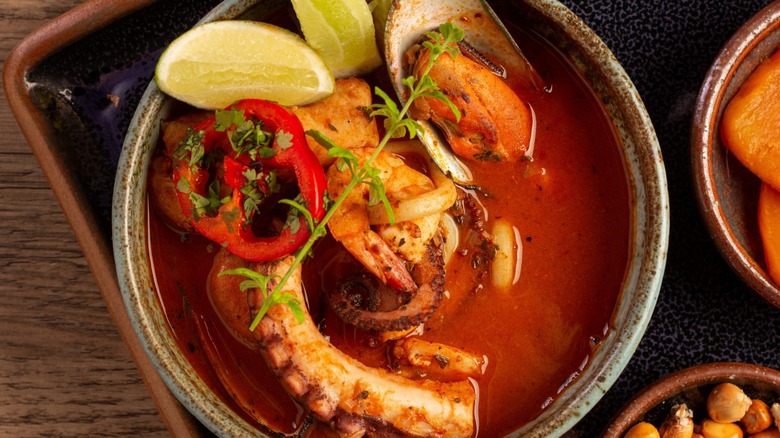
The closest most Americans get to having soup for breakfast is a cold bowl of breakfast cereal. But for many cultures, like Japan's popular miso soup, a broth rich with meat is a common way to start the day. In Peru, there are several meat-centric soups you'll find on restaurant menus or served in the Peruvian home, with caldo de gallina (a rich chicken soup, as described by Chef Erik Ramirez) being the most common, especially in more traditional settings.
Caldo de mote is another common Peruvian breakfast, which draws similarities to a Mexican pozole by using hominy, a corn that's been softened by an alkaline solution, as a key ingredient. If you're feeling more adventurous, Chef Jesus Delgado of Tanta Cocina Chicago says he "used to enjoy a good cau-cau (tripe stew) in the morning with fried egg on top."
A comforting bowl of Peruvian soup doesn't just serve as a great way to start your day, but the best way to end it, too. Chef Delgado adds: "After a long night when you get kind of crazy, I recommend a good caldo de gallina or a leche de tigre. These are our hangover cures." Susana Vivanco of Lima Criolla Peruvian Restaurant in Austin, Texas loves a seafood stew like chupe de mariscos or parihuela to beat a hangover. These vibrant soups originate from coastal fishing communities, which pack loads of seafood together with bright aromatics and a rich broth.
10. Fresh juices, black coffee, and emoliente
Sometimes breakfast is just as much about coffee and orange juice as it is about hash browns and eggs, and Peru isn't so different. While the juice selection in the U.S. is typically quite limited, in Peru, the varying climates create a much more diverse selection of fruit. Miryam Huarcaya of Lima Limón Restaurant says: "In Peru, it's common to drink fresh juices made from fruits that are almost impossible to find in the U.S., like lúcuma, chirimoya, or guanábana." Lúcuma is a yellowish fruit with a super-starchy texture and consistency. Its texture, when ripe, is compared to egg yolk, but its sweet flavor is compared to caramel. Chef José Luis Chávez says he loves a glass of lúcuma or papaya juice "for something special."
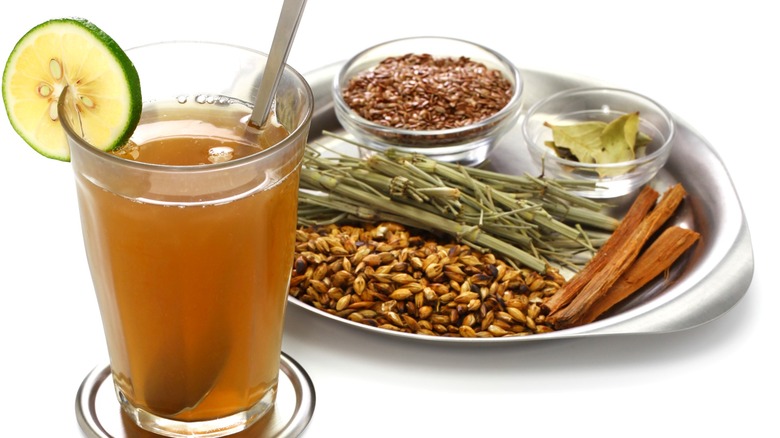
Without a doubt, all five Peruvian chefs agree that coffee is an essential part of a Peruvian breakfast, typically brewed fresh and served black. But one beverage that frequently makes an appearance at the Peruvian breakfast table is perhaps one of the most underrated aspects of the meal: Emoliente. A warm herbal drink, emoliente is made with a wide variety of nutritious herbs, but the base is always toasted barley. Chef Erik Ramirez says that it's "not a full meal, but a classic way many Peruvians start the day. And when it's made right, it's so good — warming, comforting, and nutritious."