

10 Most Overlooked Fire Hazards In Your Kitchen
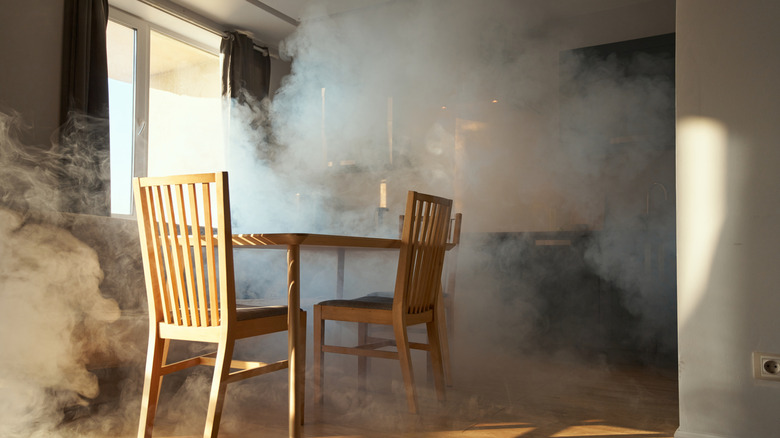
The same heat and fire that cook your food can also get out of hand and cause part of your kitchen to burn. In fact, kitchen fires are so easy to start and so common that they've become one of the top causes of house fires overall. Between 2017 and 2021, and in 2023, kitchen fires were actually the leading cause. In 2021 alone, firefighters in the U.S. battled 170,000 fires that were started by people cooking at home. That might sound like a good reason to opt for takeout at first, but what it really means is that you need to know more about just what could set your kitchen alight.
While some fire hazards are well-known, like placing a dishtowel too close to a burner, others aren't as obvious. When it comes to kitchen fire safety, prior education is much better than learning by experience. So, while some of you may know that X, Y, or Z could lead to a fire, others may have no clue. Take a look at this list of 10 overlooked fire hazards in your kitchen and see how many you were already aware of.
1. Leaving appliances unattended 'for a second' while cooking
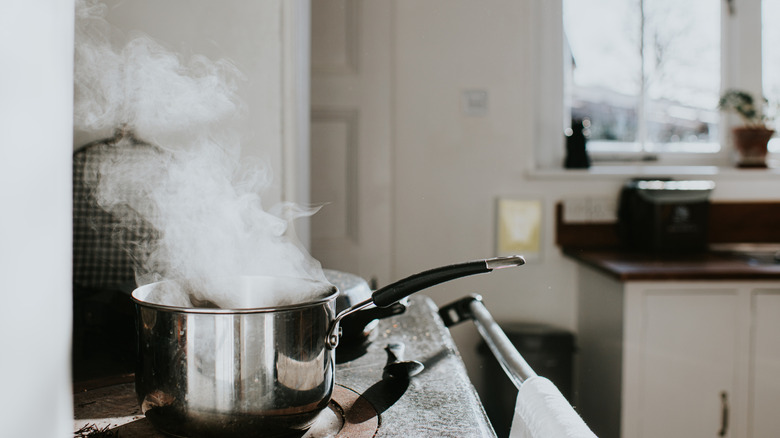
You'd think this wouldn't be overlooked, but somehow people still do this. In fact, it was the leading cause of cooking fires in 2021, leading to 37% of kitchen-based blazes. Food can ignite in a pan or boil over onto hot burners and catch fire. Plus, there's the risk of electrical malfunctions, like sparks producing flames, that you won't be able to extinguish if you're not in the kitchen to catch them early.
Fire can start and spread much faster than you expect. That's what happened in a Mesa, AZ, apartment in 2007 when one man left some cooking oil unattended on the stove to take burgers outside to the grill. The oil caught fire while he was outside. In the end, two apartments were burned, and several others had smoke damage, all from just a couple of minutes of not watching the stove. Stay in the kitchen while food cooks. The issue isn't that fires will start — it's that they could start, and you being in the kitchen and monitoring the cooking appliance is the best way to prevent those unexpected problems from getting out of control.
What about slow cookers, which are meant to be left on for hours? Slow cookers are safe to leave unattended only if you use them properly. They have to be on a heat-safe surface, they have to be on low heat, they should not be overfilled, and they need to have proper clearance around them.
2. Overcooking because you didn't check your new oven's temperature
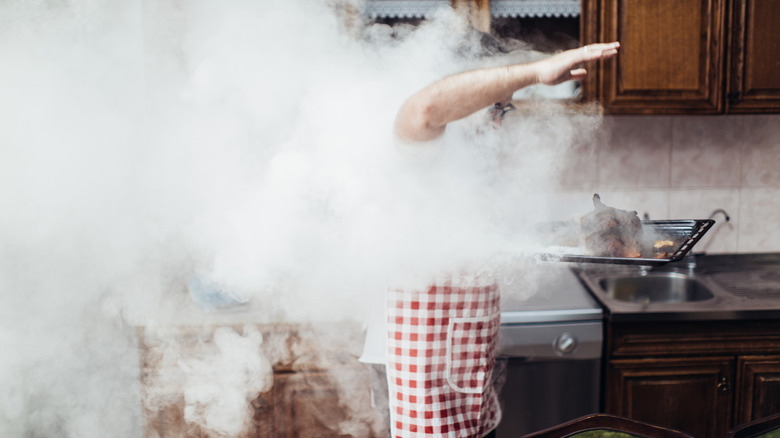
New ovens are supposed to work very well, but even they can have a thermostat that's off by some degrees. Although you can recalibrate your oven's thermostat, it's not unusual to still find deviations of up to 15 degrees Fahrenheit that make the oven run hotter or colder than expected.
A thermostat that runs hot or cold means that you might end up with food that cooks unevenly when you set the dial to the right temperature. If your oven runs cold, the food won't cook properly. But if it runs hot, your food could come out burnt. In some cases, that burnt food could end up igniting, and then you have to deal with a fire in your oven.
When you get a new oven — and occasionally over the lifetime of the oven, too — you should test the temperature to ensure you know how well it's working. The easiest method is to place a couple of oven thermometers in there and set the oven to preheat to a certain temperature. At the end of the preheating time, check the thermometers and see if they match the temperature the oven was set to. You can go further and check how much the temperature in the oven changes over time with an air probe (this sits inside the oven while connected by a cable to a digital thermometer that's outside the appliance).
3. Throwing away grease before it cools
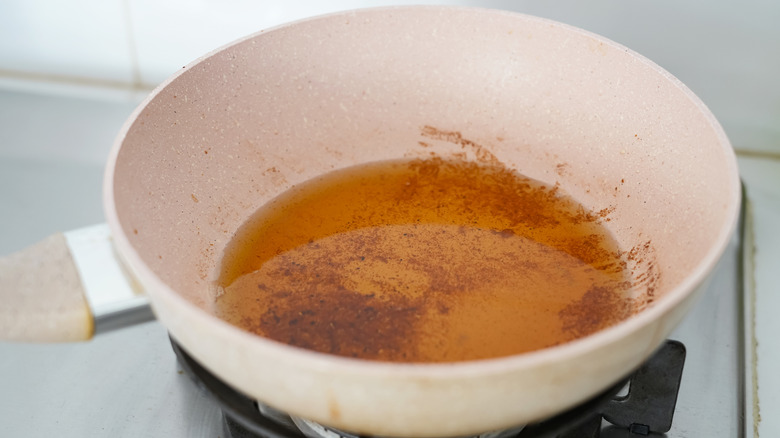
Grease left over from frying can be so hot that it causes anything flammable it touches to ignite, including things in your trash can. That may seem a little alarmist because, after all, you were just using that grease to fry something, and the food turned out well — no burnt areas in sight. But not everything has the same ignition point. If you dispose of the oil by pouring it into a trash can filled with items that catch fire easily, those items are not going to react like the food in your pan did. Always let the grease sit in the pan and cool down before you do anything with it.
Grease is a particular problem in kitchens because it can catch fire so easily. As you wait for the grease in the pan to cool, check the surrounding cooking area and wipe up any splatters that may have landed on the stove, counters, or walls. Grease buildup itself is a cause of kitchen fires, so you don't want to leave any behind after cooking.
4. Not cleaning out crumb trays
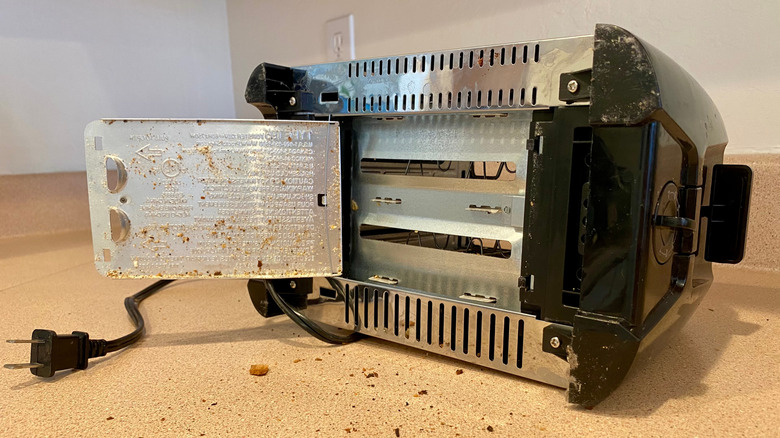
Toasters and toaster ovens both have crumb trays that catch debris that falls off food as it cooks. The crumbs can build up over time and catch fire eventually as the heating elements in the appliances warm up. And these aren't just tiny flames; a toaster fire from ignited crumbs can produce some pretty impressive and dangerous blazes. In toasters, crumbs can fall off bread as you place it in the slot, and more crumbs can fall off as you remove it. In toaster ovens, crumbs can fall off bread that you're toasting on the rack. And, even if you use a pan under the food, crumbs can bounce off the pan as you move things around or as you remove the pan from the oven.
When you're done using either appliance, unplug it, let it cool, and then empty and clean the crumb tray. Don't just shake the tray; wipe it down, too. Toaster ovens usually have a tray that you can pull out, while toasters may have a small door-like tray at the bottom that you can remove. One thing to remember about toasters, specifically, is that crumbs can also get stuck inside the toaster itself, rather than falling onto the tray. When you clean out the tray, shake the toaster over a trash can to loosen any crumbs inside. You can also take a clean toothbrush and gently sweep out crumbs that aren't budging.
5. Wearing loose clothing while cooking
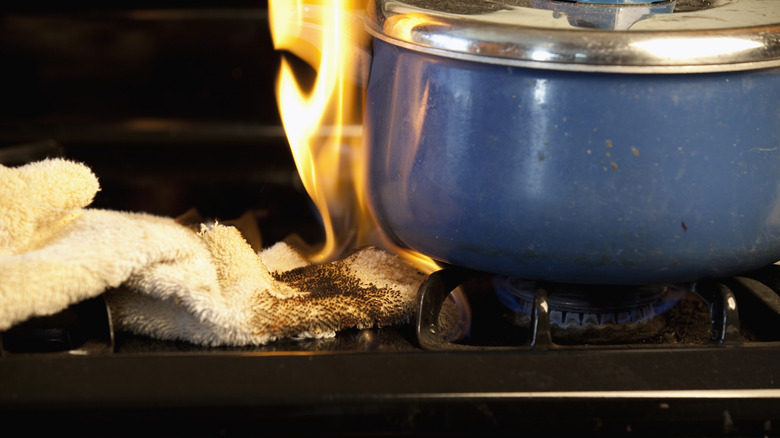
Just as placing a dishcloth too close to a burner can set the fabric on fire, so too can getting your clothing too close to the burner. This can happen when you wear loose-fitting clothing next to a gas flame or heated element on a stove. Loose sleeves or sleeves that hang down when you hold your arm out, scarves, even baggy shirts, can all end up catching fire if they get too close to a flame or hot surface. And, while clothing-initiated fires aren't the most common source of kitchen blazes, they can obviously lead to injury and death. Don't risk your health like that.
Always tie back loose clothes. Roll up sleeves tightly, wear close-fitting clothing, remove loose jewelry, and be sure no scarf ends hang down anywhere near the stovetop. Yes, it may look really cool to busily prepare a meal for a food vlog while wearing a stylish, flowy outfit, but it's too risky. And remember, just because nothing has ever happened before when you've worn loose clothing while cooking doesn't mean nothing ever will happen. Be safe and pick something appropriate to wear in the kitchen.
6. Putting things on top of toaster ovens
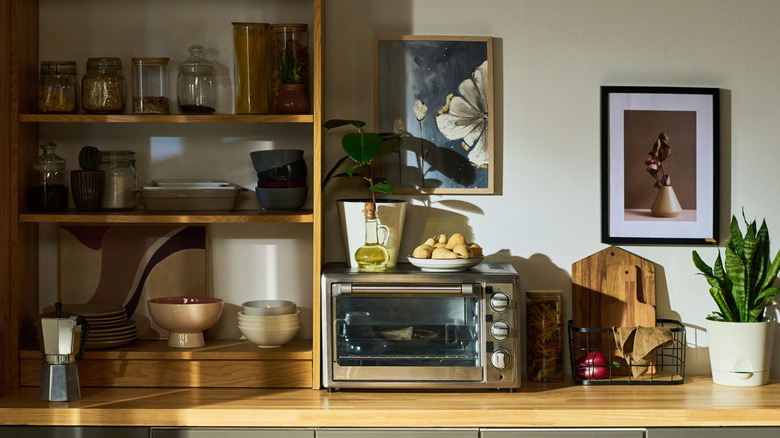
The top of a toaster oven looks so nice and open, like the perfect place to store items so that they're not in the way on your counter. Don't do this. Toaster oven exteriors are notorious for becoming very hot; just read reviews of any toaster ovens online, and you'll see complaints about how hot the exteriors of the appliances get.
That means that anything you place on the top of the oven becomes a fire risk. Don't even store items on top when the oven isn't in use because chances are, there will come a day when you forget to remove these items, and you might end up with a fire on your hands. Keep the oven's top clear and clean, and make sure the oven has enough space above it, too. You don't want to use the oven in a spot where cabinets sit just a few inches above it. This is a good rule to follow for air fryers, too.
Some brands are coming out with ovens with "cool-touch" exteriors meant to reduce the risk of burns. However, these models tend to be very expensive, harder to find, and even then, not totally without risk. So, even if you manage to buy a cool-touch version, it would still be a good idea not to store anything on top.
7. Keeping smaller appliances plugged in when not in use
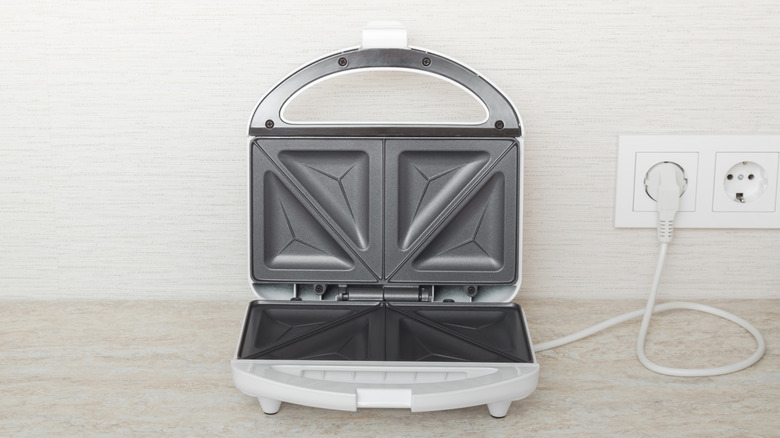
If you've got a small appliance that you use often, it may seem like common sense to leave the appliance plugged in all the time. It may not seem like such a risk because microwaves stay plugged in most of the time, so you can use the clock, right? But for many small appliances, leaving them plugged in actually creates a fire risk. In some cases, it's because the appliance doesn't have an "off" feature, so plugging it in actually keeps it on and in a warming mode.
But for others, the heating element can sometimes suddenly warm up on its own and ignite any crumbs or flammable materials stored near the supposedly switched-off device. This can happen when there's a power surge, when someone accidentally hits a switch on the appliance and doesn't realize it's plugged in, or even when the heating element is defective. Your best bet is to unplug every small appliance once you're done using it. As for the microwave, if you're not relying on the clock, you could even unplug that just to save some energy, however tiny the amount may be.
8. Using extension cords and power strips for appliances
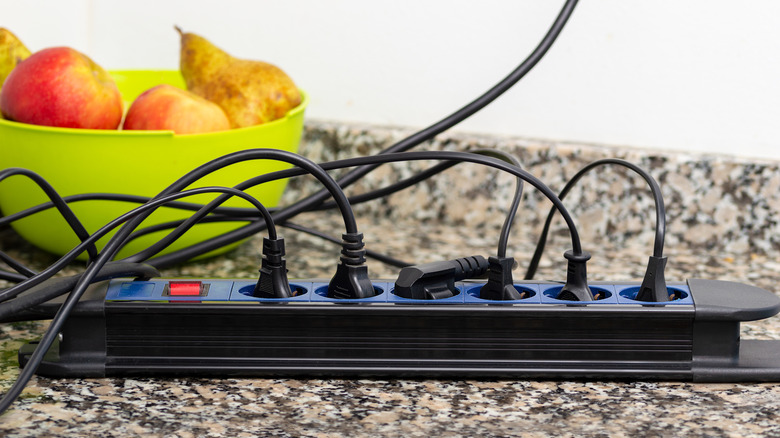
A lot of kitchen appliances come with rather short cords. You'd think plugging them into an extension cord would be OK. And some people like to plug everything into surge protector strips to protect items from lightning strikes that can affect your home's power supply. But you shouldn't do this with kitchen appliances. Small appliances often draw more power than the strips and cords can supply, potentially leading to overheating and fires.
Extension cord power limitations don't always match those of wall outlets. With a standard wall outlet, you're tapping into a circuit of around 15 amps, but some extension cords may only provide up to 13 amps at most. These can overheat quickly once you turn on something like a toaster oven that needs 10-12 amps and may overstretch the capacity of weaker extension cords. Even appliances with lower power requirements can pose a risk. Also, the typical extension cord or surge protector that's used inside can't get wet, and if you're using one near a sink, that's an electrocution risk.
9. Ignoring frayed power cords
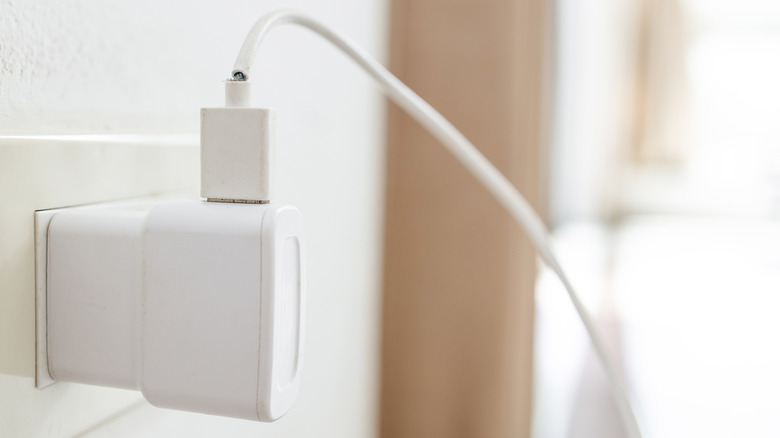
Your very old fridge or microwave may seem to work better than most new versions, inspiring you to keep those workhorses for as long as you can. But this should really only be if the appliance is still in good shape. With older appliances, the cord insulation can become a problem. Frayed cords are another overlooked source of kitchen fires because the cords contain a live wire. Expose that live wire to flammable materials, and it can set things ablaze.
Unfortunately, wrapping exposed wires with electrical tape isn't going to make things safer. That's pretty much just a temporary fix to hide the wires while the cord is unplugged. You'll need to either replace the appliance or have an electrician replace the cord. Be aware that cords can fray due to even simple accidents, like crushing the cord under the wheels of a heavy appliance as you move it around.
10. Overheating refrigerator compressors
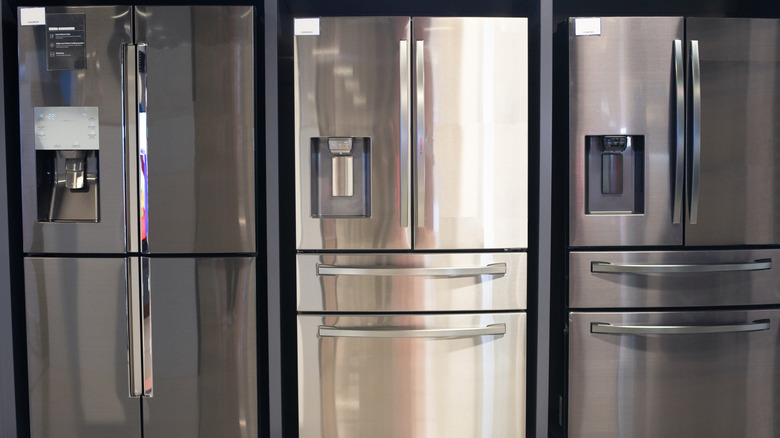
You want a cause of kitchen fires that's really overlooked? Your refrigerator. Yes, the thing meant to keep food cold can actually cause fires if the compressor inside overheats. The housing of the refrigerator can ignite, believe it or not, and if the fridge is old and uses an older type of refrigerant that's flammable, this will add another fuel source to feed the forming disaster.
Compressors can become faulty after years of use, and both they and the relay switches can eventually overheat. Defective compressors can also fail and lead to overheating, even if the refrigerator isn't that old. Because you can't really see inside the motor of the refrigerator, it's a good idea to have your refrigerator checked out occasionally, and to make sure all parts are cleaned and maintained. That's really going to be the best way to keep the appliance in good shape and to catch failing parts early.