

19 Cambodian Dishes Everyone Should Try At Least Once
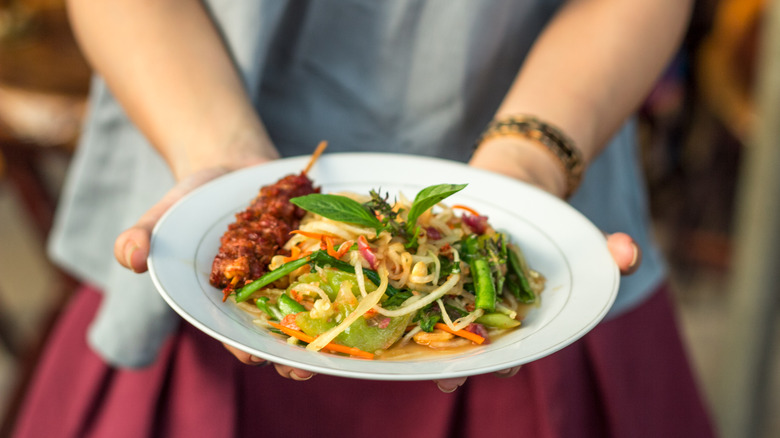
Cambodia's cuisine often gets less international attention than Thailand or Vietnam, but Khmer food is just as vibrant and steeped in history and culture. It's shaped by the country's rivers, rice fields, and coastline, as well as centuries of influence from India, China, and France. The result is a rich culinary tradition with dishes that range from comforting soups and curries to tangy salads and grilled street snacks.
In the late 2000s, I spent two years living in Cambodia's capital city of Phnom Penh. During that time, I had the chance to sample countless Khmer dishes in a wide range of settings, including morning markets, roadside stalls, elegant restaurants, and tiny family-run spots. I still crave some of those dishes to this day, like a peppery plate of lok lak or a simple bowl of kuy teav noodles. If you're curious about Cambodian cuisine, these are 19 Khmer dishes that I believe everyone should try at least once.
1. Kuy teav
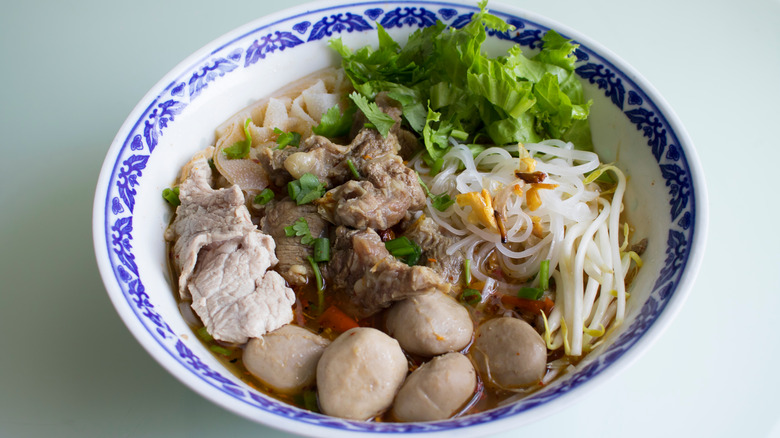
For many Cambodians, there's no better way to start the day than with a bowl of kuy teav. The noodle soup has its roots in China, but it's taken on many Khmer characteristics. It's typically available in the mornings at markets, restaurants, and food stalls as a breakfast dish. At its most basic, it includes thin rice noodles in an aromatic and flavorful broth. However, there are numerous ways to amp up the flavor and heartiness.
Kuy teav is typically made with pork or beef broth that's simmered with dried shrimp or squid. The broth is poured over cooked rice vermicelli noodles, and proteins are usually added, such as beef, chicken, dried shrimp, or small meatballs. Fresh lettuce, beansprouts, and herbs can also go into the mix, along with sliced chilies. Many people also like to add a splash of hot sauce, fish sauce, or lime juice.
2. Bai sak chrouk
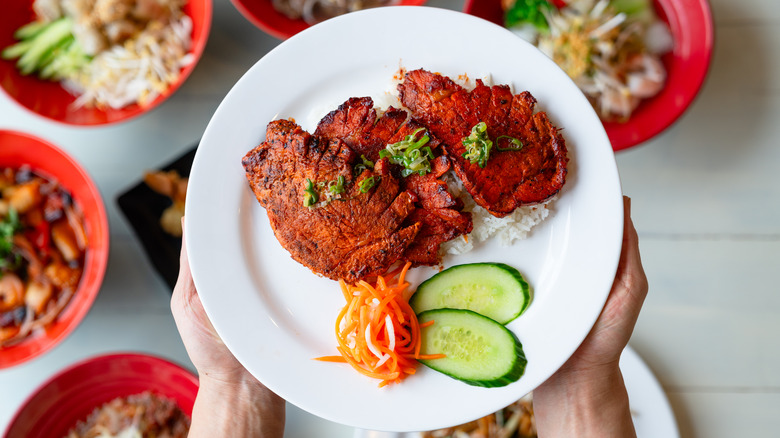
Bai sak chrouk is another popular Cambodian breakfast dish that you'll see being sold at markets and roadside stands in the mornings. It consists of thin slices of marinated and grilled pork served over white rice. It's a simple dish, but it packs a lot of flavor thanks to the slightly sweet and salty marinade and the smokiness the pork gets from the grill. Plus, it's a protein-packed way to start the day.
The key to good bai sak chrouk is to let the pork marinate for a few hours in a marinade of garlic, soy sauce, and palm sugar. Some people also add fish sauce, pepper, and coconut milk. Then, the pork is grilled over charcoal until the sugars caramelize, creating a beautiful brown crust. It's served over rice, usually with a side of pickled vegetables like carrot or daikon on the side.
3. Fish amok (amok trei)
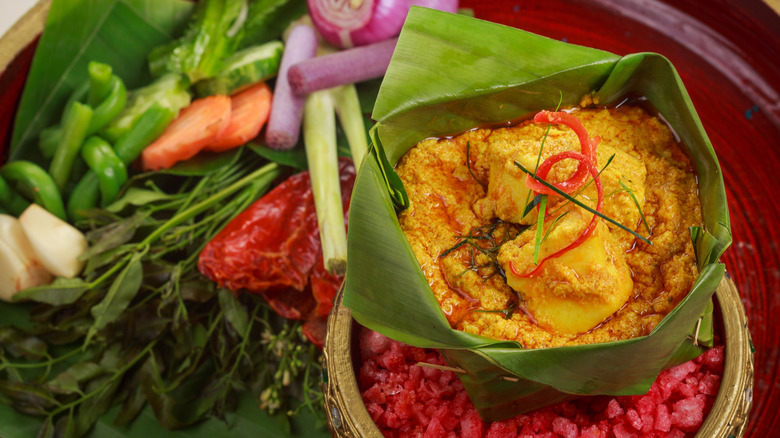
Widely considered Cambodia's national dish, fish amok (aka amok trei) is a fragrant fish curry that's steamed in banana leaves. It likely dates back to the 9th century when the Khmer Empire encompassed a large portion of Southeast Asia. The dish is typically made with freshwater fish like catfish, goby, or snakefish. Although not common, you can sometimes find versions made with chicken or prawns.
Fish amok is made by marinating pieces of fish in a spice paste called "kroeung," which often includes ingredients like lemongrass, garlic, galangal, turmeric, and kaffir lime zest. The mixture is placed in a banana leaf fashioned like a small cup, then coconut milk is added, along with thinly sliced kaffir lime leaves and the shredded leaves of a native herb called "slok ngor." The dish is steamed until the fish is cooked through and the sauce has a mousse-like consistency.
4. Lok lak
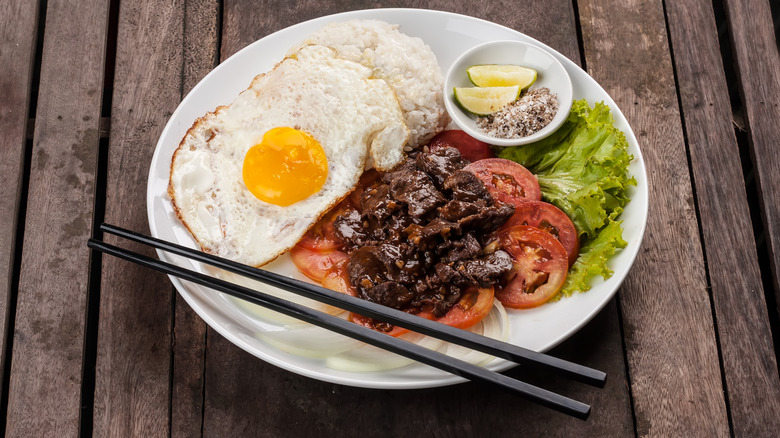
You'd be hard-pressed to find an authentic Cambodian restaurant that doesn't have lok lak on the menu. It's wildly popular across Cambodia for its heartiness and rich, savory flavors. The dish consists of cubes or slices of beef that are marinated in a mix of soy sauce, oyster sauce, garlic, black pepper, sugar, cornstarch, and rice wine vinegar or rice wine. Then, the beef is stir-fried until seared and tender.
Lok lak is often served on a bed of lettuce with sliced tomatoes and rice on the side. Some cooks also add a fried egg and some sliced onions. In addition, the dish almost always includes a dipping sauce made with lime juice and black pepper. Often, you'll get a small dish of black pepper with lime wedges on the side so that you can mix the dipping sauce yourself.
5. Somlar kari sach moan
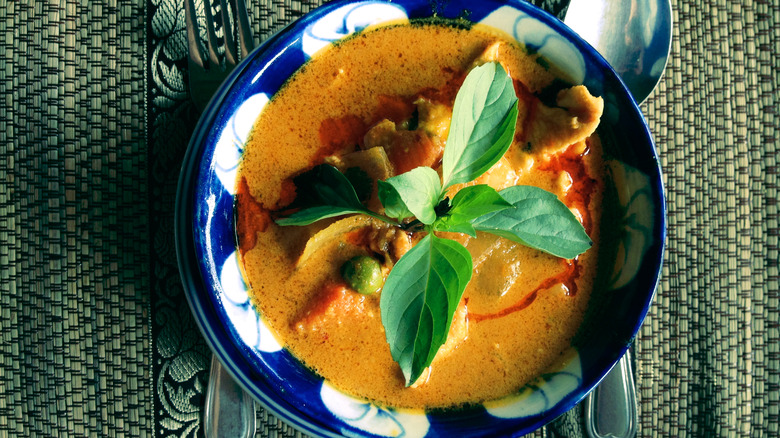
There are many different types of curries around the world, each with its own unique flavors and traditions. One of the most popular versions in Cambodia is somlar kari sach moan, a chicken curry that balances spicy, sweet, salty, and umami flavors. It's similar to many Thai curries in that it's made with coconut milk and a blend of chiles, herbs, and spices.
Like fish amok, somlar kari sach moan starts with a kroeung spice paste that often includes lemongrass, turmeric, shallots, galangal, kaffir lime zest, and garlic. However, this version also gets fiery red bird's eye chiles, which are what give the curry its reddish-orange hue and kick of heat. The paste is stir-fried with the chicken and ingredients like palm sugar, fish sauce, coconut milk, potatoes, and long beans. The curry can be served with rice, noodles, or crusty bread.
6. Kampot pepper crab
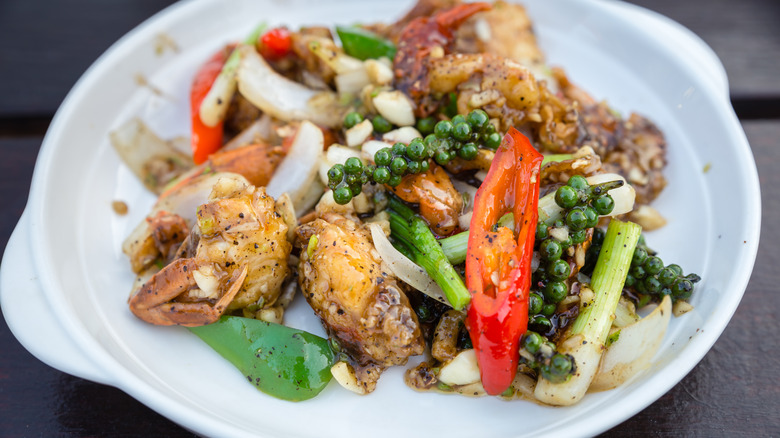
Cambodia is famous for its pepper, specifically the variety grown in the southern province of Kampot. The red, green, black, and white peppercorns are known for their beautiful aromas and mildly spicy flavors. Kampot pepper was once a prized export to French kitchens during the colonial era, and it remains an integral ingredient in many Khmer dishes today. One dish that perfectly highlights its fragrant heat is Kampot pepper crab.
If you visit the coastal town of Kep in Kampot, you'll find numerous restaurants serving up freshly caught blue crabs stir-fried in a savory, slightly spicy peppercorn sauce. Recipes vary, but the sauce typically includes a mix of garlic, soy sauce, fresh green peppercorns, black peppercorns, fish sauce, and palm sugar. Some cooks also add scallions. The crab is stir-fried and served with the shell on, and often served with a side of rice.
7. Num banh chok
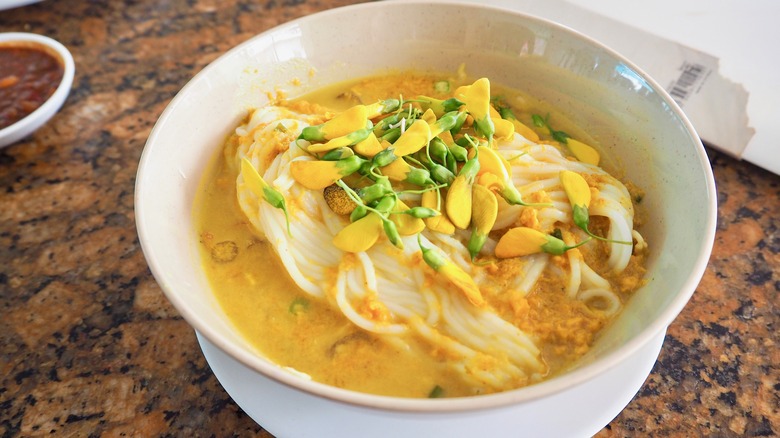
Num banh chok is a dish that many Cambodians hold dear to their hearts. In fact, it's often simply called "Khmer noodles" because it's so ubiquitous around the country and contains ingredients that are familiar and nourishing. These include freshwater fish, prahok (a fermented fish paste), herbs, coconut milk, and rice noodles. It's often eaten for breakfast but can be eaten any time of day.
The first step for making num banh chok is to make a yellow kroeung paste with ingredients like lemongrass, turmeric, garlic, galangal, and shallots. Then, freshwater fish gets poached and the filets are removed and mashed. That goes into a pot with the kroeung, prahok, coconut milk, and fish sauce, and it's simmered into a gravy. The final step is pouring the gravy over fresh thin rice noodles and adding veggies like bean sprouts, long beans, cabbage, and wild bean flowers.
8. Nhoam krauch thlong
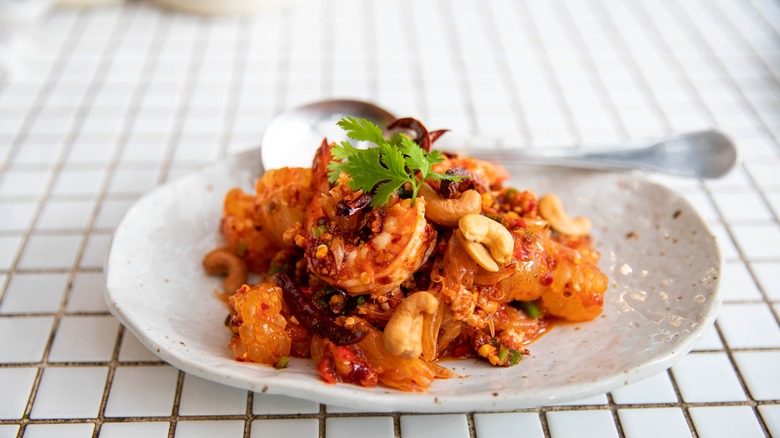
If you're looking for a vibrant salad that's perfect for cooling off on a hot day, nhoam krauch thlong is a solid choice. This pomelo and prawn salad is popular in Cambodia and neighboring Thailand, and it features an array of textures and flavors. You get freshness from the shrimp and herbs, sour notes from the pomelo and lime juice, a touch of heat from chiles, and crunchy bits from roasted peanuts and dried shrimp.
Nhoam krauch thlong may sound complicated, but it's actually pretty easy to make at home. All you need to do is combine cooked prawns, dried shrimp, bite-sized pomelo segments, roasted ground peanuts, mint, and dried coconut in a bowl. Then, you can make a sauce with lime juice, palm sugar, fish sauce, minced garlic, and minced bird's eye chiles. Toss everything together and you're all set.
9. Ya hon
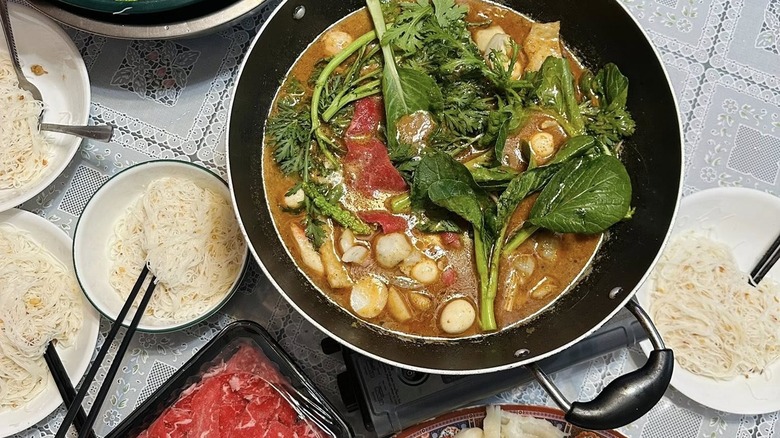
Historical records show that there were Chinese communities living in Cambodia as far back as the 13th century. Their culinary influence is still clear today in the many rice, noodle, and stir-fry dishes found across the country. Ya hon is one such dish. It's similar to Chinese hot pot, but with a distinctly Khmer twist. The broth typically includes coconut milk and savory ingredients like spicy barbecue sauce, bean curd, lemongrass, fish sauce, and tamarind paste.
Like most hot pots, ya hon is designed to share with family and friends. A big pot of the broth usually sits in the center of the table at home or in a restaurant, and then you have an array of ingredients you can add to the pot. Popular inclusions include sliced beef or pork, prawns, mushrooms, fish balls, leafy green vegetables, and noodles. Sometimes fresh herbs are also added.
10. Sach ko ang
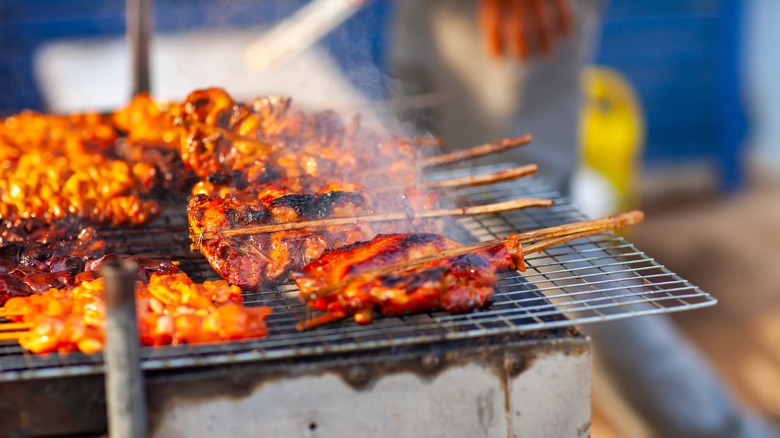
Numerous countries around the world have their takes on grilled, skewered meat, and Cambodia is no exception. Sach ko ang is a popular Khmer dish that consists of marinated beef that's threaded on skewers and cooked on a charcoal grill. Vendors all over the country sell the skewers at markets and roadside stands. They're pretty easy to track down with their smoking grills and wafting aromas of sizzling meat.
What sets sach ko ang apart from other beef skewers is the marinade. It starts with a yellow kroueng made with flavorful ingredients like lemongrass, garlic, shallots, lime zest, and turmeric. The beef gets rubbed with the spice paste and also tossed with oyster sauce, sugar, and fish sauce. Then, it's grilled until caramelized on the outside. The skewers can be eaten as-is, with a side of pickled vegetables, or in a crusty baguette.
11. Prahok ktis
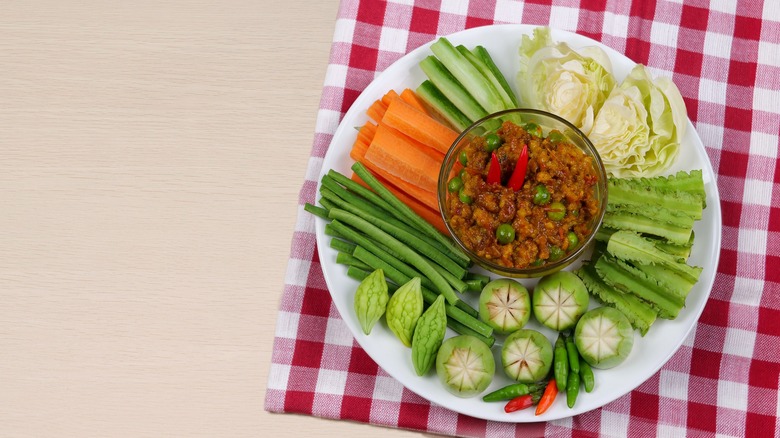
Dating back hundreds of years, prahok is one of the most distinctive ingredients in Khmer cooking. It's a fermented fish paste that's traditionally made with mud carp fish that are sun-dried in baskets for 24 hours, marinated in salt, pounded into paste, and fermented in containers. The funky smelling condiment is used in a variety of dishes, like prahok ktis.
Prahok ktis is a savory dip that consists of ground pork and tiny green eggplants mixed with prahok, chiles, kroeung paste, coconut milk, palm sugar, and chiles. It's often eaten with fresh vegetables like carrots, cabbage, and long beans. The dip is meaty and spicy with a huge umami punch from the prahok. If you want to make it at home but don't have access to prahok, fish sauce is a good substitute. It's a little less pungent, but it will give you that umami boost.
12. Num pang
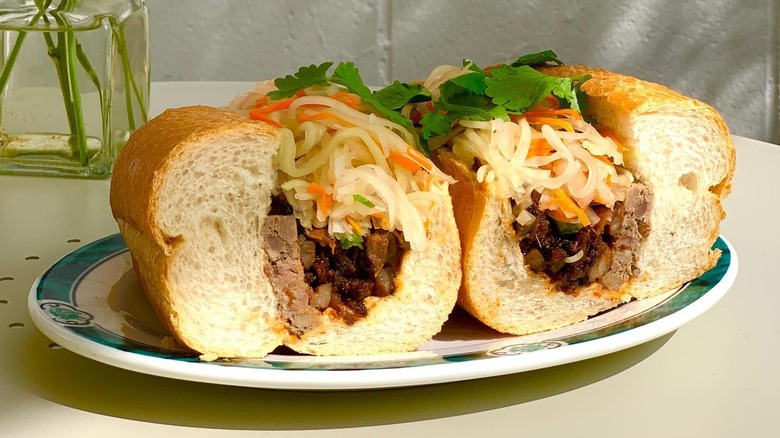
Sandwiches may not be the first thing that comes to mind when you think of Asian cuisine, but they're actually pretty popular street foods in Cambodia and neighboring Vietnam. Their origins can be traced back to the French colonial period, when bread was introduced to the region. Today, you can find plenty of breads like baguettes in both countries, as well as sandwiches like num pang in Cambodia and bánh mì in Vietnam.
A classic num pang features a baguette that's filled with meat like roasted pork and pate, as well as crunchy pickled vegetables like carrots and daikon, fresh cilantro, and perhaps a smear of mayo or a dash of chili sauce. However, there are numerous variations you can try. Some num pang include cucumbers, lettuce, and tomatoes for toppings. Others feature different proteins like meatballs, chicken, tinned fish, or sach ko ang (beef skewers).
13. Nhoam svay trei cha'eur
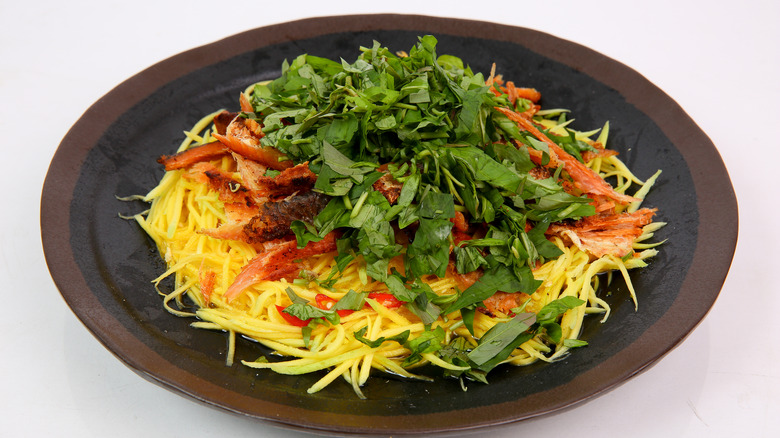
If you're a fan of Thai green papaya salad, then nhoam svay trei cha'eur will be right up your alley. This fresh and crunchy salad features a base of green mango and smoked or fried fish. Those get mixed with an array of ingredients that give the salad extra texture, and everything is tossed in a dressing that gives savory, spicy, sweet, and sour flavors.
It's not particularly hard to make nhoam svay trei cha'eur at home, but it does require some preparation. You'll need to julienne the green mango and chop your smoked or fried fish, as well as veggies like shallots and fresh herbs like mint and cilantro. You'll also need to make the dressing with lime juice, chiles, fish sauce, palm sugar, and minced garlic. Then, you just need to toss everything together with some dried shrimp and crunchy peanuts.
14. Somlor machu
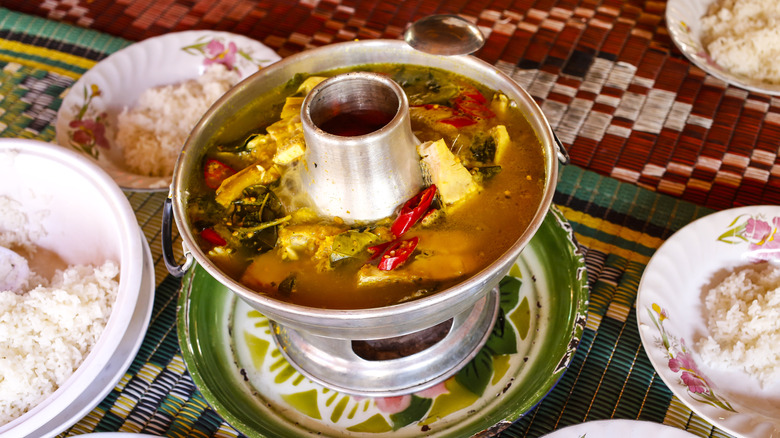
Cambodian cooking often hits every point on the flavor spectrum. You might get salty, sour, bitter, sweet, and spicy all in the same dish. Somlar machu, or "sour soup," is one of the best examples of that balance. While recipes vary considerably, it often includes a broth seasoned with tamarind paste, fish sauce, and palm sugar. Add-ins to the broth can include tomatoes, pineapples, fresh herbs, and some form of protein.
One of the great things about somlar machu is how adaptable it is. The tamarind-infused broth is the key to adding the sour notes, but from there, it can include whatever ingredients are on hand. Some versions feature pork, beef, or chicken, while others include fish. Leafy greens might be added, like water spinach, and some cooks add herbs and aromatics like lemongrass and cilantro. It can also be served with rice, noodles, or bread.
15. Chha trob
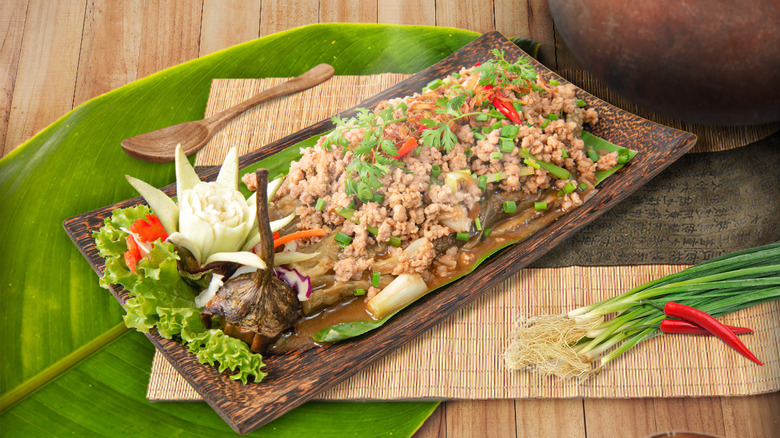
Cha trob is a hearty Khmer dish that consists of eggplant that's grilled over charcoal until the skin is blackened and the flesh is softened. The eggplant is cut open and filled with pork that's been sauteed with ingredients like garlic and oyster sauce. The result is a dish that's smoky, savory, and perfect for piling onto rice.
There are numerous variations of cha trob, particularly when it comes to the preparation of the pork. Some people use fish sauce to add umami flavor, while others add tamarind sauce for sour notes or fermented soybeans for some funk. Some people also add chiles for a bit of heat or green onions to give the dish some color. At the end of the day though, you can almost always guarantee that the eggplant will be grilled and the pork will be savory.
16. Phlea sach ko (lap Khmer)
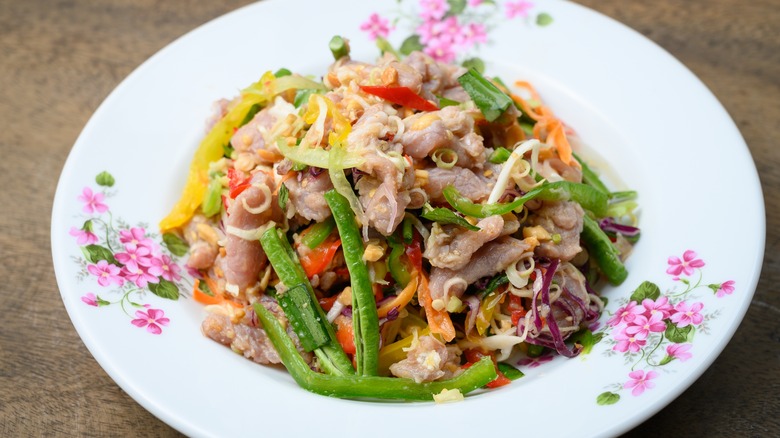
Hearty and toothsome, but also very fresh, phlea sach ko is a vibrant beef salad that bursts with Southeast Asian flavors. It typically includes raw beef that's marinated in a lime-based dressing. The lime breaks down the proteins in the meat like it does with ceviche, firming up the beef and giving it a "cooked" texture. If you're squeamish about raw beef, you can also find versions where the beef is cooked beforehand.
Phlea sach ko gets its bold flavors from the marinade that's typically made with lime juice, garlic, palm sugar, and prahok or fish sauce. Some people also add sliced lemongrass, shallots, and fresh herbs. Once the lime juice works its magic on the beef, the meat gets tossed with fresh vegetables like sliced bell peppers, bean sprouts, long beans, and sliced chiles. Some people also add peanuts for extra crunch.
17. Fried insects
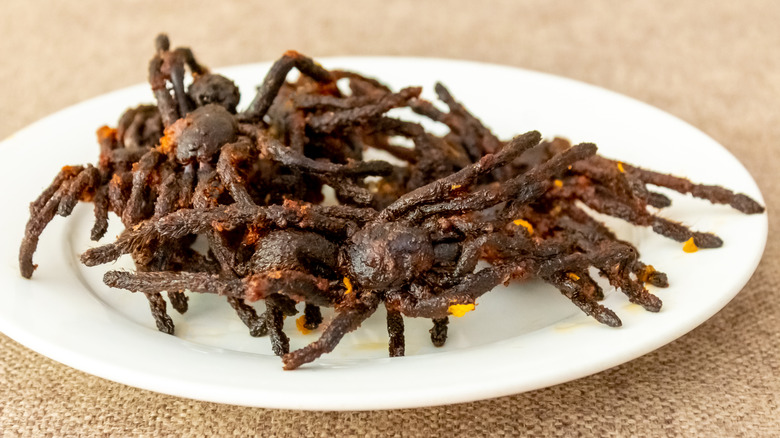
First-time visitors to Cambodia are often shocked to discover that fried insects are very much a part of the culinary landscape. Markets and street food vendors sell everything from fried crickets to cockroaches and massive fried tarantulas. Tourists may see it as a novelty, but many locals are big fans of the bugs, and will buy them by the bagful. They make for a quick snack on the go or a treat to be shared.
The history of eating insects in Cambodia can be traced back to the Khmer Rouge regime. When Pol Pot took power in 1975, he forced people into the countryside to work in the fields, and killed millions who he deemed enemies of the state. Poverty and famine forced many Khmer people to eat whatever they could, including insects. However, many people took a liking to the crunchy fried bugs, and the custom still endures today.
18. Num ansom
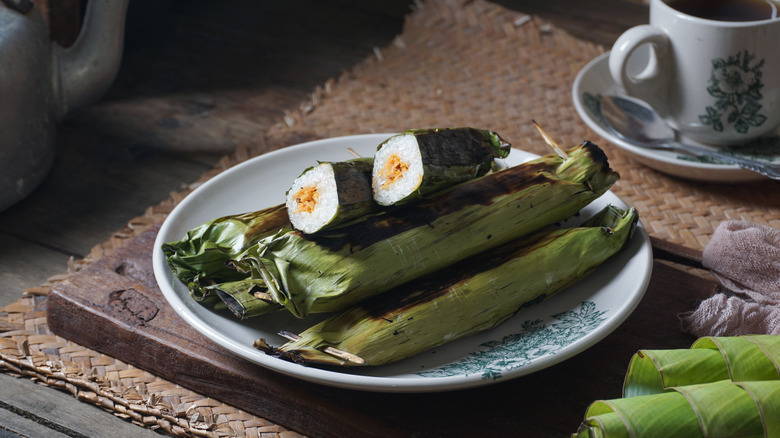
If fried insects aren't your jam, you might prefer something sweet instead. Enter num ansom, one of the most popular sweet treats in Cambodia and a staple at celebrations like Pchum Ben (a day to celebrate ancestors) and Khmer New Year. Num ansom is a cake made with sticky rice that's wrapped in a banana leaf and steamed or grilled. It's typically cylindrical in shape and can be eaten by unwrapping the banana leaf and eating it whole or slicing it into pieces.
There are several varieties of num ansom, including sweet and savory versions. Num ansom chek includes bananas, while num ansom khnao features jackfruit. You can also find versions with grated coconut and palm sugar. Then there is num ansom chrouk, which includes a sweet and savory mix of coconut milk, mung bean, and pork belly. The meaty version is often cut, fried, and served with fish sauce and pickled vegetables.
19. Sang khya lapov
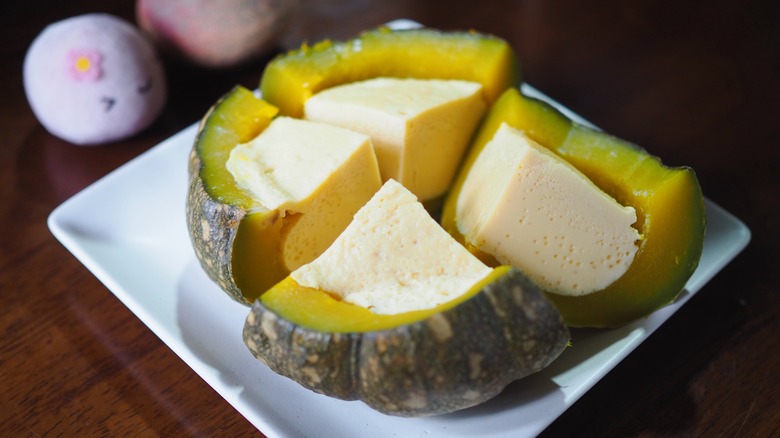
Last, but not least, sang khya lapov is one of my all-time favorite Khmer desserts. Not only is the taste dreamy, but it wins big points for presentation. It features coconut custard that's cooked inside a pumpkin. The pumpkin is cut into wedges, so you get a layer of fragrant pumpkin flesh with sweet and creamy custard nestled inside.
The main ingredients in the custard are coconut milk, sugar, and eggs. Those get whisked together and poured into a pumpkin with the top cut off and the seeds and stringy bits removed. The whole pumpkin gets steamed either in a steamer or in a baking pan with water in the oven. Once the custard has set, you just wait for the pumpkin to cool, then slice it up for a very pretty and delicious dessert.