

Olive Garden's So-Called Parmesan Cheese Is Hiding A Sneaky Secret
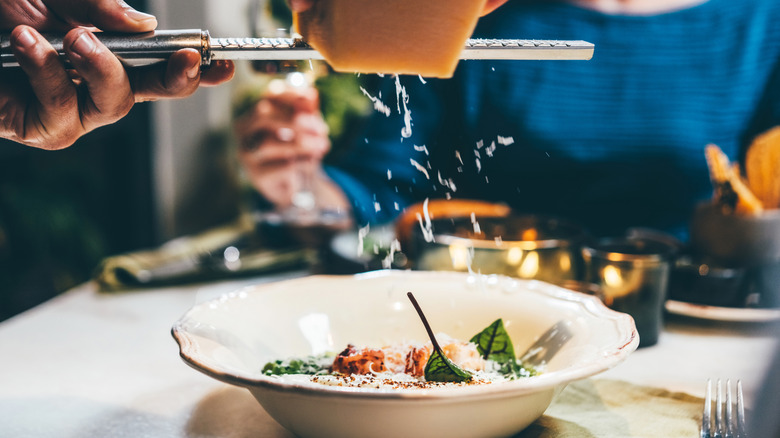
From Olive Garden's standard fare of limitless soup, salad, and breadsticks to never-ending pasta events, the establishment's brand of generosity is one of the reasons for its long-standing fan base. As openly hospitable as it may seem, it's within these offerings that Olive Garden harbors one of its darkest secrets. More specifically, that seemingly honest and humble cheese grated by the staff may not be what it claims to be. Some may be shocked to know that it's not Parmesan, but Pecorino Romano cheese, Parm's tangier sibling, being sprinkled onto their appetizers and entrees. This makes sense, not only due to flavor, but also the cost of offering such endless amounts to Olive Garden's patrons.
While there's nothing that outright states this on Olive Garden's official site, there's a chance that servers may reveal the truth to you if asked. Redditors who claim to have worked at the chain restaurant also don't shy away from outing the establishment. Putting aside its secrecy, there's a good reason that Olive Garden would prefer Romano over Parmesan. Both complement any Italian dish excellently, but the nutty, tangy umami notes of Romano cheese add a pleasing burst of flavor to any of Olive Garden's best dishes. Although Romano would do the job well by itself, it's also thought that Olive Garden's grated cheese is a blend of Parmesan and Romano. If true, this may allow guests to enjoy both, and in more generous portions, since Parmesan is also generally more costly than Romano.
Parmesan and Romano are very different from each other, but better together
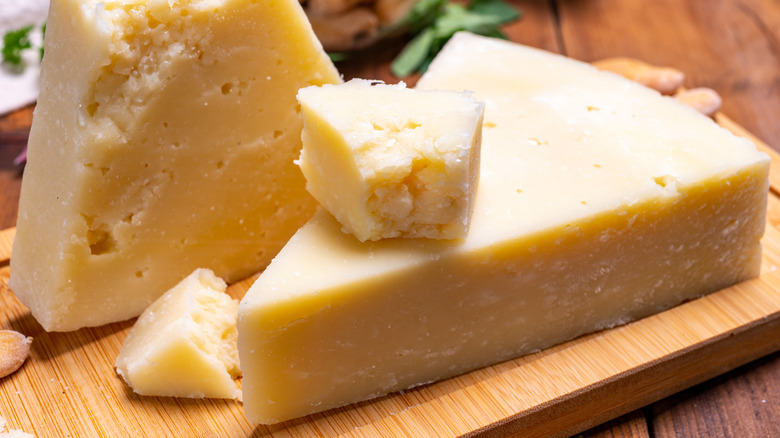
While they may seem similar enough to be confused for one another, Parmesan and Pecorino Romano are quite different. Certainly, they're both Italian cheeses, but Parmesan is made with cow's milk, which imbues it with a mild, yet sweeter, profile. Since it's aged longer, its nutty notes are also more prominent, and it has a more savory flavor from the punchy, tanginess of Romano. With that said, it's not unusual for the two to be teamed together. Mixing the two allows someone who feels Parmesan is too subtle, or that Romano is too intense, to have an agreeable option. It's also popular enough that grocery store chains like Publix sell it grated and premixed on their shelves, and some foodies have an at-home cheese blend recipe for others to try.
Cheekiness aside, and as sneaky as it seems for Olive Garden to serve its patrons Romano instead of Parmesan, it's to their customers' benefit. Parmesan certainly has a place in the culinary world and even on the Olive Garden menu (it's half the secret to the brand's Alfredo sauce, after all), but it's Romano that packs in that pungent boost. Ultimately, while Olive Garden has taken its stance, it's down to personal taste, and much like when it's offered at the table, anyone can simply turn the not-so-secret cheese away. With that mystery solved, maybe it's time to move to the next one, like figuring out the maker of Olive Garden's nifty cheese graters.