

How To Properly Store And Reuse Bacon Grease
We may receive a commission on purchases made from links.
If you've ever cooked up a delicious pan of bacon, only to scratch your head and wonder what to do with the grease, you're not alone. Sure, you know it makes for awesome fried eggs, and can be a great substitute for oil in mayonnaise. If you like to get creative, chances are you've even used it to make cornbread as they do down South, or perhaps you've whipped up some old-fashioned bacon grease biscuits. But exactly how do you store bacon grease long enough to use it that way? And is it even worth it?
Good questions, to which any aficionado (me) will answer, in reverse order: Yes, it's absolutely worth learning how to do it, because tossing bacon grease is quite simply a mistake, if not a downright sin. Also, it's pretty easy. With just a few simple kitchen tools, some basic safety sense, and a bit of extra time in the ol' cucina, you can turn a simple packet of bacon into a yummy meal now AND later.
What is bacon grease?
Although this might seem like an obvious question, there's a common confusion that bacon grease and lard are the same thing. However, there's actually a slight difference between them. While bacon grease is just that — the fat that comes out and is left behind in the pan when you cook bacon — lard is carefully rendered pork fat.
Rendering is when you take a piece of raw fat and cook it in a pot, allowing the water to evaporate off. You then strain off the fat, removing any leftover bits of meat, resulting in pure, clarified fat. This type of lard is not the same as bacon grease, which is always produced by cooking meat on the hot surface of a pan. For the purposes of this tutorial, we are discussing bacon grease only.
Tools and ingredients
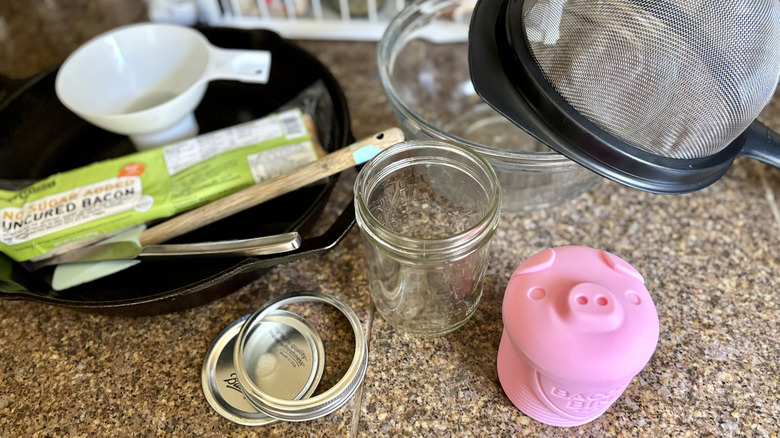
The fundamentals of how to store bacon grease are, well, pretty fundamental, and they can be found in any home kitchen. For ingredients, all you'll need is bacon — I used a 12-ounce package. To scale up, you can simply use more bacon, but you'll likely have to work in batches or use multiple pans.
Your list of tools will include:
- Pan
- Glass bowl
- Strainer
- Optional cheesecloth
- Hot pads
- Optional funnel
- Glass jar (such as a Mason or ball canning jar)
- Rubber spatula
- Tight-fitting lid
- Optional bacon storage device
- Butter knife
This is totally a matter of personal preference, but it's not a bad idea to wear an apron during this activity. Bacon grease is an unforgiving mistress, worthwhile as she may be, and she is hard on clothing.
Cook a pan of bacon
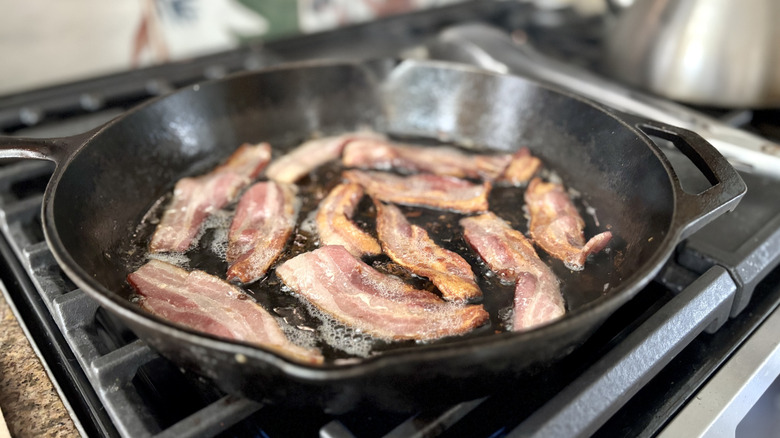
It goes without saying that you will need to cook bacon in order to harvest its grease and store it. There is, however, nothing special about this step or how to do it. You can use any kind of bacon and any kind of pan, though I prefer to use cast iron. It always gives quick, even results, and the bacon grease is excellent for keeping a good cure on our pan.
For this tutorial, I used our Lodge 12 Inch Pre-Seasoned Cast Iron Skillet, which we got for our wedding 17 years ago. How can I express my love for this skillet? Let's just say it gets awesome-er every day, with no letup in sight.
Let the grease cool slightly, but not solidify
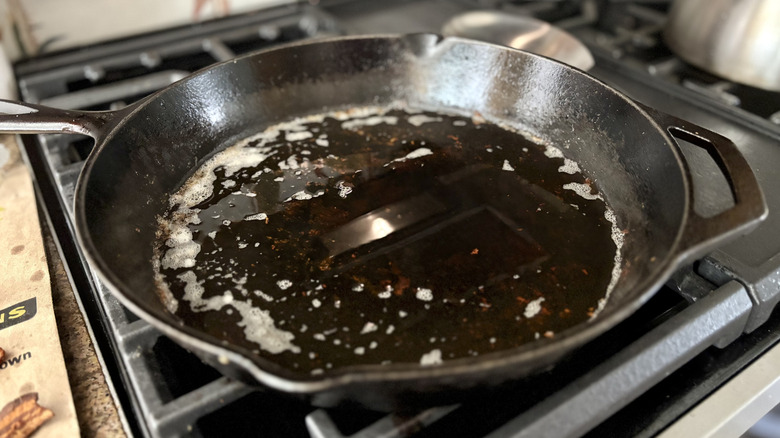
The next step is to let your bacon grease cool a bit, but not solidify. Don't let it get opaque; if you do, it won't pour. If the fat hardens, you'll need to reheat it on the stove in order to pour and store it. Instead, you want to let the fat come down a bit from the temperature to which I fondly refer as "have-fun-at-the-ER-I-hear-triage-takes-even-longer-than-it-used-to" degrees. In other words, you don't want any accidents, so avoid working with scalding fat right off the heat.
Set a strainer on a glass bowl
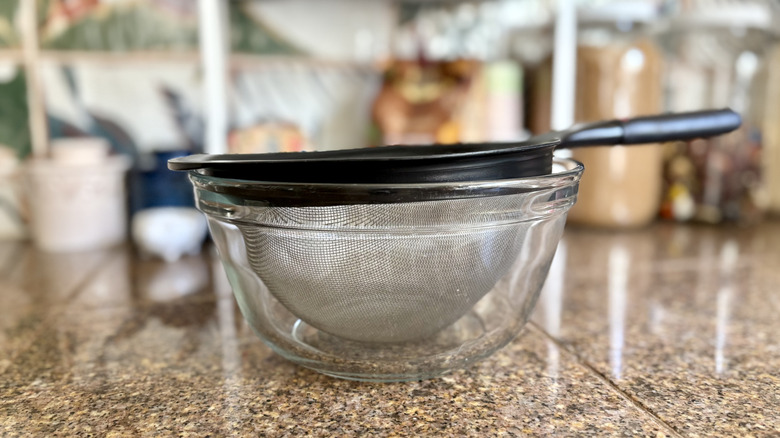
While you wait for the bacon fat to cool, get your other equipment ready. Start by setting the strainer on top of your glass bowl, aligning the edges so that it sits levelly inside the dish. If your strainer has a handle (most do), make sure it is pointing safely in toward the back of the counter. Otherwise, you or a child/dog/inattentive partner could walk by and knock against it, potentially throwing the whole setup on the floor — with or without grease. (Yes, this has happened to me. Learn from my mistakes.)
Line with optional cheesecloth
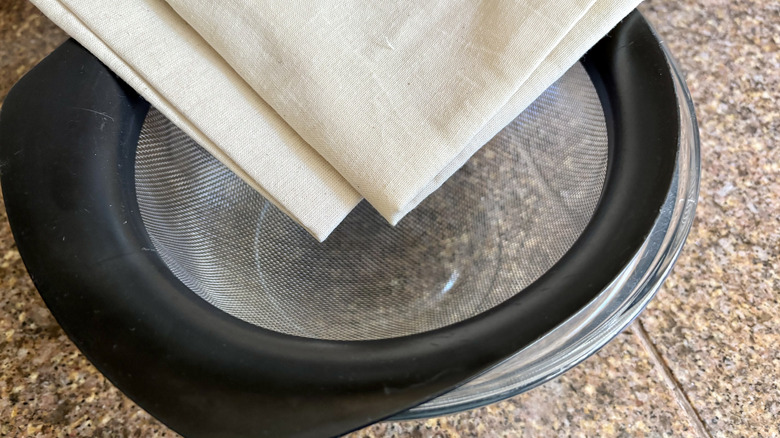
Cheesecloth is handy for straining bacon fat, and some sources claim that using it removes food particles that can make the grease spoil faster. However, it's also wasteful, because it's difficult to reuse cheesecloth. Not only should you avoid washing super-greasy textiles in a machine due to the danger of fire, but it's just not necessary, in my humble opinion.
In 20 years of homesteading, I've never had bacon grease last long enough for the question of spoilage to matter, and you can always freeze it. For that reason, I haven't used cheesecloth here. But if those leftover bacon bits gross you out, cheesecloth is your friend.
Carefully pour the bacon grease out of the pan using hot pads
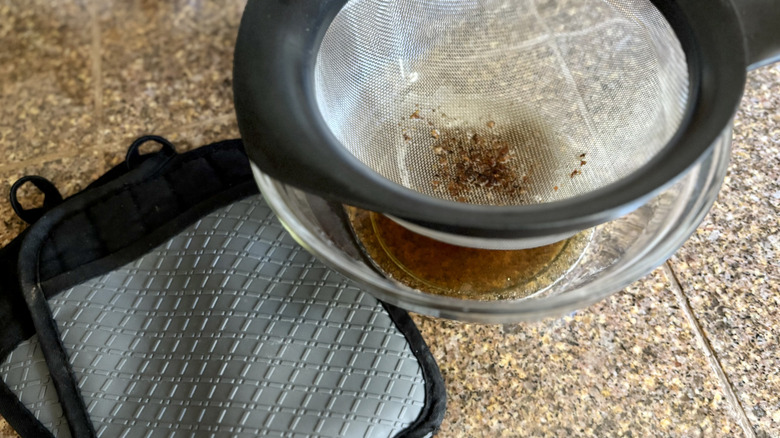
This step in the process of storing bacon grease is perhaps the most dangerous, because it's the one most likely to get you burned. Using hot pads on both hands, carefully lift the pan of bacon grease and pour it over the strainer. If you have a buddy nearby, you can have them gently push the fat from the pan using a rubber spatula, leaving the burnt bits behind. (Feel free to deglaze these and use them for another purpose, like making a stock or stew.)
Set the pan back down, shake the strainer gently to get most of the fat to filter through, and place the strainer inside the dirty pan. If you manage to do this without a blister, send a prayer up to the Pork Gods so they remember you next time.
Let the grease cool a bit more, but again not solidify
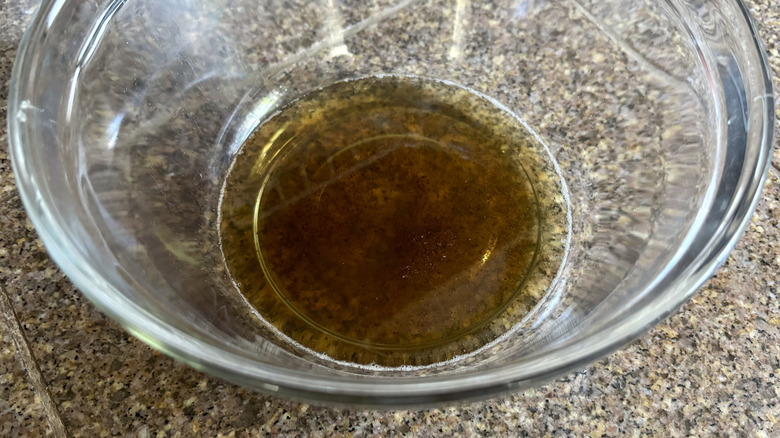
Leave the bacon grease in the bowl for a few more minutes, but again, don't let it solidify. If you do, it will be harder to transfer to the next container. Don't get discouraged if it doesn't look like very much; 12 ounces of bacon makes a cup of grease or less, so you haven't done anything wrong.
Test the outside of the bowl with your hand
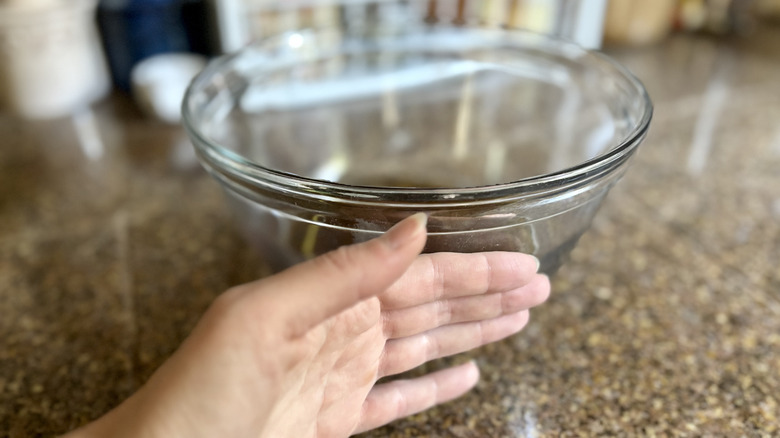
Hold your hand gently against the outside of the bowl to make sure the grease isn't too hot to handle. You don't want to get splashed while pouring it into the jar.
Place your jar on the counter next to the bowl
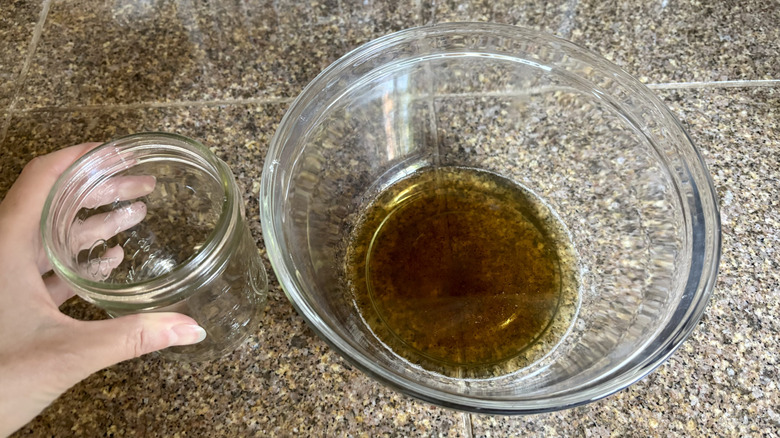
Put your jar next to the bowl. If you think you might not have as much bacon grease as you thought, sub it out for a smaller jar. (I could have used an 8-ounce jar for this tutorial, but I stuck with the 16-ounce as originally planned.) If you have more grease than planned, you can scale up your jar size or use two jars.
Set up the optional funnel
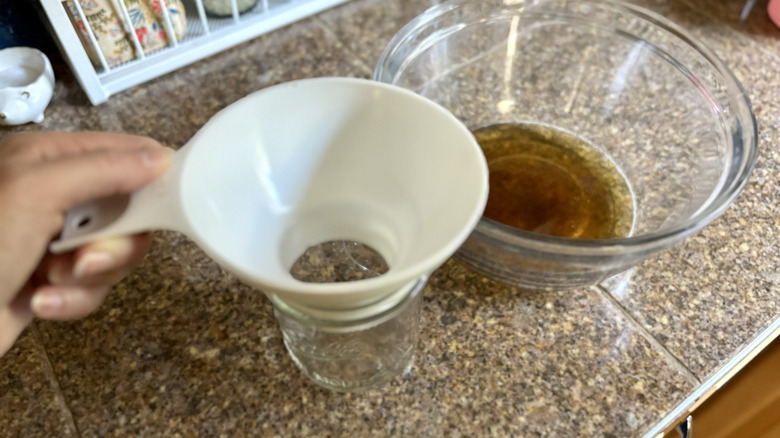
You might want to use a funnel to make sure you don't splash bacon grease everywhere. I like to use a wide-mouth version because then I don't have to worry about pouring the grease into a measuring cup or bowl with a spout; I can just pour straight from a mixing bowl.
Pour bacon grease from bowl and scrape out with a rubber spatula
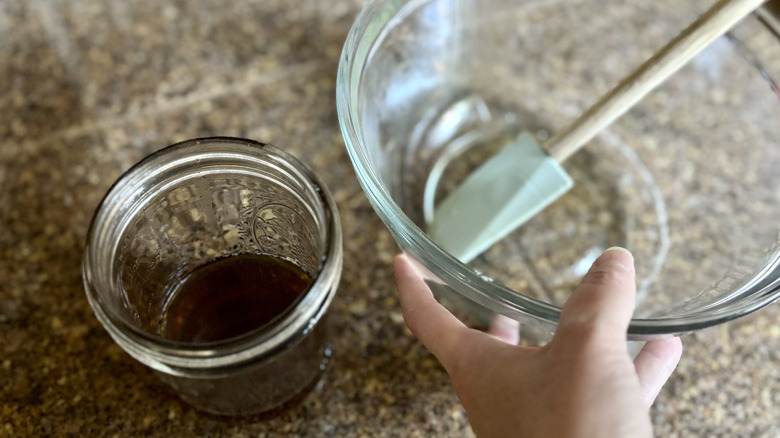
Pour the grease into the funnel and scrape out the bowl with the rubber spatula. Again, you might benefit from a partner here.
Let the grease cool and solidify at room temperature with no lid on
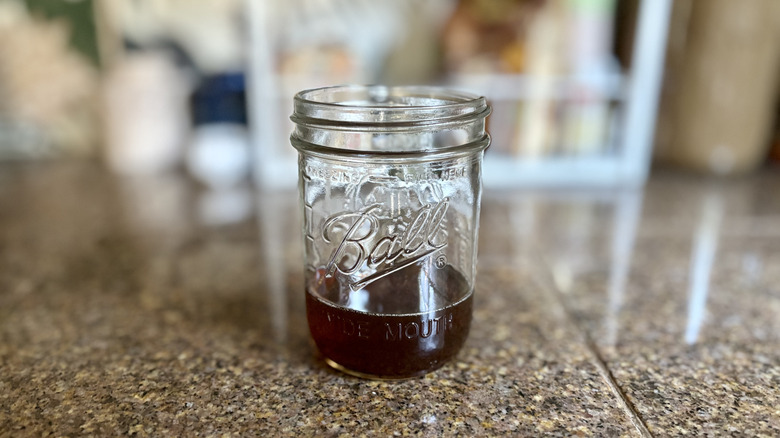
To keep your bacon grease good as long as possible, let the jar of fat cool with the lid off. Otherwise, moisture will accumulate inside the jar as a result of cooling in a sealed environment, and your bacon grease won't be pure fat anymore. If you use it quickly, like we do, it's no big deal. But if you want it to last a long time, you should avoid condensation. Water in foods is not shelf-stable the way that fat is.
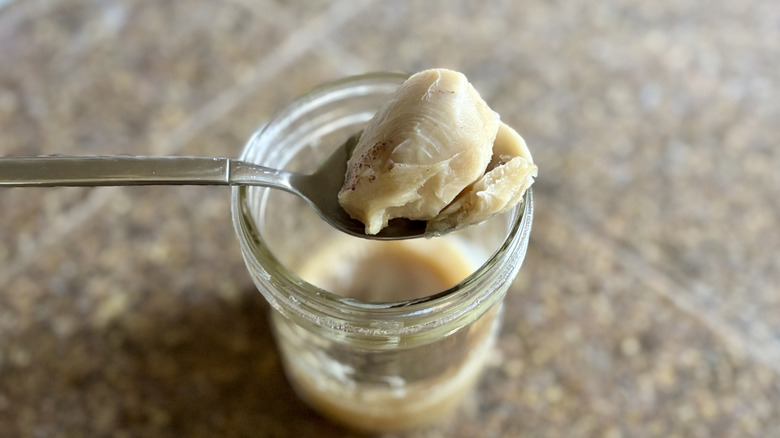
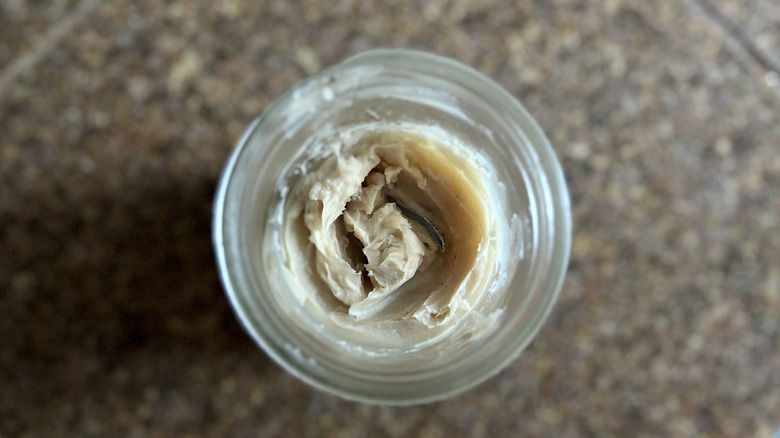
You may notice considerable variation in the color of your bacon grease. Sometimes mine comes out almost white, like the stuff you can buy for $8,000 at the health food store. Other times it's pretty brown, like this batch, which usually means I let the bacon cook in the grease longer and so more particulate matter got in. (I did let it cook longer this time, because I like my bacon to shatter.) In general, unless you notice a flavor issue, it's not a concern. Ditto if you see some granulation, as in the photos below — this is just air bubbles.
Screw on a tight-fitting lid
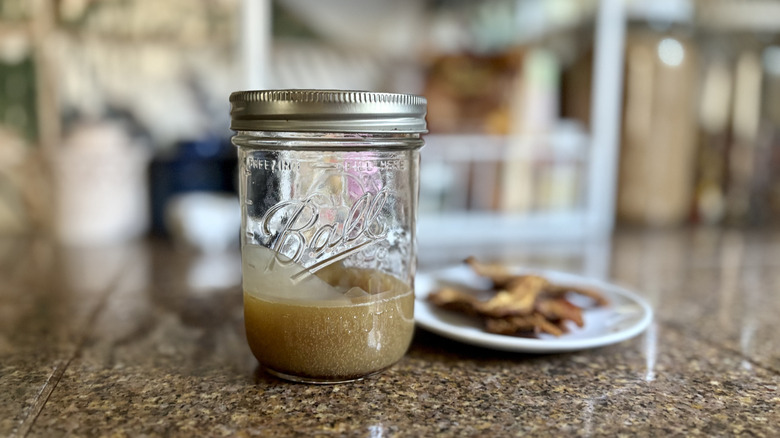
Once the jar is completely cooled, screw the lid on. Close it securely, but don't overtighten it, especially if you plan to freeze it. Overtightened lids can lead to jar breakage. Once you've given it just the right amount of pressure, give your jar a little pat of satisfaction. Good jar.
Use the optional bacon storage device
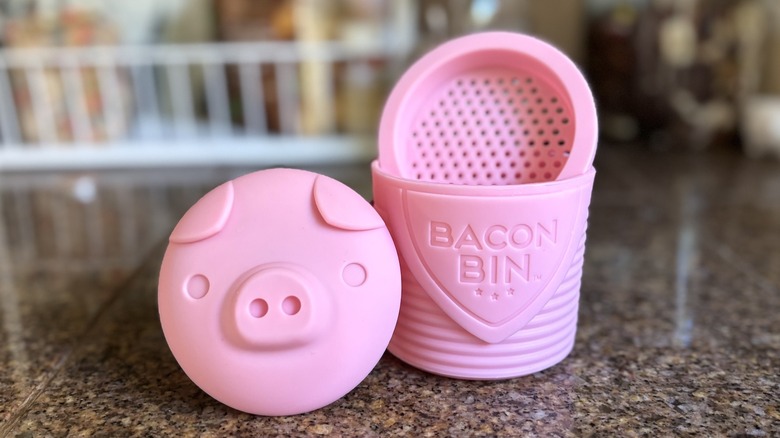
If you're like me and your mother pampers you with fun little gifts for no reason at all, you may have a pink, pig-shaped bacon storage container. Pat yourself on the back for having a great mom. If you like, you can pour the bacon grease straight into these fun containers and use the little strainer on top to weed out the biggest burnt bits rather than going the strainer-bowl-rubber spatula route. Your choice.
Store in the fridge for four months or the in freezer forever
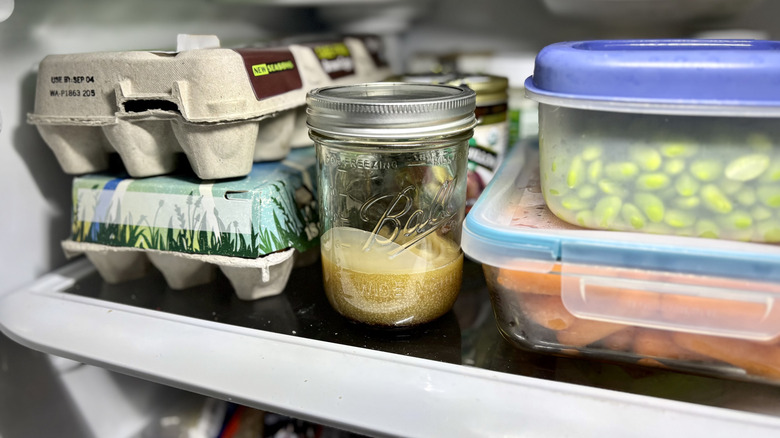
There's no trick here. Simply place the jar of prepared bacon grease into an appropriate environment until you plan to use it again. Bacon grease lasts a long time. You can expect it to stay good about four months in the fridge, and if you put it in the freezer, it's got pretty much no expiration date — at least not one that I've ever found. That said, if you smell anything funky or see a film of mold, though, you should toss your bacon grease. The visible mold on the surface of foods is but the tip of the iceberg; the rest spreads below via invisible filaments that can still make you quite sick. Don't take the chance.
Note that I feel it is perfectly satisfactory to add more bacon grease to the same storage jar you keep in your fridge. You just want to make sure to get down to the bottom of the jar within that four-month timespan; otherwise, you're rolling the dice with preservation.
To reuse, unfreeze bacon grease if necessary
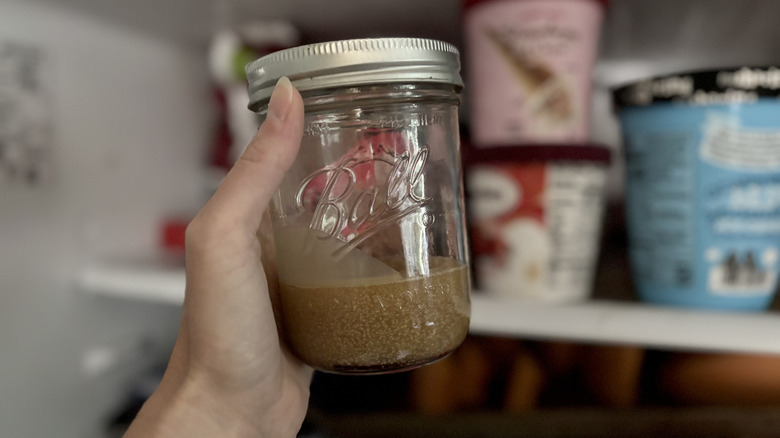
Defrost your frozen jar of bacon grease in the fridge. You can also defrost it by setting the jar in cold water or putting it in the microwave. According to the USDA, all three methods are safe, but the fridge is the least hands-on. I often find I need to put a little towel underneath things I'm defrosting in the fridge to catch the condensation.
Put a pan on the stove
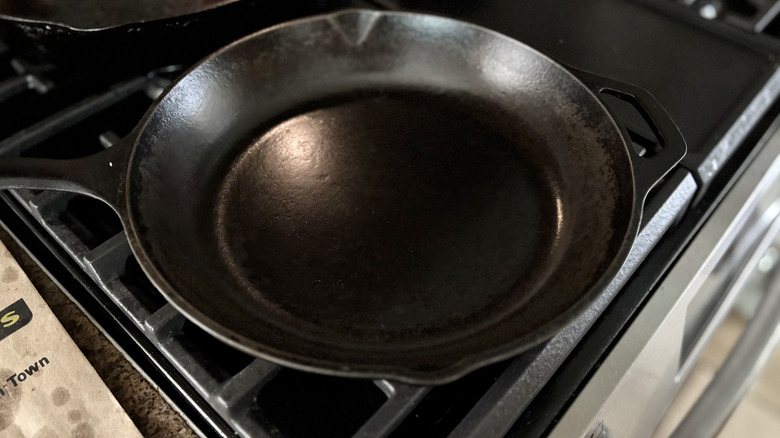
Now that you know how to store bacon grease and have done so, it's time for the fun part: using it again. If you're going to sauté up a batch of veggies or make some fried rice, you'll need a pan. Place it on the stove and heat it to the desired temperature.
Scoop out the desired amount of fat to cook food in the pan
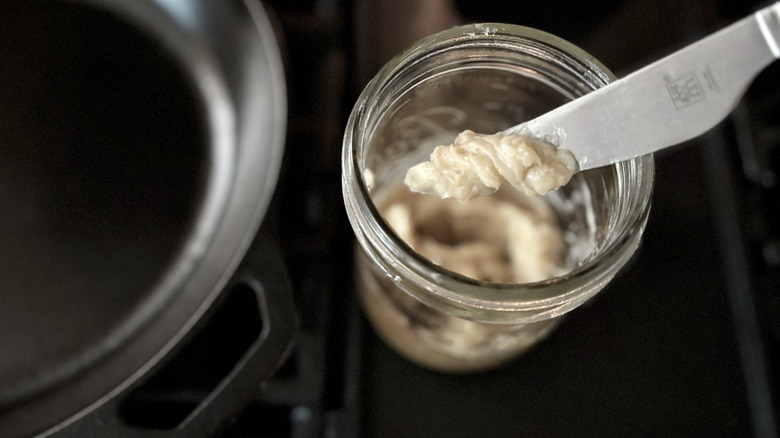
When you're ready to use your carefully stored bacon grease, just scoop out the amount you want using a butter knife and put it in the pan, then heat it gently. If you want to use your bacon grease for other things, though, you'll need to do a little research.
The smoke point of bacon grease, or the point at which the fat begins to break down and produce harmful substances, is only around 325 degrees Fahrenheit, as opposed to, say, about 400-500 degrees Fahrenheit for most vegetable oils. It is not, therefore, suitable for high-heat frying or deep-fat frying. Reserve bacon grease for gentle sauteing and frying, or for use in baked goods.
If using bacon grease as a fat substitute, look up the proper substitution ratio
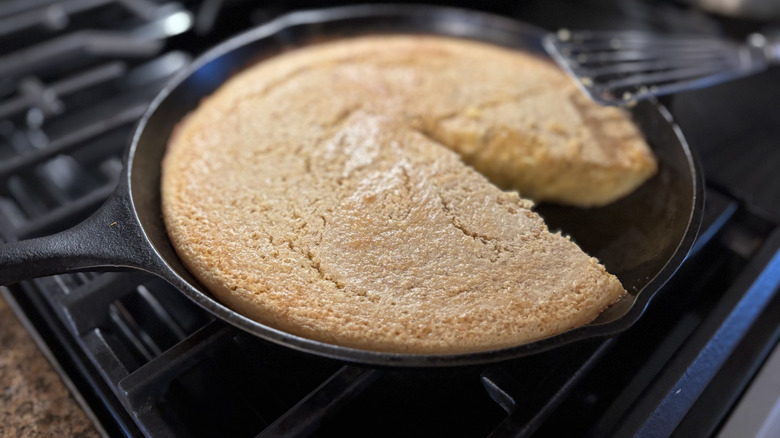
Personally, our family does not use bacon fat as a substitute for butter or other types of fat in recipes. At the most, we might let it do a shift instead of butter when we're making a pan of cornbread, as in the photo above. (If you're curious, I use the "Joy of Cooking" Southern Cornbread recipe, which calls for heating bacon fat or butter in the pan before you add the batter, resulting in an extra-crispy and lacy crust.)
You can also use bacon grease pretty freely in vinaigrettes, without following a recipe too carefully. However, if you want to use bacon grease in muffins or other baking applications where exact chemistry matters, it's better to look up a recipe that specifically calls for bacon fat rather than sub it in blindly, as this may have unexpected results.