

Can Peanut Butter Really Make Diamonds? Science Says Yes
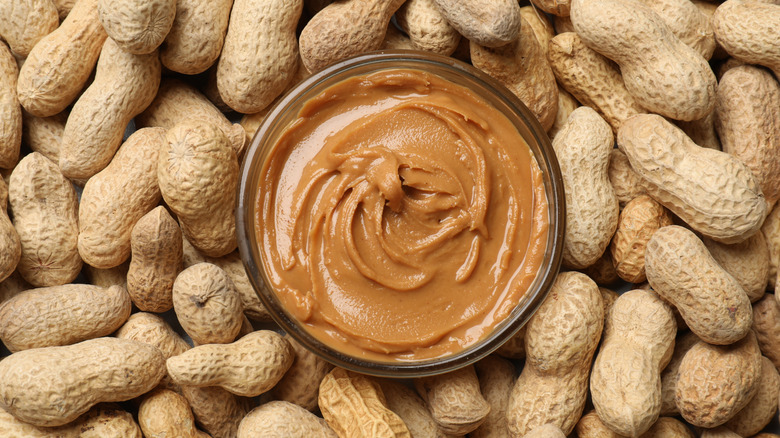
Food and diamonds usually intersect only in the hyper-opulent realm populated by the likes of the world's most luxurious cake decorated with thousands of diamonds, or the most expensive drinking chocolate in the world with its edible diamond glitter. However, science can sometimes humble even the rarest, most prized materials, and this is especially true for diamonds. Composed almost exclusively of carbon, an element that's abundant in the world, diamonds are rare not because of what they are made of but the process through which they are formed, both naturally and in a lab. Natural diamonds are formed in the Earth's upper mantle, which is about 100 miles or more below the surface, where the pressure and heat are so immense that it is (so far) impossible to access the area. The deepest we've reached so far with all our advanced technologies is a third of the way to the upper mantle.
The need to go deeper into Earth isn't to dig for diamonds; it's to actually understand how the Earth was formed and what materials it is made of. With this aim, scientists recreate similar high-pressure, high-temperature environments in laboratories, and this is where peanut butter diamonds come into the picture. Because the conditions under which diamonds are naturally formed are recreated in the lab, it becomes possible for scientists to make diamonds using those lab conditions. Since carbon is so abundantly present in so many common materials around us, scientists have used various sources of carbon to make diamonds. Years ago, geophysicist Dan Frost successfully created diamonds using carbon harvested from peanut butter and even from the air at the Bayerisches Geoinstitut in Germany.
A diamond is rare, but its main ingredient, carbon, is abundant
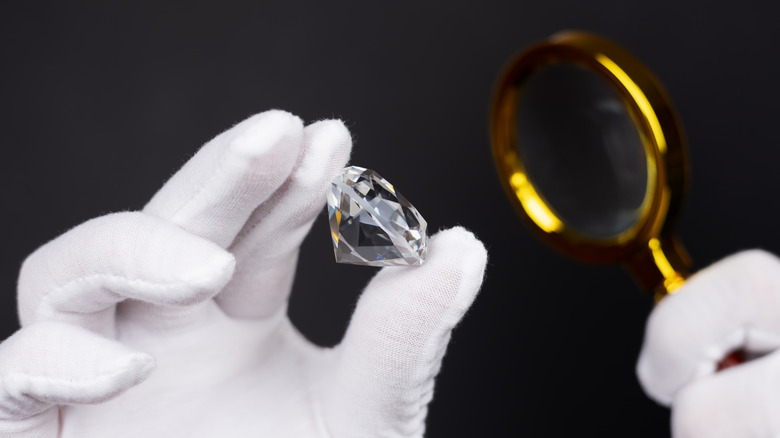
Natural diamonds form from carbon trapped deep beneath the Earth's surface. Since all living organisms on Earth are carbon-based, we are essentially made of the same material as diamonds. Most foods, since they come from living material, also contain carbon and can therefore, in theory, be used to make diamonds. In the case of natural diamonds, carbon, subject to the immense pressure of the Earth's interior, changes its structure to form the precious crystalline gem. However, if this diamond continues to be subject to the high-pressure, high-temperature environment, it once again changes its structure and turns into graphite — an abundant material that is commonly used to make pencil lead. Therefore, natural diamonds that are excavated are actually those that are able to leave the Earth's interior, usually due to violent volcanic eruptions, and make it to the surface, where the conditions are not so intense and the carbon gets locked into a diamond structure without turning into graphite. Pure carbon mainly occurs in normal conditions as either diamonds or graphite — priceless jewels or pencil lead.
Thus, while diamonds are incredibly valuable and arguably rare, their components and even their closest materials in terms of structure are anything but rare. Even lab-grown diamonds simply use a carbon-rich gas, and it's the specialized environment in which they're made that gives them value. Thus, it's not difficult to imagine that diamonds can be made with something as common (albeit delicious) as peanut butter.
Diamonds can technically be made with peanut butter or even just air!
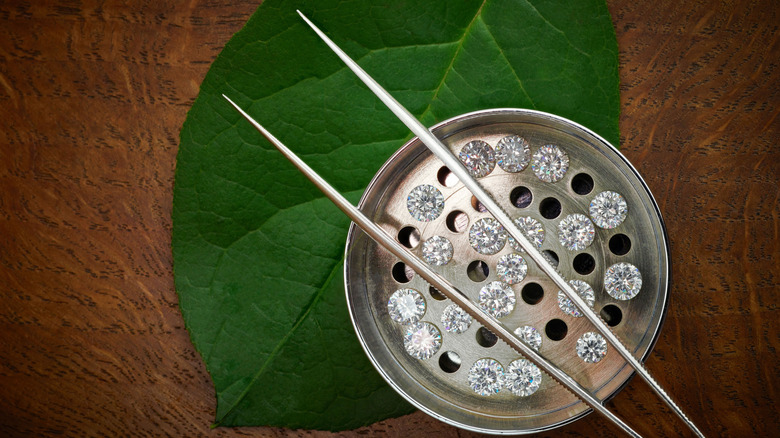
Theoretically, any source of carbon can be turned into diamonds given the right conditions. In fact, there are companies that have processes to make diamonds out ot thin air using carbon dioxide to extract carbon. Dan Frost conducted a similar experiment in his lab in which he used air to make diamonds, and was then asked to make the priceless gems using peanut butter. Frost revealed that the experiment of turning peanut butter into diamonds, while successful, was ultimately destroyed because of the large amount of hydrogen it released (via BBC). While some natural peanut butters are better than others when it comes to eating, it appears that any type of peanut butter should technically work for making diamonds.
So why isn't everyone turning their breakfast condiments into diamonds? It's because, in addition to being complicated, the process is also quite slow. It can take weeks of expensive processing to make even a minuscule diamond, making the process of turning peanut butter into diamonds quite unviable. However, if not diamonds, you can settle for the second-best option and make these intense two-ingredient cookies with just peanut butter and maple syrup.