

How To Sweeten Bitter Matcha While Keeping Its Signature Flavor
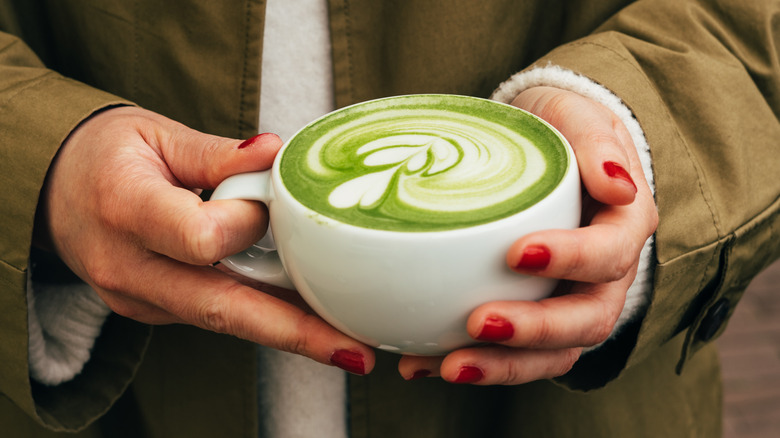
In the world of pick-me-up beverages, matcha has a dedicated fanbase to the extent that its savored in a number of unique matcha-flavored products you can find at grocery stores. Perhaps all the hype around matcha got you curious enough to order all the essentials, including the special whisk (called chasen) and bowl (chawan), to see what all the fuss is about — only to be put off by its distinct, bitter taste. If that's the case, perhaps a tip from Elle Liu, the founder of Chinese tea company THEORÓ, could do a magic trick for your taste buds.
Liu told Chowhound that, for a sip of matcha with muted bitterness, the preparation is key. This includes using water at the optimal temperature, proper whisking technique, and the amount of matcha powder you use. But there are other tricks that can help mute matcha's bitterness and sweeten it without compromising its flavor. "I personally love making a matcha latte to soften bitterness," Liu said. "I usually go for oat milk, which adds a gentle creaminess that highlights matcha's grassy, umami notes without overpowering them." For the iced beverage fans, she recommends using large ice cubes as they "melt slowly and help preserve the clarity of flavor."
The natural bitterness of matcha
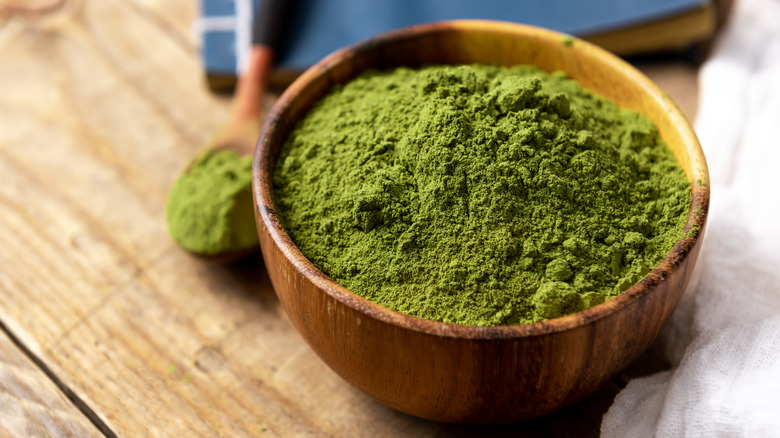
A number of factors come into play to impart the characteristic bitterness of matcha. For starters, matcha is a type of green tea; it's vastly different from conventional ones, and it has a natural earthiness. It contains compounds called catechins, which are polyphenols responsible for the astringent taste of matcha. As opposed to black and oolong teas where most of the catechins are converted into compounds called tannins, which are far less bitter, green teas like matcha are unoxidized and retain the bitter catechins.
How the matcha is harvested and processed can also impact its flavor. "True matcha starts as tencha, which is made from specific cultivars like Samidori, Asahi, or Okumidori — chosen for their color, sweetness, and umami," Elle Liu said. "These tea plants are shaded for 25 to 40 days before harvest, a technique that boosts amino acid levels and reduces catechins." The milling process is also crucial. The traditional, stone milling method "protects the tea's flavor and aroma," while the industrial mills, which have a higher output, result in teas that have "duller color, rougher texture, and a less refined taste."
Matcha is often associated with being from Japan, and rightfully so. Though it originated in China, this prized tea burgeoned within Japanese culture and is deeply ingrained in the nation's revered tea ceremonies. China continues to produce matcha, as well as India, meaning the crops are exposed to varied regional conditions that are bound to impact the final flavor profile, similar to how wines from different regions have varied tasting notes.
How preparation affects matcha's bitterness
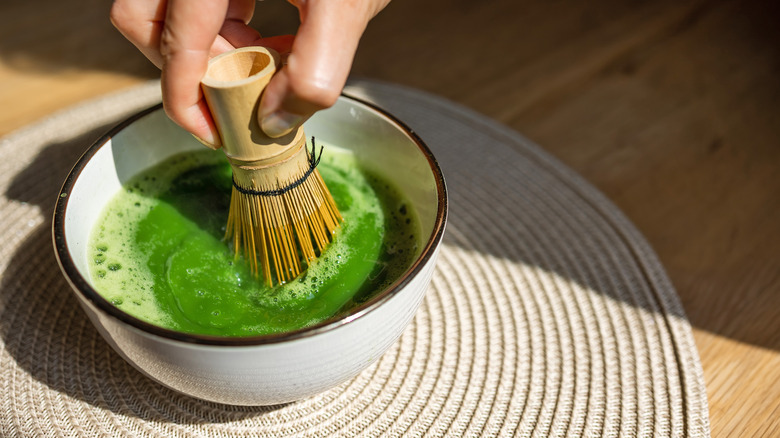
There are two main categories of matcha: culinary grade and ceremonial grade. For sipping, ceremonial grade is preferred and is less bitter, while culinary grade, as the name suggests, is suitable for cooking and baking. The lush green of matcha comes from the pigment chlorophyll, which is sensitive to high heat. So if the water is too hot, the chlorophyll starts to break down, which can turn the matcha unpleasantly bitter. According to Elle Liu, the water's temperature should be between 175 to 180 degrees Fahrenheit to allow "matcha's natural sweetness and umami come through."
It's also important to use fresh spring or filtered water that has been brought to a full boil and allowed to cool to the optimal temperature range, as Liu explained that "boiling changes the oxygen content and brings out the tea's depth." Pay attention to the ratio to avoid overwhelming your taste buds by using too much matcha powder. Liu recommends 1.5 to 2 grams of sifted matcha per 65 grams of water, combined by whisking "vigorously in a quick 'Z' motion" until a delicate foam develops. Then, the "matcha opens up and shows off its sweetness, umami, and velvety texture." You should also store the matcha correctly to prevent the green powder from turning dull.