

6 Plants That Do Not Want Your Coffee Grounds Anywhere Near Them
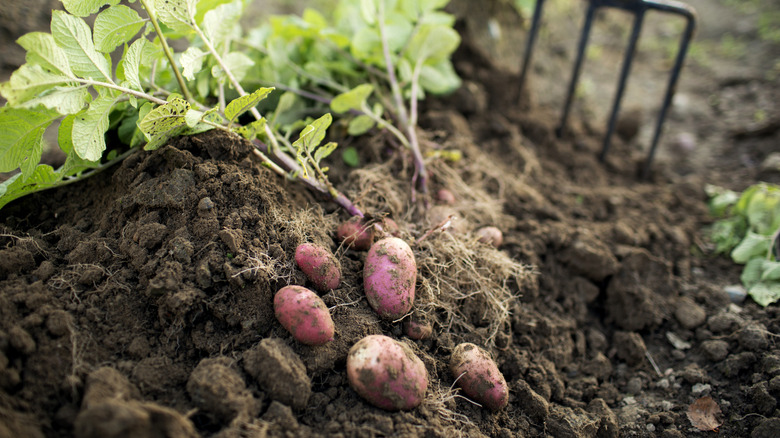
You've likely seen bags of spent coffee grounds at your local coffee house with labels that say the grounds are for your garden. Even if you haven't seen those, there's a good chance you've heard that used-up coffee grounds are great for soil nutrition and making the plants in your garden grow more quickly. For some plants, this is true. Coffee grounds can really help with soil structure and microbial control, and mixing some into your garden keeps the grounds out of landfills.
However, other plants don't like coffee grounds for a few reasons. One is that the grounds may have effects on nitrogen levels and soil acidity, and while those may not be as clear-cut as previously thought, you can't take the risk with some plants. Another is that those grounds can be dense and retain moisture, which is not great for plants that prefer drier soil conditions. No matter the plant, the caffeine content can adversely affect seedling growth. Either way, the fact is that you can't just dump coffee grounds around plants. These six plants definitely do not want your old coffee grounds around them at all.
1. Asparagus
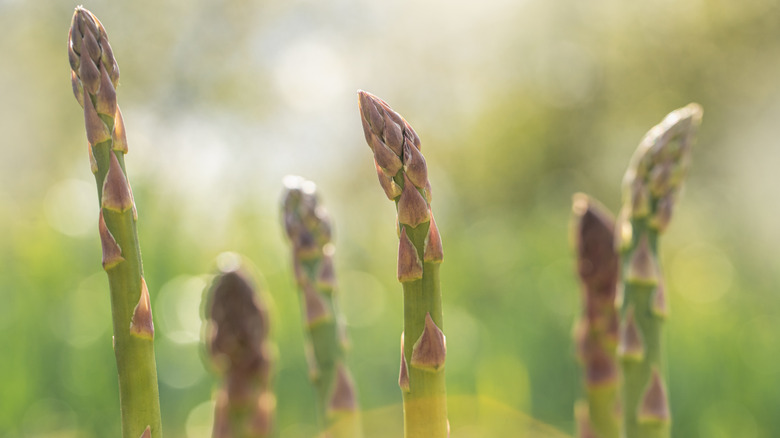
Asparagus looks extremely odd when it grows. The stalks stick straight up out of the ground with little leafy foliage, unless you leave the spears in place so that they can eventually form sparse, fern-like fronds. However, those spears make it very easy to distribute soil enhancers around the spears, like mulch and coffee grounds. Unfortunately, asparagus is a plant that does not like coffee grounds at all due to soil pH. Asparagus prefers alkaline soil, and the risk with coffee grounds is that they'll increase soil acidity.
Here's where it gets a little complicated. Coffee is acidic, and if you add coffee grounds that haven't been used, there's a risk that the soil could become more acidic. However, brewing the grounds removes much of the acidity. Spent coffee grounds are usually closer to a neutral pH range, which you'd think would make them suitable for use around asparagus. However, you'd essentially be guessing — chances are that you're not going to test each batch of coffee grounds with a litmus test strip. You won't know if you brewed the coffee for long enough to raise the pH, nor will you test each batch of unused grounds to see how acidic they were to begin with. Furthermore, unless you test the soil, you won't know the starting pH. If the soil is already neutral or even a bit acidic and were to become more acidic, the asparagus' growth could be stunted, and the plant could be deprived of good nutritional balance.
2. Rosemary
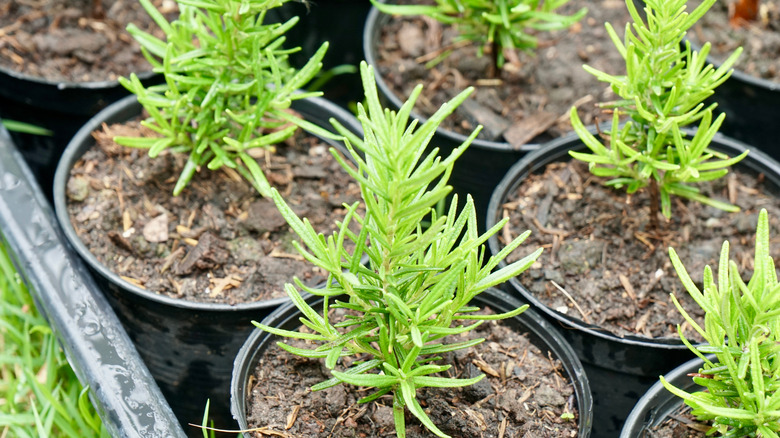
Rosemary, as well as other Mediterranean herbs, is another plant that prefers alkalinity. It's OK with soil that has a neutral pH, but once the soil starts becoming acidic, the plant's health can start to falter. Soil that's too acidic can hinder a plant's ability to extract major nutrients like potassium and phosphorus from the soil, leading to poor growth. A potassium deficiency in plants can lead to discoloration and leaf deformity. Again, spent coffee grounds are usually more neutral in pH, but there's no reason to risk the health of your rosemary plant. Instead, just make its growing conditions as good as possible by giving the plant plenty of room to expand, occasionally adding a little fertilizer.
Rosemary also likes well-draining soil, and that's another strike against coffee grounds. The grounds can compact, creating denser soil that retains moisture and doesn't drain as well. That can lead to root rot in the plant, eventually killing it.
3. Beets
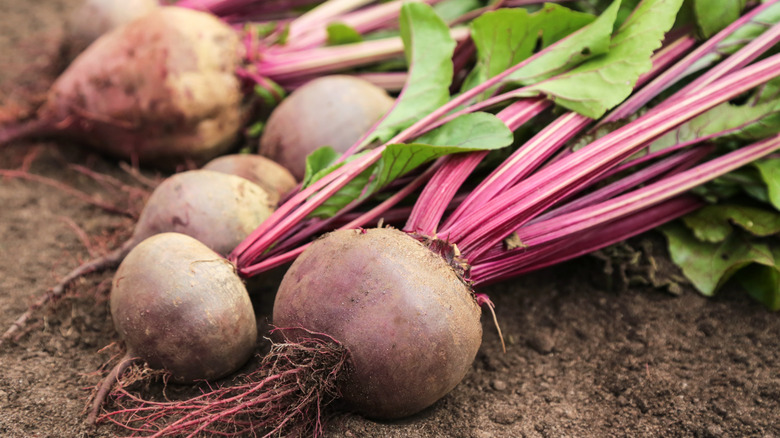
Beets are another plant that don't benefit from coffee grounds, and they need soil that's more neutral to alkaline. Acidic soil has a terrible effect on beets; in fact, it doesn't have to get far into the acidic pH range before beets simply won't grow well. Leaf production can be almost non-existent, and the beets can die. Acidic soil can also promote the growth of soil bacteria that create scab, which can affect the beets. Because acidity can reduce nutrient uptake, the beets could lack phosphorus. Even though used coffee grounds have lower acidity, this isn't a plant you want to mess with in terms of soil pH.
Beets also need looser soil. Compaction is bad for them, and if you use coffee grounds, you risk having the soil compact. This can be to the point where the beets won't grow that well. You're better off not adding the grounds at all.
4. Potatoes
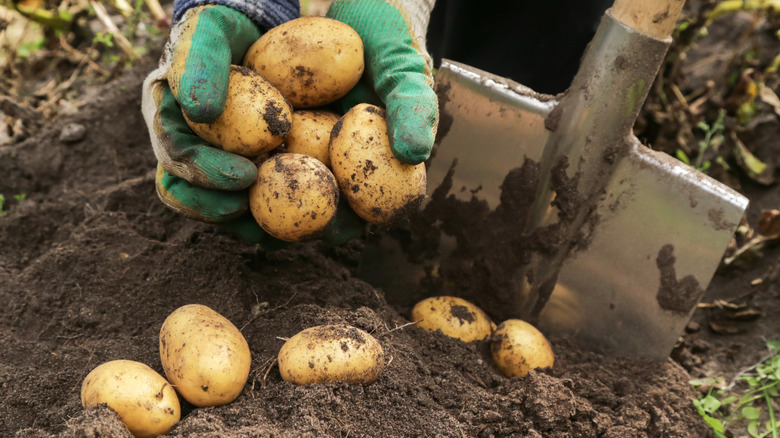
Potatoes don't like coffee grounds, but this time, the acidity (if the grounds increase that at all to begin with) isn't the main issue. Soil that's too acidic can result in scab in potatoes, but there's another problem.
Coffee grounds can increase nitrogen content in the soil. Other times, they tie up the nitrogen that's already there. In general, coffee grounds are thought to introduce more nitrogen into the soil. That's great for plants where you want to have lots of leaves, and the growth can be spectacular. However, that foliage growth comes with a price. All the plant's energy goes toward the leaves — not toward roots, flowers, and so on. That's disastrous for potatoes, where you're relying on tuber growth. Too much nitrogen can also affect the interior texture and growth of the spuds that do grow.
However, the nitrogen in coffee grounds isn't always available at first. It has to break down into an available form, and the decomposition process may actually deplete soil of nitrogen. On one hand, you risk adding too much nitrogen to the soil if the grounds break down enough as the plant grows. On the other, you risk depleting necessary nitrogen when the grounds are in the process of breaking down. You're better off avoiding using coffee grounds with potatoes.
5. Beans
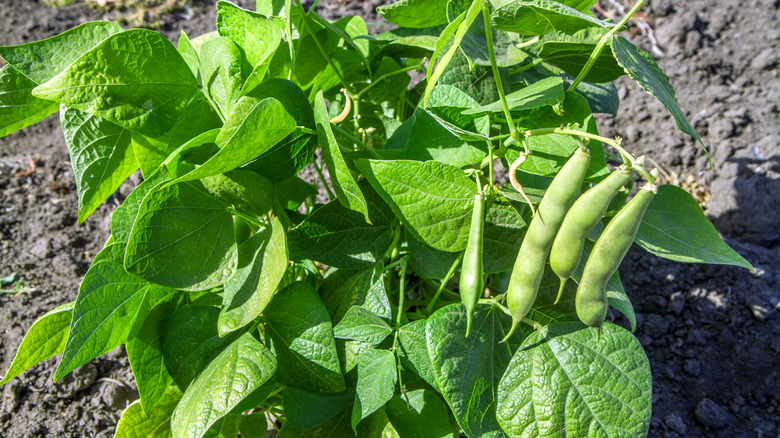
The nitrogen problem is even worse with beans, which themselves fix nitrogen in the soil. Because the beans add nitrogen, contributing more nitrogen through the application of coffee grounds isn't going to help. Instead, it's just going to introduce too much nitrogen and promote the growth of leaves over the growth of any flowers or bean pods. If the grounds end up sucking nitrogen out of the soil during the decomposition process instead, it could upset the nutritional balance in the soil, too.
Beans also like well-draining soil and a more neutral soil pH. Given that you never really know what spent coffee grounds will do in terms of lowering soil pH and the fact that they can compact into dense clumps that don't drain well, those grounds are a triple threat. Why risk any of this? Keep the coffee grounds far away from bean plants. If you really want a natural way to help bean plants grow (and you have a little extra space), look into the "Three Sisters" form of companion planting, where beans, corn, and squash all help each other grow.
6. Leeks
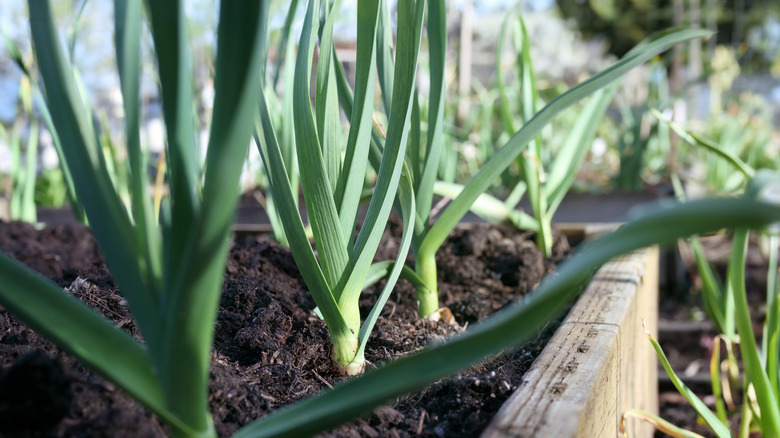
Finally, there are leeks. Leeks are a great example of what coffee grounds can do to a plant that doesn't like them. This was one of five plants put through a study at the University of Melbourne in 2016 that looked specifically at what effect spent coffee grounds would have. The results weren't pretty — the study looked at leeks, violas, sunflowers, broccoli, and radishes, and all of them fared terribly. It didn't matter what type of soil they were in or how much fertilizer they got. If they got even a little bit of spent coffee grounds, they didn't grow well. The one bright spot was that this meant weeds didn't grow well, either. Researchers looked at soil nutrition and soil pH, too, and found that neither of those appeared to be responsible.
The conclusion from the study was that the grounds appeared to have a toxic effect, although it wasn't specified what exactly was causing it. One possibility, according to the University of California Agriculture and Natural Resources program, is the caffeine content. Caffeine can limit plant growth, and while that seems like a great way to stop weeds and other competitors from growing, it could have affected the leeks and other plants in the study. All in all, while coffee grounds may help some plants, they need to be kept far away from many others.