

How To Roll Sushi Like A Pro
We may receive a commission on purchases made from links.
There are different types of sushi, but the one most popular in the United States is the sushi roll, or maki sushi. Sushi rolls can be filled with all kinds of ingredients, from raw to cooked fish and even tempura, vegetables, and more. The sushi roll's adaptability helped it become the most popular form of sushi worldwide.
There are thousands of sushi restaurants in the U.S., but sushi dining can get expensive. That's why Chowhound met with Chef Tetsuji Terashima, Head Sushi Chef at Sushi Roku in Pasadena, California. Chef Terashima showed us how to roll sushi so you can make it yourself at home. In particular, he shows us how to make uramaki, also known as the "inside-out sushi roll" because the rice is on the outside of the completed roll.
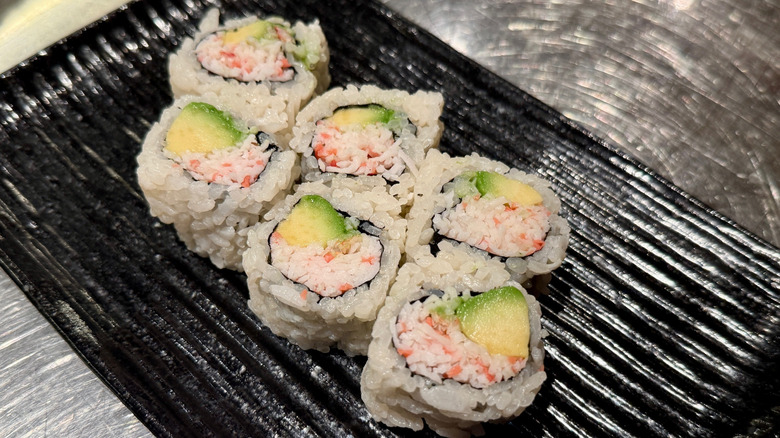
Chef Terashima has worked at Sushi Roku for almost 20 years, so he's certainly had plenty of practice making sushi rolls. For this demonstration, Chef Terashima walked us through the steps of making the ever-popular California roll. There are so many ingredient combinations you can make maki sushi rolls with, so once you learn the basics, you can go crazy with your own ingredient combinations.
What tools/ingredients you'll need for a sushi roll
The main ingredients you need to make an uramaki are rice, sheets of nori (dried seaweed), and whatever ingredients you plan on using for the filling. The ideal rice to use is short-grain rice. Short-grain rice contains higher starch than long-grain rice, which makes sushi rice stickier than normal rice. At sushi restaurants, the chefs will traditionally add a mixture of vinegar and sugar to the rice as soon as it finishes cooking. The vinegar works as seasoning and also helps maintain the rice's stickiness.
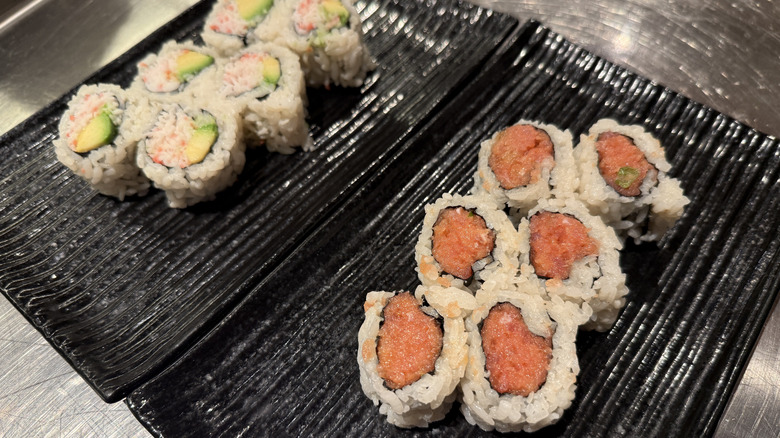
As for what ingredients to use as the filling, you can get quite creative. For example, you can even use tempura for a crispy sushi roll. For this demonstration, Chef Terashima prepared avocado slices and imitation crab for the California roll, and spicy tuna for the other. You can head to Japanese grocery stores to get sushi-grade fish. Be sure to learn what to look for. Next, you will need a makisu or Japanese bamboo mat to roll the sushi with. Of course, you also need a knife to cut the sushi once you're finished rolling.
Prepare and set up the ingredients
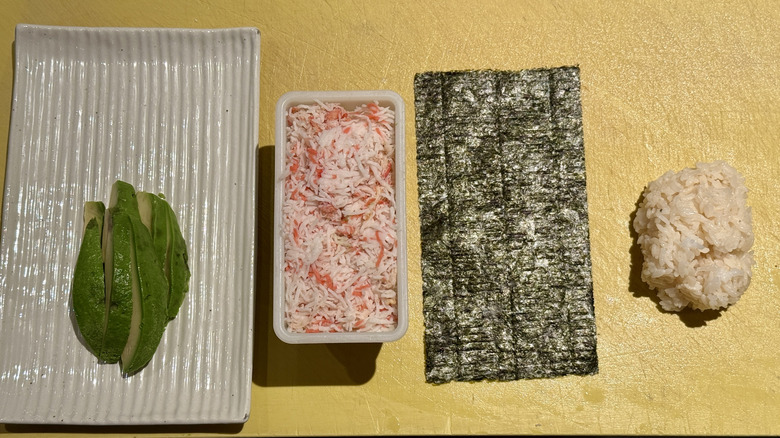
First of all, you will need a sheet of nori. Nori is a type of seaweed that has been dried and made into thin sheets, and this is what is typically used to make maki rolls. The other ingredients like rice and fish can make nori soggy if you take too long, but a very quick toast on the burner helps keep your nori crisp. At Sushi Roku they cut the nori in half. Using half of the sheet is more manageable if this is your first time rolling sushi. It also makes for smaller sushi pieces that are more manageable to eat.
You will also want to let the sushi rice cool before you start making your roll. The temperature should at least be comfortable to handle with your bare hands. Other ingredients like the fish, sliced avocado, or any other filling should be prepared beforehand so you can quickly build your sushi and start rolling.
Spread rice over the nori
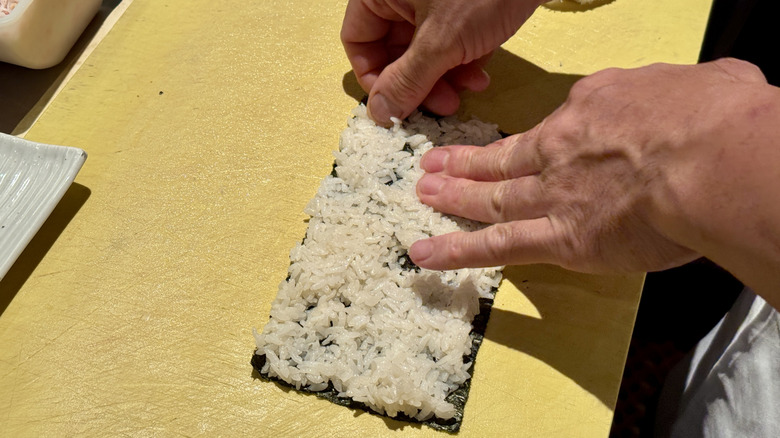
Grab some sushi rice and place it on one side of the nori. Sushi Roku uses around three ounces of rice for a six-piece sushi roll (on a half sheet of nori), but the rolls you'd find at Japanese grocery stores will most likely use more rice to make it more filling. You want to make sure you spread the rice to all four corners of the nori. According to Chef Terashima, it can be thinner in the center as there will be other ingredients for the filling, but make sure the corners and edges are covered with rice. Use your fingers to press the rice down to ensure it sticks to the nori.
Put the filling on
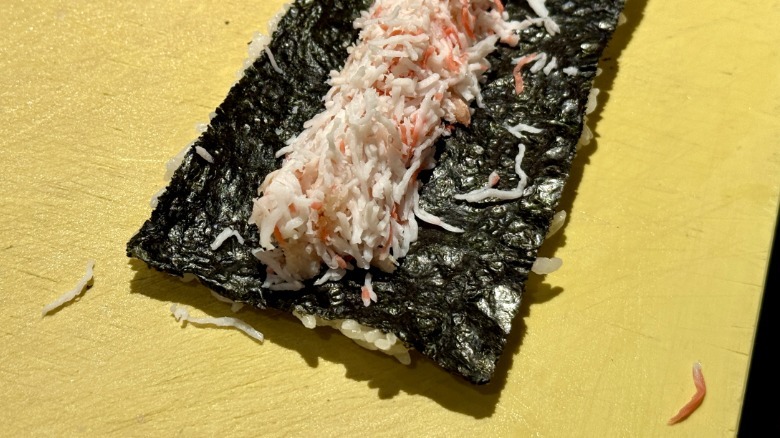
After you finish spreading the sushi, flip the nori upside down, as you will place the filling on the side with no rice. Start piling the filling ingredients like fish or imitation crab in the middle of the nori, lengthwise. You can be generous with the filling, but keep in mind you'll need to make sure all the ingredients fit into a roll.
Start rolling
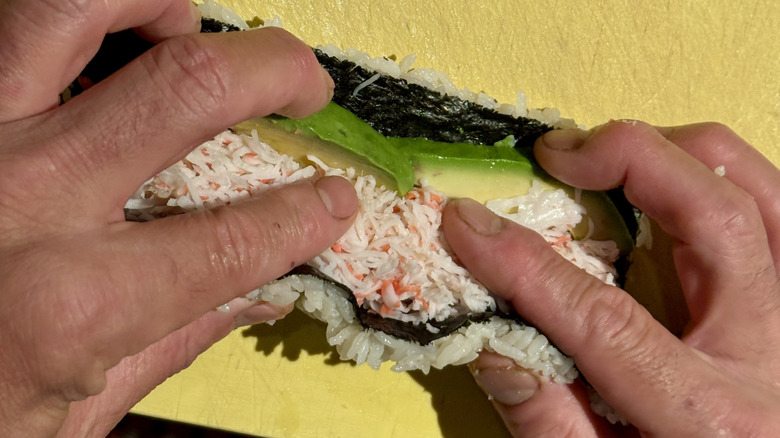
Start rolling the sushi from one of the long sides. Hold the ingredients in place with your middle fingers while you roll using your thumbs and index fingers. At this point, do not roll all the way to the other edge, but leave a narrow space at the end. You'll need that extra nori space to seal the roll, otherwise the roll will easily break apart when you cut it.
Finish rolling
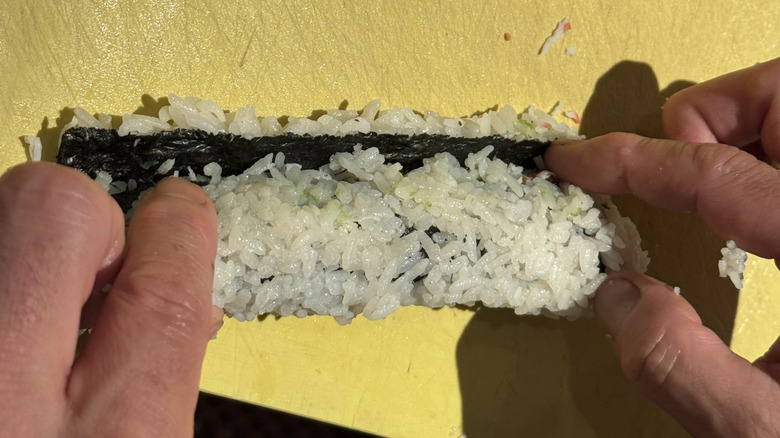
You have hopefully left a small gap on the edge of the nori from the earlier part of the rolling process. You can now finish rolling all the way to the edge to seal the roll.
Tighten roll with bamboo mat
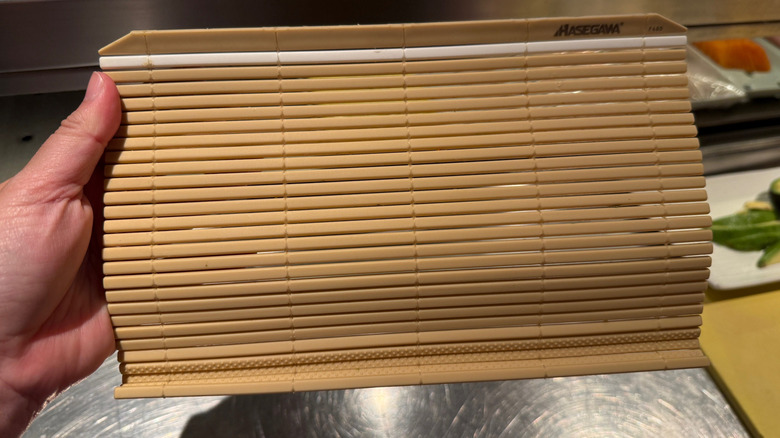
Grab your makisu, the small bamboo mat used for rolling sushi. If you're using a mat made with real bamboo, which is traditional, you'll need to wrap the mat with plastic; otherwise, the sushi rice will stick to the mat and your sushi roll will fall apart. On the other hand, contemporary makisus are often plastic, and you can use them (pictured) without plastic wrapping. You can buy makisu at Japanese markets or Amazon.
Gently press the sides in using the bamboo mat
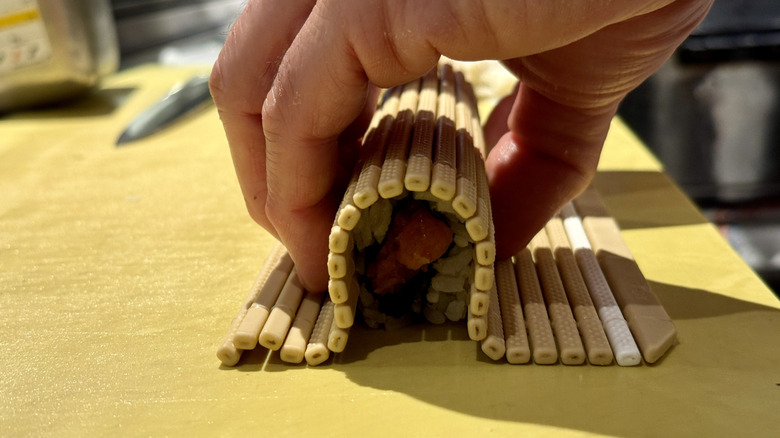
Place your makisu over your sushi roll. According to Chef Terashima, different sushi chefs have numerous methods. In his case, he gently presses the sides of the sushi inwards using the makisu. Pressing the sushi with makisu will tighten the sushi roll, making sure each piece will be evenly shaped and stay firm when you cut it.
Cut the roll
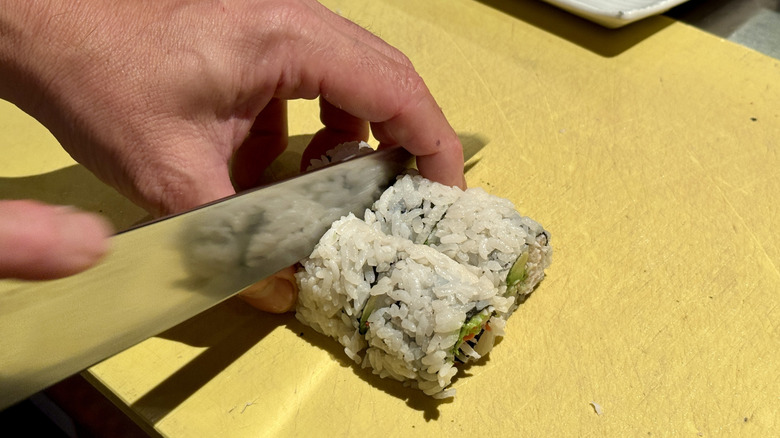
Now that the sushi roll has been tightened, it's ready to be cut. At Sushi Roku, the sushi is cut into six pieces. Chef Terashima first cuts the roll in half, then places the two halves side by side before cutting them into thirds. Now you're ready to plate the sushi and enjoy them. Use a sharp knife so you can cut it in one go, otherwise you risk the roll falling apart.