

What's The Difference Between Chinese Dumplings And Korean Dumplings?
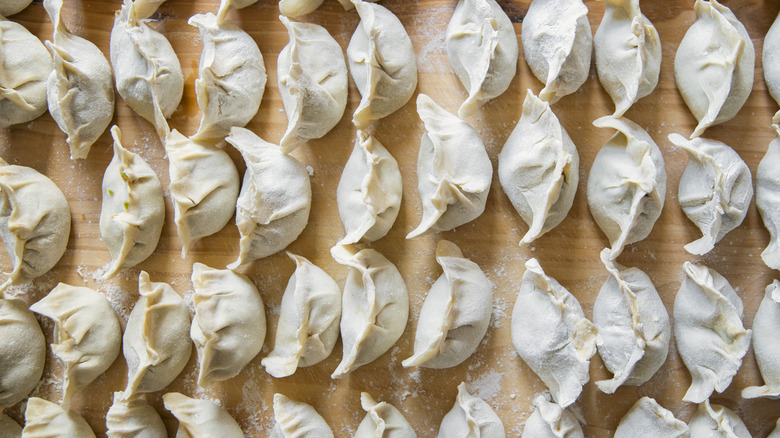
In some ways, dumplings are the universal food. Little dough pockets filled with meat and vegetables can be found across a wide array of cultures, whether they're called empanadas, pierogi, ravioli, potstickers, or gyoza. Each cuisine puts its unique spin on the dish, often from recipes that have been passed down for centuries, and there are frequently crossovers in ingredients and presentation due to the complex nature of food history. China and Korea are both cultures with an affinity for dumplings, which tend to be prepared in similar styles and resemble one another. So what are the biggest differences between Chinese and Korean dumplings?
To find out, Chowhound spoke with experts Shirley Chung (@chfshirleychung on Instagram and Chef Shirley Chung on Facebook), a Chinese-American chef, influencer, and restaurateur; and Jae Park, chef and Global R&D Director at Bonchon International. "Korean dumplings, known as mandu, share some similarities with Chinese dumplings (jiaozi), but they have distinct differences in ingredients, seasoning, and preparation," Park says.
According to Chung, "The biggest difference between Chinese dumplings and Korean dumplings is Chinese dumplings mainly use raw ingredients like ground meats, raw chopped vegetables and seafood for the filling, and Korean dumplings normally use cooked proteins and vegetables and glass noodles for the filling." Because of these different ingredients, she says, "Chinese dumplings tend to be juicier, and Korean dumplings have more textures." Park also adds that "The flavor profile of mandu is generally stronger and more aromatic... while Chinese dumplings are typically milder in flavor."
Characteristics of Chinese dumplings
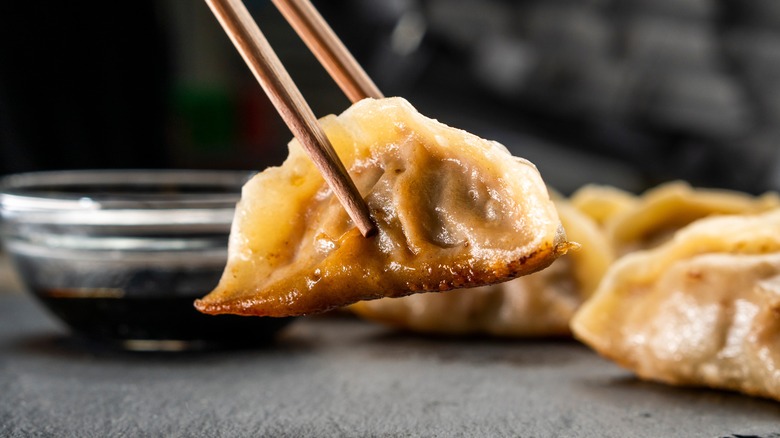
Technically speaking, there are many different varieties of dumplings within Chinese cuisines (which are also numerous and regionally-specific). Some common Chinese dumpling types include jiaozi, siu mai, bao zi, wontons, and xiao long bao (soup dumplings). The type most commonly confused with Korean dumplings are jiaozi, since they often share a similar crescent shape and may be made with the same type of wrapper dough and cooking methods as Korean mandu.
Jiaozi are typically formed using a circular, wheat-based wrapper and stuffed with ingredients like ground "pork, shrimp, or beef mixed with vegetables such as cabbage or scallions," according to Jae Park. He also notes that jiaozi, like Korean mandu, are usually cooked by "steaming, boiling, [or] pan-frying." In their tasty, pan-fried form, these dumplings are commonly known as 'potstickers' and can be purchased frozen from grocery stores across the U.S. Because Chinese dumplings tend to have a milder flavor profile, Park says, they're often served with an accompanying dipping sauce and rely on it more "for seasoning."
If you want to make and serve jiaozi like a pro, or at least look like you know what you're doing at a restaurant, there's some etiquette involved. "The proper way to eat a Chinese dumpling is to use chopsticks and a soup spoon at the same time," Shirley Chung says. "Use the chopsticks to gently pick up the dumpling, dip it into the sauce, then put it on the soup spoon, making sure not to drip, and eat it from the spoon. Spoon saves the mess."
Characteristics of Korean dumplings
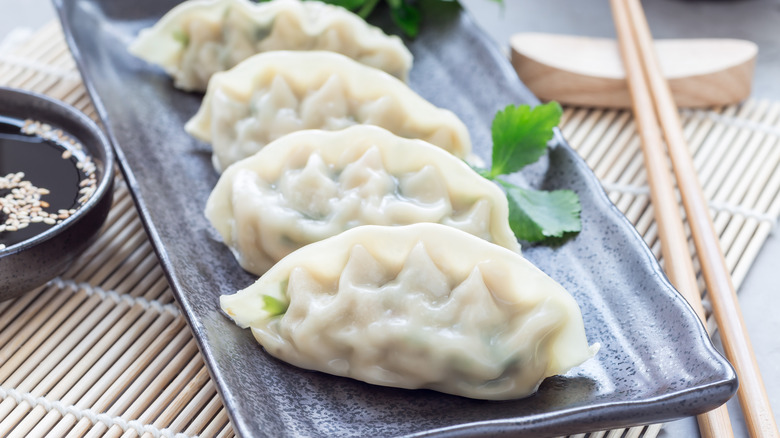
Korean mandu can be prepared in a variety of different styles, but share some typical characteristics. They're usually made with a similar wheat-based dough, though chef Jae Park says, "Korean dumplings tend to be slightly larger, with shapes that range from round to crescent-like, compared to the smaller and more uniformly crescent-shaped Chinese dumplings." They may be steamed, boiled, or pan-fried. However, unlike jiaozi, "Korean dumplings are also frequently deep-fried for a crispy texture," Park says.
Park informs us, "Korean dumplings often include unique ingredients like tofu, glass noodles, kimchi, and garlic chives," which you're less likely to see in other cultures' dumplings. Over time, these ingredients, which originated as filler to stretch the meat portions, came to define the signature flavor profile of mandu. Additionally, this flavor profile is "generally stronger and more aromatic due to the addition of sesame oil, soy sauce, and garlic," Park says.
Mandu are often served with condiments or dipping sauce as well, though the best sauce depends on the style of dumpling, Park explains. "Steamed or boiled dumplings pair perfectly with a simple sauce made of soy sauce, vinegar, and a touch of sesame oil, often enhanced with chopped scallions, garlic, and Korean red pepper powder," he says. "For pan-fried or deep-fried dumplings, a spicier and slightly sweet sauce based on gochujang, vinegar, soy sauce, and sugar provides a bold flavor contrast." He adds, "When dipping into sauce, it is best to do so lightly to avoid dripping."