

Why You Should Think Twice Before You Jump On This Bourbon Trend
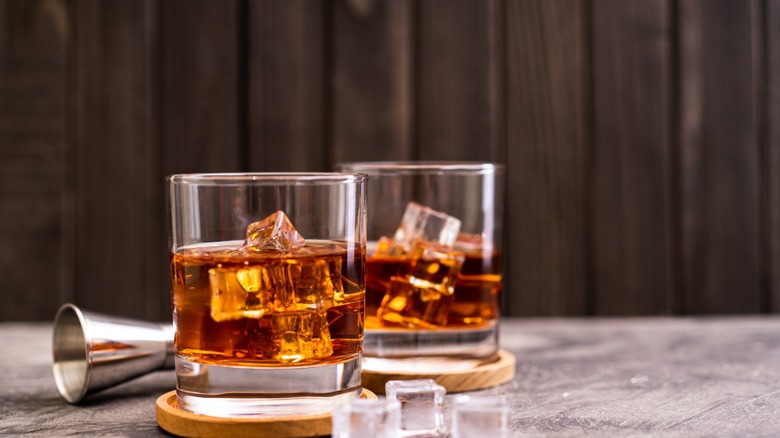
Even though all bourbon is more or less made from the same ingredients, there's still a great degree of variety from one bourbon to another — and some of these changes are reflected in the price tag. It might be more expensive due to its relative rarity, or it could be in scarce supply because the bourbon has been aged longer than usual. However, a higher number when it comes to age does not always indicate better taste — at least, that's what Chris Blatner might tell you if you asked him.
Chris Blatner is the Executive Bourbon Steward and founder of Urban Bourbonist, LLC and the Executive Director of Bourbon Charity, and he recently spoke exclusively with Chowhound regarding the issue of aged bourbons — namely that they represent a bourbon trend that you should avoid. He makes sure to address the fact that age doesn't always make a bourbon better; rather, it simply makes it different. "Age can bring in deeper oak integration, richer mouthfeel, and often darker flavor notes like tobacco, leather, and bitter chocolate," he stated. "But that can come at the expense of brightness, grain character, and balance."
If you're unsure about a particularly pricey bourbon, you can always find ways to sample it before buying. Just don't fall for the idea that an older bourbon will fit your tastes better than a younger one.
How to know if aged bourbon is for you

Some bourbon may be unique, but not worth the hefty price tag. Meanwhile, others are cheaper and stand up to their more expensive counterparts. Because of this, it can be difficult to use price as an indicator that a specific bourbon will appeal to you. This is where it can be useful to know what exactly age does to bourbon. If you know how the character of a bourbon develops, you can better guess how it'll satisfy your wants for a quality liquor.
When asked if it's a good idea to consider buying aged bourbons, Chris Blatner gave a curt and simple answer: "It depends on what you like." He explained that "if you enjoy generally drier, spicier, wood-forward bourbons with a long, chewy finish, you'll probably appreciate something that's been aged 15-plus years. But if you lean toward sweeter, fruitier, or more balanced pours, extended aging probably isn't going to be for you."
However, Blatner makes sure to point out that the best bourbons aren't just aged, they're also "well-made, well-stored, well-cared for, and well-chosen." So while age isn't merely a number when it comes to bourbon, it doesn't mean that it alone will craft a bourbon that suits you. Do your research, find a sample pour if possible, and grab the best bourbon for you regardless of its age.