

How To Assess, Clean, And Restock Your Pantry Like You Mean It
We may receive a commission on purchases made from links.
Completely cleaning and restocking your pantry may feel overwhelming, especially if the clutter has piled up over the years. However, it's a gift that keeps on giving. A well-organized pantry makes maintaining it in its new condition a lot easier, which will save you time in the long run.
The kitchen is often considered the center of the home, and the pantry gets frequent use. It's worth it to spend some time on set up so you can feel peaceful each time you open the door. Besides the benefits of a clean and organized space, new organization can better align with your lifestyle and individual meal planning needs. You can also reduce waste and save money when things aren't lost in the back of cluttered shelves, and it may feel easier to cook when you can see exactly what's in.
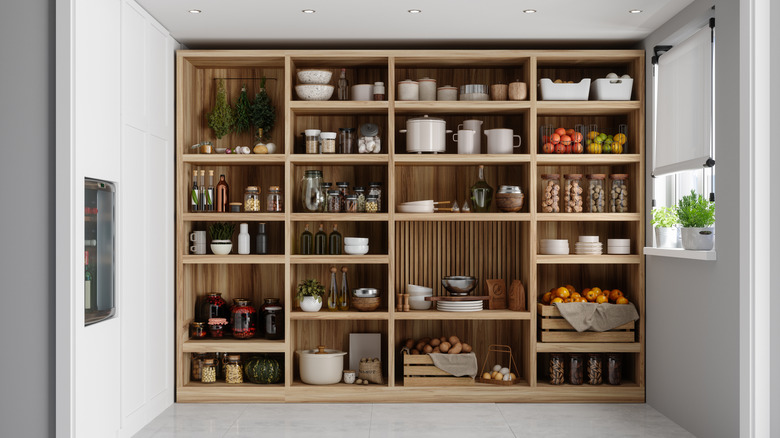
Pantries can range from small to large to aspirational kitchen features that blend in with the rest of the room. Some kitchens don't have a dedicated pantry, so the kitchen cabinets are considered pantry space. It doesn't matter if yours looks like it could be on the cover of a beautiful house magazine or you don't have a pantry at all. Our tips will help make assessing, cleaning, organizing, and maintaining your pantry space and everything in it much easier. You'll be on your way to a beautiful, functional and zen pantry before you know it.
Assess your current pantry
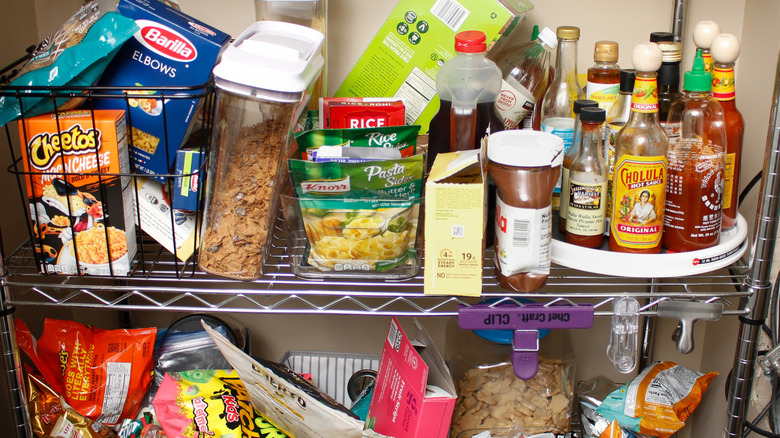
The first step is to take a good look at your current dry food storage space, whether you have a large pantry, a small one, or no dedicated pantry at all (in that case, take a look at your cabinets or shelves). First, assess the size, shape, and condition of your pantry. If anything is broken or in need of repair, plan a time to repair it after you remove everything in the next step.
Decide if you are happy with the way your pantry looks. We're not talking about food organization, but the physical pantry itself. We all need to eat, so the pantry is an important part of the kitchen that benefits from looking nice. Think about incorporating stylish pantry renovations if that would spark more joy each time you open the door. This could include simple solutions like laying down a rug, changing cabinet pull hardware, or lining wire shelves, to more involved changes like painting the walls or installing custom lighting and shelving.
Remove everything
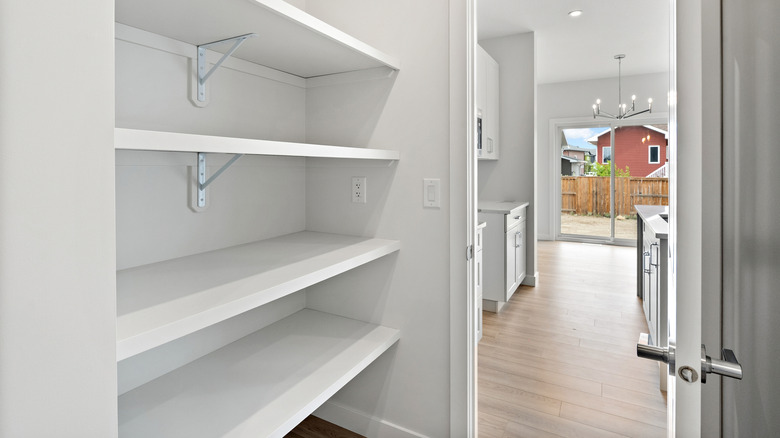
Next, remove everything from your pantry. Yes, everything. The goal here is to understand exactly what's inside. Sort the contents into categories as you remove them to keep things organized and avoid creating a new mess outside of the pantry. Grab some boxes or dedicate certain areas of the kitchen counters, table, chairs, or floor for this.
The toss category is for trash, expired food, and anything damaged beyond repair. Consider creating a donate category for unopened packages of food you're not interested in eating (as long as they're not expired) to benefit needy people in your community. The third category is for things you want to keep.
These categories go for everything in your pantry, from food to pots and pans to appliances, which you can keep in separate areas. For example, if you received a waffle maker as a gift and used it one time in the past two years, challenge yourself to use it more or donate it to someone who may need it more than you do.
Sort everything in the keep pile

First toss the trash to start with a cleaner kitchen. Empty cans or boxes of expired food and recycle the containers if you can. Drop off your donations at your local food bank, and then sort what you put in the keep pile. As you sort, think about what you found in the pantry and what you threw out to start tracking your personal habits and food needs. This will inform your new pantry system, which will be unique to you and will range from how to organize your pantry items to what to put on your shopping list.
Start by grouping your kept items into basic categories, similar to the aisles of a grocery store. Depending on how much you store in your pantry, these categories can be as broad or as specific as you think you need. For starters, think of categories like canned goods, grains, condiments, beans, sweets, spices, snacks, boxed foods, beverages, paper products, appliances, and kitchen supplies.
Clean the pantry
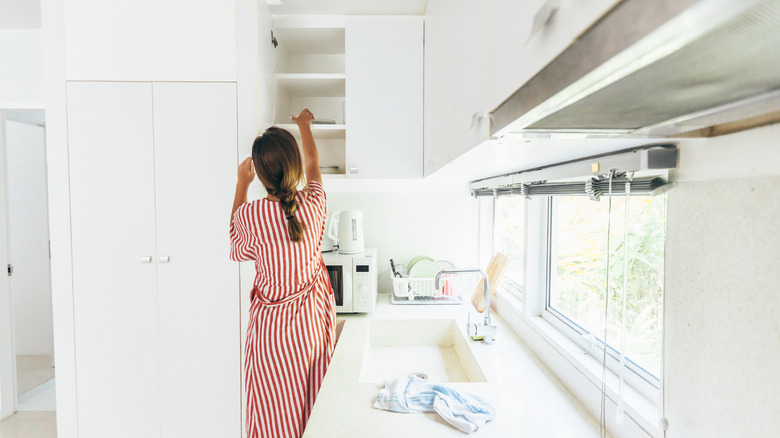
Now it's time to clean the pantry. Before you put anything back inside, deep clean all areas. It takes a little effort, but it will give you a squeaky clean base to start your new and improved pantry space. Start with the ceiling, removing any cobwebs, and go all the way to the floor, giving it a good sweep and mop. Wipe down the walls and any doors, checking for splashed food stains, and clean the shelves well. Wipe up or vacuum any crumbs on the shelves, using a crevice attachment to get around the edges. Treat any stains and wipe down the shelves with cleaner or a mixture of white vinegar and water.
If you found any sticky or dirty containers during your sorting, clean them too. Dust old cans or boxes and wipe down any sticky packages or bottles, especially bottles of oil, which often drip. A mixture of dish soap and hot water is enough to wipe down sticky containers. Use a cleaning cloth, rinse it after washing, and dry the containers.
Plan your new pantry organization
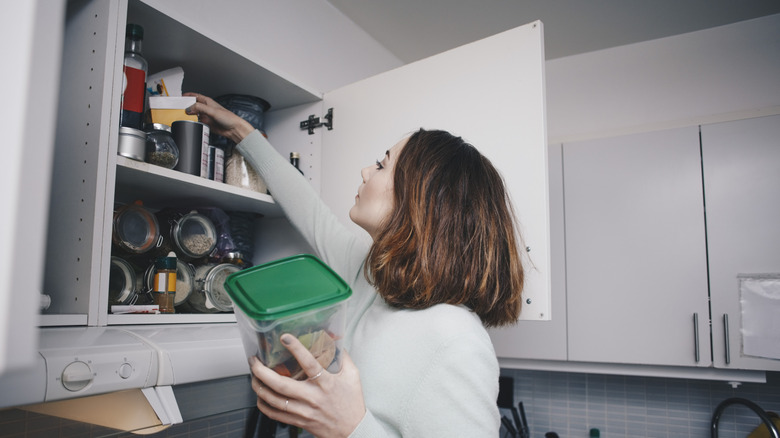
Count the categories you made when you sorted all of your keep items and compare them to how much pantry space you have. Then divide your pantry into areas for each category. These areas may shift as you actually start restocking your pantry, so think of it as a rough draft for now. Measure your shelves and storage areas, because those measurements will come in handy when planning storage containers in a later step.
Do your best to keep efficiency in mind, so your system will work for you. Do you use an assortment of vinegars daily? Do you need chocolate every afternoon? Perhaps you're on a plant-based diet and reach for dried or canned beans at every meal. Find a place for your favorites that's within easy reach.
On the other hand, think about what to do with extra supplies or infrequently used items that may not fit in the main areas. Backup items or bulk buys could have their own area, perhaps on a higher shelf you don't need to reach every day.
Modify large cabinets for more storage
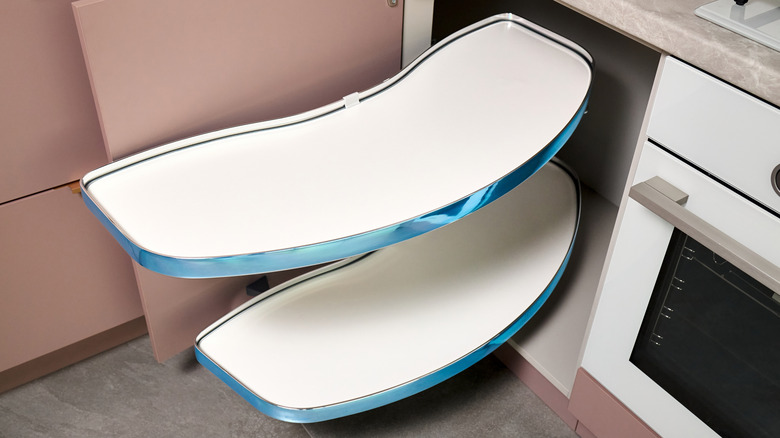
Large kitchen cabinets or drawers are hard to fill efficiently without some modification. Items are hard to reach or get lost if they're just piled in, and it's hard to see what's in the back. Luckily, there are many solutions that can be installed to make your storage spaces more accessible.
First, inspect your cabinets and see if any spaces are hard to access. Consider installing a lazy susan in larger or taller cabinets so everything on the round, rotating shelves is easy to grab. You can also install a kitchen cabinet pull-out organizer (similar to racks in a dishwasher) to make accessing pots and pans a breeze. Less complicated roll-out shelves can be installed in tall cabinets to efficiently divide the space and make items in the back easy to reach. Drawer organizers create useful separated areas in drawers, and a cutting board rack can be attached to the inside of a cabinet door to create a vertical storage area and save space in the cabinet itself.
Maximize your pantry space
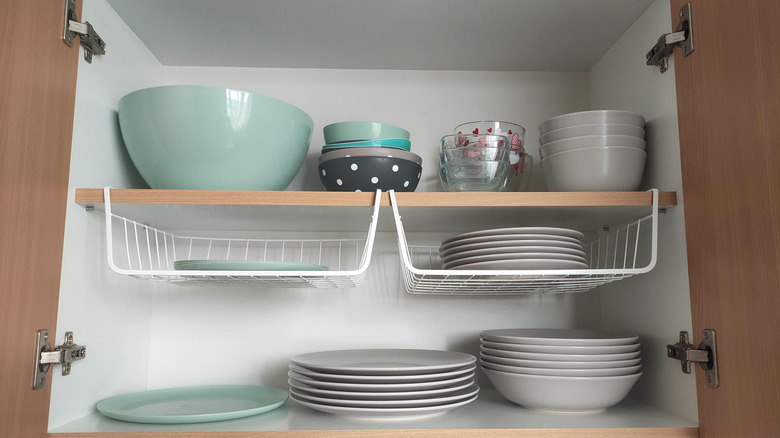
Precious vertical space in pantries and cabinets can easily be wasted. Think about using shelf risers, which are sold in various heights and widths, to create two levels to maximize storage. Or, under-shelf organizer baskets grip onto a shelf to give you extra space below. Tiered spice racks also use the vertical idea to ensure that all your spices are visible. If you prefer not to drill into your doors, over-the-door hanging racks create spaces for cutting boards and other items without damaging the door. Magazine racks are a cheap pantry storage solution that can be placed inside cabinets for an organized space for narrow objects like baking sheets and boards.
Similarly, attach hooks to the pantry wall or inside pantry or cabinet doors to hang items like aprons, a small bin for rolled up grocery bags, small pans, or kitchen utensils, depending on your space. Use over-the-door hooks to avoid attaching anything, or choose adhesive hooks, which come in a range of sizes, support different weights, and can be removed without damaging the wall.
Get specific about containers
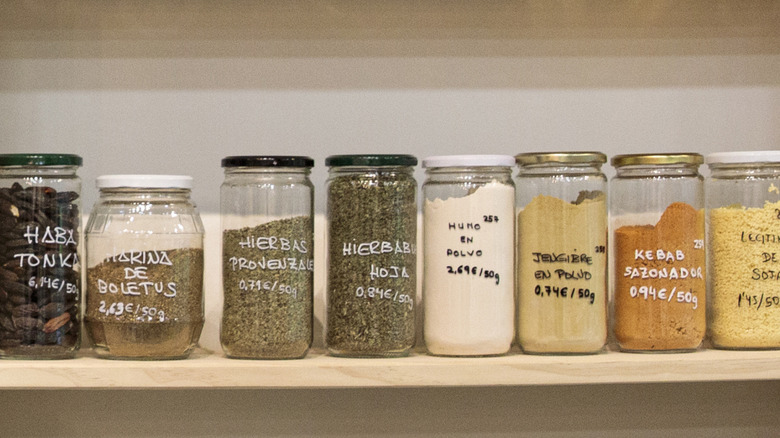
Now that your pantry is prepped, it's almost time to put everything back in. Before you do that, plan for the containers and bins you'll need. If you're going shopping, bring your pantry measurements and a measuring tape. Some people like to have absolutely everything in containers, but you could mark off different areas of the pantry with trays or decorative shelf liner instead, or just leave spaces between each section.
Spacious baskets, bins, or decorative boxes can be lined up on the shelves to hold larger items like cereal boxes or a number of smaller containers to keep things neat. Besides bins, dedicated wire baskets for canned goods, cookie jars, hanging mesh organizers, and binder clips hung on hooks can all make things easier to organize.
Think about your style — do you prefer everything be matching, or would you like a more eclectic, colorful look? Consider mixing it up, with bins on one shelf, clear stackable containers on another, and baskets on a third.
Place containers carefully
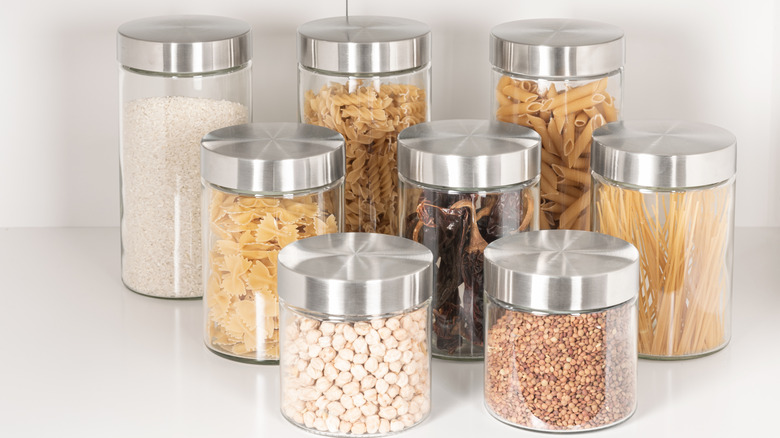
Think about what organization makes you feel more peaceful. Do you like to keep original containers? Grab some chip clips to close them neatly and arrange them according to category in the large bins mentioned above. Or, organize your pantry like Bobby Flay and transfer everything into clear stackable containers or Mason jars. Label them with the name and expiration date to be safe, and store the smaller ones in bins rather than on the shelf. That will make cleaning easier because you won't have to lift as many things to wipe the shelves below.
Wipeable containers will make your life easier because they can be easily cleaned if they get dirty or sticky. Place bottles of greasy or sticky foods like oil or honey on a wipeable tray or use this genius coaster hack to store messy ingredients in your pantry – just place those bottles on coasters to catch any drips. Finally, if you choose wheeled baskets for your pantry floor, they can be moved easily for sweeping.
Consider going plastic-free
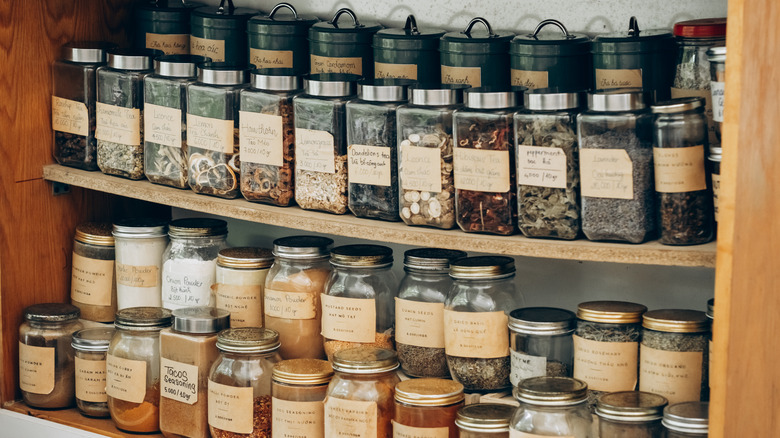
If you're interested in a more sustainable pantry, reducing your reliance on plastic containers is a good place to start. It's gentler on the environment and less toxic, and it can make your pantry look beautiful and timeless. Woven baskets, wooden bowls, wire bins, and wooden crates can replace plastic bins. Cotton or linen drawstring bags are good for bulk items. Glass jars are often used in pantries, and they are still an excellent addition to a plastic-free one. Porcelain or ceramic containers are other options, and some come with airtight silicone lids. Stackable containers make organization easy, but they're usually plastic. However, you can now find stainless steel versions, too.
Going plastic-free applies to buying new plastic items. If you already own plastic containers you like, don't toss them to buy new plastic-free ones, because that would end up generating more waste. If you're concerned about toxins, use them for storing other things around the house instead of food.
Maintain your new organized pantry

After all the hard work of planning and stocking your new and improved pantry, it's important to keep maintenance in mind to keep it clean and organized. The systems we've discussed will make it easier, but it will still require a little upkeep. Making a cleaning schedule is a good way to stay on top of things. You could include the pantry in your general housecleaning day, cleaning up crumbs, dust, and spills and putting anything out of place where it belongs. Or, you may prefer wiping the shelves on grocery shopping day before putting the food away. This will be an easier task with everything in containers that can be lifted. Less frequently, for example for spring cleaning, remove everything and clean the whole pantry.
Consider hanging a pantry cleaning checklist where you can easily see it. Include dates and a list of tasks. This will ultimately save you time because it's easier to perform smaller, more frequent cleanings than a huge cleaning of a neglected space.
Keep a pantry inventory
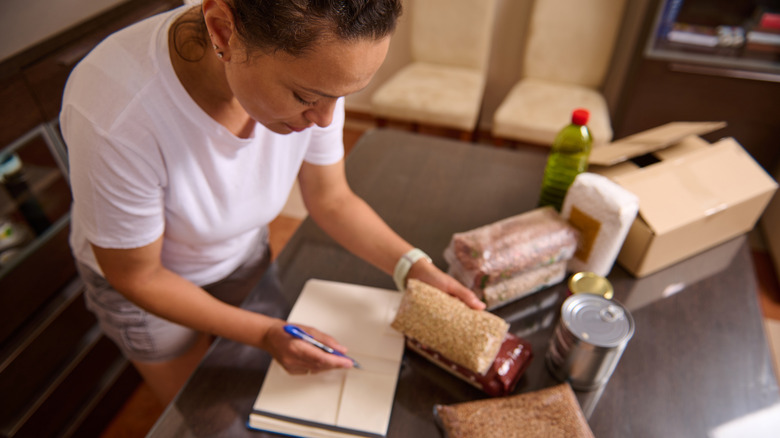
A pantry inventory can help you keep track of what you need to buy and prevent overbuying and waste. When you organized your pantry, did you find multiple packages of the same ingredient? Perhaps two tubs of cornstarch or three bottles of Italian seasoning were hidden in the back, causing you to buy more when shopping for a recipe.
Enter the inventory. This can be as simple as keeping a list of ingredients you're running out of. Or, you can inventory everything in your pantry according to category. You can find printable pantry inventory pages online to make this task easier. If that is too intricate for your taste, get in the habit of checking the pantry before you shop, and shop with a list.
Some notebooks can be hung in your pantry on a hook or with string. You could also keep a magnetized pad on the fridge or a whiteboard in the pantry. Choose what fits your personal system and aesthetic.
Link your pantry organization to meal planning to prevent waste

Try this pantry decluttering bowl hack to prevent waste: Place a bowl near the front of your pantry and use it to hold items that are about to expire. You can also use it for duplicate items you want to use up before buying again, so you don't end up with multiples of shelf-stable ingredients. When you restock your pantry with daily essentials after food shopping, check the dates and put the new items in the back so you use the older packages first.
Think about what you threw out or donated at the beginning of this process. Do you buy things you never eat? Do you really need those? If you found items you never used but wanted to, consider dedicating an area near the front of the pantry to keep those foods visible, as long as they're not expired. Challenge yourself to tweak your meal planning and find new recipes for those ingredients to make them more appealing.
Be flexible
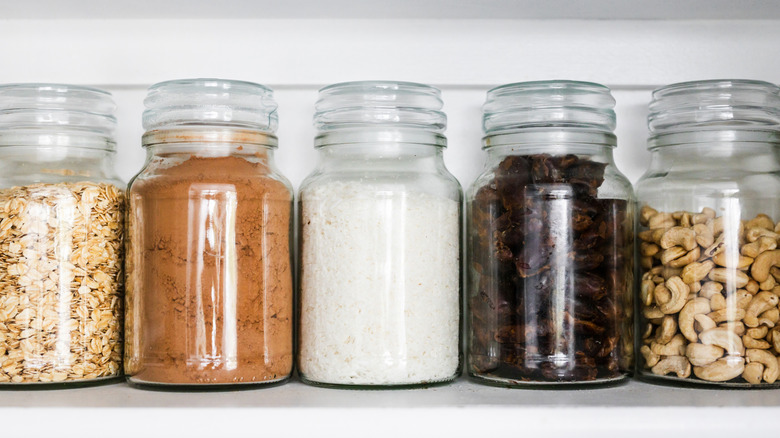
Don't get discouraged if your new pantry system isn't running perfectly from the start. New systems may sound great on paper but require a little tweaking as you go to make them work in reality. Trying to force yourself to use a system you highly dislike or that is too time consuming is a good way to abandon organizing at all. For example, if you really don't want to empty packages and transfer the contents to Mason jars, you don't have to.
Stay patient and flexible. It doesn't have to be perfect, and you don't have to do everything immediately. If your goal is to go plastic-free but cutting out single-use plastics feels overwhelming (in our modern society it is challenging), then take one small step at a time. If you love the idea of putting everything in bins, but buying enough bins and containers to hold all your food is out of your budget, then first organize without bins and add pieces when you can.
Keep pantry pests out
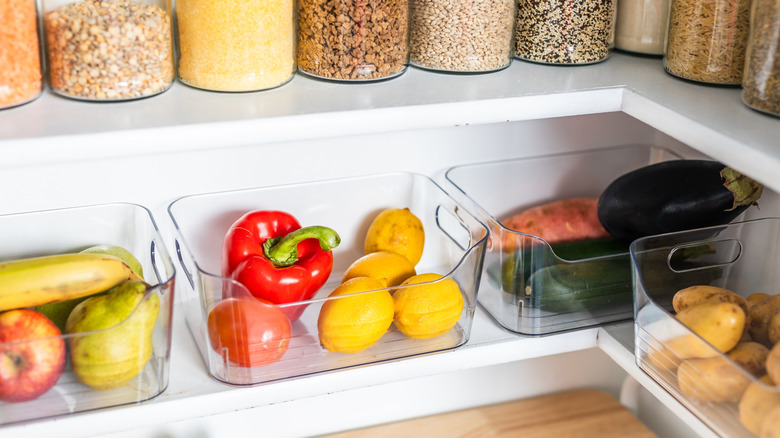
If you've ever had pantry pests, you won't want them again. From grain moths, which get in anything starchy or sugary that isn't sealed, to mice and cockroaches, which eat your food, dirty your kitchen, and can spread disease, pests are not welcome guests in our pantries.
A foolproof way to keep pests out of your food is to seal everything in glass, metal, or sturdy plastic containers with tight lids. Pests can chew through thin plastic like pasta bags. Produce you normally keep out can be stored in the refrigerator until the problem is solved. Don't seal them in plastic containers on the counter or they'll easily get moldy. Frequently dry any wet areas to deny cockroaches the drinking water that keeps them alive.
Reduce clutter, too. Pests are attracted to stacks of paper, boxes, bags, or cluttered areas which provide hiding places and nesting materials. Don't keep anything on the floor, either. This reduces hiding places and makes the floor easier to keep clean. Spray peppermint oil on counters and floors to repel rodents and cockroaches.
How to create a pantry if you don't have one
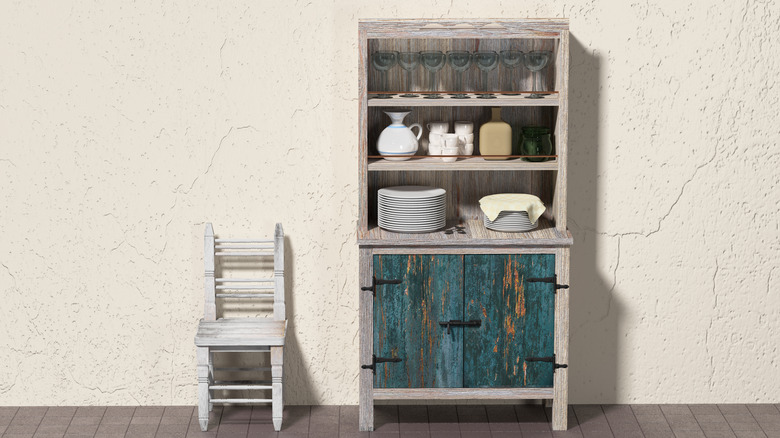
Not all kitchens come equipped with magazine-worthy walk-in pantries. Some don't have a dedicated pantry at all. In that case, kitchen cabinets function as pantry space. If you don't have a large number of cabinets, you may need additional storage space for your food and kitchen supplies.
Assess your space and see what will fit and meet your needs. Kitchen hutches come in a range of sizes, but other solutions like a standalone cabinet, sideboard, shelving unit or bookcase are viable options too. A narrow bookcase will work in a small space as will a microwave stand with shelves underneath.
You can buy new or shop secondhand for more economical solutions that cut back on waste. The quality of secondhand furniture can vary, but it's often in good condition or just needs a little touching up. Rougher pieces can be a creative DIY project to personalize them according to your tastes or color scheme.