

The Scientific Reason Your Garlic Burns So Fast (And How To Prevent It)
If you're the type of home chef who loves cooking with garlic and considers your savory meals to be incomplete without its characteristic piquant flavors, you are probably very familiar with a common mistake when cooking garlic — burning it. There is actually some science underlying why garlic burns so easily, and it has to do with its water and sugar content. Unlike other members of the allium family, garlic contains more long fructose chains, yielding a high sugar content in every clove. When cooked, the fructose chains break down, imparting a mellow sweetness that can turn acrid in an instant. Garlic also has a low water content, which, along with its high percentage of sugars, is responsible for it burning faster than other alliums like onions.
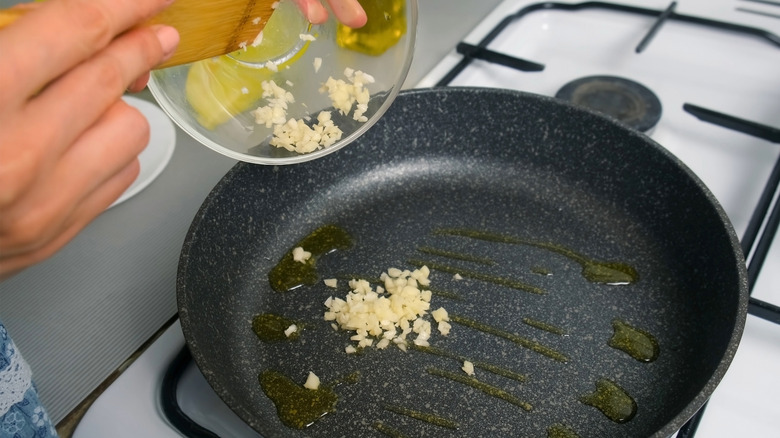
To prevent the garlic from burning, a useful tip is not to add it to the pan too early. Especially with chopped or minced garlic, which is smaller, if you add it to the pan early, it will heat in seconds and run the risk of getting burnt quickly, which would ruin the rest of the dish. If you have to add garlic first or if it's the only aromatic or vegetable being cooked, a successful but counterintuitive technique is to add it to a cold, oiled pan before turning on the heat. Keep stirring on medium-low until the pieces have softened and developed a delicate, gold color, and then proceed to add the other ingredients to your dish. If your recipe calls for cooking other vegetables, like onions and carrots, start by adding them first, then add the garlic once the other veggies have come close to being completely cooked.
Other ways to cook garlic without burning it
Cooking with garlic can be an intricate craft to ensure maximum flavor without overpowering other components in the dish. Even if there's no such thing as too much garlic in your home, other ingredients also deserve to shine in every bite of your recipe. Owing to garlic's firm position in savory dishes — almost every recipe starts with some form of garlic prep — there are several ways to prepare and cook this prized allium to deliver a delicious meal.
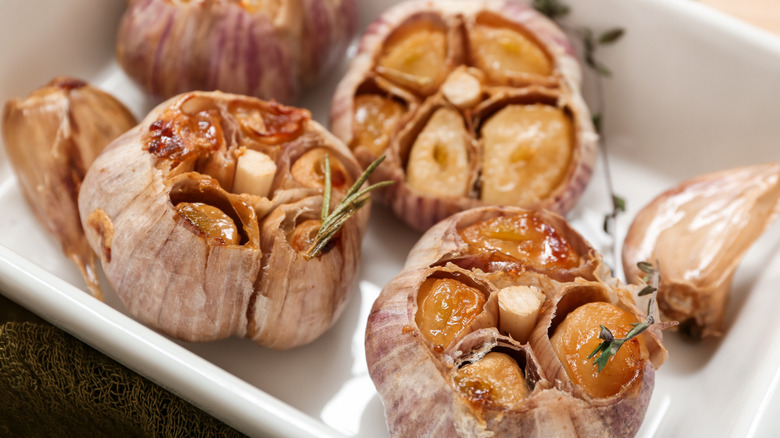
For starters, avoid smashing the garlic cloves to peel them, which happens to be the worst yet common way of peeling garlic. Instead, if you need whole cloves of garlic, try a nifty chef-approved hack of soaking the cloves overnight. For those who relish the nutty sweetness of roasted garlic, you can roast them in an oven, or you can easily roast the individual cloves of garlic in a pan instead of using up an entire oven. This technique requires poaching the cloves for about 15 minutes in an inch-deep amount of olive oil, and to prevent them from burning, stir the garlic and oil mixture regularly.
If you're keen on skipping the oven but don't want to hover over a hot stove to roast garlic, use an air fryer, which will also deliver perfectly roasted garlic in less than 20 minutes. Just like in the oven, give the entire head of garlic a generous coat of oil and wrap it tightly in foil. Both of these steps are important, as the oil raises the surface temperature to facilitate the desired caramelization and protects the garlic from drying and burning, while the foil traps moisture to create a steamy environment that ensures even cooking and also saves the garlic from burning.