

6 Premade Pie Crusts, Ranked Worst To Best
We may receive a commission on purchases made from links.
I make a darn good pie crust, and I'm proud of it. I could screw up every single other baked good on the planet, from elaborate cakes to neat-as-a-pin confections, but as long as my pie crust is good, I'm happy. However, I'm not shy about promoting store-bought versions, either. There is something so handy about grabbing a refrigerated or frozen pie crust at the store, rolling it out in your baking tin, and getting to work on the fillings (though store-bought versions of those work fine, too). It saves you time and energy in the kitchen and is especially valuable when the weather is a little too hot for a butter crust to cooperate.
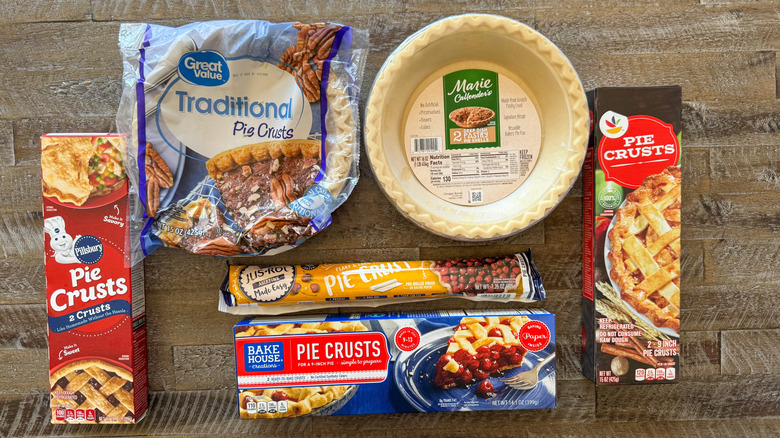
I set out on a mission to find the best premade pie crust – the one you should trust whether you're making pumpkin pie with caramel for Thanksgiving, a bakery-worthy blueberry pie, the American icon that is apple pie, or a no-bake custard pie for a gathering. I purchased each of these crusts and set them out according to the package directions to ensure that they were at the right temperature before filling them with pumpkin pie mix and baking them away in my home oven. The top-rated crusts on this list had a delectable, buttery flavor, were supportive of the heavy pumpkin filling, and would be a versatile base for an array of different fillings and pie flavors.
6. Jus-Rol
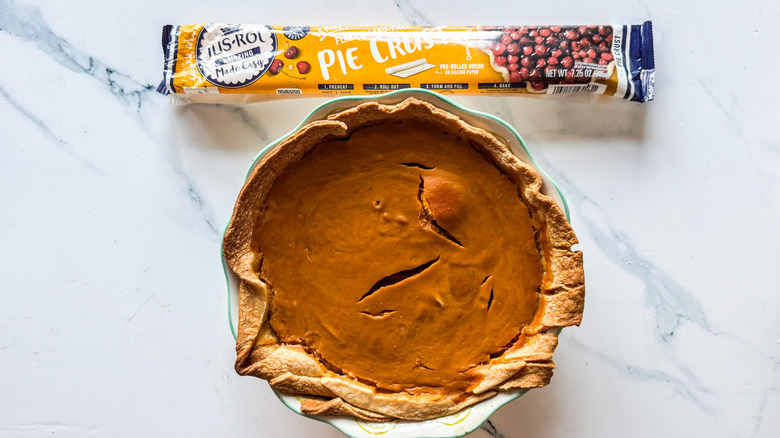
This might be a not-so-subtle foreshadowing for you, dear reader, but this is probably the most hectic and messy food review I've undergone to date. And unfortunately, a lot of it has to do with Jus-Rol — the pie crust that landed in my Stop & Shop cart out of mere happenstance. This refrigerated single pie crust wasn't listed as being in stock on the website, but it was well-stocked when I went to pick up the crusts.
When I pulled this crust out of its thin plastic wrapper, I noticed that it was scroll-like and spun around a piece of parchment paper. As I did with all the pie crusts, I made sure it was brought up to room temperature for an hour before I started working with it. An hour seems a little long for bringing a crust up to room temperature, but I don't think even four hours of thawing would have saved me. I unrolled the exterior of the parchment only to have the middle start to splinter and break, almost like phyllo dough. I tried my absolute hardest to patch the holes, but the pie crust still looked like it had lost a fight with a tiger.
I didn't have a replacement crust (since there is only one in a package, which is weird), so I kept going. As I suspected, the cracks caused the filling to ooze out into the bottom pie crust and render it soggy. When I got a bite of just the crust itself, sans pumpkin, there was little of note, except for its greasy, vegetable shortening-like aftertaste. There's no reason to purchase this pie crust, regardless of the type of pie you're making.
5. Stop & Shop
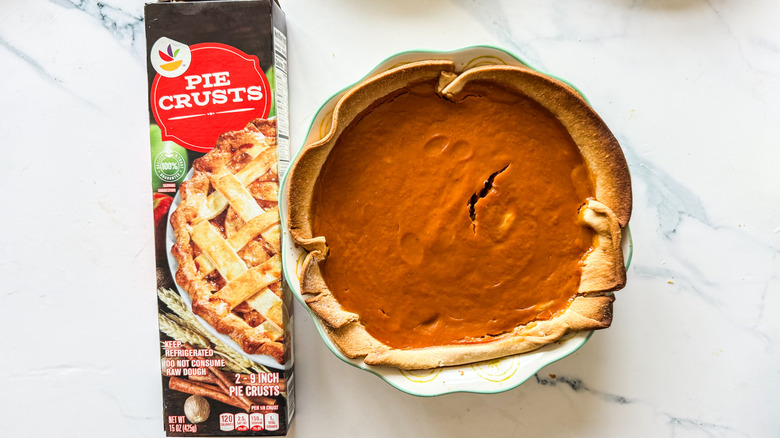
When I rolled out Stop & Shop's pie crust, I felt a sense of dread. The first crease was fine, but the second one — despite following the thawing directions on the package — is where the ripping started. Slash marks started to form, and I watched as the dough splintered and split into pieces before my eyes. At first, I expected that this Stop & Shop refrigerated crust would compete with Jus-Rol for last place, but I found that it was easier to mend and patch the rips than it was with the former. It also doesn't need to thaw for an hour, per the package directions, but I would recommend leaving it out longer than the recommended 15 minutes if you want to avoid it splintering and breaking.
Despite this blunder, Stop & Shop's crust still sliced remarkably well. Did the slice look a little worse for wear after the edge started peeling off? Maybe ... but that small detail aside, it wasn't that bad of a pie crust. The flavor was almost whole wheat-like, which set it apart from the other crusts that clearly tasted like they were made with white flour. It was rustic, and I imagine it would be even more delicious paired with an apple or blueberry filling.
However, no taste in the world can make up for its structural issues. The bottom was soggy, so much so that it would surely make it onto a list of some of the worst baking fails on "The Great British Baking Show." If Stop & Shop made a frozen pie crust with the same flavor, I would consider buying it.
4. Bake House Creations
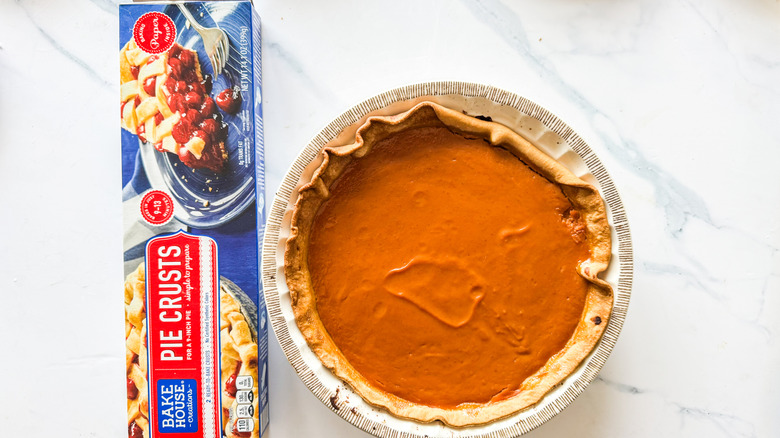
Aldi is my go-to grocery store for nearly everything, and this reasonably priced twin-pack of refrigerated pie crusts from one of its in-house brands, Bake House Creations, might just be another reason to shop at the budget grocer. I baked it alongside the Stop & Shop pie crust and found that, despite the fact that both brands had the same recommended thawing time, this one was much easier to unfurl and set in my pie pan. I didn't have to worry about it breaking or ripping at all. The crust was light, thin, and pliable — all things I look for in a good pie crust.
This slice baked well; it was slightly dark around the edges, but I have no doubt this is something that a metal shield could easily fix. This slice came out of the tin easily and with little resistance. There were a few pieces of crust left in the tin, but I think that this was more of a halfhearted cutting job on my part than anything. The taste of the crust itself is incredibly mild. It doesn't have a noticeable shortening-like aftertaste to it, though it lacks the buttery richness of a crust that I would make homemade.
I will give Aldi some praise here, as the bottom of the crust was perfectly baked and did not allow the filling to soak through. I appreciate that it wasn't as tooth-hurtingly snappy as Pillsbury's refrigerated crust. It had just the right amount of heft to make it an effective vessel for the filling, but not so much that it distracted from the flavor and bite of the pumpkin. Its low cost makes it a great option, but there was nothing inherently remarkable about it that would make me want to rush out to the store and buy another box.
3. Great Value
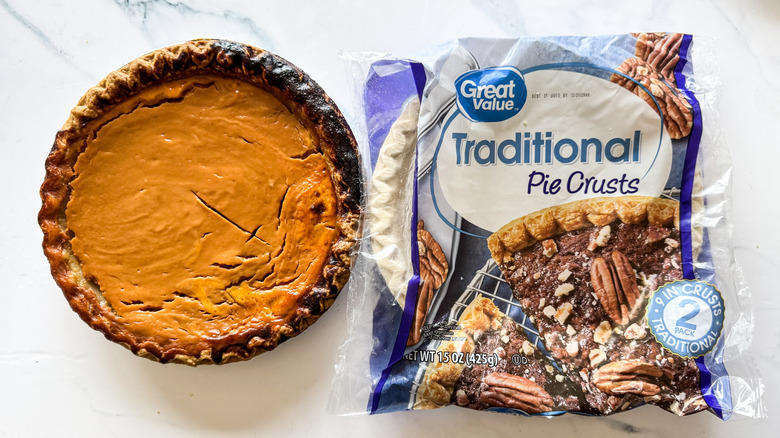
Great Value's frozen pie crusts were well-stocked at my local Walmart. Like the other frozen crust brand I sampled, this two-pack of crusts needs to sit out on the counter for a little bit to defrost before you fill and bake it. There are inherent benefits to choosing a frozen store-bought crust over a refrigerated one. Mainly, the only real risk of you not defrosting it properly is that it takes longer to bake or doesn't come out as well-done as you'd expect it to. You don't have to worry about it ripping and breaking before you can even get your fillings in it, which is why I ranked Great Value above Aldi. However, one big issue I had with it is that it's not deep enough. I accidentally overflowed the crust when I was pouring in my pumpkin filling, which led to a frantic bucket brigading with a measuring cup to try and stop it from cresting the tin.
Aside from the Great Flood of 2025, this was a pretty okay pie crust. It browned adequately and sliced easily. When I took a bite of the crust alone, I thought that its flavor was a little dry and mealy. From a structural perspective, it was great. But it lacked the flakiness of a homemade pie crust, as well as the rich, buttery flavor I was looking for. I suppose if you were in a mad dash for a pie crust and wanted to take the easy way out, Great Value would give you a compelling option. But it still wouldn't be my pick of the litter.
2. Pillsbury
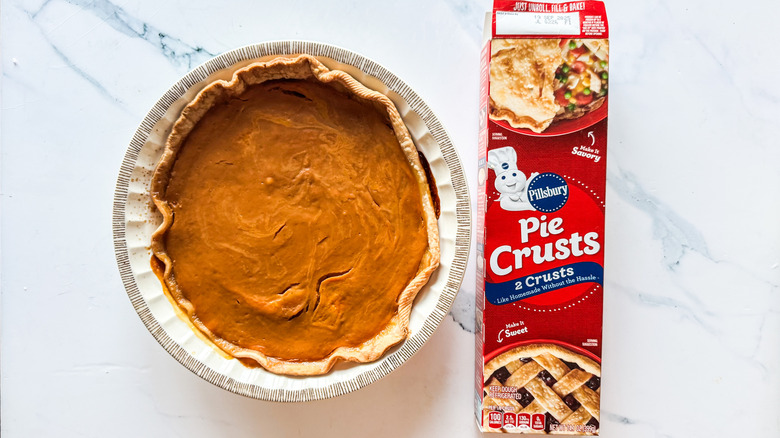
Pillsbury's pie crust, like Aldi's, was remarkably easy to roll out. There was no issue with breaking, snapping, or cracking, which I was glad to see after undergoing the trauma of Stop & Shop's and Jus-Rol's pie crusts. I popped it in the pan, baked it, and was very, very satisfied with the results.
The crust that was poking up from the edges of the pan was almost bubbly and golden brown — like a crab rangoon that just came out of the fryer at my favorite takeout spot. When I looked at it from the side, I could easily discern the layers in both the edge and the underside of the crust. Could this be the remarkably flaky pie crust I was looking for? I was even more gleeful when I slid my knife into this pie and was able to cut the bottom with a satisfying snap. Moisture was clearly not going to be an issue here, and my thoughts were affirmed when I picked a piece out of the pie tin. I could hold this piece like a slice of pizza and not have to worry about it breaking or moving. I was also able to pick the piece of pie up and see that the bottom had browned exquisitely.
However, the main place where Pillsbury lost points was its flavor. I wish it were slightly more buttery, and I noticed that it had a burnt flavor to it even in the spots that weren't even remotely brown. All in all, it's a triumph of a crust and one that I would consider buying again if I needed one.
1. Marie Callender's
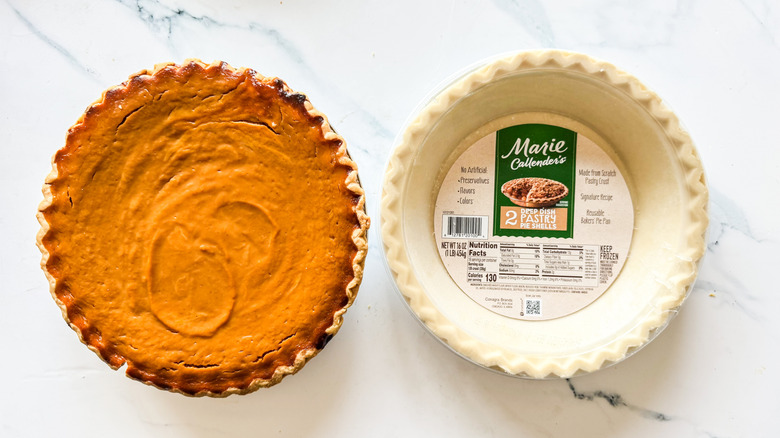
I had tried Marie Callender's frozen pies before for a food review, in which I had nicked the brand for the taste of its pie crust. So, it was interesting to try another one of its products, but this time, really zero in on the construction and flavor of it. Like Great Value, I was glad to have a pie crust as hands-off as this one. Thaw, fill, and bake — how easy is that? It also offered a little more surface area than Great Value, which prevented any issues with overflow.
This pie sliced and came out of the pan beautifully, earning it good marks. It wasn't as crisp as Pillsbury, meaning I couldn't pick it up and see the color on the bottom. However, after a couple of bites, I had made my decision: Marie Callender's was the winner. The crust was thin, so it didn't have a distinct snap, nor did it have the layers that Pillsbury offered. But its subtle buttery flavor was leaps and bounds above anything the Pillsbury Doughboy could whip up in his bakery. It supported the filling well enough and was an effective supporting actor to the main character: the pie filling. Normally, I would want a food to stand out, be distinct, and really scream, "I'm here!" But in the case of a pie crust, I just need it to do its job of supporting the filling and keeping things neat.
Don't get me wrong, the waxy texture of this pie crust hints at the fact that it's store-bought. But I would still rather have that than something that crumbles in my mouth or shatters my molars when I bite into it.
Methodology
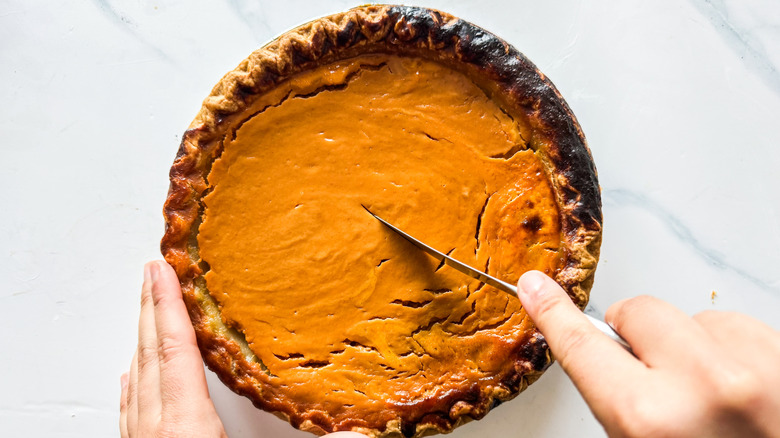
I chose to test each of these premade pie crusts with a pumpkin pie filling for two reasons. Not only is it a common pie that people make around the holidays, but it's also a very tricky filling for a crust to hold and bake because of its water content. Any splits or tears will cause the filling to seep down into the pie pan and make for a messy slice, which is one indicator of a bad crust. The other indicators I looked at for this ranking included the overall flavor of the crust. It should be buttery, without any oily or shortening-like aftertastes that would alter the flavor of the pie or make for an unpleasant mouthfeel. It should also be crisp and snappy along the edges and pliable enough to pleat or decorate.
In order to give every premade pie crust brand a fair shot, I made the exact same pumpkin pie filling: one 30-ounce can of Libby's Pumpkin Pie Mix (note that there are differences between pumpkin pie and pumpkin purée filling, as the former is already sweetened and spiced), 5 ounces of evaporated milk, and two eggs. I followed the baking directions specifically noted on the back of the Libby's can and made sure that every pie crust was thawed according to the package directions before working with it. The refrigerated pie crusts were baked in ceramic pie tins, while the frozen ones were baked in the metal tins they came in.