

What Kind Of Beans Are Used For Baked Beans?
We may receive a commission on purchases made from links.
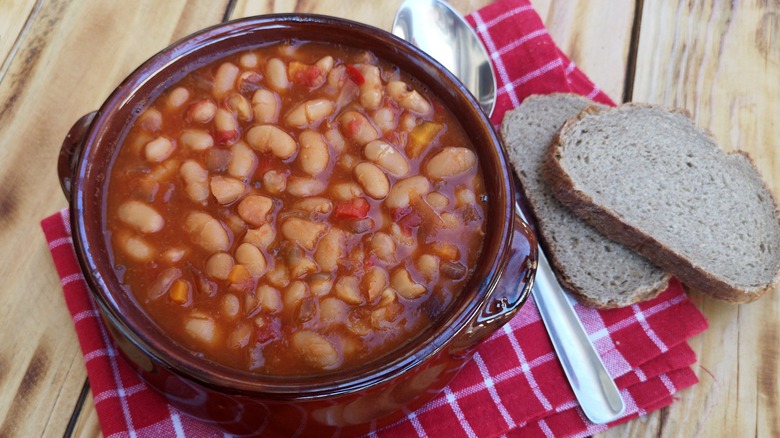
When it comes to baked beans, one bean reigns supreme: the navy bean. Also known as Boston beans, haricot, or pea beans, navy beans are small white legumes with a creamy texture and a mild flavor — perfect for soaking up the sweet, tangy sauces that define this comfort-food classic.
Major brands all tend towards the navy bean. Bush's Baked Beans, for instance, use slow-cooked navy beans in their signature Brown Sugar Hickory variety. B&M Baked Beans also rely on pea beans, as do Campbell's. Amy's uses whites beans, which are again likely navy beans, in its organic canned offerings.
Why navy beans? Their creamy consistency and ability to hold shape during long cooking times make them ideal. While other beans like kidney, pinto, or cannellini are used in baked bean recipes or similar dishes around the world, they don't hit quite that same soft texture common to American baked beans. Pinto beans add a nuttier taste, while black beans show up in Latin American-inspired versions.
A brief history of baked beans
Today, baked beans may seem like a humble side dish, but there is a deep history of different cultures and peoples enjoying and adapting the recipe. The story starts with Indigenous peoples of North America who slow-cooked beans with maple syrup and animal fat. European settlers then took and adapted this recipe by substituting molasses for maple syrup and baking beans in wood-fired ovens.
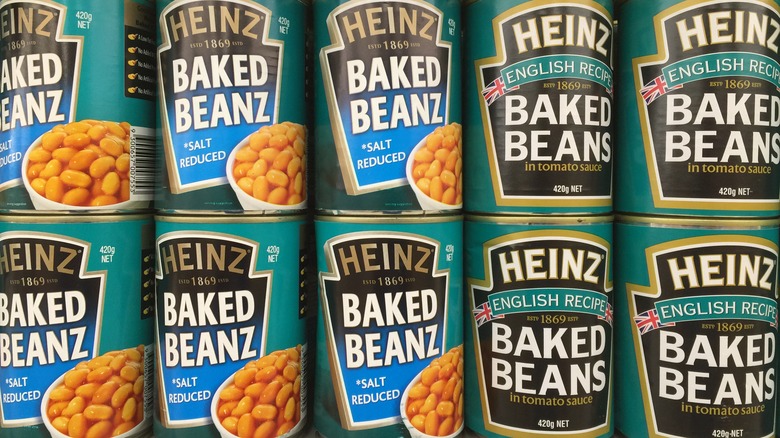
By the 19th century, with the advent of canning technology, baked beans were transformed from a home-cooked necessity into a global pantry staple. First canned by the H.J. Heinz Company (yes. the same Heinz of the ketchup) in Pittsburgh. From there, they became integrated into various different cuisines. In the United States, American households often pair them with barbecue, while in the United Kingdom, beans on toast is practically a national treasure.
However, there are many global versions of this simple delicious meal. In Brazil, feijoada — a smoky black bean stew — mirrors the comforting essence of baked beans but with regional flavors. In Greece, a similar dish bakes giant white beans called gigantes in a tomato sauce with carrots, celery, and oregano. So while baked beans may come in many forms today, their core identity — slow-cooked, richly flavored legumes — has been a hit far and wide, and for centuries.
Ways to enjoy your beans
This dish is ideal because there are so many high-quality canned options available — although do make sure you choose the best brand of baked beans. You can easily jazz up canned beans with add-ins like onions, bacon, or chorizo for extra flavor. A few simple ingredients can completely transform a humble can into something special.
Of course, you can also make baked beans from scratch if you prefer to customize the recipe to your liking — just be sure to plan ahead, as they require plenty of cooking time. If you have a slow cooker, you're in luck: it's the perfect tool for baked beans. Simply toss in all the ingredients in the morning, and by evening, dinner is ready.
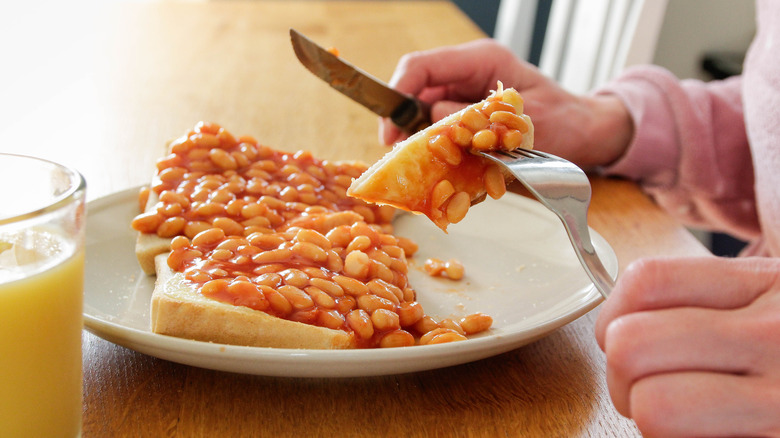
Once you've got your crock of baked beans, you're all set. Whether you're spooning them over toast like the Brits, pairing them with hot dogs, or using them as the base for a hearty casserole, there's no wrong way to enjoy this classic. Baked beans can be enjoyed in dozens of dishes from breakfast burritos to lunchtime soups, to a cozy dinner of baked bean sloppy joes.