

6 'Cheese Products' You Might Want To Avoid Buying
Cheese is a common food in many people's lives, adorning dishes from the simplest grilled cheese sandwich to a gourmet soufflé. From a crumbly blue Stilton to a creamy French brie or aged Parmesan, many cheeses are renowned worldwide for their intense flavor and long-established cheesemaking traditions.
At the other end of the scale, however, are cheese products that don't exactly make it to a sophisticated charcuterie board. Many staples in the cheese aisle at the grocery store are bordering on not legally being cheese, still, we add them to our carts and melt them on top of well, everything. While the FDA doesn't have an official legal definition for the broad category of "cheese," its description of different types of cheese makes it clear that real cheese comes from dairy sources such as milk or cream; enzymes such as rennet for clotting purposes; and limited additives such as colorings and anti-fungal agents.
From cheese in a can to shelf-stable Parmesan imposters, many of the popular cheese products on our shelves fall into the ultra-processed category of food, meaning that regular consumption is not good for our bodies long-term. They often have stabilizers, colorings, and emulsifiers that are designed to make the product as convenient as possible — from extending the shelf life to creating a spreadable texture — at the expense of nutritional quality.
For this list, we have chosen the cheese products that are the most highly processed, so they might not be the best for your health. Let's take a look at the "cheese products" you might want to avoid buying.
1. American cheese
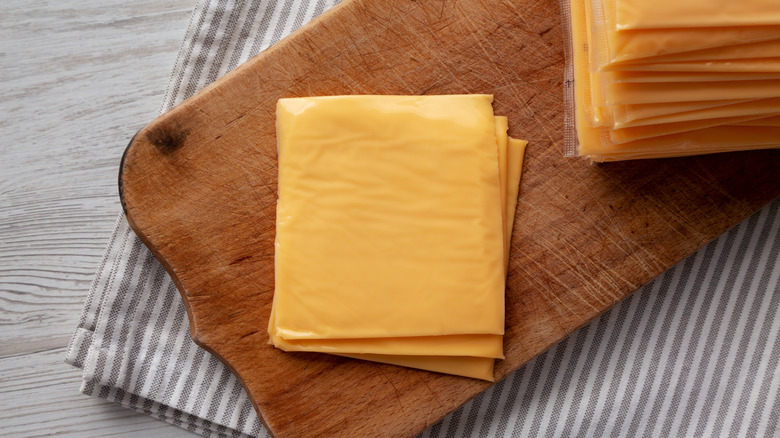
When you reach for cheese from the fridge to add to your burger or grilled cheese, chances are you may opt for good old American cheese. With its comforting dark yellow hue and mild flavor, it is a versatile dairy product that makes a beautifully melted addition to your burger or sandwich. There's just one problem — it's not actually cheese.
Legally, American cheese does not fall into the same category as "whole" cheeses such as cheddar or mozzarella. Instead, the United States Food and Drug Administration classifies it as a "pasteurized process cheese," due to the processing involved in creating it. By definition, a process cheese product is a blend of cheeses, including Cheddar cheese and curd cheese, with the addition of emulsifiers and preservatives. Sodium citrate or sodium phosphate are added to get that gorgeous melty effect that we all love, but both are synthetic additives that you wouldn't expect to find in traditional cheesemaking. Sodium citrate has been linked to dental issues, and sodium phosphates could potentially trigger heart or kidney problems, particularly in those who have pre-existing conditions. Though both have been deemed as safe in small amounts, if you are eating American cheese or similar products regularly, the quantities can begin to add up, and choosing a real cheese with just a handful of ingredients means you can avoid these additives entirely.
If you can't imagine giving up your slice of American, try cheddar cheese instead. It melts nicely, has a rich cheesy flavor, and the ingredients list will take you much less time to examine.
2. Spray cheese
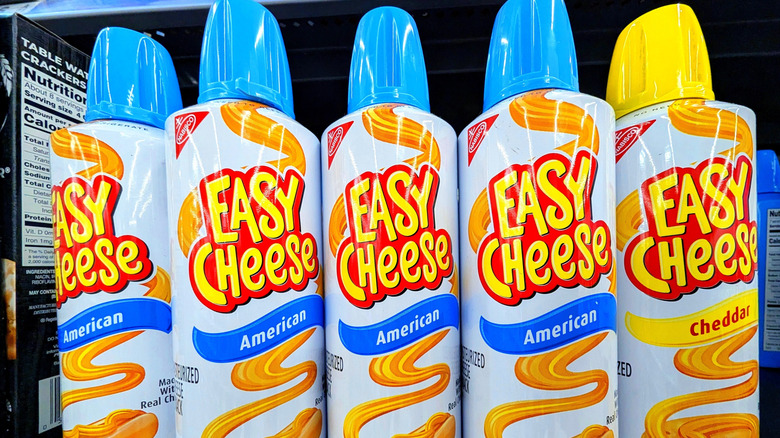
When we spray cheese out of a can, we are usually aware that it is not the most natural dairy option — in fact, it is one of the most processed cheese options available. With convenience often comes heavy processing, and to make the cheese capable of coming out of a can, it needs to transform quite a bit from the solid cheese at the deli counter.
Though genuine cheese, usually cheddar, does make an appearance in canned cheese, it is not the main ingredient, with canola oil and milk further up the ingredients list. Ingredients such as sodium citrate and sodium phosphate are added to keep the cheese shelf-stable and to act as emulsifiers to improve the texture. Although these additives are declared as food-safe, they do have negative health effects when consumed in large quantities.
Sodium citrate has been shown to have negative dental effects due to its acidity, and sodium phosphate is not good for kidney health, especially for those with existing kidney issues. Consuming these products occasionally is unlikely to cause major issues, but when these synthetic additives are consumed across many different processed foods, the quantity can add up quickly. Canned cheese may seem like an easy solution, but the high levels of processing mean that real cheese products are much better options to eat regularly.
3. Shredded cheese
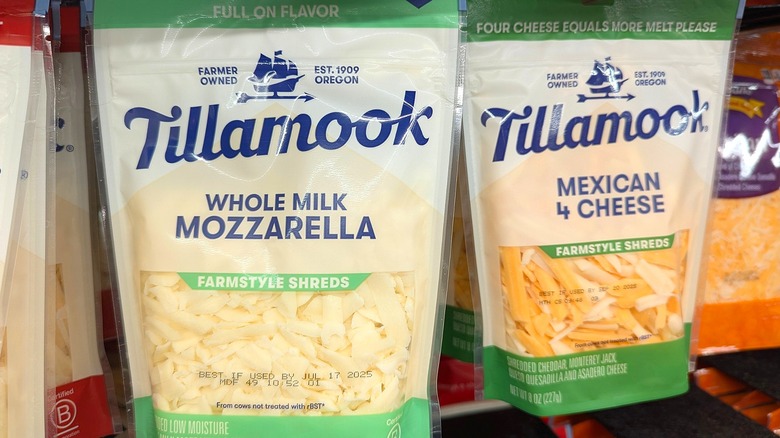
If you use shredded cheese a lot, you may have assumed that buying it pre-shredded in a bag is a great time saver, which it is. But if you thought that it was the exact same cheese just in grated form, you may be surprised to learn that is not the case. If you have ever shredded too much cheese and left it until the next day, you will understand why.
To keep the correct texture of the shredded cheese until you are ready to sprinkle it on your homemade pizza, other ingredients need to be introduced into the mix, and not all of them are ideal. As well as potassium phosphate, which is in many processed cheeses as a stabilizer, shredded cheese contains cellulose, which is essentially wood pulp. Cellulose is found in all plants, but the cheapest form for using in food is usually from wood. In shredded cheese, it is an anti-caking agent, absorbing extra moisture and preventing clumping. As an indigestible form of fiber, it passes through the digestive system unchanged, and it can be used in diet foods, as it creates a feeling of fullness.
Concerns have been raised in the past about the safety of cellulose in food, though a 2018 study found it to be within safe limits. In addition to all of the above, and the fact that your grated cheese may have contained wood without you even realizing it, the texture of pre-shredded cheese is never as good as a solid block that you have grated yourself. If you want the best option in terms of flavor, texture, and nutrition, take an extra few seconds to grab the box grater and shred it yourself.
4. Processed vegan cheese
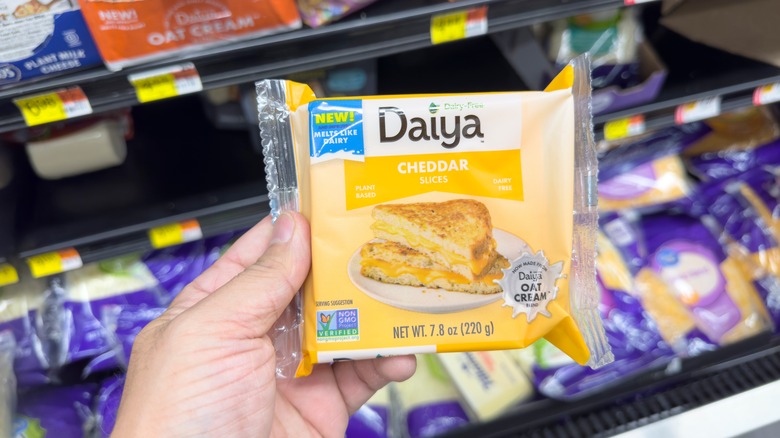
Many people, when they hear the word vegan, automatically assume that it means healthy, but that is not always the case. Fries can be vegan, fizzy drinks are generally vegan, and some vegan cheese can be just as highly processed as the dairy versions.
Vegan "cheese" made from cashew nuts tends to be less processed, and contains more nutrition than some of the others on the market. On the other hand, Daiya Cheddar & Mozza Style Blend Cutting Board Collection Shreds scores a worse rating on the EWG's food scores than a jar of Kraft Cheez Whiz, which most of us would know is a pretty unhealthy product. That particular vegan cheese contains safflower oil, which contains omega-6 fats (which can cause inflammation); dextrose (a quickly absorbed sugar made from corn); and tricalcium phosphate (which could increase the risk of kidney stones when consumed in large quantities).
The bottom line is, none of these ingredients are what you would expect to find in real cheese, so to find them in a vegan cheese product that many people will choose for health reasons is disconcerting. There are many vegan cheeses on the market that are made with nutritious ingredients, so be sure to check the packaging the next time you are shopping.
5. Some types of dried parmesan
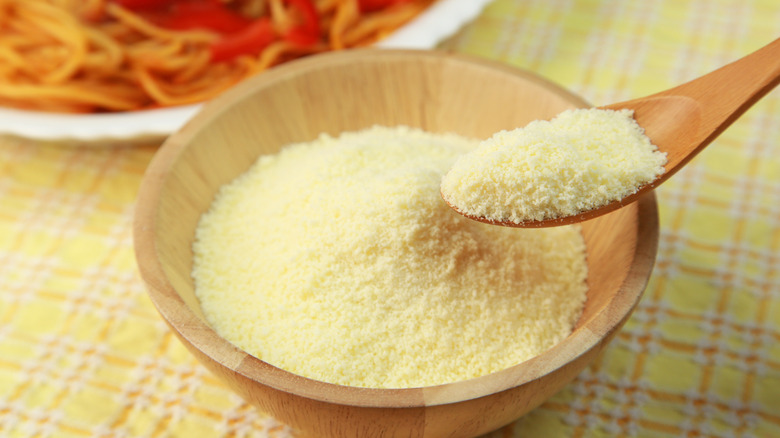
Aged Parmigiano Reggiano is a crumbly, super-umami cheese product that has protected status in its home of Parma, Italy, and is revered the world over as a top-quality cheese. If you think the cheese in question is the same stuff that comes in a plastic container and is found on the grocery store shelf, you couldn't be further from the truth.
Dried parmesan-style cheese – there is the big clue — does not contain only the famous Italian cheese. In fact, in some cases, it doesn't contain any Parmigiano Reggiano cheese at all! Several lawsuits have been filed in recent years against manufacturers claiming that their product is 100% Parmigiano Reggiano cheese, when in some cases it was 0%. Cellulose is permitted up to a maximum of 4%, but many products were found to contain significantly more of this filler.
Kraft's parmesan-style topping contains a list of ingredients including maltodextrin, a processed sugar that causes glucose spikes, and artificial colorings. There are nine FDA-approved synthetic food colorings, and a 2012 study found potential safety concerns with every single one. Safe to say that dried Parmesan is miles removed from Parmigiano Reggiano's three ingredients of rennet, salt, and milk. Real parmesan may seem prohibitively expensive, but its intense flavor means that a wedge will last you a long time, and the benefits from both your body and your taste buds make it well worth the switch.
6. Processed cheese spreads
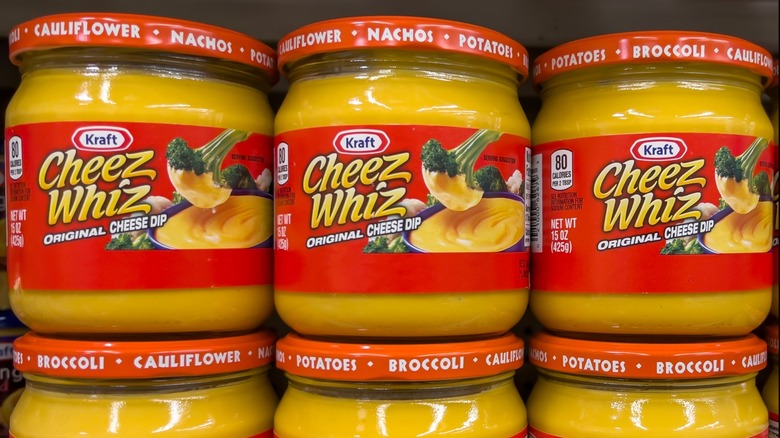
If you crack open a jar of cheese spread such as Cheez Whiz, there are a couple of unmistakable signs that it is a processed cheese. Firstly, there's the expiry date, since it is extremely shelf-stable compared to a fresh cheese, and secondly, there's the color. That signature orange hue comes partly from natural colorings such as annatto and oleoresin paprika, but also from caramel e150, which the FDA regards as an artificial coloring.
According to the FDA, processed cheese spreads must contain at least 51% cheese, which leaves nearly half the jar for additives, fillers, and other synthetic ingredients. Worryingly, maltodextrin is near the top of the ingredients list, long before cheese gets a look in. This processed sugar has been shown to cause inflammation in the body, particularly in the gut. Though it is regarded as safe in small amounts, it is becoming more present in processed food, meaning the overall consumption by individuals could be worryingly high. One benefit of eating real cheese is that it causes no blood sugar increase, with a Glycemic Index score of 0, whereas maltodextrin scores a ridiculously high 110. For context, the original GI scale had a maximum score of 100, based on how quickly glucose itself causes blood sugar to spike — the higher the number, the more concerning the blood sugar spike will be.
It would be hard to get any further away from the real stuff and still put cheese on the label, albeit with a creative spelling. Instead, create your own alternative with some fresh cream cheese, grate in some mature cheddar or Parmesan, and add a sprinkling of herbs.