

9 Major Food Safety Issues From The '80s That Everyone Just Ignored

The 80s were a wild time. It was the era of Walkmans, Cabbage Patch Kids, and allowing your children to run around unsupervised until the street lights came on. Neon clothes, leg warmers, MTV, and Nintendo. It was also a time of super interesting food trends that we no longer see, such as McDonald's pizza and Taco Bell burgers. Beyond the questionable taste in trends, some appeared to be playing fast and loose with safety in the food industry. This was the decade when some of the first E. coli outbreaks occurred at restaurants. There was also the unregulated shellfish industry, the insane growth of artificial trans fat in everything, and many other issues that the public simply ignored. I mean, why would you care about the negative effects of beef tallow when it produces delightfully crunchy fries?
Fortunately, we finally saw the light as time passed. While most people ignored the many food issues in the 80s, some were starting to sound the alarm. Government agencies, like the U.S. Department of Agriculture (USDA) and the Department of Health and Human Services (HHS), began putting together studies and guidelines. It was in 1980 that we got the first "Nutrition and Your Health: Dietary Guidelines for Americans," which focused on adding variety to our diets while limiting things like sugar, fat, saturated fat, cholesterol, and sodium. With that in mind, let's take a jaunt down memory lane and look at some pretty serious food safety issues from the 80s that people ignored.
1. Candy used to have lead-tainted packages
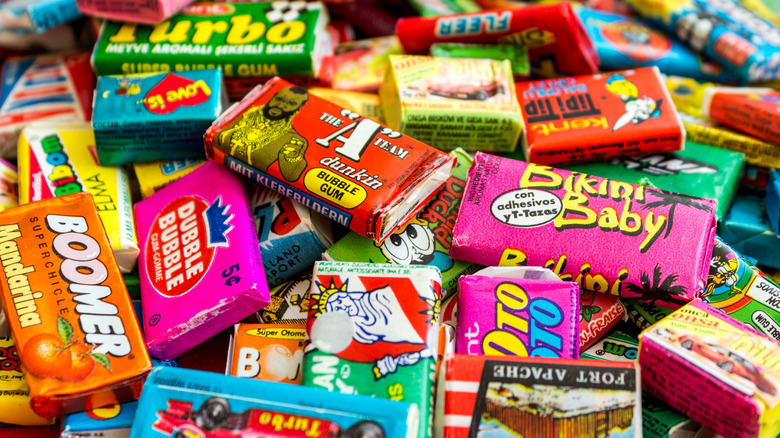
We're starting off with a fairly big issue — lead-tainted candy. Yes, this was definitely a thing in the 80s, yet no one really paid much attention to it. This is likely because they were too busy panicking over people putting things into candy rather than things that were already there. Around 1982, there was major panic surrounding poisoned Halloween candy, which was bolstered by the Tylenol poisonings that happened that year. Of course, urban legends about poisoned candy have abounded since the 60s and 70s. However, people should have worried less about razor blades or drugs being shoved into chocolate bars and more about the packaging those bars came in.
Studies on the effects of lead exposure started picking up some steam in the mid- to late-80s. However, no one considered lead-based paint on candy packaging to be problematic. It wasn't until 1994 that the FDA became aware of candy contaminated by lead-based paint, after running tests on sweets imported from Mexico. This led to testing for contamination on a larger scale and regulation.
Additionally, according to the CDC, some ingredients can be a source of lead exposure, namely chili powder and tamarind. If they're not dried, stored, and ground just right, these ingredients can introduce lead into the candy. Thankfully, there are now better regulations regarding candy packaging and how ingredients are stored and prepared, so that they don't cause lead poisoning. Current FDA standards, as of this publication, state that the maximum level of lead in candy should be 0.1 parts per million (ppm), lower than the previously set 0.5 ppm.
2. Foie gras could cause organ damage
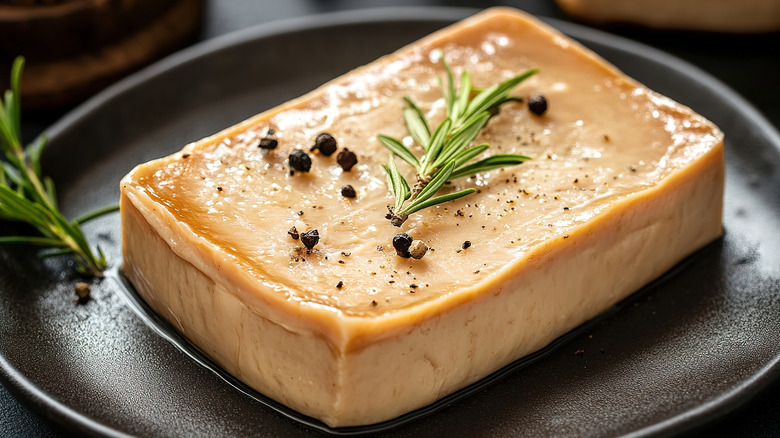
The 80s were known for the rise of the yuppie — aka college-educated young urban professionals — bringing with them a taste for the finer things in life, including foie gras. The fattened duck or goose liver became a popular dish in fine dining establishments, especially in French cuisine. While it experienced popularity worldwide before the 80s, there was a boom in the U.S. at this time, thanks to companies specializing in locally produced foie gras.
While there was and still is plenty of ethical controversy surrounding foie gras, what many didn't understand or know about was that geese who have been force-fed before being slaughtered could transmit a rare disease to humans, much like Mad Cow Disease was transmitted through eating infected beef. This disease, called amyloidosis, occurs when abnormal proteins build up in organs and tissues. While this can happen anywhere in the body, it's most common in the heart, kidneys, nervous system, and gastrointestinal tract. There are different types of the disease, and symptoms can vary. It can be fatigue, weight loss, swelling, or kidney damage.
As mentioned, foie gras has been controversial from an animal rights perspective — especially with how it's produced. It is this rather than safety concerns that have led to it being banned at various levels in just over a dozen countries worldwide, such as the U.K., Poland, Germany, and India.
3. Trans fats were in everything
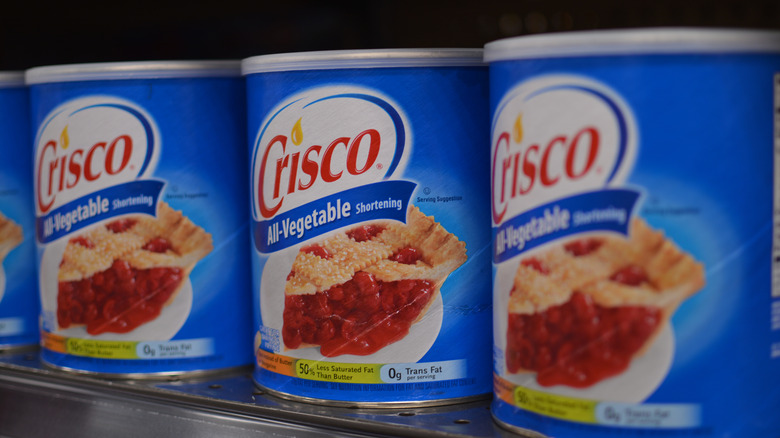
Many people who grew up in the South probably remember their mothers and grandmothers pulling out a large tub of Crisco anytime they cooked. It was used for everything from frying chicken to baking. We can thank the birth of this household ingredient to a German scientist who showed Proctor and Gamble how to add hydrogen to cottonseed oil, hence inventing trans fat — also known as partially hydrogenated vegetable oil (PHO).
It grew into prominence during the Great Depression and World War II when butter was in short supply. It helped that margarine is made from vegetable oils and is non-dairy, unlike butter. It grew even more popular in the 80s, and eventually, you found trans fat/PHO in everything from cookies to bread, since it could help prolong shelf life. This was despite the fact that some studies from the 50s showed that trans fat wasn't exactly healthy.
Everything changed in the 90s, when studies began to emerge linking PHO to heart disease. By 2006, artificial trans fat in food was estimated to cause one in five heart attacks a year in the U.S. Eventually, the FDA passed regulations on labeling for trans fat. PHO was also no longer Generally Recognized as Safe (GRAS) by the FDA. In 2018, the agency's ban on using PHO as a food ingredient went into effect, though some manufacturers had until January 2021 to comply. So, while you can still find Crisco and margarine on grocery store shelves, the ingredient list is a bit different. These products and other shortenings have been reformulated to be PHO-free.
4. Canned foods were soldered with lead
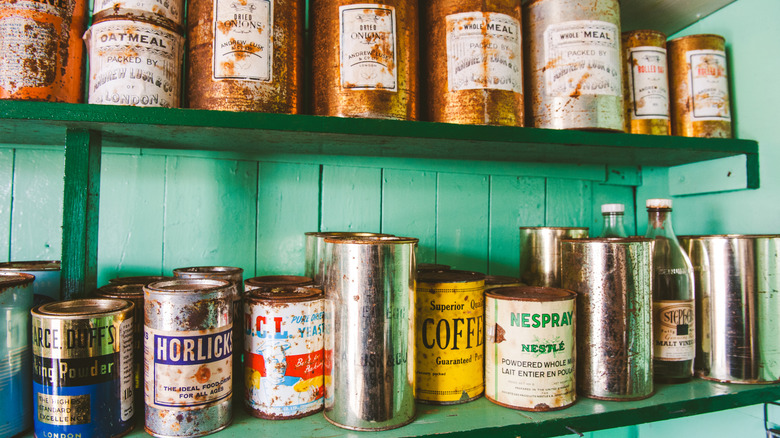
Humans have been using lead for a very long time — over 6,000 years, in fact. Canning has been a popular form of food preservation since the 1800s, and it really shouldn't be that big of a surprise that lead found its way into canning. Nor should it be that much of a surprise that people in the 80s would completely ignore the dangers. This was a time when canned foods like Chef Boyardee were popular, and we'd really love it if they'd consider bringing Roller Coasters back.
Exposure to lead can have very serious consequences and even be fatal. High-level exposure in kids can lead to brain damage, convulsions, and death, according to the WHO. Even lower levels can cause developmental problems. It's bad news, no matter how long a person is around it.
Lead solder was used to seal the seams of cans along the top and bottom, despite doctors already starting to look into the adverse effects of even small amounts of lead exposure. That study was released in 1979, but it wasn't until 1991 that the canned food industry in the U.S. stopped using lead solder. It took a few more years for the FDA to fully put its foot down; in 1995, the agency issued a final rule that prohibited the use of lead in all food products. Those that are produced domestically and imported from abroad.
5. Rising diet culture propped up high fructose corn syrup
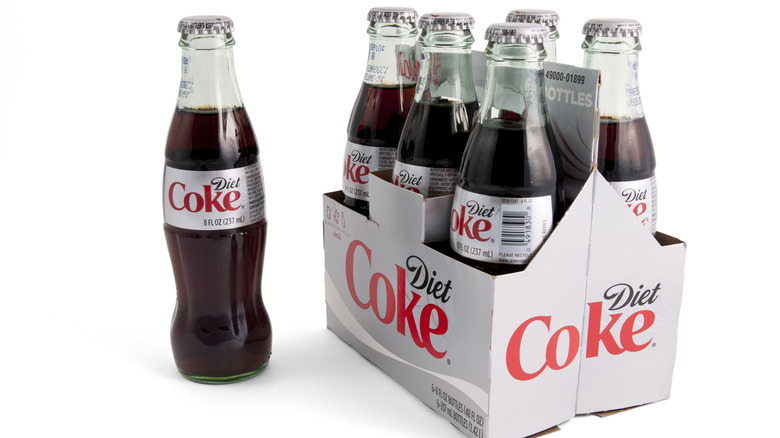
No decade or generation would be complete without its fad diets, and the 80s are no different. During this era, we started seeing a rise in the popularity of zero-sugar, light, and diet sodas. This was in line with the growing fat-free and sugar-free trend. In order to cut down on sugar in various foods and drinks, manufacturers started using artificial sweeteners like high fructose corn syrup (HFCS), including those vintage sodas that some wouldn't mind making a comeback.
Derived from corn starch, HFCS contains about 55 percent fructose. Some studies suggest that the human body requires additional steps to break down fructose, compared to glucose. This can increase the risk of liver disease, obesity, and diabetes, among other health issues. HFCS became the sweetener of choice in the 80s, with major soda makers adopting it. And the consequences of this were notable, even back then. As the consumption of HCFS rose, so did obesity rates. The rate sat at around 15 percent in the early 80s, according to the CDC, and is at around 40 percent as of 2023. Early studies into HCFS were starting to point fingers. However, it wasn't until the 2000s that people started actually paying attention.
Even as of this publication, the FDA says that it has not seen any evidence that shows HFCS is any more dangerous than other sweeteners or sugars. However, it still recommends that people keep their consumption of both HFCS and sucrose at moderate levels.
6. Lemon lime sodas contain brominated vegetable oil
If you've ever had a lemon lime soda or Mountain Dew, then you've probably had brominated vegetable oil. Unlike some entries on this list, this is something that was still allowed in certain products until very recently, though there have been calls since the 1970s to take a closer look at its safety implications.
Brominated vegetable oil (BVO) is a vegetable oil that is modified with bromine and is used as a stabilizer for fruit flavors in beverages. Specifically, it's used to keep citrus flavoring from floating at the top of drinks. It's been in use since the 1920s, and from the 50s to 60s, BVO was considered safe by the FDA. By the late 60s, there was enough concern that the FDA removed it from the GRAS list, but didn't ban it overall due to a lack of evidence.
Tests in the 70s brought up concerns about adverse effects on the heart when too much BVO is consumed, but it was still allowed to be used throughout the 80s, regardless. It could be found in popular lemon-lime drinks at that time. Later studies also showed that large amounts of BVO could cause heart problems. There was even a case in 1997 of a person suffering from bromine poisoning after drinking 2 to 4 liters of soda with BVO in it. As of 2024, the FDA issued a final rule that officially bans BVO from foods. It allowed a one-year grace period, though reportedly, most drink manufacturers had already started cutting BVO from ingredient lists.
7. Alar-treated apples could cause cancer

If you ever wondered about that wax coating on apples, it's part of the measures to protect their freshness. And it's considered completely safe and regulated by the FDA. Back in the 80s, things were a bit different. While not used to protect freshness, there was a chemical put on apples that no one thought twice about until it created a giant uproar in 1989:Alar.
Alar is a chemical that was sprayed on apples to regulate growth and enhance color. It was also used to keep fruit firm. The National Resources Defense Council released a report on the hazards of 23 agrochemicals, including Alar. They brought this to CBS's 60 Minutes, which did a broadcast claiming that Alar is carcinogenic. This was then compounded by Meryl Streep acting as a celebrity spokesperson for the dangers. Unsurprisingly, the public panicked, even though detractors claimed that Alar was actually safe.
There has been some back and forth on the validity of the report, and some of the tests run on Alar. The EPA did actually launch a review into the chemical in 1984, before the broadcast, but ultimately didn't do anything about its findings at the time. After the broadcast, they initiated a phased ban on Alar, with the final one occurring in 1991. Not to mention, courts dismissed defamation lawsuits filed after the broadcast, saying there was no proof that any of the information presented to the public was falsified.
8. Bad oysters led to tummy problems
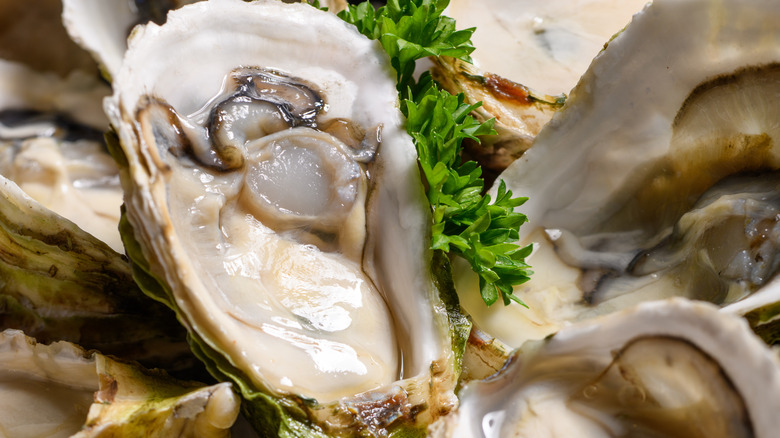
Nowadays, many of us are overly aware of the risk of eating raw shellfish like oysters and clams. There are definite rules that one must follow to make sure that they're only eating fresh and don't end up with the tummy ache to end all tummy aches. Interestingly, it was an outbreak of typhoid traced to contaminated oysters in the 20s that led to the start of the National Shellfish Sanitation Program, which sought to keep the shellfish industry safe. Despite this, there were still some obstacles to overcome. And in the 80s, people weren't really thinking about how safe that oyster was before they ate it.
The popularity of shellfish grew in the 70s and 80s and continued beyond, rising from a loss-adjusted availability of 1.3 pounds per capita in 1970 to a whopping 3.2 pounds per capita in 2017. During this time, there were a few concerning cases of illness after eating oysters. One of the bigger ones was an outbreak of Vibrio gastroenteritis at a conference of doctors to discuss antimicrobial agents and chemotherapy. There was yet another large case involving people getting sick from paralytic shellfish poisoning in Massachusetts and Alaska in 1990.
Finally, in 1997, the FDA stepped in and adopted regulations geared towards food safety regarding seafood. This required all seafood processors to utilize HACCP (Hazard Analysis Critical Control Point). Using this, businesses identify any food safety hazards that could happen and implement controls at crucial points to stop or hinder these hazards to an acceptable level. Yes, there are still some occasional outbreaks of foodbourne illness regarding shellfish, but these steps are there to prevent or control them. Though, you'll still want to be sure that you're eating fresh shellfish when it's in season.
9. Beef tallow was at fast food chains

Beef tallow is another thing (like Crisco) that used to be in most people's kitchens and even in use at some of our favorite fast food chains like McDonald's before a lot of people stopped using it. It's a food product that's created by removing, simmering, and clarifying the fatty tissue surrounding organs of animals like cows. It was commonly used for deep frying and roasting. Beef tallow is mostly made up of saturated fat. While excessive consumption has been linked with some nasty side effects like increasing the risk of heart disease and strokes, research says that small amounts might not be entirely bad for you.
As mentioned, beef tallow was well in favor in the 80s, even though the first Dietary Guidelines released in 1980 had recommended that people start limiting their fat intake. This started to take hold in the late 80s and early 90s, as many fast food chains publicly announced that they would stop using it. The previously mentioned low-fat trend that began in the 80s was partially fueled by health advocates pushing for people to cut back on saturated fat.
Beef tallow is back in the news as of this publication, with a recent public push by HHS Secretary Robert Kennedy to move away from seed oils (this move is still under debate, with nutrition scientists saying research confirms their health benefits). Some chains like Steak 'n Shake are bringing it back, but whether this becomes the overall trend remains to be seen.