

Can You Use Fast-Rising Yeast In Place Of Instant For Bagels?
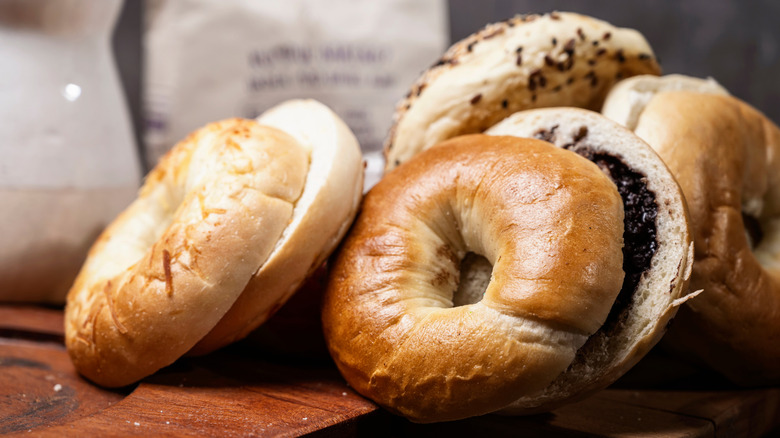
Making bagels in your own kitchen is not quite the Herculean task it might at first seem when you're more accustomed to admiring the gleaming beauties abundant in wire baskets at the neighborhood shop. But there are also plenty of mistakes that everyone makes when baking bagels at home. Getting the American breakfast staple just right is a labor of love and a science, and, like all such studied undertakings, you'll need precise materials for success. So we asked Josh Small, CEO and managing director of DoughCo Bagels, about some potentially tempting ingredient swaps.
Bagels need yeast to rise and to take on their inimitable texture, and there are a couple of different kinds that you might be inclined to pick up. See the variety labeled "fast-rising," and that might even seem like the superior product. But it is not, in this case, Small says. "We strongly recommend against using fast-rising yeast because the best bagels take hours and even days to develop their flavors," he tells Chowhound exclusively. "Fast-rising yeast will cause the dough to ferment too quickly and reduce flavor development. In addition, fast-rising yeast is more difficult to control, leading to potentially over-proofed bagels." Put those perils together and you'll end up with flat, flavorless Frisbees, rather than the lovely wheels you expected.
The right yeast for the best bagels
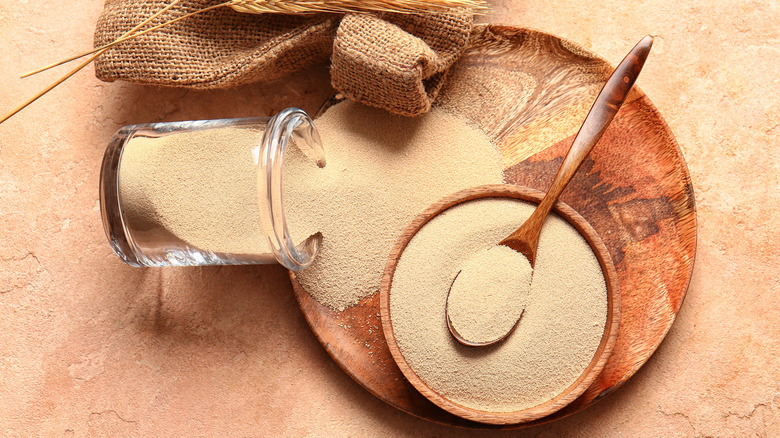
Aspiring bagel makers should source only active dry yeast for the best results. And even once you've nabbed the accurate component, you still need to handle it with care. "To maximize the effectiveness of your yeast, you should use warm water and a little sugar," Josh Small says. "After a few minutes, you should see bubbles rising in the water, demonstrating the yeast activation."
This activation is an early step in most bagel recipes, which will also detail the precise amounts of water and sugar required. You'll then combine the rest of your dough ingredients, knead, roll, and let rise before those critical shaping and proofing steps. An old school boiling trick will give your bagels their signature shine once they're baked to finish. Beginners should schmear the round breakfast staples with cream cheese for a control taste versus store-bought bagels before tapping the other best bagel toppings that surpass the standard spread. Homemade bagels are best enjoyed fresh, but you can also toast them a day or two later to revive their just-baked quality.