

14 Old-School Soups That Have Fallen Off The Radar
We may receive a commission on purchases made from links.
Nothing says comfort like a bowl of soup. It's simple to make, easy to eat, and usually nutritious to boot. For as long as people have been cooking, they've been throwing ingredients into pots or pits with water and heating them up. Over the centuries, soups have evolved to include all sorts of iterations. Some, like chicken noodle and creamy tomato soup, are classics that never seem to go out of fashion. Others, however, have quietly faded into the background or fallen off the culinary map entirely.
Many of these old-school soups fell out of favor because the ingredients became harder to find, modern tastes shifted, or convenience foods took their place. During the Great Depression, families made do with Hoover stew to stretch what little they had. Turtle soup once showed up on elegant menus, but is rare to spot today. Some vintage soups might sound odd to modern tastes, but they were once staples at dinner tables, restaurants, and communal eating halls. Here are 14 vintage soups that we think deserve a second look and maybe even a spot back in the pot.
1. Dandelion soup
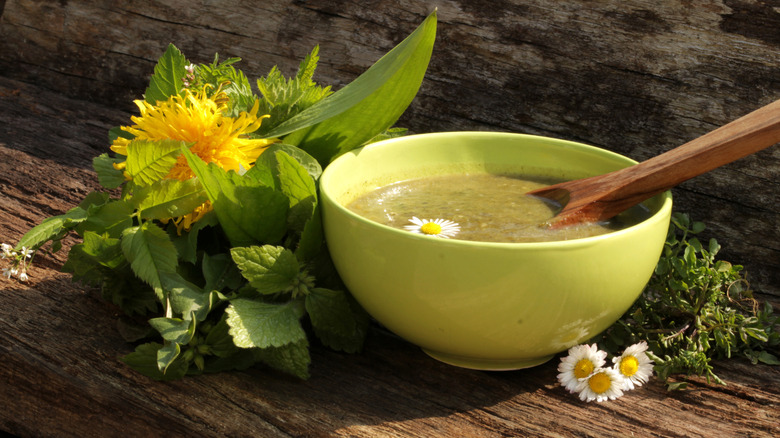
Dandelions might be considered nothing more than a pesky weed today, but back in the day, people used them in a variety of dishes. The plants are native to Asia and Europe, and made their way to the Americas in colonial times. They were often used as medicine to cure ailments like toothaches, fevers, and indigestion. Records of boiling dandelions for consumption date back to the 1600s, and many cultures, including Germans and Italians, have long traditions of turning these foraged greens into hearty soups.
One of the great things about dandelions is that the entire plant is edible. You can chop up the plants — flowers and all — and simmer them with other ingredients like onions, carrots, and potatoes to make a rustic soup that stretches whatever's on hand. You can also do like Al Capone's family did, as detailed in the book "Uncle Al Capone" written by his niece Deirdre Marie Capone, and make dandelions the star of the show by sautéing the leaves simply with garlic and onion, then simmering them in chicken stock. Puréeing is another option if you want a smoother texture.
2. Pottage
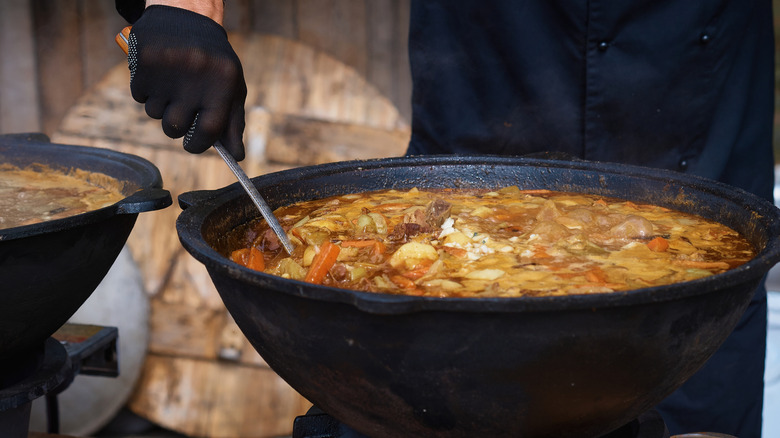
If you had been alive in Europe during medieval times, pottage (aka potage) most certainly would have been in your meal rotation. It was a dish that was eaten by peasants and royalty alike, and it consisted of pretty much anything that was on-hand and could be thrown in a pot with water. For peasants, that often meant ingredients like cabbage, leeks, and onions. More well-to-do folks often added meat, herbs, and spices. Sometimes grains like oats and barley were added, and it was often served with bread or in a bread trencher.
Pottage stuck around for so long because it was cheap, filling, and adaptable. Families could keep a pot simmering over the hearth all day, adding whatever scraps, garden vegetables, or grains they had on hand. In lean times, it might be thin and mostly cabbage or root vegetables. When times were better, it could be thick and hearty. While you won't find pottage on many menus today, its spirit lives on in rustic dishes like Scotch broth, Irish stew, and even simple homemade vegetable soups that make use of odds and ends from the fridge.
3. Turtle Soup
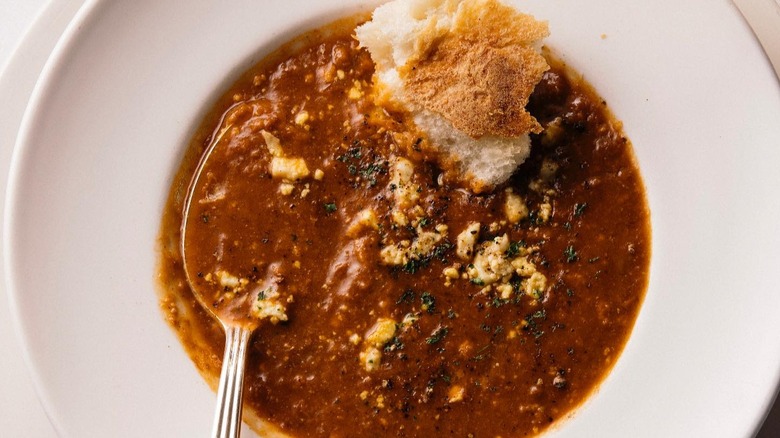
It may sound strange today, but turtle soup was all the rage in 19th-century America. Prior to that, indigenous people had been eating turtle meat for centuries. When European people first arrived in the New World, they saw turtle as simply subsistence food. However, around the mid-1800s, turtle soup started appearing on restaurant menus and it came to be viewed as a delicacy. Soon, it was appearing at fancy banquets, fine dining restaurants, and even the White House.
Sadly, the craze for turtle soup caused populations of green turtles and terrapins in the United States to decline drastically. The price of turtles skyrocketed, which further launched turtle soup into luxury food territory. Hence, the creation of mock turtle soup made with calf's head or veal. There was even a canned version that joined the long list of discontinued Campbell's soups over the years. The popularity of turtle soup really began to decline during Prohibition when people could no longer get sherry, which was an important component of the soup. Some traditional recipes for turtle soup still survive in pockets of the States today, but it's pretty rare to see it on restaurant menus.
4. Hamburger Soup
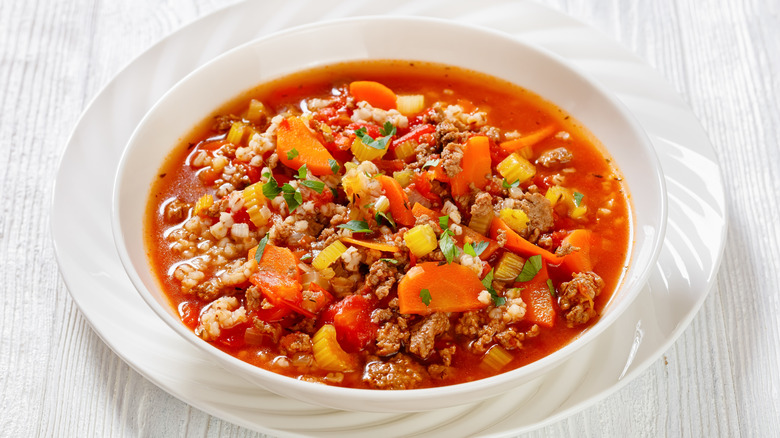
Hamburger soup is one of those old-school ground beef dishes no one seems to make anymore, which is a shame because it's both economical and tasty. As the name suggests, it features many of the elements you typically find in hamburgers, including ground beef, tomatoes, and onions. Many people also add vegetables like bell peppers, potatoes, and carrots, as well as seasonings like oregano, Worcestershire sauce, and parsley. Pasta can also bulk it up a bit.
This hearty soup gained traction around the mid-20th century when people were looking for quick and easy recipes that were also affordable. It was a budget-friendly way to turn a pound of ground beef into a satisfying meal for the whole family. Canned and frozen veggies often made it into the mix, and still do today. The great thing about hamburger soup is how adaptable it is. You can swap out the ground beef for leaner meat like chicken or turkey, add Velveeta or cheddar for a cheeseburger twist, and kick the heat up a notch with the addition of cayenne pepper or hot sauce.
5. Split pea soup
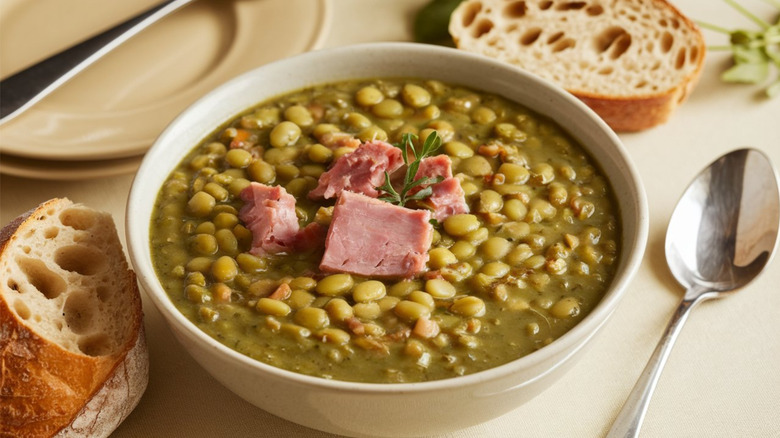
Cold Canadian winters call for something hearty and warm, and for generations, split pea soup has been a go-to solution. The soup has a lengthy history that dates back to the 1600s when Samuel de Champlain first arrived in what is now Quebec. At that time, sailors would make soups and stews with ingredients that were easy to store like dried legumes and salted meat. When the first French "habitants" settled in Canada, they adapted those rustic soups to include local vegetables and ham from pigs they raised.
Split pea soup (also known as Habitant soup or soupe aux pois cassés) typically features yellow split peas, smoked ham hock, and vegetables like onion, carrots, and celery. Those go into a pot with water or chicken stock and seasonings like thyme and savory. Everything gets simmered low and slow so that the split peas soften and everything melds together. A slow cooker is perfect for split pea soup. Some people like it thin and slurpable, while others prefer it thick and chunky. The soup is often served with crusty bread on the side for dunking.
6. Philadelphia pepper pot soup
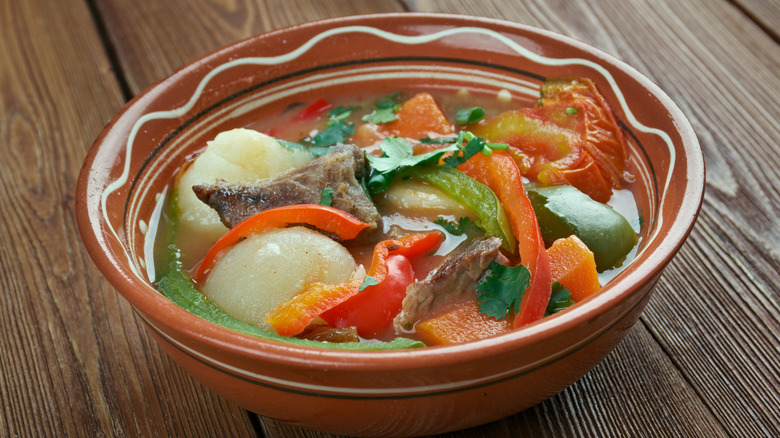
Known as the "soup that won the war," Philadelphia pepper pot soup has a longer backstory than most people realize. It originated in West Africa and made its way to the Caribbean via the slave trade. From there, the soup travelled to port cities along the east coast of America, including Philadelphia. Legend has it that the soup helped revive George Washington's tired and hungry troops at Valley Forge, Pennsylvania, enabling them to eventually win the American Revolution.
Pepper pot soup began as a simple dish made with whatever was on hand like scraps of meat, vegetables, leafy greens, starches, and hot peppers. Versions in the Caribbean typically include salted beef or pork. When the dish arrived in Philadelphia, tripe became the main protein. It was popular in the city from the 18th century all the way up to the mid-20th century. Andy Warhol even painted a can of Campbell's pepper pot soup. Over the past few decades, its popularity has significantly declined. Campbell's discontinued it in 2010, and it's hard to find at restaurants today. However, there are some restaurants that still offer this storied soup.
7. Rivel soup
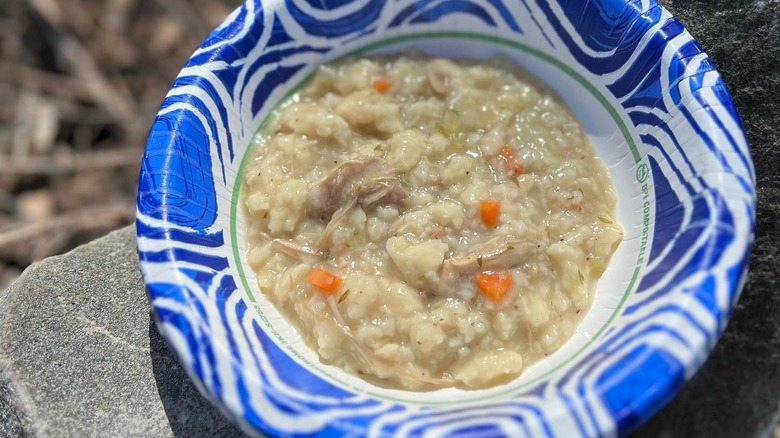
For Pennsylvania Dutch cooks, rivel soup was an easy way to turn pantry staples into a warm, filling meal. At its most basic, the dish includes just a few ingredients like potatoes, milk, water, and simple dough dumplings called rivels. The dish has its roots in starchy soups similar to porridges that were consumed for centuries in Germany. When Amish and Mennonite groups fled religious persecution in Europe and settled in Pennsylvania, they brought their recipes with them. The soup is now a traditional dish of the region.
Over time, cooks put their own spin on rivel soup by adding chicken or beef broth, bits of leftover meat, or extra vegetables to stretch the meal even further. You might see versions with corn, carrots, or turkey. The rivels themselves vary from tiny, crumb-like pieces to larger dumplings, depending on family tradition. Although you won't find it on many restaurant menus, rivel soup still shows up at family tables across Pennsylvania. It's easy to see why it's endured. It's filling, comforting, and very budget-friendly.
8. Vichyssoise
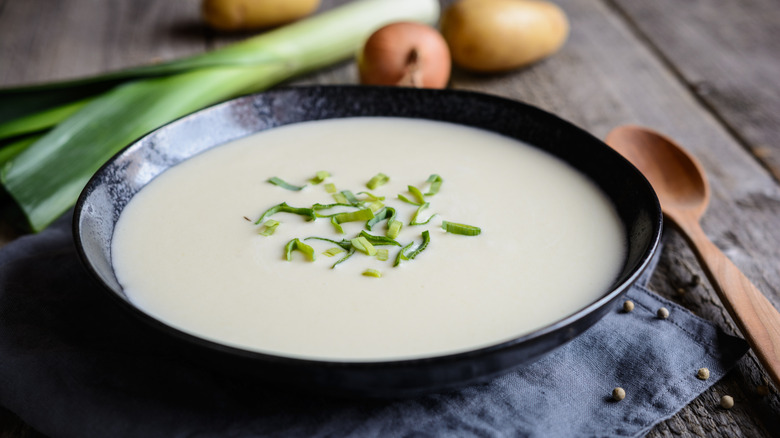
It's easy to think vichyssoise came straight from a French kitchen. The name alone sounds fancy enough, and Julia Child was famously a fan. But while it does have connections to France, this creamy, cold potato soup actually got its start in America. It was invented by a French chef named Louis Diat while he was working at the Ritz-Carlton in New York City in the early 20th century. He adapted his mother's recipe for leek and potato soup by adding milk and cream and served it chilled. He named it crème vichyssoise glacée after the spa town of Vichy in France.
Silky smooth and refreshing, vichyssoise is an elegant dish that's surprisingly easy to make. All you need to do is sauté some leeks and onions in butter, add potatoes and stock, and simmer everything until the potatoes soften. Then, you purée the soup, add heavy cream, and refrigerate it until it's chilled. Some people like to add nutmeg and garnish it with fresh herbs like chives. You can also add sour cream for a bit of extra richness and tang.
9. Hoover stew
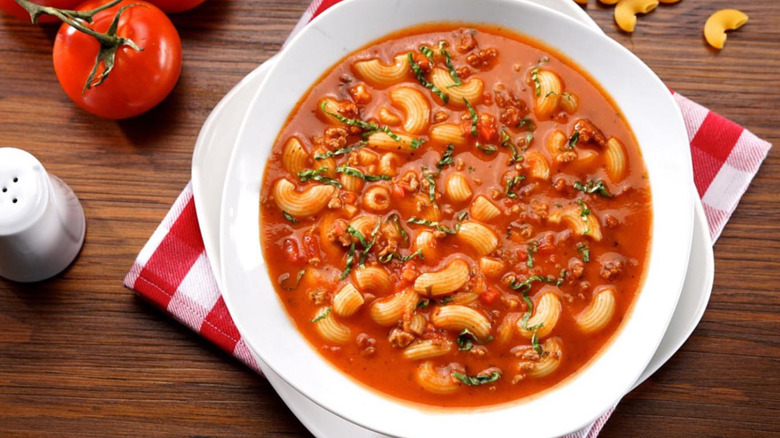
When the stock market crash of 1929 plunged the United States into the Great Depression, it dramatically changed the way people ate. As jobs and money began to dissipate, fancy foods and meals out at restaurants were not an option for many. Families had to make do with what they had, which is why many of the foods eaten during the Great Depression were dishes cobbled together with bits and pieces of whatever was affordable. One example of this was Hoover stew.
Herbert Hoover had a rough run as president. He held office from 1929 to 1933, and was often blamed for not doing enough to alleviate the hardships of the Great Depression. Shantytowns began to be called Hoovervilles, and that's where many soup kitchens operated to feed the down and out. Hoover stew was created to feed the masses on the cheap. It consisted of odds and ends like hot dogs, canned vegetables, canned meat, and pasta. Today, some people call it "dump soup" because it can be made by dumping any old leftovers and pantry items into a pot.
10. Corn chowder
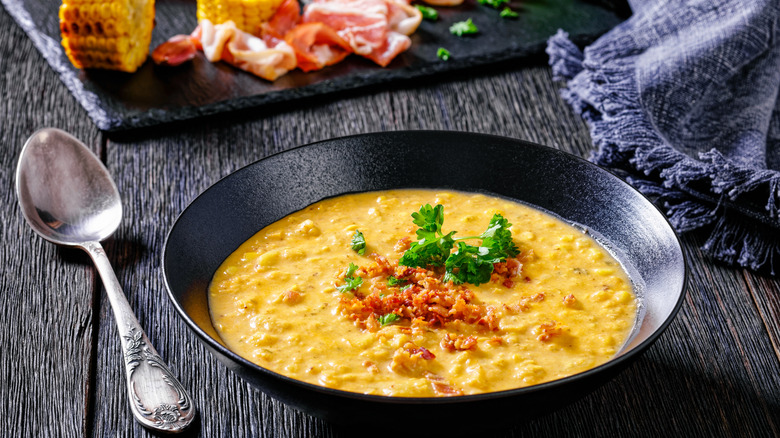
Corn chowder has several roots, including early Native American corn soups and the hearty fish chowders cooked along the coasts of New England and Eastern Canada. Chowder itself comes from the French word "chaudiére," which refers to a cooking pot. Early chowders often featured fish or salted meat stewed in a pot with crackers to thicken the mixture. As the dish spread across the United States, it was adapted to whatever ingredients were plentiful. In the Midwest and South states, that was corn.
A classic corn chowder features fresh or frozen corn kernels, potatoes, and onions simmered with stock or water and thickened with a mixture of flour and milk or cream. Many people also add bacon or ham for protein and extra flavor. The key to cooking corn chowder is to go low and slow so that the vegetables cook through and become tender without disintegrating. Here's where a slow cooker can be your best friend. Leftovers also reheat well, so it's a smart make-ahead meal for busy days.
11. Scotch broth
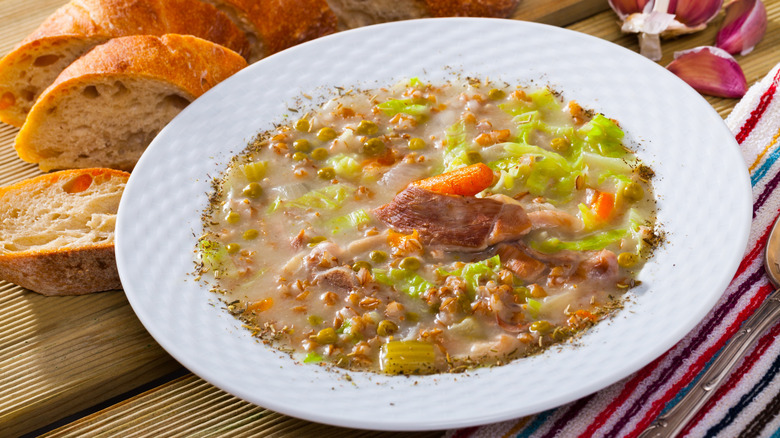
If you're looking for a hearty old-school soup that's perfect for cold winter days, Scotch broth will warm you up and fill your belly. As you may have guessed from the name, it originated in Scotland and it's been around for centuries. It typically consists of beef, lamb, or mutton that's simmered with barley and root vegetables like carrots, potatoes, and turnips. The end result is a soup that's rich, flavorful, and wholesome with its mix of meat, veggies, and grains.
The secret to a good Scotch broth is a long, gentle simmer that brings out deep flavors. You can use store-bought stock or broth as a shortcut, or make your own stock by simmering lamb shanks or bones. If you've ever wondered when it makes sense to use broth versus stock, this is a great soup to learn the difference. Broth is typically made by simmering meat and is lighter, while stock made with simmered bones is richer thanks to the collagen in the bones. Once the barley and vegetables have softened and the flavors come together, you'll end up with a thick, satisfying soup.
12. Cabbage soup
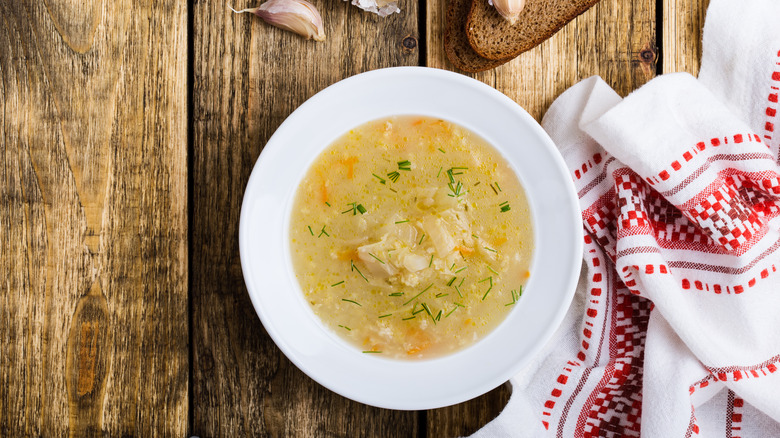
Cabbage soup has been a staple for centuries in places like Eastern Europe, Ireland, and Russia — basically, anywhere people needed cheap, filling food to get through lean times. Cabbage is inexpensive, hardy, and stores well through winter, so it makes sense that it's been a key ingredient in soups since medieval times. Many historic recipes for cabbage soup call for cabbage leaves to be simmered in meat broth or stock. Some versions get thickened with breadcrumbs, while others include meat and spices.
While old-fashioned cabbage soups may have been meager, there's nothing to say you can't create a version that's much jazzier. You can use different types of cabbages for textural contrast, layer in tasty meats like sausage or bacon, and play around with different aromatics. The broth can be meat-based or you can take inspiration from Russian shchi soup and use a vibrant tomato base. Potatoes and pasta can add bulk, and garnishes like fresh herbs and sour cream can elevate cabbage soup into something that's less peasant fare and more contemporary.
13. Mulligan stew
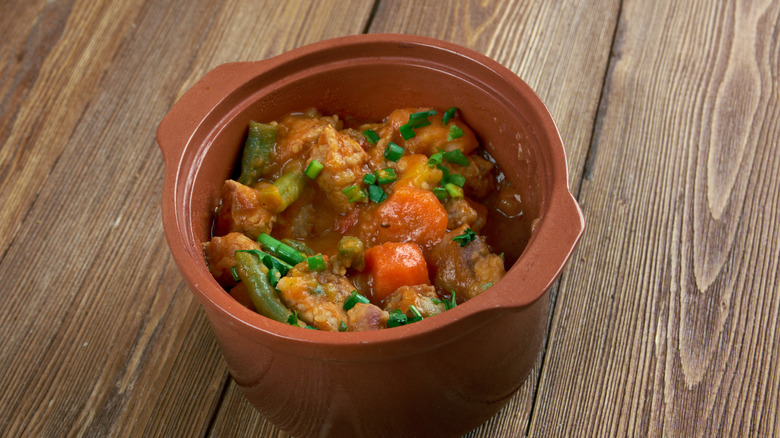
Mulligan stew is another vintage dish that came about as a result of scarcity. Also known as "hobo stew," it was created by itinerant workers in the United States in the late 1800s. Being short of cash, they would throw together whatever ingredients they had into a can and simmer them over an open fire. This could include foraged vegetables, as well as canned items like corned beef and tomatoes. It may have been based on Irish beef stew, hence the name Mulligan, which is a common Irish surname.
What made Mulligan stew unique was that it was often a community meal. Workers would each toss in whatever they could spare to create a shared pot that stretched meager supplies further. There was no fixed recipe, as the stew changed depending on what was on hand and who contributed to the meal. During the Great Depression, it became a symbol of scraping by and sharing what little you had. These days, Mulligan stew typically features hearty ingredients like meat and potatoes, along with whatever fresh or frozen vegetables are on hand.
14. Melas zomos
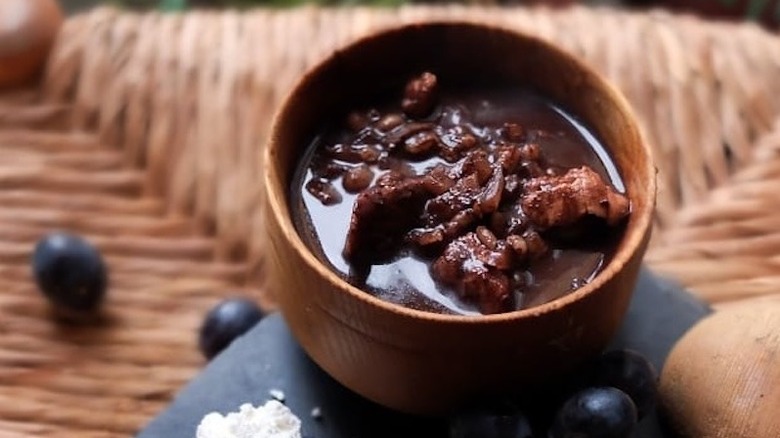
If you sat down at an ancient Spartan table, there's a good chance you'd get a bowl of melas zomos, also known as "black broth." It fueled some of history's toughest warriors, but despite a few curious chefs giving it a try, it's debatable whether it's going to make a comeback anytime soon. That's because it was known for being austere and not particularly appetizing even back in its day. It consisted of just four ingredients: pork, blood, vinegar, and salt.
While melas zomos is mentioned in several ancient texts, no definitive recipe has survived, so there's no saying what the exact portions of each ingredient actually were. Modern interpretations often include pork shank and equal parts pork blood and vinegar. Some people also add bay leaves, onion, and barley. At its essence, the soup is supposed to be nourishing and practical as opposed to indulgent, which is in keeping with the Spartan ethos. However, some people note that it could do with a little embellishment to kick the texture and flavor up a notch.