

The Frozen Garlic Hack You Desperately Need For More Flavorful Meals
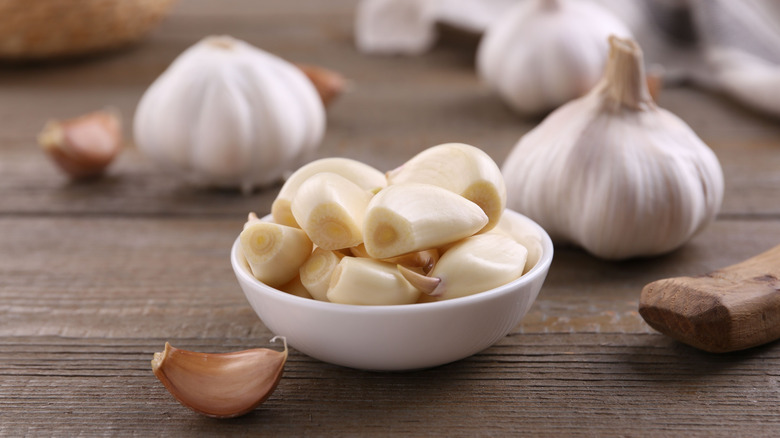
If you're the type of cook who staunchly believes that no meal is complete without garlic, join the club! The aroma of garlic sautéing in the pan has the power to make your mouth water with anticipation. So it only makes sense to have this coveted member of the Allium genus on hand at all times. One foolproof technique to prolong the shelf life of fresh garlic is to store it in the freezer. Not only does this technique avoid spoilage, but it can also enhance the taste of your meals. Start by peeling individual garlic cloves, which is probably the hardest part of this entire hack. However, with the chef-approved trick of submerging the unpeeled cloves in water overnight, you should be able to get those stubborn peels off more easily. While smashing the garlic to loosen the clove from the peels is a popular approach — even among seasoned chefs — it's not the best way to peel garlic.
Once peeled, set the cloves in the freezer, and when you're ready to use them in a recipe that calls for minced garlic, reach for a grater. Grating frozen garlic is far easier and you retain the garlicky goodness without any noticeable loss of flavor. Moreover, the consistency of grated, frozen garlic is slightly creamy and perfect for creating a luxurious sauce. Working with frozen garlic is also a helpful tip to prevent any lingering garlic smell on your hands. Put this frozen garlic to the test the next time you're making an ultra-flavorful garlic bread or a rich garlic-parmesan sauce.
Why does freezing garlic work?
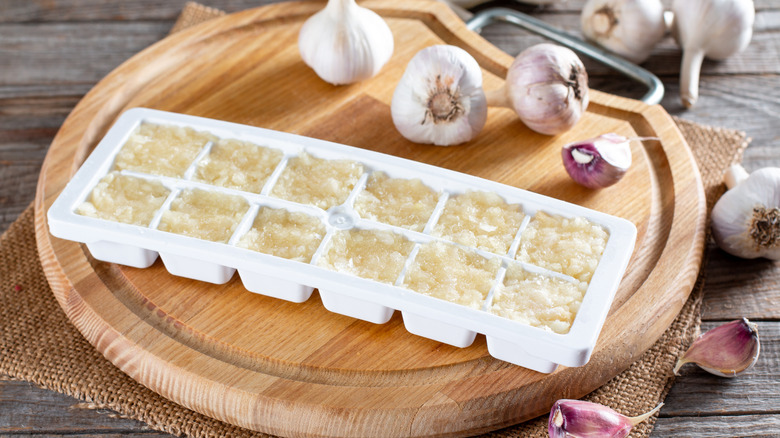
You might be familiar with the "fresh is best" motto. While that may be true in some circumstances, there's a strong case to be made for freezing produce. From extending the life span to preserving flavor, freezing certain produce comes in handy and can ease kitchen prep work. When cooking with garlic, freezing it is a great way to ensure convenience without sacrificing flavor and, in most cases, the overall texture. Unlike some of its allium cousins like onions and shallots, garlic contains relatively lower water content, approximately 60% compared to the close to 90% in onions. This is also why it's usually recommended to add the onions first when sautéing, as starting with garlic runs the risk of them burning quickly. Thanks to this reduced moisture, the texture of frozen garlic is not impacted to the extent that frozen onions would be upon thawing.
During the freezing process, the water in the plant cells expands, which causes the cell walls to rupture. So, when you thaw produce with high moisture content like onions, you're more than likely to end up with runny mush. On the contrary, garlic's denser and less fibrous structure allows it to remain intact enough to be used for most culinary applications. Essentially, anything that doesn't require garlic to retain its bite, like a crispy garlic topping, is game. Beyond the basics, you can also add a boost of flavor to rotational meals by roasting the garlic before freezing. All you need is one prep session to peel your garlic and store it in a freezer-safe container, so you can have it ready to go in a moment's notice for several weeks' worth of meals.