

For The Most Flavorful Chili, Always Keep This Spicy Ingredient In Your Cabinet
We may receive a commission on purchases made from links.
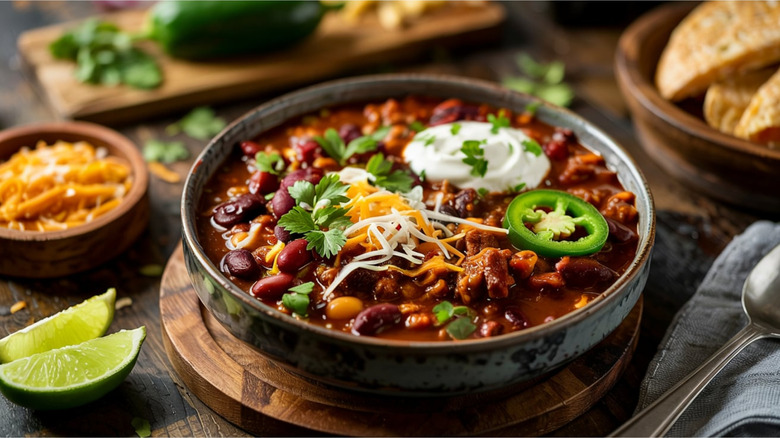
Chili is among the premier meals that you can make to satisfying effect with just what's in your pantry. Expand your culinary universe to the freezer, too, and you can introduce all manner of meats and other perishables like garlic and onions that you've cleverly tucked away. But add some dried chiles to your kitchen's shelf-stable staples, and well, you're practically on track to win the town cook-off without so much as a trip to the store.
While you may already have a ground chile pepper blend or single-origin heat source among your spice rack's must-have seasonings, dried chiles let you tinker with different flavors and degrees of ferocity. Anchos, for example, are somewhat sweet and narrowly fruity, while your chiles de árbol pack a fiery punch, and chipotles are rich with smoke. Layering the flavors is a culinary choose-your-own-adventure.
The simplest way to use dried chiles in your next batch is to remove the stems and soak the chiles in hot water for around 20 minutes to soften before pulverizing into a paste with a bit of stock or broth in the small appliance of your choice, and adding a few tablespoons to the chili pot to taste. Some folks like to scrape out the seeds and pith, too, but since a lot of a chile's heat comes from that pith, you may want to keep some or all of it in the mix. The type of chili you're making can also help you decide which dried peppers to use.
Choosing the right dried chiles for your chili
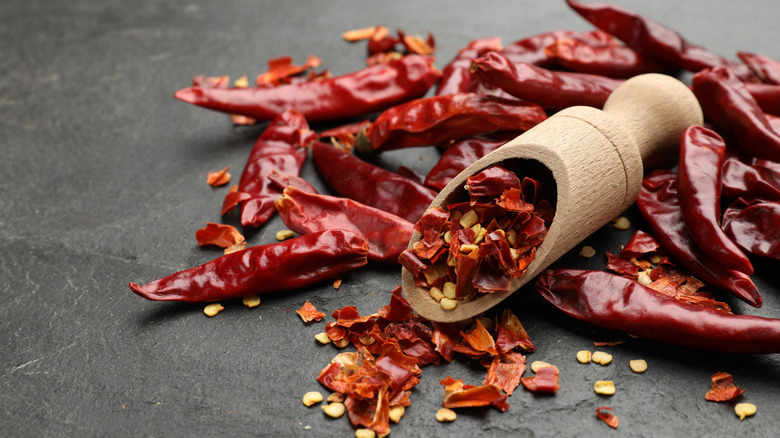
There's no shortage of options for adding dried chiles to your chili, and you can choose different varieties depending on your recipe. Vegetarian chili is one of the most satisfying meat-free dishes you can make, but some versions can lack savory depth. Smokier chiles like pasilla and chipotle are the solution; they bring robust heartiness without any animal products. You can also find smoked versions of peppers that are more commonly sold fresh, like habaneros (for when you want to turn up the heat).
A basic beef chili's bovine quality will benefit from dried chiles that lean slightly fruity, like the aforementioned anchos, which will complement the meat's earthy notes, particularly when working with a grass-fed selection. For something slightly spicier with an almost berrylike tartness, give something like Badia Guajillo Chili Pods a shot. Of course, if you miss the heat of something like chiles de árbol, then, guess what, you can toss a few of those in, too, and even add a chipotle for a taste trifecta. (We weren't joking about that whole choose-your-own-adventure thing.) Similar principles, of course, apply to the ever-popular turkey chili, which you can also zag to your sweet, hot, or smoky preference with just the dried chiles in your kitchen cabinet and a little imagination.