

Jarred Gravy Tastes Miles More Delicious When You Dump In This Creamy Canned Staple
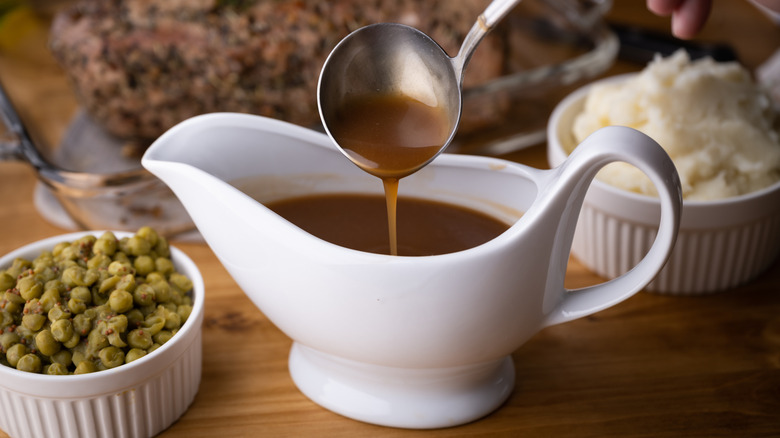
Making homemade gravy is one of those extra steps that we don't always have time for when prepping a big meal. Grabbing a jar off the store shelf is easy and convenient, and while it generally tastes fine (though it could benefit from some flavor enhancers), there is one special way to zhuzh it up that will make it creamier, richer, and also increase the overall volume: add cream of chicken soup.
Gravy is usually made from meat drippings, and cream of chicken soup already has that meaty flavor thanks to the flour and cream that combine with the chicken stock. Just add a can of soup alongside the jar of gravy in a pan, and whisk them together for a creamy version that still maintains its rich, chicken-forward notes. Depending on the brand of jarred gravy you use, the texture might be thicker than you like. In this case, have water, milk, or stock handy to thin out the final result.
Add a few seasonings and aromatics for extra flavor, such as rosemary or thyme. Go light on the salt, since jarred sauces and soups tend to be high in sodium, but give it a little kick with some black pepper or paprika if desired. The effects will be so savory and delicious that you'll want to know how to make the most of this gravy so that you don't waste a single drop; here are some suggestions for that.
How to make the most of this gravy at your dinner party

This creamy gravy works well over so many different foods, so you can prepare a larger batch and just serve it with a spoon at the dinner table; guests can pour it over anything they want. Of course, a flavorful roast chicken or turkey deserves a spoonful of gravy to pair, but it even blends well with mashed potatoes or as a creamy addition to roasted broccoli or green beans.
Make sure the gravy is hot before serving, and serve it in a heat-friendly material, such as stoneware, which will help keep it hot as it sits. Gravy tends to thicken as it cools, so add a little extra milk or even a splash of water if you're worried it might get too thick while sitting on the table. In general, most gravy types last around three to four days in the fridge, so keep it in a sealed container, and toss it after day four if there's still any left. To reheat your gravy in a way that prevents splitting, use a saucepan over low heat, and don't let it come to a boil. If it does happen to split, just whisk it all back together — it should taste just as delicious as it did on day one.