

Not Cayenne Or Chile Powder — Fried Eggs Go From Flavorless To Fabulous When You Sprinkle On This Spice From Syria

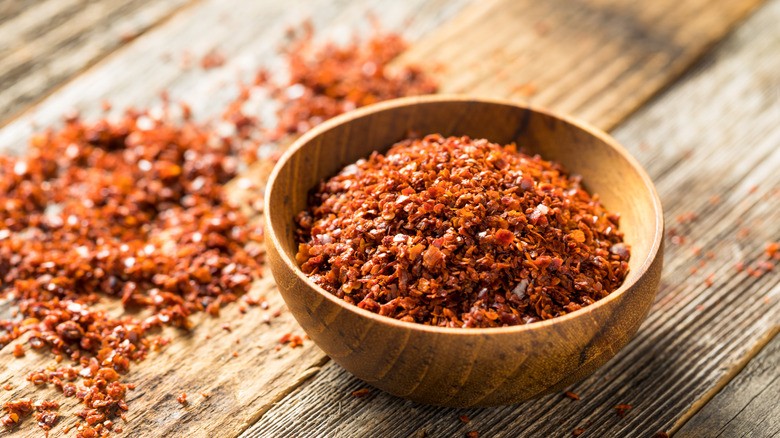
Stop reaching for cayenne pepper to spice up your fried eggs: Consider Aleppo pepper instead (also called Halaby pepper). This dried, crushed chile is named for the Syrian city of Aleppo, where it's a staple condiment. (The spice also goes by the name pul biber in the country.)
Descriptions of Aleppo pepper's taste vary depending on who you ask, but generally, it's a little fruity (some even say there are hints of raisins), a bit tangy, and it has a heat that builds up slowly on the palate, instead of hitting hard at once. The pepper is deseeded, partially sun-dried, and then crushed with some salt and olive oil, which also adds more flavor.
The gentle, tangy heat explains why it works well with eggs: Eggs are pretty mild, so Aleppo pepper gives them both warmth and a tangy depth a little bit like tomatoes. Look to Turkey and you'll realize this is hardly a culinary secret: The Turkish dish çilbir with poached eggs and yogurt gets a noticeable kick from butter that's used to bloom with Aleppo pepper, a technique for maximizing the flavor of spices. Obviously, this means there's no need to stick to just fried eggs. Aleppo pepper works just as well on poached or scrambled eggs (Turkish-style menemen, a noteworthy take on scrambled eggs, is a great example of this). Just sprinkle it on the finished eggs, starting with about ¼ teaspoon per egg. It's milder than red pepper flakes so you may want to add more from there.
What else to add, other uses, and where to get it
If you truly want to flavor-max, no need to stop at just Aleppo pepper. It plays well with butter, olive oil, garlic, dill, lemon, mint, and feta, so you could consider building up a garlicky yogurt-herb situation around your eggs. And that jar of Aleppo pepper doesn't need to just sit around on your shelf waiting for you to cook eggs again, as it works in plenty of settings. It's key for muhammara, the walnut and roasted red pepper dip that's also from Aleppo, and is great mixed into hummus. More generally, it works well rubbed into meats (a Gordon Ramsay favorite) sprinkled into a tomato sauce for that subtle heat, or tossed with vegetables before roasting them.
The only catch may be getting your hands on it. The good news is that Aleppo pepper isn't particularly obscure: A Middle Eastern or Turkish grocery store is probably your best bet, and it will likely be on the shelf at specialty spice shops, or you can order it online. At supermarket chains like Whole Foods, it's not out of the question, but it also doesn't seem ubiquitous. It's worth knowing that not much Aleppo pepper comes from Syria anymore due to the country's civil war destroying the crop — it's often grown in Turkey, and there are a few U.S. producers out there, too. This may mean that it's labeled as "Aleppo-style" pepper for provenance reasons, yet this isn't necessarily a sign of lower quality — just make sure you buy from a reputable spice seller.