

Skip The Rolls — Italian Sandwiches Are Miles Better Paired With This Tuscan Bread
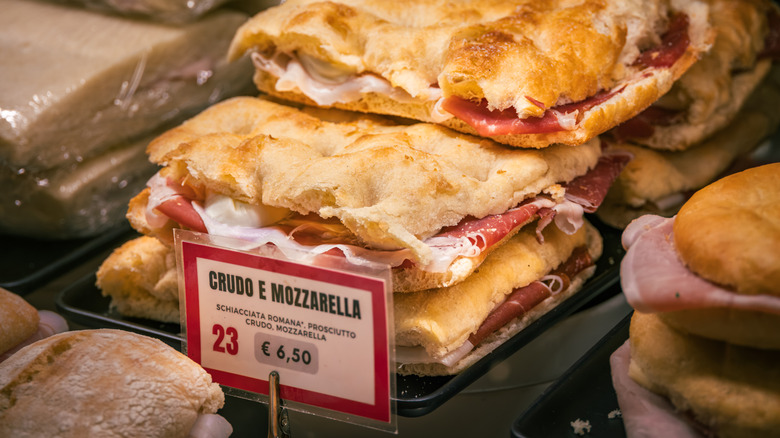
If you're making a truly Italian-style sandwich, there's a good chance you reach for ciabatta or focaccia for the bread (and we're not talking subs or hoagies — these are firmly Italian-American). Yet in Tuscany, there's one lesser-known bread that's also an excellent option. Schiacciata is its name, and it comes from the Italian verb for "to flatten" or "to squash". This refers to how the dough is handled before it goes in the oven: Instead of being left to puff up, it's pressed down so it's thinner and denser.
This technique goes back to pre-Roman times when this type of flattened dough would be cooked directly on hot stones, since the crude cooking method was only capable of cooking bread evenly when it was thin. Later on, schiacciata would be used by bakers to test whether the temperature of their wooden ovens was okay before putting in the "real" bread.
The dense crumb of schiacciata means that it can be solidly loaded up with ingredients without going mushy. In Florence, the standard is to put prosciutto and pecorino in there, sometimes with arugula as well. Salami, finocchiona (a fennel-garlic salami), mortadella, and lardo di Colonnata are also common options. You might also see sweet versions that are more cake-like, flavored with orange and vanilla; this is a Florence specialty.
What else to know, and where to get it
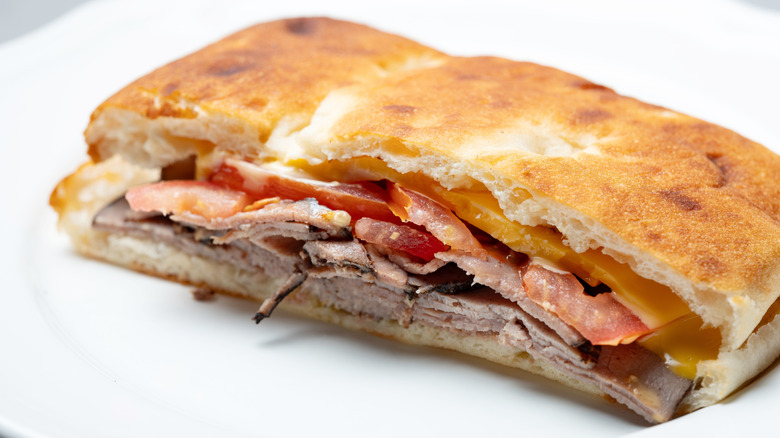
If you look at a recipe for schiacciata, it can seem similar to focaccia (which is associated more with Liguria, in Italy's northwest): It needs flour, yeast, lukewarm water, olive oil, and salt in its most basic form. However, the differences are in the ratios. Schiacciata uses less water and olive oil, making it crispier and less spongy. It also differs from the classic Tuscan table bread (pane toscano), which is historically made without salt (a hangover from an era when salt was heavily taxed).
The straightforward ingredients mean you shouldn't have difficulties making schiacciata at home if you want. Basically, if you can pull off focaccia, you can probably manage schiacciata. You'll need a good amount of time for it to rise (potentially over 12 hours, although recipes vary on the exact time). The technique and equipment are simple: It needs some kneading and a pan for baking (or perhaps cast iron for extra crispiness); some recipes may also suggest using sourdough starter. Like focaccia, it can also be topped with extra ingredients beyond olive oil and salt. Olives or herbs like rosemary or sage are some good options, or you can take a more pizza-like approach with cherry tomatoes, cheese, potatoes, and so forth.
If home-baked bread isn't your thing, you might find schiacciata in specialty stores like Eataly. A company called Tuscanini also makes a packaged version that appears to be listed on Instacart as available in a range of grocery chains. Take note that schiacciata dries out quickly (it's best eaten on the day it's baked), so don't over-buy it.