

Here's What Happens When You Eat Eggs Every Day

You've probably heard all the hype surrounding protein intake for weight management, muscle building, and general health, but what are the actual facts? Social media can sometimes be oversaturated with self-proclaimed nutritionists spreading misinformation about health, and dietary recommendations are no exception. For many years, eggs have been one of the most misunderstood and contentious protein sources due to their cholesterol content. To clear up the confusion and myths, here is what actually happens when you eat eggs every day and how their nutritional profile impacts your body.
Incorporating eggs into your daily routine delivers a dense concentration of essential micronutrients and high-quality protein to support general bodily health. A single large egg provides approximately 6 grams of complete protein, containing all nine essential amino acids required to sustain and build muscle mass while promoting satiety. Beyond protein, eggs are one of the primary dietary sources of choline, a key nutrient for brain health, cognitive function, and cell membrane integrity. Daily consumption also contributes vital micronutrients, including vitamin B12, selenium, and the antioxidants lutein and zeaxanthin, which help protect eye health. As for those aforementioned egg myths, here is what to know so that you can make informed choices.
Debunking myths and keeping eggs interesting
Eggs have often been linked to cardiovascular disease and elevated cholesterol, but contemporary research shows that this myth has been largely debunked for most healthy adults. It turns out that dietary cholesterol has a minimal impact on blood lipid levels compared to saturated and trans fats. Consuming one egg a day is not linked to an increased risk of cardiovascular disease; in fact, one 2026 study published in The Journal of Poultry Sciences noted that daily intake may maintain or slightly improve the ratio of high-density lipoprotein (HDL) to low-density lipoprotein (LDL) cholesterol while supplying nutrients that support healthy skin, hair, and the nervous system. HDL is important because it absorbs excess cholesterol circulating in the blood, preventing it from building up.
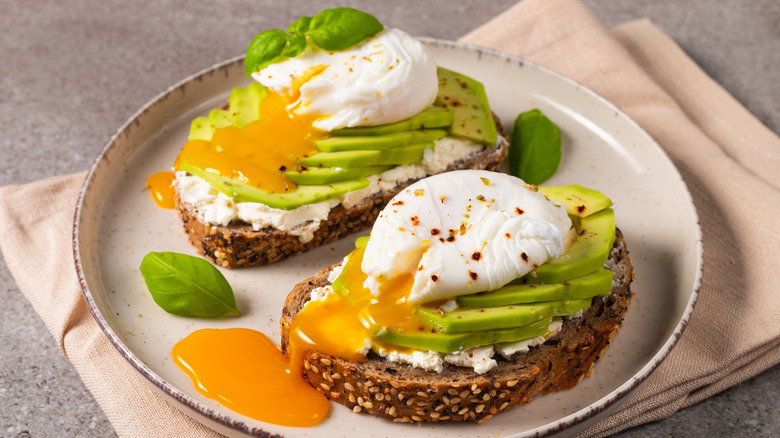
Understandably, eating a plain sunny-side-up fried egg on toast every morning can get repetitive, but there are many simple ways to vary your routine without losing those health benefits. Scrambled eggs pair easily over avocado toast topped with leafy greens and red pepper flakes, while soft-boiled eggs or poached preparations offer rich texture without requiring extra cooking fats. Hard-boiled eggs remain a convenient option for meal prep, and because eggs have a mild flavor profile, they serve as a versatile base for nutrient-dense toppings like herbs, spices, and fresh vegetables.