

The Right Way To Make Fried Eggs With The Perfect Crispy Edges
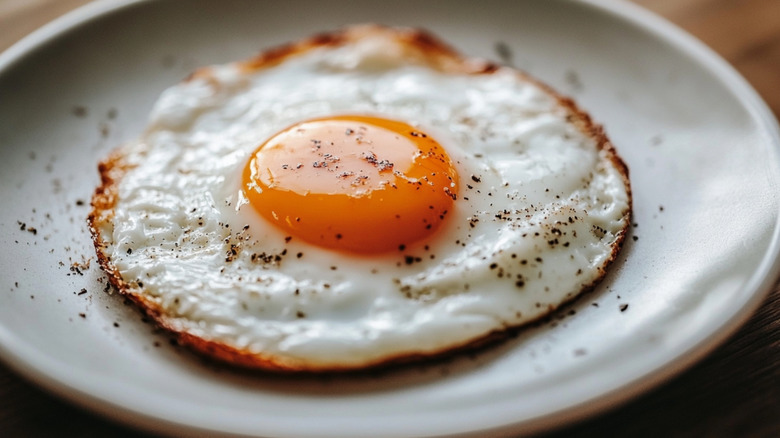
When the goal is fried eggs with golden, crispy edges and a soft yolk, the most important thing to get right might actually be the temperature of the pan itself. If the pan is too cool, then the egg white runs the risk of sticking to the pan. Similarly, a pan that is too hot can burn the bottom of the egg before the middle parts have even cooked through, or create a gummy effect. It's the Goldilocks theory: get the pan just right and you are on your way to perfect crispy eggs.
First, preheat your pan by placing it over a medium heat for a few minutes, and then add 1 to 2 tablespoons of oil for every egg you're frying. The debate between using butter or oil for fried eggs is common, but vegetable oil, including olive oil, is a universally good choice because it can withstand the temperatures you need to get crisp edges. Yes, butter can work, but its milk solids can go brown and burn in high temperatures.
Once the pan is hot and the oil is shimmering, crack your eggs into the pan. They should sizzle the moment they hit the surface. If the edges immediately bubble, then you're off to a good start, but if there's barely a sound, give the oil a little longer to heat up before adding the next egg.
Adjust the heat to get crispy edges without overcooking the yolk
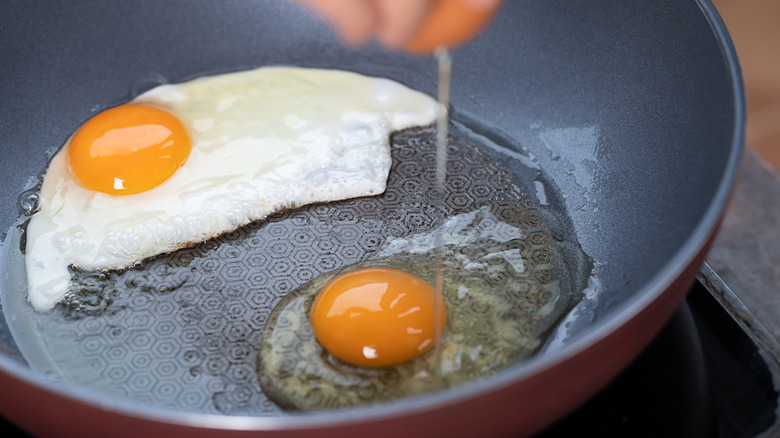
If you're looking for those characteristic lacy edges on your egg white, then keep the heat at medium-high initially and allow the hot oil to fry the thin outer layer first. From there, once the edges are golden, you can lower the heat slightly so the rest of the white can finish cooking. And keeping the heat too high is a mistake for a runny yolk, too. The white and yolk will cook at different times, and so a blazing hot pan will cook the bottom of the egg before the top — including both the white and yolk — has finished setting.
If you follow these techniques but the white around the yolk is still translucent, then carefully spoon some hot oil over the uncooked egg (taking care to avoid the yolk). This is known as basting, and it can help you cook the top without having to flip the egg. You could also utilize steam to cook the top of the egg by throwing in a tiny amount of water and covering the pan, though steam will generate a much softer result. Once it looks like it's fried to your liking, remove it from the pan, and now you're free to season your fried eggs in all kinds of delicious ways.