

Make Steak More Exciting With A Hawaiian-Style Marinade Bursting With Sweet, Savory Flavors
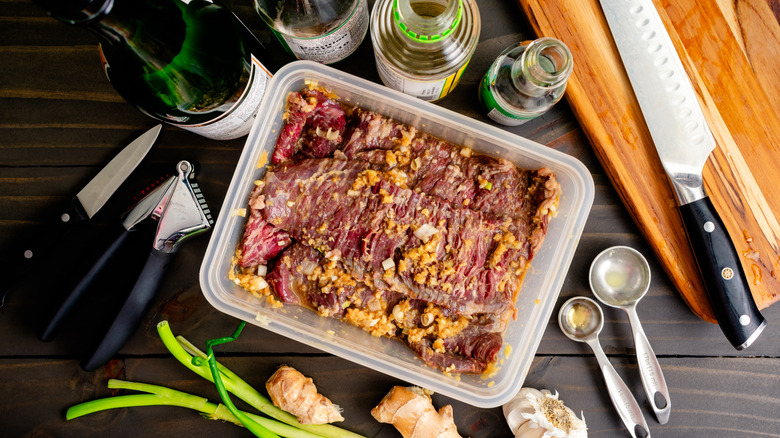
Any balanced steak marinade will include key components that ensure properly tenderized meat and robust flavor. That means using some variation of acid, fat, seasonings, and aromatics. For a unique twist on your next steak dinner, it's worth trying a Hawaiian-inspired teriyaki variety. This slightly candied, umami-rich, savory marinade will vary depending on the recipe. However, core ingredients include soy sauce, sesame oil, ginger, garlic, scallions, brown sugar, and pineapple.
You'll combine everything like you would any standard marinade, allowing each of the different flavors to blend together. Once combined, simply mix in the pineapple (use equal parts pineapple juice, chunks, sugar, and soy sauce). Just make sure to whisk the solids and liquids well, ensuring that the sugars are properly dissolved.
You can marinate in a resealable bag, bowl, or other dish. The key is to ensure you're coating the meat. If using a bag, release the air to reduce space between the liquid and protein. To avoid risk of leakage, you can then place the sealed bag into a bowl in the fridge. All that's left is to cook the meat on each side atop the grill or stove until you reach the desired temperature. Beyond that, here's how to get the most out of your marinade.
Make the most of your marinade
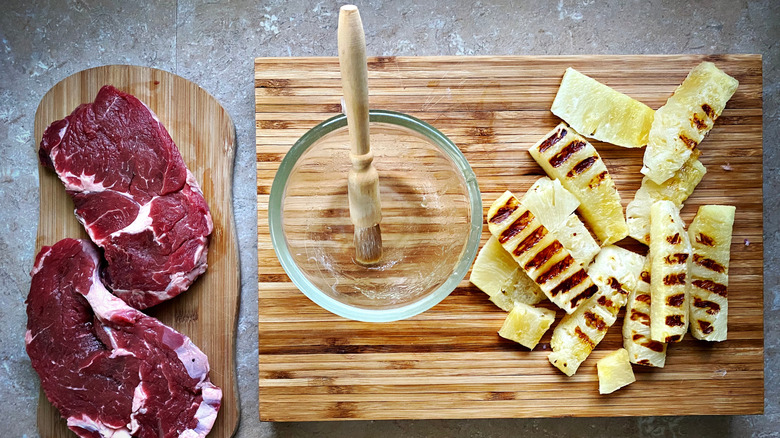
Marinades work best if they infuse for awhile. In some cases, it's even better if the flavors are able to work overnight. That said, this Hawaiian-style marinade only needs 20 minutes to one hour, as pineapple is not only acidic but also rich in the protein-digesting enzyme bromelain. (That enzyme is why pineapple sometimes burns your tongue.) If left for too long, the steak could become overly tenderized and mushy, especially if working with something like skirt steak, which it's a mistake to over-marinate. You can also score the steak beforehand if you're using tough cuts like skirt or flank. This step will help the flavors better infuse into the dense tissue.
Once finished, you may have a good deal of leftover mixture. Toss it if you want, but with a few extra steps, you can also safely reuse it for a delectable sauce or glaze. It is important to note that after touching raw meat for any period of time, the liquid will need to come to a rolling boil before being able to safely consume. Five minutes at 212 degrees Fahrenheit is the recommended standard in order to kill off any potentially harmful bacteria.
Don't forget to consider that your marinade's flavor and texture will change after boiling as it reduces. So make sure you taste it once it's done, adjusting the ingredients before you pour it over your nicely cooked steak. If the glaze reduced too much, you can always add liquid like vegetable or chicken stock to balance out the texture. You may even add rice vinegar, which can cut through the concentrated sweetness without adding extra salt.