

Make This Fall Veggie The Star Of Homemade Curry With Advice From A Pro Chef
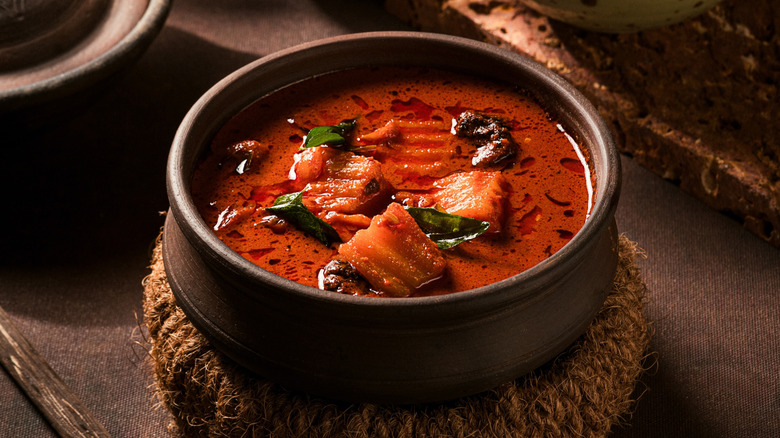
When you think of fall flavors, pumpkin is probably at the top of your list. But while the flavor is frequently associated with baked goods like pumpkin pie, this mild squash can be used in savory contexts as well. Chef Regi Mathew, founding partner of Chatti, spoke with Chowhound about how to use pumpkin in a flavorful fall curry. Chatti, a New York City-based restaurant specializing in Keralan cuisine, features a claypot pumpkin curry on its fall menu — so we were eager to learn more about the development behind this recipe and how to recreate something similar at home.
"What drew me to [pumpkin] as an ingredient was the opportunity to work with that sweetness through the lens of Kerala cooking, where we often build flavor through the interplay of coconut, spices, aromatics, and the natural character of an ingredient, rather than overpowering it," says Mathew. While that description of the cuisine may sound intimidating, the good news is that, according to Mathew, you can make a good curry with just a few ingredients.
When it comes to pumpkin curry, Mathew advises cooks to "let the pumpkin be the hero of the dish." Spices may be an integral part of Keralan cuisine, but don't allow them to overpower the pumpkin flavor. "I would also caution against treating pumpkin as though it were simply a neutral base for a sauce," says Mathew. "It has its own flavor, texture, and sweetness, and the cooking should bring those qualities forward. Season in stages, use water judiciously, cook gently, and taste as you go." Mathew recommends starting with a flavorful variety of pumpkin. Chatti uses red pumpkin, but there are many other types of cooking pumpkins worth discovering.
More tips for finishing your pumpkin curry
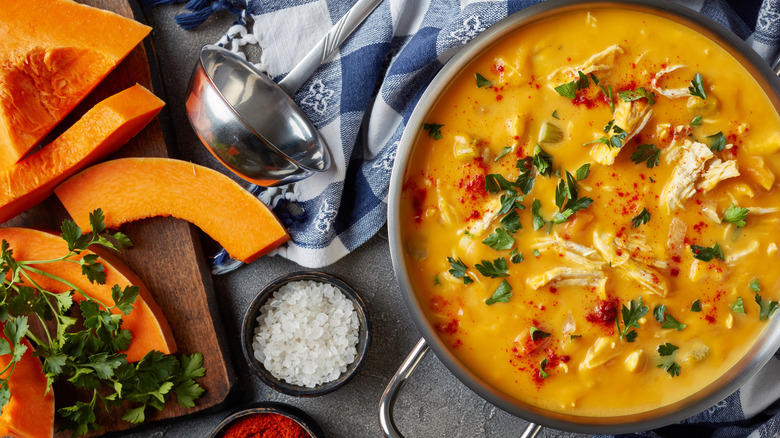
An important part of cooking pumpkin is managing moisture. "Pumpkin releases water as it cooks, so adding too much liquid at the beginning can leave you with a thin curry," Regi Mathew says. (This high water content is why you should always strain canned pumpkin before using it.) Mathew also explains that rushing the curry-making process is another easy mistake to make. "People sometimes try to rush a curry by cooking it at too high a temperature or adding too many spices in the hope of building flavor quickly," says Mathew. "With pumpkin, this can be counterproductive. You risk breaking down the vegetable too much, losing its natural sweetness, and ending up with a curry in which the spices overpower everything else."
"When cooking with pumpkin," Mathew continues, "I think it is important to respect its natural sweetness rather than try to disguise it." This means paying careful attention to your balance of flavors. Keralan cooking, he says, already possesses "a wonderful vocabulary of ingredients" — such as coconut, cumin, curry, and chilies — that lends itself to exactly this. "Ultimately, a good pumpkin curry is about balance," explains Mathew. "You want the sweetness of the pumpkin, the warmth of the spices, the fragrance of the curry leaves, and the richness of the coconut to work together."
To get the most flavor out of your spices, Mathew recommends tempering the mustard seeds towards the end of the cooking process by heating them, along with dried red chilies and curry leaves, in coconut oil before adding them to the pot. "For me, the finishing tempering can make an enormous difference," says Mathew, adding that it "brings a final burst of fragrance and flavor."
The benefits of claypot cooking
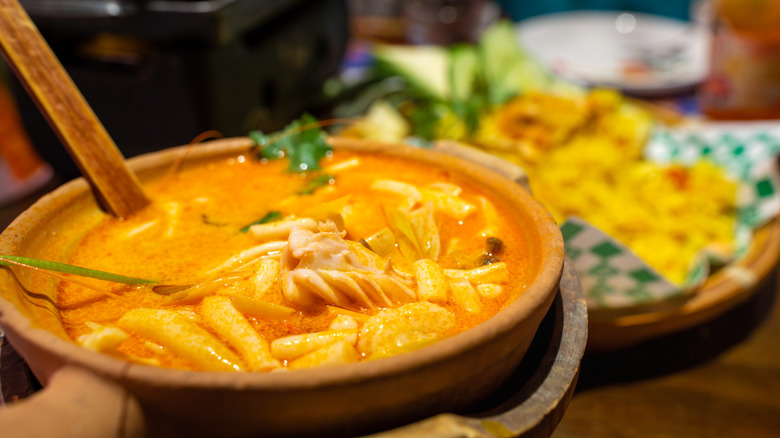
Although Chatti's pumpkin curry is cooked using a claypot method, Regi Mathew says that similar results can be achieved in a Dutch oven, if needed. Mathew says that the benefits of a claypot are that "it heats gradually and retains heat well, making it particularly suited to gentle simmering." In other words, it's a type of cooking that, if done correctly, can encourage the best flavor and texture for your pumpkin. "With pumpkin, that gentle cooking is especially useful because you want the vegetable to become tender while retaining some of its character," says Mathew. "You do not want it to dissolve completely into the curry unless that is the texture you are aiming for." Whether using a claypot or a Dutch oven, don't be tempted to turn up the heat too much, and don't rush.
But Mathew appreciates the unhurriedness of claypot cooking for more than just flavor optimization. "The claypot adds another dimension to the experience," he says. "There is something deeply comforting about a curry that cooks slowly, allowing the flavors to come together and develop gradually. The result is a dish that feels hearty and warming without necessarily being heavy."