

With Greek Yogurt, Cucumber, And Mint, You Have The Start Of A Refreshing Indian Dip
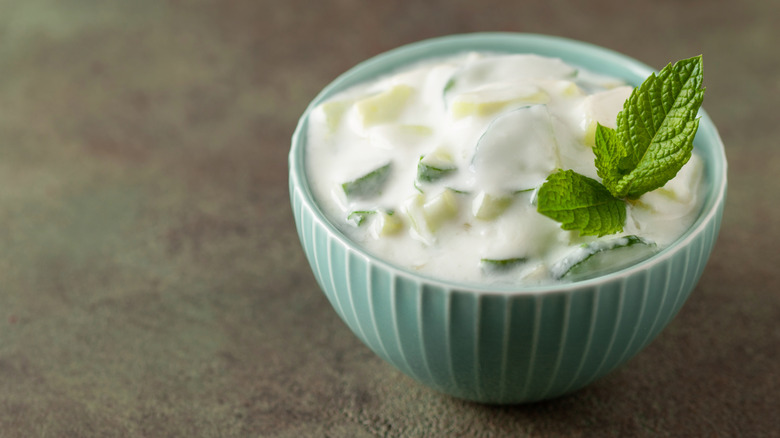
Dine at an Indian restaurant and you'll probably encounter a yogurt-y item served up alongside one or more dishes. That's raita, a sour, herby Indian sauce, which (in its basic version) is just plain yogurt with a little salt, perhaps a touch of sugar, and various herbs and raw vegetables. Cucumber and mint are the staple additions, but there's plenty of flexibility and a lot of regional variations. Raita is a longtime staple in Indian cuisines. It's thought to go back to millennia-old Ayurvedic medicine, where yogurt was prized for helping digestion (you could compare this to its present-day use as an antidote to intensely spicy food).
A good raita should be tangy, savory, and slightly sweet, with a cooling quality that makes it great alongside a variety of hot dishes from curries to kebabs. As well as a side condiment, it can be used in all sorts of places: as a dip, in place of mayo on an Indian-style sandwich, or for tenderizing tough steak before it hits the grill. Strictly speaking, raita is typically made using plain full-fat yogurt, but plain Greek yogurt should work fine. It'll be similarly neutral in terms of flavor, but a little thicker than what you might see in an Indian restaurant; this may be preferable if you like a dip that sticks to whatever you're dipping in it. As a bonus, Greek yogurt will give you more protein if you're aiming for that — about double what you'd get from plain yogurt.
The many different ways to approach this dip
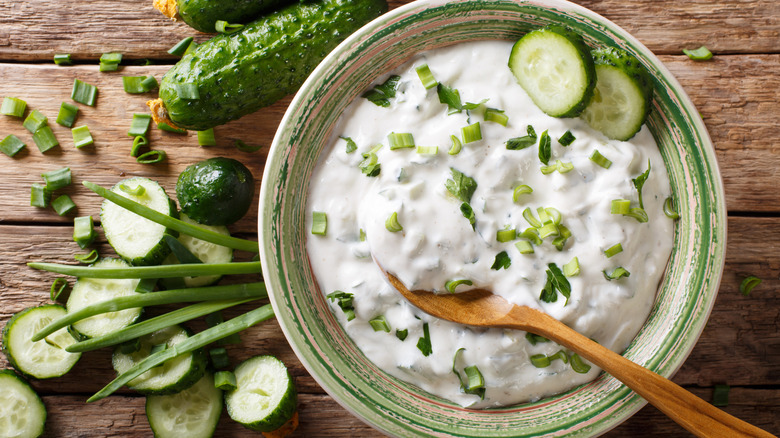
It's fair to say that raita isn't one of those dishes where there's a single accepted way to make it. In India, it varies by region. A standard version in the north may incorporate veggies like cucumber and tomato, and a mix of roasted cumin and fresh cilantro on the spice side. There's also boondi raita, which is studded with small balls of fried chickpea flour. The cucumber and tomato base is particularly common, and this is arguably the version you'll see most outside India.
In southern India, you'll encounter a different yogurt dip which goes by the name pachadi (officially speaking, it has a different heritage, although it certainly resembles raita). It might have ground coconut, mustard seeds, dried chiles, and curry leaves, an underrated Indian spice worth seeking out for its unique flavor. Sometimes pachadi also features cooked (instead of raw) vegetables. Whichever approach you take as inspiration for your dip, some other options for ingredients can include cilantro, green chilis, grated beets, pomegranate seeds, red onion, or garam masala. Since it's well-spiced, you'll probably want something neutral to dip in it. Naan bread would be an obvious option, but plain pita chips or some crudités (raw veggies) such as carrots or strips of bell pepper are good, too.
There are also sweet raitas out there, made with warmer-climate fruits like banana, pineapple, or pomegranate. These ones can equally work as dessert or be an accompaniment for rich and spicy biryanis. For dipping, consider something firm and sweet like apple slices.