

Forget Filet Mignon — This Pork Cut Is Just As Tender And Way More Affordable
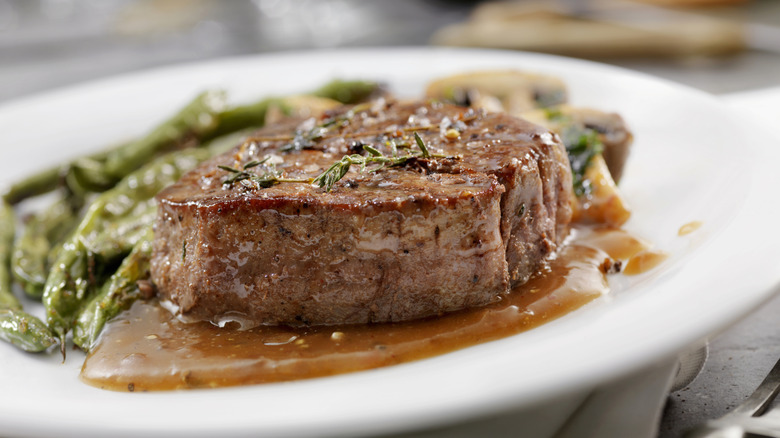
If you're looking for a tender cut of meat, you could pay anywhere from $20 to $40 a pound for filet mignon, but for a far better deal, perhaps it's worth looking sideways to pork. Specifically, pork tenderloin: This cut comes from alongside the backbone of the pig, and it's a muscle that barely gets used, making it super tender — and in terms of where it comes from, it's actually the pork equivalent of filet mignon. And the prices can be seriously low: It can go for under $4 per pound at Walmart, and even fancier, farm-fresh sources can offer bargain basement prices, around $6 or $7 per pound.
Why so cheap? Well, it's more that beef (or really, steak) is particularly expensive: Its tenderloin, from the same section of the animal, is just a sliver of the cow's overall weight. On a per-cow basis, you don't get a whole lot of it, so there's a lot of demand for not much supply (this explains why bigger, chunkier cuts are cheaper). That's less of an issue with pork — and even pork chops, a more standard option, are similar in price to tenderloin.
Expect a pretty mild flavor from pork tenderloin (and don't confuse it with the larger pork loin). As a lean cut there's not much fat to add flavor. This should factor into how you cook it: Consider it like a blank slate for spice rubs, or a marinade or glaze.
How to work with pork tenderloin
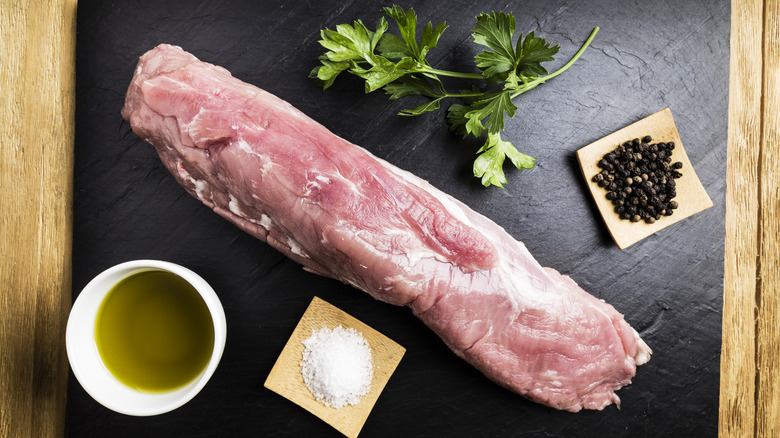
The first thing you'll need to do when prepping pork tenderloin is removing the shiny membrane that's probably on it: It's tough and you don't want to eat it. As mentioned, pork loin will need some work to add flavor (it's comparable to chicken breast in this sense). A rub is a solid idea for this: You could start with some basics like salt, pepper, garlic and paprika and build on that however you like (perhaps some chile for heat, or mustard powder for a little kick). Again, that neutral flavor means there's no single right choice. A little sugar can help with a nice caramelized crust, although beware that it can burn if you're cooking it at higher temperatures. For a marinade, you can take those flavors and add some liquid like oil, vinegar, and soy sauce. If you want to glaze it (say, with a barbecue sauce), do this a few minutes before the end of cooking so it doesn't burn.
Pork tenderloin is like chicken breast in another notable way: It can dry out quickly if you're not careful when cooking it. Searing is a great option and then since it's not such a thin cut, you can finish it in the oven at 400 degrees Fahrenheit. This will ideally get you a nice crust on the outside without overcooking the center. Roasting it is another good option. Either way, you'll want to cook it so the internal temperature is 145 degrees Fahrenheit — there will likely still be some pink inside, but this is safe as long as the internal temperature is correct. As with steak, let it rest a few minutes before slicing it to serve.