

The Right Oven Temperature For Perfectly Cooked Pork Tenderloin Every Time
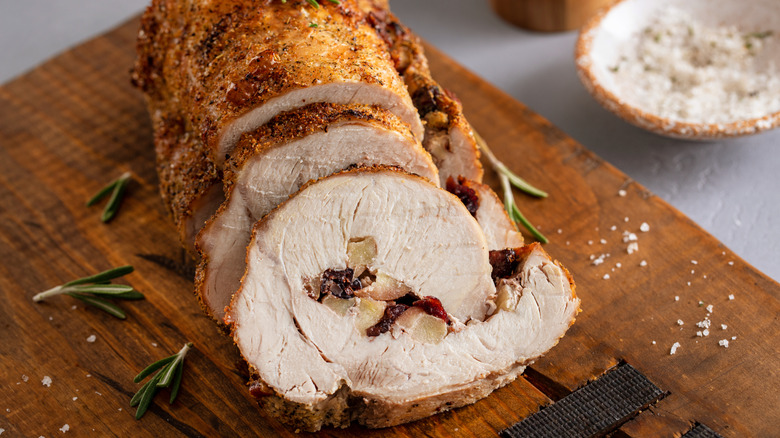
Cooked correctly, pork tenderloin is the perfect centerpiece for your holiday table or next dinner party. Most people opt for whole chicken or salmon fillets, but pork tenderloin is the underrated main dish to make on repeat at every special occasion. Though pork (especially the lean tenderloin) has a reputation for becoming dry and mealy in about 10 seconds flat, cooking it at the right temperature guarantees an impressively succulent and tender result almost every time.
Since tenderloin is a fairly thick cut of meat, especially when cooked whole, preheating your oven to the correct temperature is vital. About 400 degrees Fahrenheit is the sweet spot that ensures your tenderloin is roasted evenly and safe to eat without sucking all the moisture out of it. At this temperature, an average-sized cut of pork needs about 30 minutes to cook through completely; use a standard instant-read meat thermometer to ensure the tenderloin has reached an internal temperature of 145 degrees Fahrenheit.
Reaching this USDA-approved internal temperature is why cooking temperature is so important. An oven that's too cool requires more time to get your meat to this temperature, running the risk of your tenderloin either being undercooked and unsafe to eat, or so overcooked that it's dry and crumbly. Meanwhile, setting your oven much hotter than this temperature can burn the outside of your meat before the center reaches 145 degrees Fahrenheit.
Tenderizing your tenderloin for juicy results at the right temperature
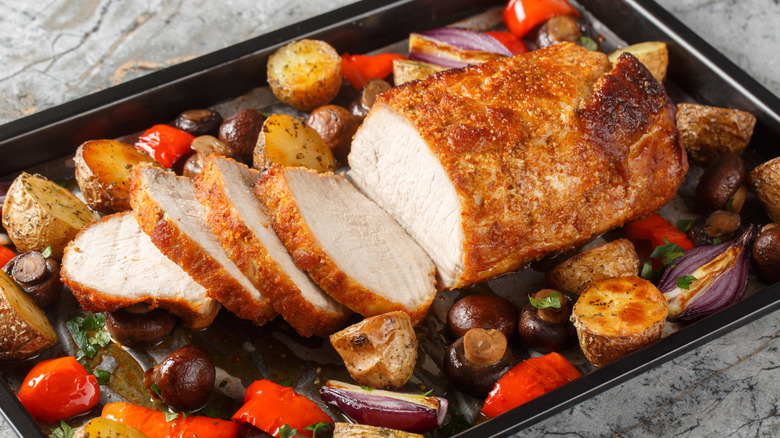
Setting your oven to the correct temperature is the most important part of producing a delicious, perfectly roasted pork tenderloin. Utilizing the proper cooking time comes in at a close second. However, since this pork tenderloin has so little fat, you still need to give it a touch of TLC to ensure it's juicy and tender when you pull it out of the oven.
This means a little extra work in the kitchen, but it's also an opportunity to infuse your meat with that much more flavor, so it's doubly worth it in the end. Despite how tricky it can be to cook properly, one advantage to this cut is that it's really difficult to marinate pork for too long. Unlike delicate fish or tender steaks, pork needs a nice, long soak (at least two hours, though it benefits the most from overnight) in your marinade of choice to get the full benefits of it.
Pork is also tasty with a wide range of marinade ingredients, from garlic-infused olive oil and apple cider vinegar (doubly tasty if you add cubes of apple to the mix) to melted butter and lemon or orange juice (a mix of both citrus flavors is also incredible). As for herbs and spices, think strong, piquant flavors, such as fruity pink peppercorns, red pepper flakes, or a blend of cayenne pepper with pineapple chunks for a tropical flavor profile.