

For The Most Flavorful Cabbage, Give It The Caramelized Onion Treatment
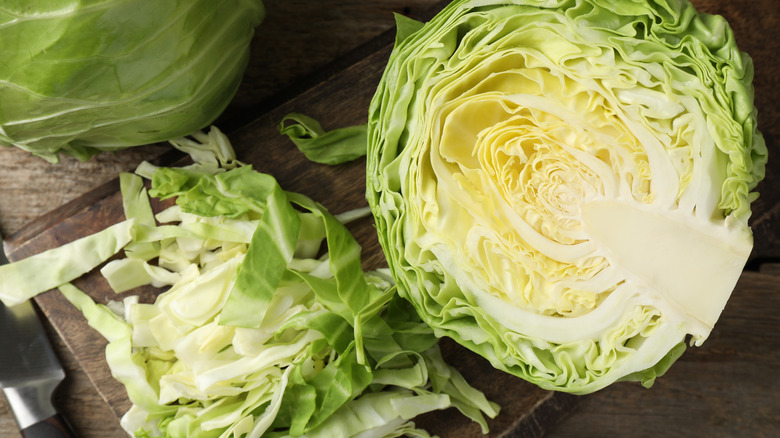
While cabbage has spent a lot of time being relegated to the supporting role in coleslaw and soup, one of the biggest food trends of 2026 was that it was named "the year of the cabbage." So, in the spirit of the vegetable's popularity, if you're looking for new ways to get excited about cabbage, then one particularly tasty trick is to cook it like you'd cook caramelized onions. You may be surprised at how much they can achieve a similarly rich, jammy, golden-brown finish.
Melt-in-your-mouth caramelized onions get their signature flavor from being cooked slowly — that time is what softens their sharp bite and brings their inherent sweetness to the forefront, and cabbage responds much the same way to this technique. As cabbage's tough leaves cook down, they will soften and their edges will develop that deep golden color and a sweet, slightly nutty taste that makes them truly sensational. Nothing like your grandma's watery, boiled cabbage.
How to caramelize cabbage for a sweeter, richer flavor
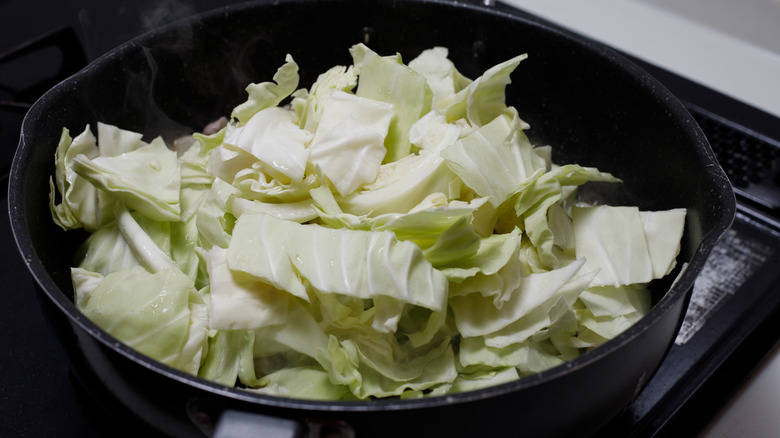
This is a method that is especially useful when cabbage is in season and it's easier to find the many varieties available. Green cabbage is a good place to start but savoy cabbage also works well. Both types will soften but have enough structure to hold up in the skillet over time without running the risk of going mushy.
First remove any damaged outer leaves as well as the tough core, then shred the cabbage into thin strips, keeping them as similar in size as possible so they cook at the same time. Add some olive oil or butter to a large enough pan before throwing in the cabbage with a pinch of salt to highlight its flavors. You'll want to cook the cabbage at medium heat so that it can soften without burning, and it should caramelize beautifully in half an hour or so. If the pan looks a bit too crowded, it may be better to work in batches to prevent the cabbage from steaming.
For even more layers of flavor, add thinly sliced onions to the pan and let them cook alongside the cabbage to let both vegetables mix together and develop their nutty sweetness at the same time. The dish can be finished off with black pepper and a splash of lemon juice (or vinegar) to balance out the sweetness, then served hot alongside roasted potatoes, stirred into pasta, or spooned inside a grilled sandwich.